
High-altitude glare is a performance barrier that standard eyewear cannot overcome. Choosing the right sunglasses for skiing is the difference between sharp, high-contrast vision and constant eye fatigue. You've likely experienced the struggle of lenses that are too dark in the shadows yet fail against the blinding midday sun. It's frustrating when frames slip during aggressive turns or feel bulky under a helmet. Your gear needs to handle rapid light changes and high-intensity movement without compromise.
This 2026 guide identifies the technical specifications and style trends required for elite eye protection on the slopes. We promise to show you how to achieve total UV400 safety while maintaining a curated, modern look for the après-ski scene. We will preview the latest in photochromic polarized lens technology, lightweight carbon fiber frame construction, and high-utility design features. Get ready for a deep dive into high-visibility gear, secure-fit geometry, and the essential attributes of modern mountain eyewear. This is your roadmap to functional, trend-aware selection for the winter season.
Key Takeaways
- High-altitude UV400 technical requirements. Snow reflects 80% of radiation. Maximum eye safety for extreme mountain elevations.
- Polarized glare reduction and photochromic light adaptation. Advanced lens technology for high-contrast vision in shifting light.
- Carbon fiber frame construction. Lightweight durability and thermal stability. High-performance materials for freezing temperatures.
- Helmet-compatible geometry. Straight temple arms and adjustable nose pads. Secure, non-slip fit for high-intensity movement.
- 2026 trend-aware styles. Vintage oval and square polarized photochromic frames. Essential sunglasses for skiing and après-ski fashion.
Why Sunglasses are Essential for High-Altitude Skiing
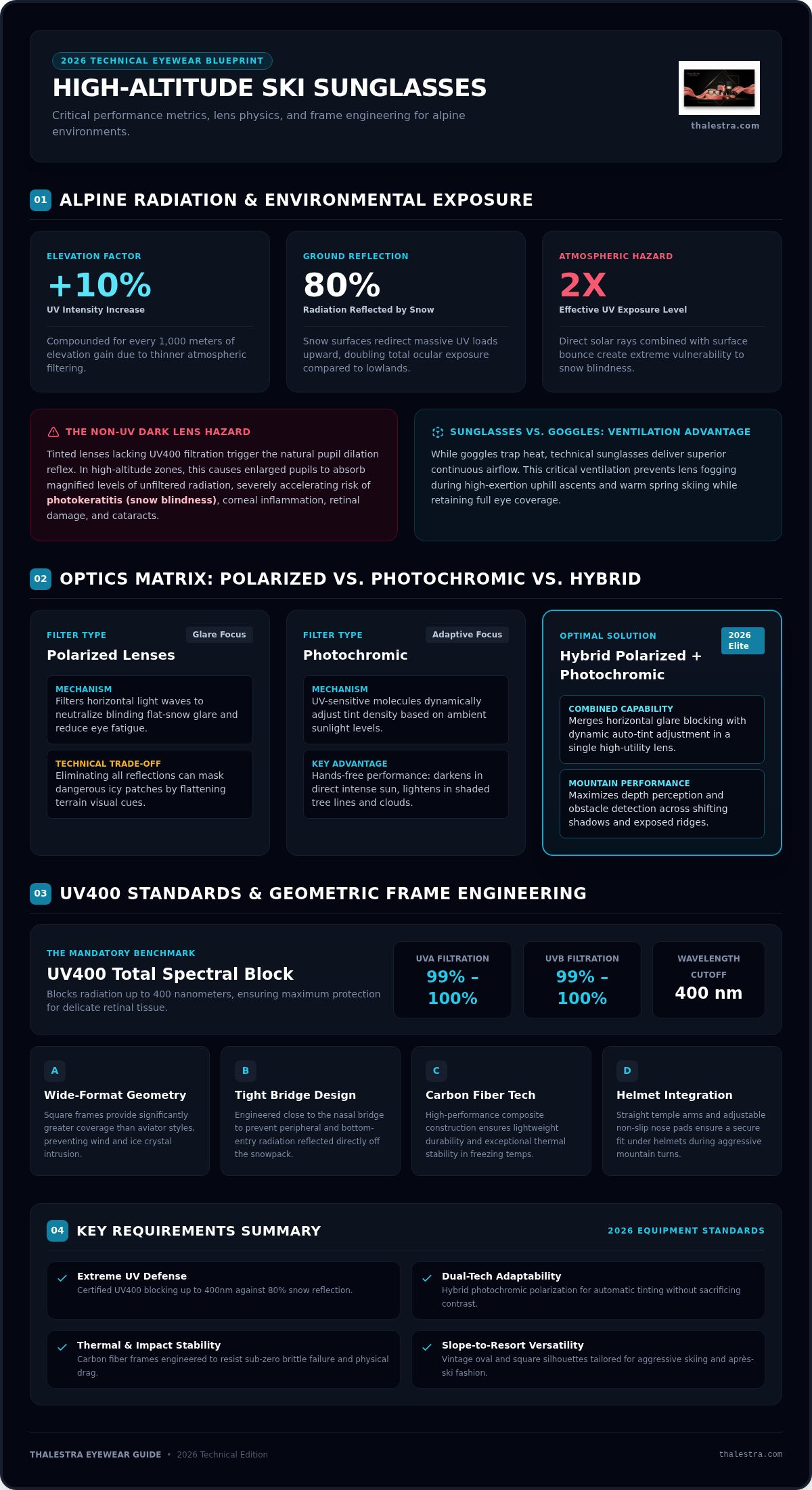
High-altitude environments demand specialized technical eyewear. Standard casual frames lack the necessary specifications for extreme mountain conditions. UV intensity increases by 10% for every 1000 meters of elevation gain. Snow surfaces reflect up to 80% of UV radiation. This creates a high-glare environment where exposure levels effectively double compared to lower elevations. Choosing high-performance sunglasses for skiing is a critical safety decision for every mountain athlete.
Intense glare exposure leads to photokeratitis, commonly called snow blindness. This condition involves painful corneal inflammation caused by excessive UV absorption. Professional-grade eyewear provides a primary defense against these concentrated rays. Additionally, sunglasses offer superior ventilation compared to traditional goggles. This increased airflow prevents lens fogging during high-exertion uphill climbs and warm spring skiing sessions. It's an efficient solution for temperature control and visual clarity.
UV400 Protection: The Non-Negotiable Standard
UV400 certification is the industry benchmark for ocular safety. These lenses block 99 percent to 100 percent of UVA and UVB radiation up to 400 nanometers. Understanding how sunglasses lenses work is vital for mountain environments. Dark lenses without proper filtration are dangerous. They cause pupils to dilate, which allows more unfiltered radiation to reach the retina. The dangers of non-uv protected sunglasses are magnified at high altitudes where the atmosphere is thinner and offers less natural protection. Long-term exposure without UV400 standards contributes to permanent retinal damage and cataracts.
Wind and Debris Shielding
High-speed wind chill and airborne ice crystals present physical risks on the slopes. Modern sunglasses for skiing utilize specific frame geometries to protect the ocular area. Wrap-around designs are essential for minimizing lateral wind intrusion and peripheral glare. Modern square frames offer significantly more coverage than traditional aviator styles. This increased surface area blocks wind and prevents eye watering during rapid descents. Key design features include:
- Wide-format lens geometry. Maximum coverage.
- Streamlined temple integration. Reduced drag.
- Impact-resistant materials. Debris protection.
- Tight-fit bridge designs. Bottom-entry light blocking.
These functional attributes ensure consistent performance. High-utility frames combine style with essential physical shielding. They maintain ocular comfort in freezing temperatures and high-wind scenarios. The result is a pragmatic piece of gear that transitions from technical descent to resort life.
Polarized vs. Photochromic Lenses: Which Wins on Snow?
Selecting the optimal lens technology is a performance requirement for high-altitude environments. Standard sunglasses for skiing often force a choice between glare reduction and light adaptation. Polarized lenses function by filtering horizontal light waves. This eliminates the blinding glare reflected off flat white snow packs. It reduces ocular strain during long days on the mountain. However, a technical trade-off exists. Total glare removal can mask icy patches by neutralizing the reflections that signal a frozen surface. This makes the terrain appear uniform, which is a safety risk during high-speed descents.
Photochromic lenses utilize UV-sensitive molecules to adjust tint density automatically. They darken in direct sunlight and lighten in overcast conditions. This provides a hands-free solution for shifting weather. Thalestra offers an elite alternative through hybrid technology. The LIOUMO Top Quality Photochromic Polarized Sunglasses combine both features into a single high-utility lens. This hybrid configuration provides the glare protection of polarization with the adaptive versatility of photochromic tech. It is the most efficient setup for skiers who demand consistent visual clarity without swapping gear.
The Benefits of Polarized Photochromic Sunglasses
Adaptive vision is critical when moving between exposed ridges and shaded tree lines. These hybrid lenses enhance color contrast on flat light days. They improve depth perception and obstacle detection in challenging terrain. This technology mirrors the performance requirements found in our photochromic cycling sunglasses guide, where high-speed light transitions are constant. Choosing a dual-function lens ensures you maintain high-contrast vision regardless of cloud cover or sun position. It is a pragmatic choice for all-day mountain activity.
Lens Tints for Different Mountain Conditions
Specific tints optimize visual performance for distinct weather patterns. Selecting the right color improves your ability to read the snow surface. Consider these technical options for your next pair of sunglasses for skiing:
- Rose and Amber: Ideal for low-light, fog, and overcast skies. These tints maximize depth perception.
- Dark Grey and Brown: Best for high-altitude, blue-bird conditions. They provide neutral color perception and maximum light reduction.
- Yellow: Essential for maximizing contrast during heavy snowfall and whiteout scenarios.
- Green: High-utility tint for reducing glare while maintaining color balance in mixed light.
Modern lens construction focuses on high-definition clarity. Synthetic materials now offer impact resistance that exceeds traditional mineral glass. This ensures safety during falls while keeping the frames lightweight for all-day comfort. Focus on technical specifications to ensure your eyewear matches your performance needs.
Frame Durability and Materials: Carbon Fiber and Lightweight Tech
Mountain performance eyewear requires absolute structural integrity. Traditional plastics often fail in sub-zero environments. Carbon fiber frames provide the ultimate strength-to-weight ratio for active sports. This material ensures total thermal stability. It maintains its shape and structural integrity in freezing temperatures where standard nylon frames become brittle and prone to snapping. High-utility sunglasses for skiing must survive high-impact falls without shattering. Frame material choice is a critical safety specification for high-speed descents. Lightweight construction reduces pressure on the nose bridge. This prevents skin irritation and fatigue during long sessions. It's a pragmatic gear choice for the modern athlete.
Carbon Fiber Frame Square Glasses
Carbon fiber frame square glasses provide extreme structural rigidity. This prevents lens misalignment under physical stress. These frames offer a modern aesthetic for the 2026 season. They bridge the gap between technical performance and luxury style. Compared to traditional acetate, carbon fiber is significantly more durable and lighter. It is the preferred choice for high-volume mountain activity. The material's high tensile strength allows for thinner, more streamlined profiles. These frames integrate seamlessly with winter headgear. They offer a sophisticated, digital-native look that transitions from peak to resort. This is high-performance equipment designed for the immediate present.
TR90 and Advanced Polyamides
Advanced polyamides like TR90 offer unique flexibility. These materials feature memory properties. They bend under pressure and return to their original shape. This is essential for helmet compatibility and long-term durability. Hypoallergenic surfaces ensure comfort against the skin during heavy exertion. Every gram matters on a full-day tour. Lightweight sunglasses for men utilize these advanced polymers to minimize total gear weight. Key technical attributes include:
- Flexural Strength: Resists snapping under extreme cold stress.
- Low Density: Minimizes facial pressure points and fatigue.
- Chemical Resistance: Protects against sweat and sunblock degradation.
- Thermal Resistance: Stability across wide temperature ranges.
Choosing advanced materials ensures equipment longevity and consistent performance. High-performance frames provide a secure, reliable platform for technical lenses. They are essential components of a modern mountain gear kit. This focus on material science ensures your gear survives the demands of the slopes. Secure your vision with high-utility, impact-resistant technology.
Fit and Comfort: Helmet Compatibility and Face Shape
Performance integration depends on physical compatibility between your eyewear and headgear. Selecting sunglasses for skiing requires a focus on temple arm geometry. Straight temple arms provide a streamlined profile that slides easily under helmet straps. This design prevents the pressure points and headaches often caused by traditional curved hooks. High-utility frames feature thin, flexible tips to ensure zero-interference with ear protection. Secure fit is a non-negotiable requirement for high-speed descents. If your frames shift during a turn, visual clarity is compromised. Look for adjustable rubberized nose pads to maintain stability during heavy exertion and sweat management.
Wrap-around 8-base curve geometry is the technical standard for mountain environments. This high-wrap fit blocks peripheral light and prevents top-entry glare from reflecting off the snow. It also creates a physical barrier against wind and ice crystals. However, frame-to-face distance is a critical factor for ventilation. If the lenses sit too close to the face, you risk eyelash fogging. This occurs when moisture from your breath or skin is trapped behind the lens. A proper fit provides enough clearance for airflow while maintaining a tight seal against the elements. This balance ensures high-contrast vision without the distraction of internal condensation.
Choosing Frames for Your Face Shape
Aesthetic appeal meets functional design in 2026 frame selections. Square frames provide necessary angular contrast for round and oval faces. This adds definition and a modern, high-volume look. Wide frame sunglasses for men are essential for larger head shapes to ensure maximum rim clearance. This prevents the temples from pinching and ensures the lenses cover the entire field of vision. Finding the correct balance between frame size and the helmet rim is vital. Ensure the top of the frame does not push against the helmet, which can force the sunglasses down onto the nose bridge. Explore the full range of Classic Mens Polarized Sunglasses for high-utility mountain performance and precise fitment.
Maintenance and Care on the Slopes
Professional maintenance ensures gear longevity in harsh winter climates. Ice crystals, road salt, and frozen residues are highly abrasive. These elements can quickly degrade lens coatings and scratch polarized surfaces. Consult our professional guide on how to clean polarized sunglasses for technical care instructions. Always use a microfiber pouch for immediate lens clearing on the lift. Hard cases are mandatory for storage in the ski lodge to prevent crushing or lens impact. Proper storage and cleaning protocols protect your investment and maintain the high-definition clarity required for technical skiing.
- Straight Temple Arms: Maximum helmet compatibility. Zero pressure points.
- Adjustable Nose Pads: Anti-slip technology. Custom bridge fit.
- Wrap Fit: 360-degree light blocking. Wind protection.
- Microfiber Storage: Immediate cleaning. Scratch prevention.
Pragmatic gear selection focuses on these specific fit attributes. A secure, comfortable frame allows you to focus on the terrain rather than your equipment. High-performance sunglasses for skiing bridge the gap between technical tool and style accessory. prioritize these specs to ensure consistent performance from the first chair to the final run.
Top 2026 Ski Sunglasses for Men and Women
Selecting the right sunglasses for skiing in the 2026 season involves balancing technical specifications with aesthetic relevance. Modern skiers require modular gear that performs on a black diamond run and looks sophisticated on a sun terrace. High-utility design focuses on lens clarity, frame grip, and peripheral vision. The current market prioritizes lightweight materials like carbon fiber and advanced polyamides to ensure all-day comfort. Thalestra’s curated selection highlights these performance-driven attributes for a global audience of winter athletes. Our inventory focuses on immediate value and functional excellence.
The 2026 Trend: Vintage Designer Aesthetics
Resort fashion is currently dominated by a retro revival. Vintage designer sunglasses are the standout trend for the 2026 après-ski scene. These models feature iconic silhouettes like the vintage oval and slim rectangle. While the look is nostalgic, the technology is strictly modern. These frames integrate high-grade UV400 protective coatings and impact-resistant lenses. They provide a seamless transition from active sport to leisure. The 2025 Vacation Sunglasses For Men offer a similar aesthetic for those seeking a curated, trend-aware look that bridges the gap between performance and luxury.
Performance Selection for Active Skiers
High-intensity downhill and cross-country skiing demand specialized optics. The LIOUMO Top Quality Photochromic Polarized Sunglasses are the premier choice for variable light conditions. These frames utilize polarized photochromic square lenses to manage glare and adaptive tinting simultaneously. For those seeking timeless silhouettes with updated technology, the Classic Mens Polarized Sunglasses provide a reliable, high-contrast visual experience. Minimalist backcountry skiers should prioritize lightweight carbon fiber models for their superior strength-to-weight ratio. Key performance attributes for the active skier include:
- Polarized Photochromic Lenses: Adaptive vision for shifting mountain light. Maximum contrast.
- Carbon Fiber Frames: Extreme durability. Thermal stability in sub-zero temps. Lightweight feel.
- Hydrophobic Coatings: Repels melting snow and moisture for clear vision. Reduced maintenance.
- Rubberized Grip Zones: Prevents slippage during high-speed maneuvers. Secure fitment.
Thalestra maintains a commitment to high-utility, modular eyewear selection. Our digital-first marketplace ensures immediate access to these trending goods. Whether you need the structural rigidity of carbon fiber or the adaptive vision of photochromic tech, the 2026 lineup delivers. Focus on your performance needs and aesthetic preferences to find the perfect pair. Gear up with confidence. Secure your mountain vision with equipment designed for the immediate present.
Optimize Your Vision for the 2026 Winter Season
High-altitude environments demand technical precision. Selecting the right sunglasses for skiing ensures your vision remains sharp against 80 percent snow reflection. You now understand the necessity of UV400 certification and the adaptive benefits of polarized photochromic lenses. High-performance carbon fiber frames provide the thermal stability required for sub-zero descents. These specifications are the difference between peak performance and ocular fatigue on the mountain. Gear utility is paramount when navigating extreme UV exposure and shifting light conditions.
Modern mountain equipment must transition seamlessly from technical runs to the social atmosphere of the resort terrace. Prioritizing helmet-compatible geometry and lightweight construction ensures all-day comfort without pressure points. Thalestra provides immediate access to these elite specifications through our digital-first marketplace. Explore our curated inventory featuring UV400 Certified Lenses and High-Performance Carbon Fiber Frames. We provide global expedited shipping to keep your equipment synchronized with the latest 2026 market demands. It's time to upgrade your winter kit with high-contrast optics.
Shop the 2026 Ski Sunglasses Collection at Thalestra and secure your mountain vision today. Dominate the slopes with gear designed for the immediate present.
Frequently Asked Questions
Can I use regular sunglasses for skiing instead of goggles?
Regular sunglasses for skiing are highly effective for touring and spring conditions. They provide superior ventilation compared to goggles, which prevents overheating during uphill climbs. You must ensure the frames have a high-wrap design to block peripheral glare. While goggles offer more coverage for heavy snowfall, technical sunglasses handle high-altitude UV rays and wind chill efficiently. It's a pragmatic choice for all-day resort activity and casual transitions.
What is the best lens color for skiing in low light?
Rose, amber, and yellow tints are the optimal choices for low-light mountain conditions. These colors maximize contrast and improve depth perception on overcast or flat light days. They help you identify terrain changes and icy patches that darker tints might obscure. Yellow lenses are specifically designed for heavy snowfall or fog. Selecting the correct tint ensures consistent visual clarity when the sun is absent.
Are polarized sunglasses better than non-polarized for snow?
Polarized sunglasses are superior for eliminating horizontal glare from white snow surfaces. This technology reduces eye fatigue during long days in high-glare environments. However, total polarization can sometimes hide icy patches by removing all surface reflections. Many professional skiers choose hybrid lenses to balance glare reduction with terrain visibility. This ensures a high-contrast view without compromising safety on frozen sections of the mountain.
Why do my sunglasses fog up when I ski?
Fogging occurs when warm, moist air from your face or breath gets trapped behind the lens. This is often caused by a lack of airflow or the frames sitting too close to your skin. Choosing sunglasses with proper frame-to-face clearance prevents internal condensation. High-activity sessions require frames with ventilated bridges or straight temple arms that don't block side airflow. Proper maintenance and anti-fog coatings also improve visual consistency.
Do I need UV400 protection for winter sports?
UV400 protection is a non-negotiable requirement for all winter sports. High-altitude environments expose your eyes to significantly higher levels of radiation. Snow reflects up to 80 percent of UV rays, effectively doubling your exposure. Without UV400 certified lenses, you risk photokeratitis, also known as snow blindness. This technical standard ensures 99 percent to 100 percent of harmful rays are blocked. It's an essential safety specification for long-term retinal health.
What are the benefits of carbon fiber sunglasses for skiing?
Carbon fiber frames offer a superior strength-to-weight ratio for active mountain sports. This material provides extreme thermal stability, meaning it won't become brittle or snap in sub-zero temperatures. Lightweight construction reduces pressure on your nose bridge during high-intensity activity. It's a durable, high-impact material that survives falls better than traditional acetate. These frames bridge the gap between technical performance and modern, digital-native aesthetics.
How should skiing sunglasses fit with a helmet?
Sunglasses for skiing must feature straight temple arms to ensure helmet compatibility. This design allows the frames to slide under helmet straps without creating painful pressure points. You should check for a secure fit that doesn't shift during aggressive head movements. Adjustable nose pads help maintain stability even when you're sweating. The top of the frame should clear the helmet rim to prevent the glasses from being pushed down.
Are photochromic sunglasses fast enough for skiing in and out of trees?
Modern photochromic lenses are highly responsive to shifting light levels. They adjust tint density within seconds when moving between bright ridges and shaded tree lines. This eliminates the need to swap eyewear as weather conditions change. High-quality photochromic polarized sunglasses provide consistent visual clarity across diverse terrain. While the transition isn't instantaneous, it's fast enough for most recreational and professional skiing speeds. It's a high-utility solution for all-day mountain use.