
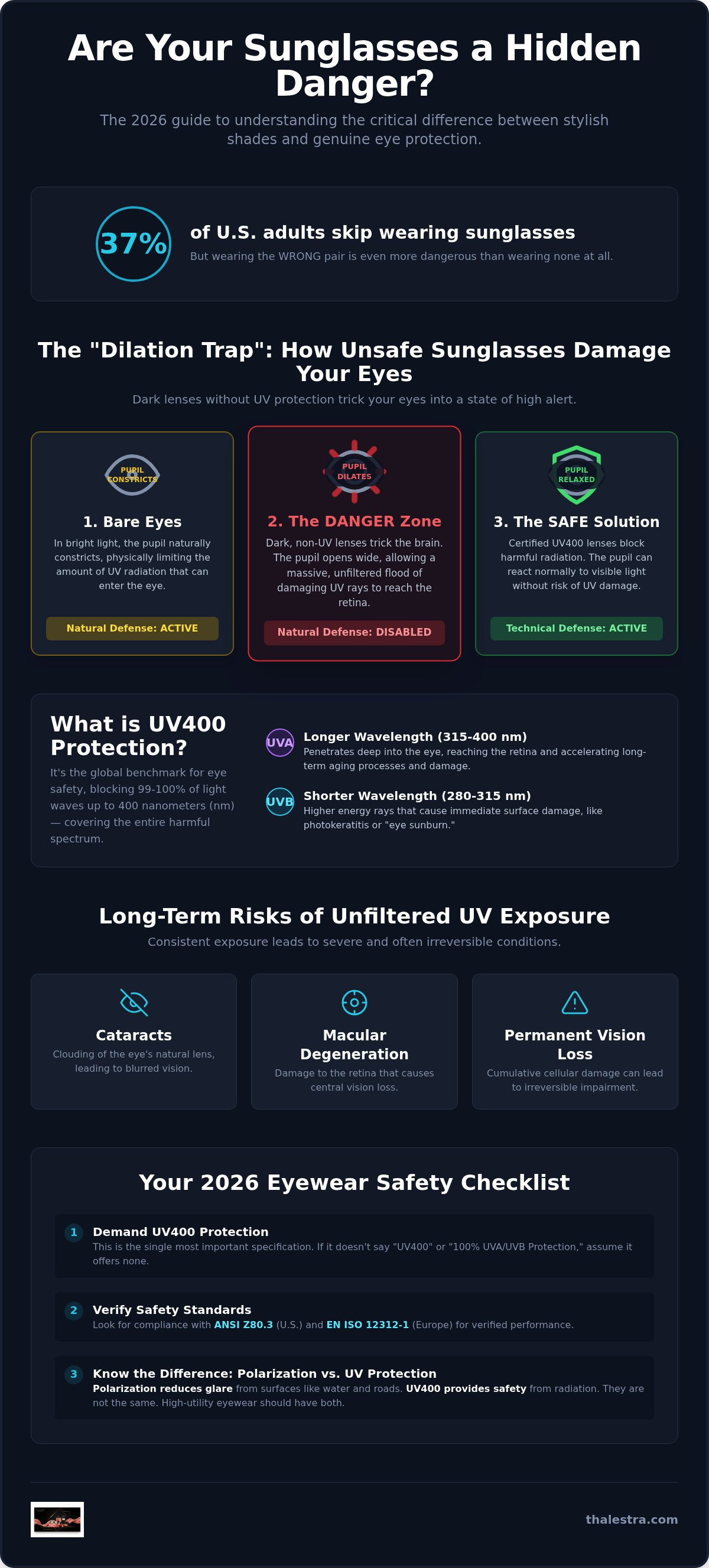
The wrong pair of sunglasses is more dangerous than wearing no sunglasses at all. This counterintuitive fact defines the dangers of non-uv protected sunglasses in 2026. While 37% of U.S. adults skip eyewear entirely, many users of unrated shades fall into the "dilation trap." Dark tints without filters trick pupils into opening wider. This allows concentrated UV radiation to flood the retina. High-utility protection is a functional necessity. You need trend-aware eyewear with verified specifications to prevent long-term vision loss, cataracts, and macular degeneration.
You likely value style, but technical specifications ensure safety. You deserve clear distinctions between polarization and genuine UV400 ratings. This guide provides the 2026 eye health roadmap. Learn to verify UV400 claims. Understand ANSI Z80.3 and EN ISO 12312-1 standards. We review high-performance carbon fiber frames and photochromic tech. Discover how to find top-quality polarized sunglasses. Secure your vision with stylish, specification-heavy eyewear that meets global safety requirements without sacrificing current market trends.
Key Takeaways
- Identify UV400 as the essential 2026 specification for blocking 100% of harmful UVA and UVB radiation.
- Understand the "dilation trap" and the dangers of non-uv protected sunglasses where dark tints without filters increase ocular damage.
- Differentiate between polarization for glare reduction and UV400 for safety to avoid common eyewear specification myths.
- Link consistent, unfiltered solar exposure to severe long-term health risks including cataracts and macular degeneration.
- Verify ANSI and ISO safety standards in e-commerce descriptions for high-utility photochromic and polarized eyewear.
Understanding UV400 Protection and Eye Health
UV400 protection: a mandatory technical specification for 2026 eye safety. These specialized lenses block 99% to 100% of active UVA and UVB light waves. Standard dark lenses without these integrated filters expose users to the dangers of non-uv protected sunglasses. The cornea and crystalline lens function as biological filters, but they can't withstand sustained, unfiltered solar radiation. Excessive absorption leads to cellular degradation and tissue damage. High-utility eyewear must intercept these light waves before they reach the ocular surface. Modern eye health protocols prioritize 400nm wavelength coverage to address the full solar spectrum. Current 2026 data indicates that approximately 37% of adults still skip regular protection. Verified UV400 ratings ensure that even the smallest, most energetic light waves are neutralized before impact.
UVA vs. UVB: The Dual Threat
Solar radiation presents two distinct risks for outdoor enthusiasts and vacationers. UVA rays possess a longer wavelength, ranging from 315 to 400 nanometers. These rays penetrate deep into the eye, reaching the retina and accelerating long-term aging processes. UVB rays are shorter, measuring 280 to 315 nanometers, and carry higher energy levels. They cause immediate surface-level damage such as photokeratitis, frequently described as "eye sunburn." 100% protection is the only acceptable functional baseline for 2025 vacation sunglasses for men. Without this shield, the eye's internal structures absorb high-energy photons that trigger oxidative stress and permanent vision impairment. Retinal health depends on blocking these wavelengths consistently.
The 400nm Standard Explained
Generic "UV protection" labels often lack technical precision. The 400nm suffix confirms that the lens filters all light waves up to 400 nanometers, successfully capturing the most energetic parts of the UV spectrum. This rating serves as the definitive global benchmark for ocular safety. Understanding UV Protection in Sunglasses is essential for verifying product utility in a crowded digital marketplace. Many budget options fail to meet the 2026 ANSI Z80.3 requirements despite having dark lens tints. The dangers of non-uv protected sunglasses are particularly high when the "400" suffix is absent. High-quality photochromic polarized sunglasses integrate these protective filters directly into the lens monomer. This ensures permanent protection that doesn't degrade with use. UV400 protection is the single most important specification for maintaining long-term eye health in high-glare environments.
Why Non-UV Sunglasses Are More Dangerous Than No Sunglasses
The biological response to solar radiation is immediate and precise. In high-glare environments, the human pupil constricts to a pinhead size. This physical barrier limits the volume of light reaching the internal ocular structures. The dangers of non-uv protected sunglasses emerge when this natural defense mechanism is bypassed. Wearing dark lenses without a UV400 filter creates a false shadow. The brain perceives a low-light environment and signals the pupil to dilate. This opening allows a massive influx of radiation that would have been blocked by a squinting, bare eye. Technical specifications are the only way to prevent this biological failure.
The Dilation Trap: Tricking Your Eyes
Dark, non-rated lenses provide a deceptive sense of comfort. They reduce visible brightness while leaving invisible UV rays completely unfiltered. This is the "dilation trap." Your eyes stop squinting. Your pupils expand. Without a technical barrier, UVA and UVB waves pass through the dilated opening with zero resistance. Bare eyes are technically safer because the natural constriction reflex provides a partial shield. High-utility eyewear, such as Classic Mens Polarized Sunglasses, prevents this trap by combining dark tints with 100% UV filtration. Never prioritize shade over specification.
Increased Retinal Exposure
An open pupil acts as a gateway for deep-tissue damage. Unfiltered radiation travels directly to the macula and retina through the expanded aperture. This concentrated exposure accelerates sun damage to the eyes, leading to permanent vision loss over time. Fashion-only eyewear lacks the necessary 400nm block. It remains a high-risk choice for summer vacations and outdoor activities. The cumulative effect of recreational exposure is significant. You need a technical defense to maintain ocular health.
Comparison of solar impact and biological response:
- Bare eyes: Pupil constricts. Limited UV entry. Natural defense active.
- Non-UV sunglasses: Pupil dilates. High UV entry. Natural defense disabled.
- UV400 lenses: Pupil remains neutral or dilates. Zero UV entry. Technical defense active.
Maintaining eye health requires a focus on verifiable specifications. Choosing 2025 Vacation Sunglasses For Men ensures that style does not compromise safety. High-performance frames must include verified UV400 tech to neutralize the dangers of non-uv protected sunglasses. Don't let a dark tint trick your biological defenses. Prioritize technical utility for every outdoor environment. Focus on specifications that protect the retina from unnecessary radiation floods.
Common Myths: Polarization, Lens Tint, and Price
Visual appearance doesn't signal safety. Dark tints and polarized films are secondary to technical specifications. Many consumers ignore the dangers of non-uv protected sunglasses by assuming price or darkness guarantees a filter. UV400 protection is a clear chemical treatment. It's applied to the lens monomer or as a coating during manufacturing. It is not a visible feature. You can't see, feel, or guess the presence of a UV filter through a simple visual inspection. Technical verification is the only reliable method for ensuring ocular safety in high-exposure environments.
Polarization vs. UV Protection
Polarization and UV400 are distinct technologies with different functional goals. Polarized films filter horizontal light waves to eliminate glare from surfaces like water, snow, or asphalt. This is a comfort and visibility feature. It doesn't inherently block UVA or UVB rays. Total safety requires both specialized layers. High-utility options like polarized sunglasses for fishing combine glare reduction with verified 400nm filters for maximum utility. Don't assume a polarized sticker confirms UV safety. Always check the product specifications for a 100% UV400 rating before purchase.
The Tint Color Misconception
Lens color is a functional tool for contrast and aesthetic choice, not solar protection. A clear safety lens can provide 100% UV protection if treated correctly. Conversely, a jet-black fashion lens might provide zero filtration. Different tints serve specific roles for the user:
- Grey: Maintains natural color perception and reduces overall brightness.
- Brown/Amber: Enhances depth perception and contrast in variable light.
- Yellow/Rose: Improves visibility in low-light or foggy conditions.
None of these colors provide solar filtration by themselves. The dangers of non-uv protected sunglasses are invisible to the naked eye. Always verify the UV400 rating on the technical description regardless of how dark or light the lens appears. Protective coatings are transparent and independent of the lens dye density.
Price and Designer Labels
High-priced designer frames prioritize branding, hinge construction, and premium frame materials like carbon fiber or acetate. They don't necessarily offer "superior" UV protection compared to technical, mid-range eyewear. UV400 is a binary standard. A lens either blocks 100% of rays up to 400nm or it doesn't. Verified 2026 standards ensure that technical sunglasses, like LIOUMO Top Quality Photochromic Polarized Sunglasses, provide the same level of ocular safety as luxury fashion alternatives. Focus on the specification sheet rather than the price point to ensure your vision remains protected from long-term solar damage.
Long-Term Health Risks of UV Exposure
Lifelong UV absorption causes irreversible structural changes within the eye. Cataracts represent the clouding of the natural lens, a direct result of protein breakdown from sustained solar radiation. Macular degeneration follows a similar path. It remains the leading cause of vision loss, linked specifically to blue light and high-energy UV waves. These conditions don't appear overnight. They are the result of cumulative, high-volume exposure that degrades ocular tissues over decades. Maintaining technical protection is a functional necessity for every outdoor environment.
Pterygium, frequently called "Surfer’s Eye," is a fleshy growth on the conjunctiva. Wind, sand, and intense sun exposure trigger this inflammatory response. While it often begins as a cosmetic concern, it can grow across the cornea and obstruct vision. Active outdoor demographics face the highest risk. Consistent use of verified UV400 lenses prevents the cellular irritation that drives these growths. High-utility eyewear acts as a physical and technical barrier against these environmental stressors.
Acute vs. Chronic Damage
Photokeratitis provides an immediate warning. This painful condition, often termed "snow blindness," occurs when UV rays reflect off sand, water, or snow to burn the cornea. It's a temporary but debilitating injury. The dangers of non-uv protected sunglasses are most severe in their chronic, invisible form. Ten years of non-UV wear significantly increases the probability of early-onset cataracts and retinal thinning. Ocular damage from UV is often painless until vision loss begins. This lack of immediate feedback makes technical specifications like UV400 filtration critical for long-term safety.
Protecting the Eyelids
The skin surrounding the eyes is exceptionally thin and vulnerable. Basal cell carcinoma frequently appears on the lower eyelid due to its constant exposure to overhead solar radiation. Large frames and wrap-around styles offer superior skin protection by blocking peripheral rays. Men’s aviator sunglasses provide the necessary surface area to shield these sensitive tissues. Maximizing structural coverage reduces the risk of skin cancer on the eyelids and the delicate corners of the eyes. High-performance frames must prioritize both lens tech and physical dimensions.
Protect your long-term vision from cumulative solar damage. Browse our UV400 rated collections to find high-utility eyewear that meets 2026 safety standards. Focus on specifications that offer total ocular and skin coverage for your vacation or daily commute.
Selecting Certified UV400 Eyewear for 2026
Verification is a mandatory step in the digital procurement process. You must audit e-commerce descriptions for explicit UV400 or 100% UVA/UVB blockage claims. Look for specific technical strings such as ANSI Z80.3 (U.S. standard) or EN ISO 12312-1 (European CE mark). These codes confirm that the manufacturer has met verified ocular safety benchmarks. The dangers of non-uv protected sunglasses are mitigated through strict adherence to these global certifications. High-utility listings prioritize these specifications over vague marketing adjectives. If a product description lacks these technical identifiers, the eyewear is likely a fashion-only item with zero protective utility. Reliable merchants provide detailed specification blocks for every frame in their inventory.
Modern Lens Technologies
Adaptive vision technology defines the 2026 eyewear market. Photochromic lenses represent a peak functional choice for active users. These lenses transition from clear to dark based on ambient UV intensity while maintaining a constant UV400 block. This prevents the "dilation trap" discussed earlier by ensuring the eye is never exposed to unfiltered rays during light shifts. High-performance photochromic cycling sunglasses provide this adaptive utility for high-speed outdoor environments. Impact-resistant polycarbonate and TAC materials add a layer of physical safety for vacation and sports use. These materials are lightweight, durable, and chemically treated for permanent solar filtration. Technical lenses must offer both optical clarity and structural resilience.
The Thalestra Selection
Thalestra serves as a global gateway to trend-aware, high-specification eyewear. Every item in the inventory prioritizes the intersection of style and technical utility. The LIOUMO Top Quality Photochromic Polarized Sunglasses feature adaptive lens tech and polarized films for total glare and UV control. For those seeking traditional aesthetics with modern safety, the Classic Mens Polarized Sunglasses offer a robust 400nm block. Carbon fiber frames are a primary focus for 2026. This material provides exceptional tensile strength and a lightweight profile for all-day comfort. Square carbon fiber designs combine this tech with essential eye safety. Our 2025 Vacation Sunglasses For Men include vintage oval and contemporary square styles, all meeting the 100% UV400 standard. The dangers of non-uv protected sunglasses are eliminated by choosing frames that list explicit technical certifications. Focus on these high-utility attributes to secure your vision in any environment:
- Lens Tech: Verified UV400, polarized, and photochromic options.
- Frame Materials: High-strength carbon fiber, acetate, and impact-resistant alloys.
- Style Profiles: 2025 vacation trends, vintage oval, and classic square frames.
- Safety Standards: Compliance with ANSI Z80.3 and EN ISO 12312-1.
Efficiency in selection saves time and protects health. Prioritize specification-heavy descriptions to ensure your eyewear performs as a medical-grade barrier against solar radiation. High-volume inventory updates ensure you have access to the latest trend-aware designs without compromising on safety-rated lens tech.
Secure Your Vision for 2026 and Beyond
Ocular safety in 2026 relies on technical verification over aesthetic choice. You now understand the dilation trap and the clinical necessity of 400nm filtration. Dark tints without verified ratings expose you to the primary dangers of non-uv protected sunglasses, bypassing natural biological defenses. Prioritize high-utility specifications to prevent cumulative retinal damage and early-onset cataracts. Modern eyewear must combine trend-aware design with medical-grade blocking technology for maximum ocular integrity.
High-performance carbon fiber frames and polarized photochromic tech provide adaptive utility for global travel and active lifestyles. Don't compromise vision with fashion-only alternatives. Secure long-term eye health by selecting eyewear meeting strict ANSI and ISO safety benchmarks. Shop Thalestra UV400 Protected Sunglasses to access curated UV400 certified lenses and high-performance carbon fiber frames. Our inventory features the latest polarized photochromic technology for adaptive vision in high-glare environments. Invest in technical eyewear shielding your eyes from the full solar spectrum. Stay safe and stylish in every environment.
Frequently Asked Questions
Can cheap sunglasses actually damage your eyes?
Yes, inexpensive eyewear lacking technical filters can cause permanent ocular damage. The dangers of non-uv protected sunglasses are highest when low-cost materials prioritize dark tints over UV400 coatings. These lenses trick your pupils into dilating, which allows harmful radiation to flood your retina directly. Always verify the ANSI Z80.3 or CE mark on the product description before purchase. High-utility protection is available at various price points, but technical specifications are mandatory for safety.
How can I tell if my sunglasses have UV protection at home?
You cannot accurately verify UV protection at home without professional equipment like a spectrophotometer. Some people use UV flashlights and credit card security strips, but these methods are often unreliable and inconsistent. The most efficient way to ensure safety is to purchase from reputable merchants that provide verified technical specifications. Optical shops can test your existing lenses using specialized meters to confirm if they meet the 400nm filtration standard required for 2026 eye health.
Is UV400 better than 100% UV protection?
UV400 is the most comprehensive technical standard because it blocks all light rays up to 400 nanometers. While "100% UV protection" is a broad claim, the UV400 label specifically confirms that both UVA and UVB rays are filtered. This includes the most energetic light waves that cause long-term tissue degradation. In 2026, this rating is the global benchmark for ocular safety. Choosing UV400 ensures that your lenses provide a complete barrier against the full solar spectrum.
Do polarized lenses protect against UV rays?
Polarization does not inherently provide UV protection. It is a functional feature designed to reduce glare from horizontal surfaces like roads or water. While many high-quality polarized sunglasses include a UV400 filter, it is a separate chemical treatment. You must check the product specifications to confirm both technologies are present. Combining these features ensures that you have both visual comfort and essential protection against the dangers of non-uv protected sunglasses in high-glare environments.
What happens if I wear non-UV sunglasses on a cloudy day?
UV radiation penetrates through clouds even on overcast days, meaning your eyes remain at risk. Wearing non-rated sunglasses in low light can still trigger pupil dilation, allowing these invisible rays to reach your retina. Cumulative damage occurs regardless of visible brightness. Using photochromic lenses is an efficient solution for these conditions. They adapt to changing light levels while maintaining a constant UV400 barrier, ensuring your vision is protected during all-day outdoor activities or vacations.
Are dark sunglasses better for your eyes than light ones?
Lens darkness only affects visible light reduction and does not correlate with UV protection levels. A clear lens with a UV400 coating is safer than a jet-black lens without one. Dark tints without filters are hazardous because they disable your natural squinting reflex. This allows more radiation to enter your expanded pupils. Focus on the technical specification sheet rather than the visual density of the lens dye to ensure you are receiving adequate solar filtration.
Should children wear UV400 sunglasses?
Children require UV400 protection because their ocular lenses are more transparent and allow more radiation to reach the retina. Most lifetime UV exposure occurs before the age of 18. Protecting young eyes early reduces the risk of developing cataracts or macular degeneration later in life. Ensure that children's eyewear meets the same ANSI or ISO safety standards as adult models. High-utility, impact-resistant materials are recommended for durability during sports and outdoor play.
Do sunglasses lose their UV protection over time?
UV protection can degrade over time due to lens scratches, heat exposure, and general wear. Research suggests that daily use in high-UV environments may cause the protective chemicals to lose their effectiveness after two to three years. If your lenses are heavily scratched or the frames are several years old, it is efficient to replace them with new, certified eyewear. Regular updates ensure that your technical barrier against solar radiation remains functional and reliable for long-term health.