
Your shirt tail or a standard household glass cleaner might seem like an efficient tool, but it's often the fastest way to ruin high-tech polarized filters. Learning how to clean polarized sunglasses correctly is essential for anyone who values glare reduction and visual clarity. Persistent oily smudges are more than just a nuisance. It's common to fear permanent scratches or lens delamination when using unverified cleaning methods. You need a reliable, professional approach to maintain your investment.
This 2026 professional maintenance guide delivers the exact steps to restore your lenses without compromising delicate anti-glare coatings. We'll provide the specific technical protocols for removing stubborn salt spray, skin oils, and environmental grime. This guide covers pH-neutral solution mixtures, microfiber cloth selection, and updated ANSI Z80.3-2025 durability standards. You'll gain the knowledge to achieve crystal clear vision and long-lasting lens protection using safe, high-speed cleaning techniques designed for modern, active lifestyles and vacation-ready gear.
Key Takeaways
- Identification of delicate multi-layer lens architecture to prevent filter delamination and coating damage.
- Execution of the professional 5-step protocol for how to clean polarized sunglasses for smudge-free visual clarity.
- Elimination of hazardous household chemicals like ammonia and alcohol that strip technical anti-glare filters.
- Application of specialized saltwater rinse procedures to neutralize abrasive sand and salt crystal friction.
- Implementation of "lenses up" storage standards to maintain long-term durability for premium vacation eyewear.
Why Polarized Lenses Require Specialized Cleaning
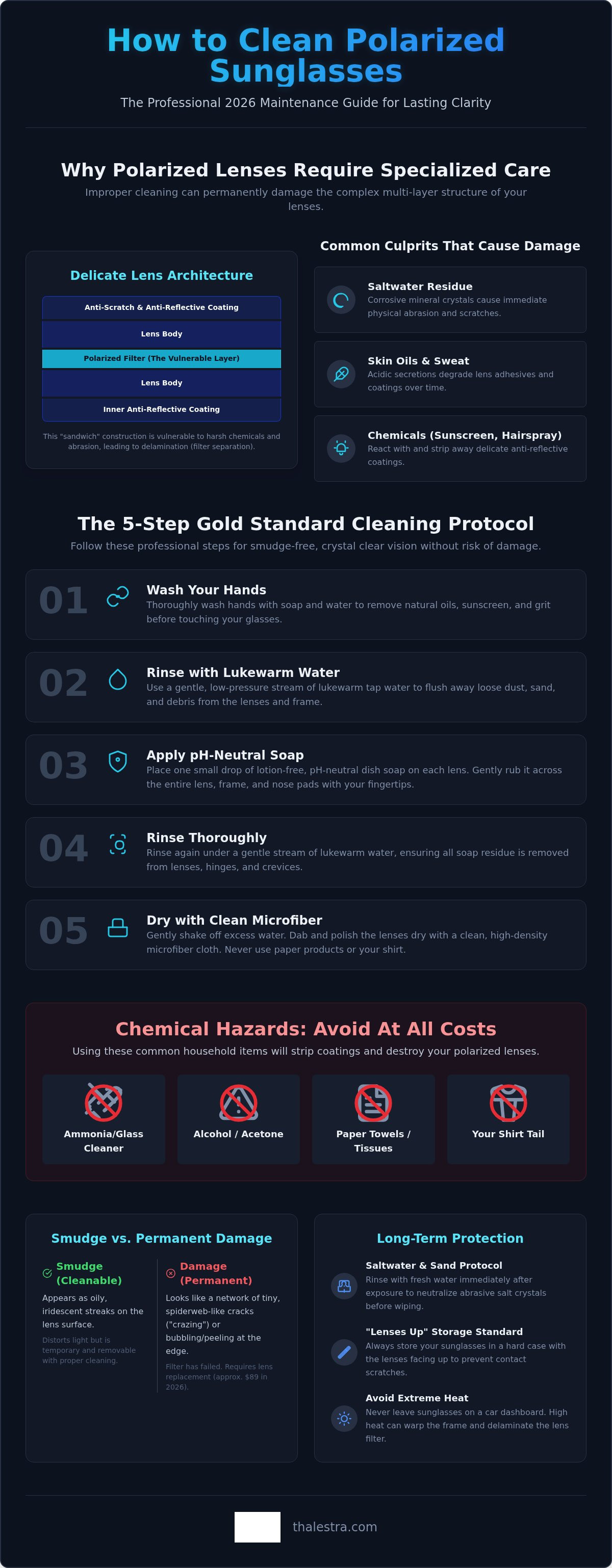
Polarized lenses function as high-tech optical stacks, not monolithic slabs. Manufacturers laminate a thin vertical-alignment filter between multiple protective layers to block horizontal glare. This "sandwich" construction creates a specific vulnerability. While standard protective eyewear with basic tints can withstand aggressive wiping, polarized optics require a precise maintenance protocol. Improper handling leads to delamination, a process where the internal filter separates from the lens body due to chemical or thermal stress.
- Saltwater residue: Corrosive mineral crystals. These cause immediate physical abrasion.
- Skin oils: Acidic secretions. These degrade lens adhesives over time.
- Environmental dust: Microscopic grit. This creates permanent surface haze.
- Chemical residues: Sunscreens and hairsprays. These react with anti-reflective coatings.
The Science of Polarized Filter Damage
Chemical solvents like alcohol or acetone penetrate the lens perimeter through capillary action. These aggressive agents dissolve the internal lamination bond. The results are polarized film retraction, bubbling, or discoloration. Heat exposure is equally hazardous. Storing eyewear on a vehicle dashboard in direct sun warps the internal film. This permanently distorts the light-blocking axis. The updated ANSI Z80.3-2025 standards highlight lens durability, yet even high-spec coatings fail when exposed to trapped sweat. Facial oils and perspiration often accumulate at the frame edge. This initiates localized peeling that eventually migrates across the visual field.
Identifying Smudges vs. Permanent Coating Failure
Differentiating between surface debris and structural damage is critical before attempting deep cleaning. Smudges appear as oily, iridescent streaks. These distort light but remain on the lens surface. They typically respond to a lukewarm rinse and microfiber application. Permanent failure manifests as "crazing," which looks like a network of microscopic, spiderweb-like cracks within the filter layer. If you observe bubbling, persistent cloudiness, or visible film separation at the lens periphery, the polarized filter has failed. Replacing non-prescription polarized lenses in 2026 costs approximately $89 for quality replacements. Mastering how to clean polarized sunglasses effectively prevents these structural failures and preserves your premium investment.
The 5-Step Gold Standard for Cleaning Polarized Lenses
Maintaining optical integrity begins with hand hygiene. Wash your hands thoroughly to remove transfer oils, sunscreen, and abrasive grit before handling your eyewear. This prevents the introduction of new contaminants to the delicate polarized layers. Once hands are clean, apply a low-pressure, lukewarm water rinse to both sides of the lenses. This initial step is vital to flush away loose particles that cause micro-scratches during physical contact. Learning how to clean polarized sunglasses correctly requires this touchless start to protect the specialized anti-glare filters.
Soap selection is the next critical factor for lens longevity. Use only lotion-free, pH-neutral dish soap. Avoid soaps with added moisturizers or skin-softening agents, as these leave a persistent film that attracts dust and smudges. Gently massage a single drop of soap across the lens surface, frame, and nose pads using your fingertips. This ensures you properly clean your glasses without applying excessive pressure to the internal lamination. If you're looking for durable options, explore our range of Classic Mens Polarized Sunglasses designed for active use.
Step-by-Step Deep Cleaning Instructions
Rinse the frames again under low-pressure water to remove all soap suds. High-pressure streams can force water and debris into the lens-frame junction, potentially accelerating delamination. Pay specific attention to the hidden grime in the nose pads and hinges. For those using premium vacation eyewear, ensuring the hinges are free of salt buildup preserves the frame's mechanical tension. Mastery of how to clean polarized sunglasses includes these often-overlooked areas to prevent long-term corrosion.
The Role of Microfiber Cloths
High-density microfiber is the only safe fabric for drying modern polarized tech. Unlike paper towels, tissues, or shirt fibers, microfiber lifts oils without creating abrasive friction. Paper products contain wood pulp fibers that cause permanent surface hazing over time. To maintain your cloth, wash it regularly in warm water with a mild detergent and air-dry it to prevent grit re-introduction. Keeping a clean pouch for your eyewear ensures they remain smudge-free on the go. Avoid any fabric that has been treated with fabric softener, as this chemicals transfer to the lens surface and cause streaking.
Chemical Hazards: What to Avoid at All Costs
Protecting technical lens coatings requires strict chemical discipline. Alcohol and acetone are aggressive solvents that dissolve anti-reflective (AR) layers and mirror finishes almost instantly. These substances penetrate the multi-layer optical stack, causing irreversible clouding and surface pitting. Ammonia-based window cleaners are equally hazardous. Ammonia strips the specialized polarized filters, leading to the delamination risks discussed in the previous section. To properly clean your sunglasses, you must avoid these high-volatility chemicals that compromise structural integrity.
Biological contaminants also pose significant risks. The common "breath and wipe" method is a major maintenance error. Saliva contains digestive enzymes and proteins that create a sticky residue, attracting more environmental grit. This creates an abrasive paste when wiped with a shirt sleeve. Household "all-purpose" sprays are designed for non-porous hard surfaces like countertops, not delicate polymers. These cleaners often contain degreasers that strip the protective clear coat from frame finishes, especially on carbon fiber or vintage-style designs. Understanding how to clean polarized sunglasses means recognizing that "clean" does not mean "chemically aggressive."
Common Home Remedy Myths
Vinegar is often cited as a natural solution for spotless glass; however, its high acidity is detrimental to lens lamination. It degrades the adhesives holding the polarized "sandwich" together. Toothpaste is another dangerous myth. Its abrasive particles are designed to scrub tooth enamel. These particles leave thousands of microscopic scratches on polycarbonate or Trivex lenses. Additionally, avoid ultrasound cleaners for polarized tech. High-frequency vibrations can cause the internal filter film to vibrate against the outer layers, initiating separation at the lens edges.
The Danger of Extreme Heat
Thermal stress is a silent killer of polarized optics. Leaving sunglasses on a vehicle dashboard exposes them to temperatures often exceeding 120 degrees Fahrenheit. This causes rapid thermal expansion. The frame and lens expand at different rates, putting immense pressure on the lens edges. This leads to warping and eventual delamination of the internal polarized filter. Hot water is just as damaging as harsh chemicals. Use only lukewarm water for rinsing. Safe storage requires a cool, dry environment, ideally between 60 and 80 degrees Fahrenheit, to maintain the physical bond of the internal lamination layers.
Lifestyle-Specific Maintenance: Saltwater and Sand
Coastal environments present the most aggressive challenges to lens longevity. Seawater contains dissolved minerals that transform into microscopic sodium chloride crystals upon evaporation. These sharp crystals act like industrial sandpaper. Wiping a lens with dried salt spray causes immediate, permanent surface abrasion and degrades technical coatings. Mastering how to clean polarized sunglasses in these conditions requires a strict "rinse-first" protocol to neutralize abrasive grit before any physical contact occurs.
- The Salt Crystal Problem: Evaporated salt leaves jagged residues that scratch polycarbonate surfaces.
- Immediate Rinse Protocol: Fresh water is the only effective solvent for neutralizing salt before it dries.
- Sand Management: Silica-based sand is harder than lens coatings. It must be blown off, never wiped.
- Chemical Fog: Sunscreen and tanning lotions contain oils that chemically react with frame polymers.
Sunscreen management is equally critical for frame structural integrity. Chemical filters like avobenzone and oxybenzone can migrate into frame plastics, causing a permanent matte "fog" or surface tackiness. This is especially common on high-wrap vacation styles where the frame makes direct skin contact. Wipe the frame chassis with a damp microfiber cloth after every beach use to prevent chemical absorption. This simple step preserves the aesthetic finish and mechanical flexibility of your eyewear investment.
Beach and Ocean Care Routine
Professional maritime maintenance requires carrying a portable bottle of fresh water for immediate rinsing. This is particularly vital for those using polarized fishing sunglasses. Salt spray accumulates rapidly during active use, distorting the vertical filter's ability to cut water surface glare. Rinse the frames every two to three hours to prevent salt from penetrating the lens-frame junction. Store your eyewear in a sealed hard case when on the sand to prevent wind-blown silica from settling into the hinges and technical coatings.
On-the-Go Emergency Cleaning
When fresh water is unavailable, use pre-moistened lens wipes specifically formulated for polarized tech. These wipes must be alcohol-free and non-abrasive to protect the internal lamination. Avoid the "dry wipe" at all costs. If you lack proper cleaning tools, it's safer to leave the lenses dirty than to risk permanent scratching. This is critical during high-speed activities like photochromic cycling where dust and grit are prevalent. For high-performance gear that withstands active travel, explore our 2025 Vacation Sunglasses For Men collection today. Learning how to clean polarized sunglasses properly ensures these premium lenses provide clear, adaptive vision throughout your entire trip.
Protecting Your Investment: Storage and Longevity
Proper storage is the final pillar of professional maintenance. Using a crush-resistant hard case is essential for transit and high-activity environments. While a soft microfiber pouch provides a secondary layer of scratch protection, it cannot prevent frame deformation under external pressure. Always follow the "Lenses Up" rule. Placing eyewear face-down on any surface, even inside a protective case, invites micro-abrasions from trapped dust particles. This simple habit reduces the frequency of needing to know how to clean polarized sunglasses by preventing avoidable surface contamination and grit transfer.
Regular hardware inspection ensures long-term frame utility. Tighten hinge screws monthly to prevent lens misalignment and chassis instability. Sweat and facial oils don't just affect the lenses; they penetrate the hinges and nose pad assemblies, leading to green oxidation or mechanical failure. Rinse the entire frame chassis after high-exertion use to neutralize these acidic secretions. If you notice a persistent yellowing tint or reduced glare reduction despite knowing how to clean polarized sunglasses effectively, the internal UV filter has likely reached its service limit and requires replacement.
Maximizing Lens Life
Deep-cleaning schedules maintain optical performance for high-surface-area styles like men's aviator sunglasses. These larger lenses attract higher volumes of environmental debris and skin oils. Avoid the common habit of resting sunglasses on top of your head. This practice stretches the frame chassis and exposes the internal lens coatings to hair products and scalp oils. Over time, this exposure initiates delamination at the top edge of the polarized filter. Consistent use of protective cases prevents the impact-related coating failures common in unsecured storage.
Upgrading Your Polarized Tech
Modern lens tech offers enhanced scratch resistance and hydrophobic properties, making daily maintenance more efficient. The 2026 polarized coatings are engineered to repel water and oils more effectively than previous generations. High-performance photochromic polarized sunglasses provide adaptive light management, reducing the need for constant manual handling and potential smudge introduction. Selecting durable materials like carbon fiber ensures the frame maintains its shape and tension through years of cleaning cycles. These advanced materials resist the chemical "fog" caused by sunscreens better than traditional acetates, securing your investment for long-term vacation use.
Optimize Your Vision with Advanced Lens Care
Professional maintenance is the key to preserving lens lamination and optical precision. You've learned the exact protocol for how to clean polarized sunglasses using pH-neutral solutions and touchless rinsing. By avoiding the chemical hazards and abrasive fabrics discussed, you prevent the delamination and micro-scratching that degrade technical filters. These simple, functional steps ensure your eyewear provides consistent glare reduction throughout its lifecycle. Clear vision depends on disciplined hygiene and correct tool selection.
Combine these cleaning techniques with professional storage habits to maintain frame alignment and coating integrity. Hard cases and the "lenses up" rule are essential for preventing surface friction and mechanical stress. This integrated approach secures your investment against the salt, sand, and thermal hazards typical of active vacation environments. Maintaining your gear ensures it remains a reliable gateway to clear, comfortable vision in high-glare conditions.
Upgrade your vacation gear today. Browse the 2026 Polarized Sunglasses Collection at THALESTRA.COM for premium UV400 protection and high-performance polarized filters. Benefit from free worldwide shipping and stay synchronized with the latest in adaptive eyewear technology. Secure your next pair of high-utility sunglasses now.
Frequently Asked Questions
Can I use Windex or glass cleaner on my polarized sunglasses?
Avoid using Windex or standard household glass cleaners on your eyewear. These products often contain ammonia, which chemically attacks the specialized vertical filters inside the lens stack. This exposure leads to permanent clouding or accelerated lens delamination at the frame edges. Use only pH-neutral solutions specifically formulated for modern optical coatings. Professional 2026 maintenance standards recommend alcohol-free sprays to preserve the structural integrity and clarity of your high-performance polarized lenses.
What is the best cloth to use for cleaning polarized lenses?
High-density microfiber is the only safe material for drying polarized tech. These cloths feature microscopic fibers designed to lift oils and moisture without creating abrasive friction. Avoid paper towels or tissues, as wood pulp fibers cause surface hazing. Ensure your microfiber cloth remains clean; wash it regularly without fabric softeners to prevent grit re-introduction. This is a critical step in how to clean polarized sunglasses for long-term visual clarity and lens protection.
How do I remove dried saltwater from my sunglasses without scratching them?
Rinse lenses immediately with low-pressure fresh water to dissolve sodium chloride crystals. Dried salt acts like industrial sandpaper; wiping before rinsing causes deep, permanent scratches. After the salt is flushed away, apply a single drop of lotion-free soap to remove the remaining residue. This protocol is essential for vacation eyewear used in coastal environments to prevent abrasive damage to the lens surface and maintain the integrity of the specialized anti-glare filters.
Is it safe to use dish soap to clean polarized sunglasses?
Lotion-free, pH-neutral dish soap is the gold standard for removing skin oils and environmental grime from your eyewear. Avoid "extra-strength" or moisturizing soaps containing skin-softening agents, as these leave a persistent film on the lens that attracts more dust. A single drop per lens surface is sufficient for a thorough deep clean. This method effectively neutralizes acidic secretions without compromising the internal polarized lamination or external anti-reflective coatings during the maintenance process.
Why do my polarized lenses look blurry even after cleaning?
Persistent blurriness often indicates residual skin oils or a contaminated microfiber cloth. If the blur remains after a thorough rinse and dry, inspect the lenses for "crazing" or microscopic cracks in the filter. This structural failure often results from extreme heat exposure or chemical damage. In some cases, the blur is actually the initial stage of delamination, where the internal polarized film begins to separate from the lens body, creating a permanent visual distortion.
Can I use my t-shirt to wipe my sunglasses in an emergency?
Avoid using t-shirts or clothing fibers for emergency cleaning. Standard fabrics trap microscopic grit and dust that cause immediate surface abrasion. Additionally, many clothing materials contain abrasive wood pulp or synthetic fibers that haze delicate coatings over time. If a proper microfiber cloth is unavailable, it's safer to leave the lenses dirty until you have access to a lukewarm water rinse and professional optical cleaning tools to prevent permanent lens damage.
How often should I deep clean my polarized sunglasses?
Perform a deep clean once per week or immediately after high-exertion activities to maintain optical performance. Regular maintenance prevents the buildup of acidic sweat and skin oils that can eventually penetrate the frame hinges and lens edges. For those living in coastal areas or using eyewear for active sports, daily rinsing with fresh water is required to neutralize salt spray and environmental grit. This cleaning frequency ensures your investment remains in peak condition for long-term vacation use.
What should I do if my polarized lenses start to peel or delaminate?
Peeling or delamination is irreversible structural damage and cannot be repaired through cleaning. Once the internal polarized film separates, optical clarity is permanently compromised. If your lenses show signs of bubbling or edge peeling, it is time for a replacement. Understanding how to clean polarized sunglasses correctly prevents this issue, but once it occurs, the only solution is to install new lenses to restore UV protection and glare reduction for safe outdoor use.