
What if your favorite 1970s style icon was actually a high-performance optical tool engineered for 2026 safety standards? You likely recognize the classic silhouette, but finding quality retro aviator sunglasses that don't feel flimsy or distort your vision is a modern challenge. Most shoppers settle for cheap frames that slide down the nose or fit too wide, sacrificing optical clarity for a basic vintage look. You know the frustration of lenses that fail to block glare or frames that lose their shape after a single season of use.
You deserve eyewear that combines 1970s aesthetics with 2026 polarized and photochromic lens technology. This guide delivers the technical data needed to select durable, high-end frames that meet new national standards for lens strength and nickel leaching. We provide a clear roadmap for identifying UV400 protection, refined lightweight metal constructions, and advanced light-adaptive tints. You will learn to navigate technical specifications like carbon fiber durability and geometric frame variations to find the perfect fit for your specific face shape and high-performance lifestyle needs.
Key Takeaways
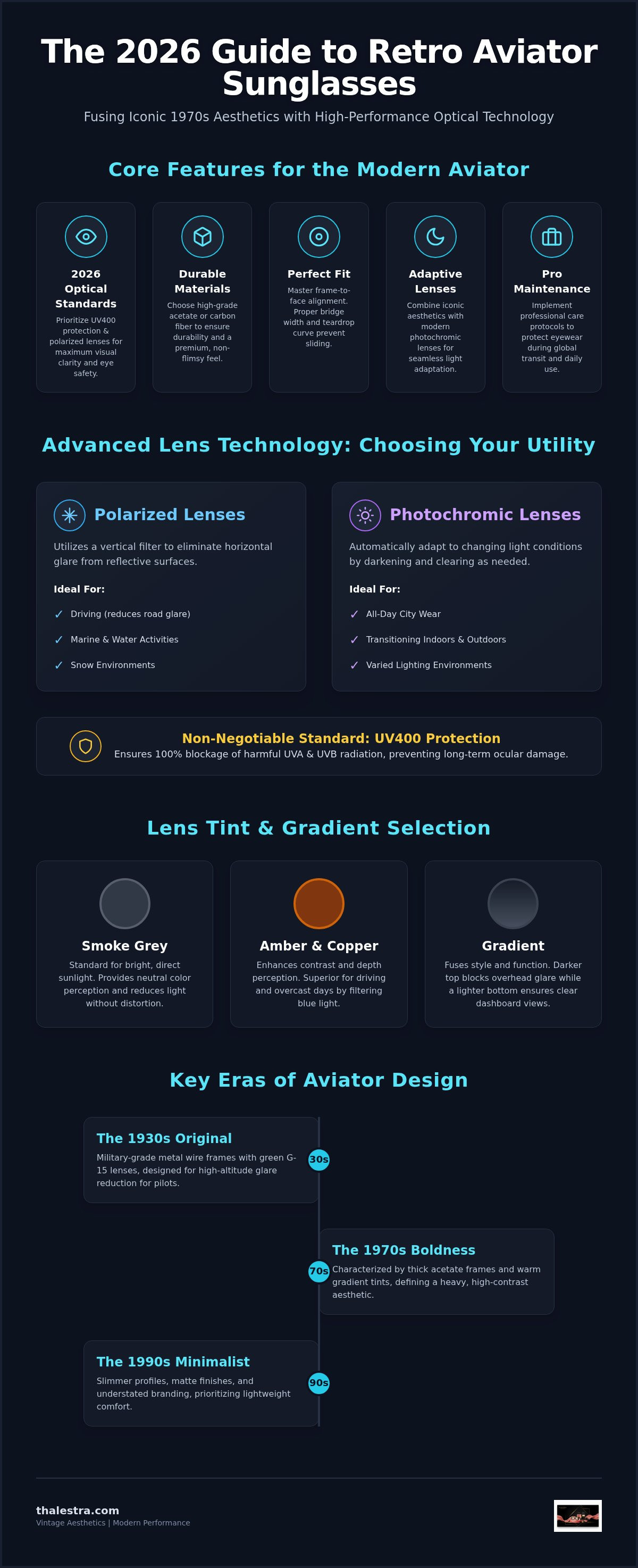
- Identify 2026 optical standards. Prioritize UV400 protection and polarized lens technology for visual clarity.
- Compare high-grade acetate and carbon fiber materials. This ensures your retro aviator sunglasses offer durability so they don't feel flimsy.
- Master frame-to-face alignment. Teardrop curvature and bridge width must prevent common fit issues like sliding.
- Combine iconic 1970s aesthetics with modern photochromic lenses for seamless light adaptation in high-utility environments.
- Implement professional maintenance protocols. Use 2026 styling tips to protect your eyewear during global transit.
The 2026 Resurgence of Retro Aviator Sunglasses
The 2026 eyewear market sees a dominant return of the pilot silhouette. This shift moves the frame from its mid-century cockpit utility into a 2026 luxury staple. Modern retro aviator sunglasses prioritize high-end optical clarity while maintaining the iconic teardrop lens shape. This resurgence is driven by a demand for "Tech-Retro" designs. These products combine 1970s aesthetics with 2026 polarized and photochromic lens technology. The History of Aviator Sunglasses shows a transition from military necessity to a global fashion standard.
Defining the retro aesthetic involves specific visual markers. Key identifiers: prominent double bridges, bold brow bars, oversized lens geometries, and signature teardrop curvature. These elements provide a vintage profile that remains the most versatile frame in eyewear history. It's a design that complements diverse facial structures and integrates with both vacation linen and urban streetwear.
Key Eras of Aviator Design
Aviator evolution follows distinct stylistic shifts across the decades. Each era introduces specific material and lens preferences that influence modern 2026 collections.
- The 1930s Original: Focus on military-grade metal wire frames. These designs utilized green G-15 lenses for high-altitude glare reduction.
- The 1970s Boldness: Characterized by thick acetate frames and warm gradient tints. This era defined the heavy, high-contrast look essential to current retro aviator sunglasses trends.
- The 1990s Minimalist: Featured slimmer profiles and matte finishes. These iterations prioritized lightweight comfort and understated branding.
Why 2026 Consumers Prefer Retro Silhouettes
Modern buyers lean toward the "Quiet Luxury" movement. This trend favors archival fashion influences over temporary logos. Retro aviators represent a fusion of aeronautical heritage and contemporary optical standards. They offer universal appeal across genders and facial structures. 2026 consumers demand high-utility features like UV400 protection and carbon fiber durability within these classic shapes. It's about securing a product that functions as a professional-grade optical tool while maintaining a curated, trend-aware appearance.
Advanced Lens Technology for the Modern Aviator
Modern retro aviator sunglasses function as high-performance optical tools. High-performance lens technology now integrates with vintage frame geometries to provide superior eye health protection. The non-negotiable standard for 2026 is UV400 certification. This rating ensures the lens blocks 100 percent of UVA and UVB radiation. Adhering to UV protection standards for sunglasses prevents long-term ocular damage. Beyond basic protection, modern aviators utilize specialized coatings. Anti-scratch layers preserve surface integrity during travel. Hydrophobic treatments repel water during maritime use. Oleophobic coatings minimize fingerprint smudges on high-gloss finishes. These technical attributes ensure your eyewear remains functional in high-intensity environments.
Polarized vs. Photochromic: Choosing Your Utility
Selecting the correct lens type depends on your specific environment. Polarized lenses utilize a vertical filter to eliminate horizontal glare. This technology is essential for driving, marine activities, and snow environments where light reflects off flat surfaces like asphalt or water. Photochromic lenses offer different advantages. These lenses adapt to changing light conditions by darkening in sunlight and clearing indoors. They are ideal for all-day city wear and transitioning between varied lighting environments. Understanding The Hidden Dangers of Non-UV Protected Sunglasses helps users prioritize technical utility over mere aesthetics. For those requiring adaptive performance, exploring Classic Mens Polarized Sunglasses provides a versatile solution for 2026 demands.
Tint and Gradient Selection
Lens color impacts visual performance and contrast. Smoke Grey lenses are the standard for bright, direct sunlight. They provide neutral color perception and significant light reduction without distorting the natural environment. Amber and Copper tints offer contrast enhancement. These colors filter blue light effectively. This makes them superior for driving or overcast days where depth perception is critical for safety. Gradient lenses maintain the 1970s retro look while offering modern functionality. The darker top section blocks overhead glare. The lighter bottom ensures clear vision for reading or viewing digital dashboard displays. This combination provides the ultimate fusion of archival style and 2026 material science, especially when paired with modern carbon fiber frame components.
Premium Materials: Acetate, Metal, and Carbon Fiber
Selection of retro aviator sunglasses depends on material integrity. High-grade materials define the 2026 luxury eyewear segment. Stainless steel and Monel provide the classic lightweight wire-frame feel. These metals offer corrosion resistance and structural stability for maritime or urban use. Hardware integrity remains a priority. Reinforced hinges. Integrated nose pads. Precision screw assemblies. These components ensure the frame maintains its alignment during constant movement. Modern manufacturing prioritizes strength-to-weight ratios to prevent the common "heavy frame" fatigue during all-day wear.
The Durability of Carbon Fiber
Carbon fiber frames represent the 2026 standard for high-performance durability. This material provides exceptional impact resistance for active lifestyles and frequent international travel. Unlike traditional plastics, carbon fiber maintains flexibility and shape retention over years of use. It doesn't warp in high-temperature environments like vehicle dashboards. The enduring appeal of aviator sunglasses now relies on these aerospace-grade materials to meet modern expectations for utility. For detailed technical specifications on high-performance builds, consult Men’s Aviator Sunglasses: The 2026 Guide to Style and Lens Tech. It's a material choice that ensures your eyewear survives rugged transit without sacrificing the iconic pilot aesthetic.
Acetate vs. Injection-Molded Plastic
High-grade acetate offers distinct advantages over cheap injection-molded alternatives. Acetate is a plant-based material with hypoallergenic properties. It allows for a hand-polished finish and superior depth of color. Visual depth is a primary differentiator. You get complex tortoiseshell and crystal effects unique to this material. Designer acetate is adjustable. It allows for a custom fit around the ears and temples through professional heat-shaping. Sustainability is a major factor in 2026 frame manufacturing. Bio-based acetates reduce the environmental footprint compared to petroleum-based plastics. Choosing these retro aviator sunglasses ensures a premium feel that basic plastic cannot replicate. You get a durable, high-gloss product that feels substantial yet comfortable for long-term use.
Matching Aviator Frames to Your Face Shape
Precision fit engineering is critical for retro aviator sunglasses. A frame that looks iconic on a display might fail in daily utility if proportions are incorrect. The "Teardrop Effect" serves a functional purpose beyond aesthetics. This specific downward lens curvature balances strong, angular jawlines by drawing the eye toward the center of the face. Proportionality remains a primary selection factor. While oversized retro looks offer maximum coverage, classic tailored fits provide superior stability for active users.
Bridge width is the most common failure point in eyewear selection. A bridge that is too wide causes the "slipping aviator" problem. This constant sliding distorts the focal point of polarized lenses and necessitates frequent manual adjustments. Look for frames with adjustable nose pads or integrated bridges that match your specific nasal bridge width. Temple length ensures comfort behind the ears for all-day wear. The temple must extend past the ear curve without applying excessive pressure. Incorrect temple sizing leads to headaches and frame misalignment over time.
Aviators for Square and Heart Face Shapes
Curved teardrop lenses soften square jawlines. They provide a necessary visual counterpoint to sharp facial angles. For heart-shaped faces, choose frames slightly wider than the forehead to create a balanced vertical line. Bold brow bars work well for these face shapes. They add structural weight to the upper face to match a strong chin. To find an optimized fit for your next trip, browse the 2025 Vacation Sunglasses For Men collection.
Aviators for Oval and Round Face Shapes
Oval faces remain the most versatile for eyewear. They accommodate almost any aviator geometry without disrupting facial symmetry. Rounder faces require "Navigator" styles, which are square aviators with more horizontal lines. These angular frames add definition to softer features. The double bridge adds vertical interest and elongates the face visually. Standard-sized frames maintain symmetry better than oversized alternatives on rounder features. This ensures the retro aviator sunglasses don't overwhelm the wearer's natural proportions.
Professional Maintenance and 2026 Styling Guide
Successful integration of retro aviator sunglasses into a 2026 wardrobe requires understanding current aesthetic shifts. The "Tech-Retro" movement bridges the gap between archival silhouettes and modern utility. Metal aviators provide a streamlined, professional look when paired with tailored blazers or structured outerwear. For a "Vacation Aesthetic," transition to high-grade acetate frames with bold summer prints and linen textures. Accessorizing with contemporary chains or cords adds a functional retro edge; this secures the frame during movement while maintaining a curated appearance across diverse global environments.
Protecting your investment involves the "Traveler Protocol." High-utility eyewear remains vulnerable during global transit and high-intensity activities. Always use a hardshell case to prevent frame misalignment or lens scratches. Avoid placing sunglasses on top of the head. This habit stretches the temples and loosens hardware integrity over time. For metal frames, minor adjustments are possible at home. Safely tweak metal temples by applying gentle pressure to the ear curve for a custom fit. Focus on the temple tips rather than the hinges to avoid structural damage or screw stripping.
Styling Your Retro Aviators
Modern styling focuses on versatility across different social and professional settings. Metal wire-frames offer a minimalist profile suitable for urban streetwear or corporate environments. Acetate options provide depth of color for high-contrast fashion statements. Key 2026 trends emphasize specific combinations:
- Professional Integration: Silver or gold-tone metal frames with neutral smoke grey lens tints.
- Contemporary Retro: Oversized acetate silhouettes with warm gradient lenses and double bridges.
- Utility Edge: Carbon fiber frames paired with technical apparel and performance gear for a high-speed look.
Maintenance for Longevity
Optical clarity depends on preserving high-tech lens coatings. Avoid chemical cleaners or paper products that strip hydrophobic and oleophobic layers. Use a clean microfiber cloth for daily smudges. For deeper cleaning, utilize an ultrasonic cleaner with distilled water to remove salt and debris from tight hinges. Regular hardware checks prevent frame failure in the field. Tighten hinges using a precision screwdriver every three months. Replace silicone nose pads annually to maintain grip and prevent the "slipping aviator" problem. For a complete technical walkthrough, see How to Clean Polarized Sunglasses. These protocols ensure your retro aviator sunglasses remain a high-performance tool for years of reliable use.
Secure Your 2026 Optical Standard
Selecting the right retro aviator sunglasses requires a balance of archival 1970s aesthetics and 2026 technical performance. You now have the decision framework to identify UV400 protection standards, high-grade carbon fiber durability, and the specific lens tints required for your environment. Correctly matching teardrop curvature to your face shape ensures a stable, professional fit that avoids common sizing errors like frame slippage or temple pressure. Proper maintenance, including ultrasonic cleaning and hardware checks, preserves these high-performance tools for long-term global use.
THALESTRA.COM acts as your efficient gateway to these high-utility eyewear trends. Our curated inventory features polarized and photochromic options engineered for maximum optical clarity in high-glare environments. We offer UV400 Protection Guaranteed on all models; we also provide Global Shipping on All Designer Styles to meet your immediate travel requirements. It's time to upgrade your visual experience with frames that combine heritage design and modern material science.
Shop the 2026 Retro Aviator Collection at THALESTRA.COM
Frequently Asked Questions
Are retro aviator sunglasses still in style for 2026?
Yes, retro aviator sunglasses remain a dominant 2026 trend. The current market prioritizes the "Tech-Retro" aesthetic, which fuses 1970s silhouettes with modern material science. This style persists because it bridges the gap between archival fashion and high-performance utility. Modern versions feature refined, lighter frames and advanced lens technology like photochromic adaptation. These updates ensure the silhouette remains relevant for both urban streetwear and professional vacation wardrobes across diverse global demographics.
What is the difference between classic aviators and navigator sunglasses?
Classic aviators feature the iconic teardrop lens shape designed for maximum coverage. Navigator sunglasses utilize a more rectangular or square geometry. Classic teardrop lenses soften angular jawlines on square or heart-shaped faces. Navigators provide vertical interest and definition for round or oval face shapes. Both styles typically include the signature double bridge and metal wire construction. Choosing between them depends on your specific facial proportions and desired level of vintage boldness.
Can I get polarized lenses in retro acetate aviator frames?
Yes, polarized technology is widely available in retro acetate frames. High-grade acetate provides the depth of color and hand-polished finish required for a premium vintage look. Integrating polarized filters into these frames eliminates horizontal glare from flat surfaces like asphalt or water. This combination offers the aesthetic appeal of 1970s eyewear with the technical superiority of 2026 optical standards. It is an ideal choice for users seeking durable, high-utility frames for driving or maritime activities.
How do I know if my aviator sunglasses provide full UV400 protection?
Verify the UV400 or 100 percent UV protection label on the product specifications. This rating ensures the lenses block all light rays with wavelengths up to 400 nanometers, covering both UVA and UVB radiation. 2026 international safety standards require rigorous testing for lens strength and material safety. Proper eye health protection prevents long-term ocular damage, such as cataracts. Always prioritize certified technical specifications over lens darkness, as tint color does not indicate UV filtration levels.
Are aviator sunglasses suitable for small face shapes?
Aviator sunglasses are suitable for small faces if you prioritize proportionality. Avoid oversized retro styles that overwhelm narrow features or slide down the nose. Select tailored fits or "small" category frames with shorter lens heights and narrower bridge widths. These dimensions provide the iconic pilot look without compromising stability. Adjustable nose pads are essential for securing the frame on smaller nasal bridges. This ensures the retro aviator sunglasses remain centered and functional during all-day wear.
What are the best lens colors for driving in retro aviators?
Amber and copper tints are the best options for driving. These colors enhance contrast and improve depth perception by filtering blue light. This is critical for identifying road hazards in overcast or variable lighting conditions. Smoke grey lenses are also effective for bright, direct sunlight as they provide neutral color perception. For maximum utility, choose photochromic lenses that adapt tint density automatically. These transitions ensure consistent visual clarity when moving between tunnels or changing weather patterns.
Is carbon fiber better than metal for aviator frames?
Carbon fiber offers superior strength-to-weight ratios compared to traditional metals like stainless steel. This material provides exceptional impact resistance and flexibility, making it ideal for active lifestyles or frequent global travel. Metal frames provide the classic, minimalist wire-frame aesthetic preferred for professional settings. Carbon fiber does not warp in high-heat environments and maintains its shape over long-term use. Both materials meet 2026 durability standards; the choice depends on your specific preference for weight and visual style.
How should I clean my polarized aviator lenses without scratching them?
Use a clean microfiber cloth for daily removal of smudges and fingerprints. Avoid using paper towels, clothing, or household chemical cleaners, as these can strip high-tech polarized and hydrophobic coatings. For deeper cleaning, rinse lenses with distilled water or use an ultrasonic cleaner to remove salt and debris from hinges. This protocol prevents micro-scratches that distort vision over time. Regular maintenance ensures your high-utility lenses maintain their optical integrity and visual clarity in diverse environments.