
What if the most critical piece of safety gear for your next high-altitude trek isn't in your pack, but on your face? You probably deal with eye fatigue from constant glare and lenses that feel too dark in forested sections. It's frustrating when frames slide during steep, active ascents. Finding the best sunglasses for hiking means prioritizing visual clarity and a secure, stable fit. High-performance eyewear is essential for navigating technical trails and protecting your vision from intense sun exposure.
This article identifies the core lens technologies and frame features required for maximum trail protection. We promise to show you how to achieve clear visibility in all light conditions while ensuring a secure fit during movement. You will learn about UV400 protection, polarized photochromic hybrids, and lightweight carbon fiber durability. Our preview covers the latest ANSI Z80.3-2025 standards and high-utility frame specifications. This is your guide to top-quality photochromic polarized sunglasses, 2025 vacation sunglasses for men, and classic polarized models. We focus on immediate value, functional attributes, and the technical terminology necessary for informed trail gear selection in a fast-paced market.
Key Takeaways
- Understand the critical role of UV400 ratings and Visible Light Transmission (VLT) in maintaining trail safety and long-term eye health at high altitudes.
- Identify the best sunglasses for hiking by evaluating the benefits of polarized glare reduction against photochromic adaptability for variable forest and canyon light.
- Select high-performance frame materials like lightweight carbon fiber and TR90 to ensure impact resistance and a secure, non-slip fit during steep ascents.
- Enhance depth perception and visual clarity across different terrains by choosing specific lens tints like amber, rose, or smoke based on your environment.
- Discover the technical advantages of specialized polarized photochromic hybrid lenses for superior performance during extended multi-day outdoor activities.
Understanding Eye Protection for High-Altitude Hiking
High-altitude environments demand specialized ocular protection. Standard lifestyle frames fail to address the unique atmospheric conditions found above the tree line. Atmospheric thinning results in reduced filtration of harmful radiation, making the selection of the best sunglasses for hiking a critical safety decision. Technical mountain environments require specific lens categories and frame geometries to prevent immediate injury and long-term degenerative conditions. Casual frames don't provide the durability or coverage needed for unpredictable alpine weather.
Visible Light Transmission (VLT) plays a vital role in trail safety. Lower VLT percentages are necessary for high-exposure zones like glaciers or granite ridgelines. Without proper light management, hikers experience squinting, headaches, and a loss of depth perception. This loss of contrast makes navigating technical terrain dangerous. Modern Sunglasses designed for the trail utilize advanced filtration to maintain visual clarity in extreme brightness. High-utility eyewear ensures that your eyes remain relaxed during extended periods of intense solar exposure.
The Science of UV Radiation at Elevation
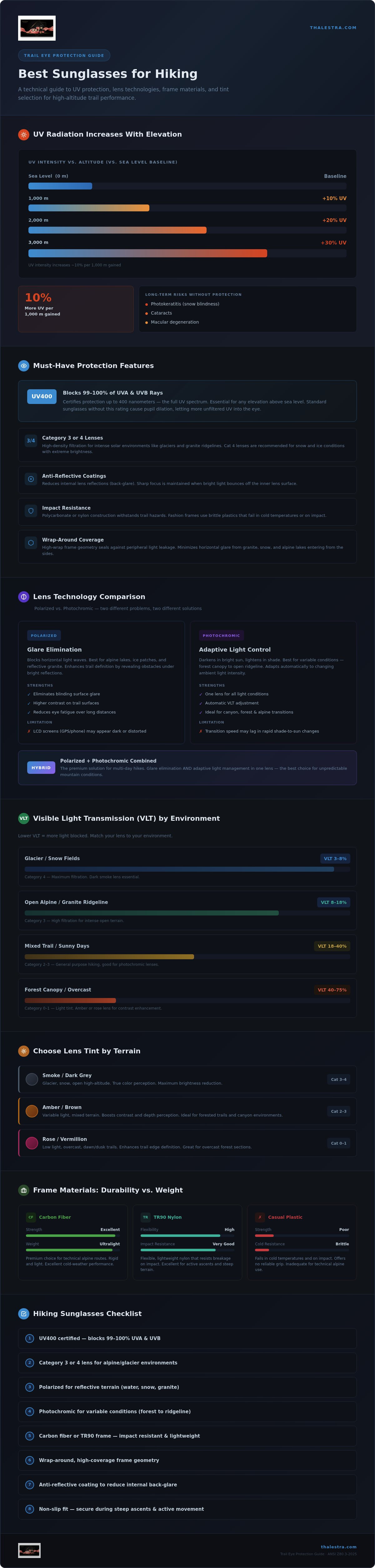
UV radiation intensity increases by approximately 10% for every 1,000 meters of elevation gained. This compounding effect means that at 3,000 meters, your eyes face 30% more solar radiation than at sea level. Using non-UV protected eyewear in these zones is dangerous because dark lenses cause pupils to dilate, allowing even more unfiltered radiation to enter the eye. Hikers should understand the hidden dangers of non-uv protected sunglasses before attempting high-altitude summits. Long-term exposure without certified protection can lead to photokeratitis, cataracts, or macular degeneration.
Glare Reduction and Visual Clarity
Horizontal glare from light-colored granite, snow patches, or alpine lakes causes significant eye fatigue. This reflected light enters from multiple angles, requiring 100% UV400 protection. The best sunglasses for hiking utilize wrap-around coverage to minimize peripheral light leakage. Standard flat frames allow rays to bounce off the inner lens surface, causing "back-glare" that obscures trail details. High-wrap designs provide a complete seal against the elements. Key features for high-altitude clarity include:
- UV400 Certification: Blocks 99% to 100% of UVA and UVB rays up to 400 nanometers.
- Category 3 or 4 Lenses: High-density filtration for intense solar environments.
- Anti-Reflective Coatings: Reduces internal lens reflections for sharper focus.
- Impact Resistance: Polycarbonate or nylon construction for trail durability.
Casual eyewear lacks these technical attributes. Frames made for fashion often use brittle plastics that fail in cold temperatures or during impact. Professional-grade hiking gear prioritizes high-utility specifications, ensuring visual clarity and physical durability throughout the trek. Investing in gear designed for active movement keeps the frames secure during steep ascents.
Essential Lens Technologies: Polarized vs. Photochromic
Selecting the best sunglasses for hiking requires a technical analysis of light-filtering specifications. Polarized and photochromic technologies address different visual challenges on the trail. Polarization targets reflected glare from surfaces. Photochromic technology manages ambient light intensity. High-utility eyewear often integrates both to provide a comprehensive solution for variable mountain conditions. Reviewing How to Choose Sunglasses helps align these technical features with your specific hiking environment.
Polarized Lenses for High-Contrast Environments
Polarized lenses utilize a specialized vertical filter to block horizontal light waves. This mechanism is critical for eliminating blinding glare from alpine lakes, ice patches, and reflective granite. These lenses enhance trail definition by revealing obstacles hidden under bright reflections. However, high-intensity polarization can interfere with digital screen visibility. LCD displays on GPS units or smartphones often appear dark or distorted. This blackout effect occurs when the lens polarization aligns with the device's filter. Understanding the technical specs in uv400 vs polarized sunglasses how to choose the best lens protection in 2026 ensures you select the right balance of protection and digital utility.
Adaptive Vision with Photochromic Lenses
Photochromic lenses feature light-sensitive molecules that react to UV exposure levels. These lenses darken automatically in direct sunlight and return to a clear state in shaded canyons or dense forest canopies. Rapid transition speeds are essential for hikers moving through changing light environments. This adaptive vision technology ensures consistent visibility without requiring manual gear adjustments. The same principles found in a photochromic cycling sunglasses adaptive vision guide 2026 apply to high-speed trail activities. Consistent optical performance reduces eye strain during extended multi-day treks.
Hybrid polarized photochromic sunglasses offer the most versatile performance package for active hikers. These lenses provide constant glare suppression while adjusting tint density to match ambient light. This combination is ideal for technical terrain and unpredictable mountain weather. Key benefits of hybrid lens technology include:
- Continuous Glare Control: Permanent polarization blocks reflections regardless of current lens tint.
- Dynamic Tint Adjustment: Lenses transition between Category 1 and Category 3 based on UV intensity.
- Enhanced Depth Perception: High-contrast optics improve foot placement on uneven or rocky trails.
- All-Day Comfort: Significant reduction in light-induced fatigue during long-distance outdoor sessions.
For hikers seeking professional-grade versatility, LIOUMO Top Quality Photochromic Polarized Sunglasses deliver the necessary high-utility performance. These frames provide the technical specifications required for active mountain use and secure movement.
Durability and Comfort: Frame Materials for the Long Haul
Frame construction determines long-term comfort during multi-day treks. High-performance materials prevent pressure point irritation and bridge fatigue. Selecting the best sunglasses for hiking requires evaluating the strength-to-weight ratio of the chassis. Technical frames must withstand temperature fluctuations and physical impact without losing their shape or structural integrity. Standard plastic resins often become brittle in cold alpine conditions, while high-utility materials maintain flexibility. Proper weight distribution ensures the gear remains balanced on the face during high-exertion activities.
Corrosion resistance is another critical factor for trail durability. Sweat and high humidity cause metal components in low-quality eyewear to oxidize and degrade. Professional-grade hiking frames use specialized coatings or non-metallic materials to resist salt damage. This focus on material science extends the lifespan of the gear in rugged environments. Reviewing the REI guide on How to Choose Sunglasses highlights the importance of frame construction for specific outdoor applications.
The Advantage of Carbon Fiber Frames
Carbon fiber offers superior structural integrity compared to traditional recycled plastics or standard resins. These frames are exceptionally lightweight, significantly reducing bridge fatigue during long, vertical ascents. Carbon fiber frame square glasses provide a modern aesthetic while maintaining industrial-grade durability for active use. This material is ideal for technical trails because it doesn't expand or contract significantly in extreme heat or cold. For those seeking 2025 vacation sunglasses for men that transition from the trail to casual settings, carbon fiber provides a premium, high-utility solution.
Ergonomic Features and Trail Stability
Secure fit is paramount during active movement. Hydrophilic nose pads and temple grips increase their "tackiness" when exposed to sweat. This feature prevents the frames from sliding down the nose during steep descents or technical scrambles. Ventilation ports are also essential. These small openings allow airflow to circulate behind the lens, preventing fogging during heavy breathing on steep sections. Wide frame sunglasses are necessary for broader face shapes to ensure a comfortable fit without pinching the temples. Key frame attributes for hikers include:
- TR90 Thermoplastic: Incredible flexibility and "memory" properties allow frames to bend and return to their original shape.
- Polycarbonate Construction: High impact resistance protects the eyes and the frame from trail debris or accidental drops.
- Integrated Hinges: Streamlined designs reduce snagging and improve the overall durability of the temple arms.
- Wrap-Around Geometry: Provides a wider field of view and superior protection from peripheral light and wind.
Classic mens polarized sunglasses often utilize these ergonomic features to ensure all-day wearability. By prioritizing weight distribution and pressure point management, hikers can focus on the terrain rather than adjusting their gear. High-utility frames provide the necessary stability for unpredictable mountain environments.
Selecting the Right Lens Color for Your Terrain
Lens color selection dictates visual performance across variable geographical terrains. The best sunglasses for hiking utilize specific tint profiles to optimize contrast and depth perception. While grey is often marketed as a universal choice, it can flatten depth in low-light forest environments. Technical lens colors like amber, brown, and rose provide functional advantages by filtering specific light wavelengths. Matching the lens to the environment ensures trail safety and reduced eye fatigue. High-utility eyewear must balance light reduction with visual definition to prevent missteps on technical trails.
High-Contrast Lenses for Forest and Canyon
Brown and copper lenses are the preferred choice for trail running and technical forest hiking. These tints enhance blue light filtration to create sharper visual edges on roots, rocks, and uneven surfaces. Amber lenses improve visibility in overcast mountain weather by increasing contrast against grey skies. This high-contrast performance is essential for maintaining speed in shaded canyons. Rose and amber tints excel in green environments by making the trail stand out against dense foliage. Key features of high-contrast lenses include:
- Brown and Copper: Superior depth perception for rocky trails and technical descents.
- Amber: Enhanced light gathering for low-light forest sections and foggy mornings.
- Rose: Maximum contrast against green foliage and varied forest floor textures.
True Color Lenses for Alpine and Open Ridge
Grey and smoke lenses are essential for extreme brightness at high altitudes and open ridgelines. These neutral tints maintain natural color balance for scenic summit views. High-altitude environments require lower VLT (Visible Light Transmission) ratings found in Category 3 and Category 4 optics. Category 3 lenses are standard for bright sun, whereas Category 4 is necessary for glaciers and high-snow zones. Green lenses offer a functional middle ground by balancing shadow detail with intense light protection. This true-color perception is critical when navigating open exposures with 100% UV400 intensity.
Terrain-specific lens selection prevents the visual distortion caused by "flat light" conditions. High-utility eyewear allows for precise navigation of unpredictable mountain landscapes. For those seeking a reliable all-terrain solution, Classic Mens Polarized Sunglasses provide the necessary contrast and clarity. Selecting the correct tint ensures all-day comfort during extended outdoor exposure. Carbon fiber frame square glasses paired with the right lens color create a professional-grade gear setup for the modern hiker. This combination ensures durability and visual accuracy during active movement in high-altitude environments.
The Thalestra Selection: Top Sunglasses for Outdoor Activities
Market availability for high-utility eyewear often forces a choice between extreme cost and technical failure. Thalestra provides a curated inventory of the best sunglasses for hiking that prioritizes professional-grade specifications at a competitive value-performance ratio. This selection focuses on immediate availability, global tracking, and multilingual support for a global audience. These models address the specific pain points of trail visibility, frame stability, and UV400 protection without the inflated pricing of heritage brands. Every item in the inventory is designed for rapid deployment in rugged high-altitude environments.
High-Performance Photochromic Models
The LIOUMO Top Quality Photochromic Polarized Sunglasses represent the primary solution for multi-day treks through variable light. These lenses feature rapid transition speeds between shaded forest canopies and high-exposure ridgelines. The hybrid technology combines permanent glare suppression with dynamic tint adjustment. Technical specifications include UV400 protection ratings for 100% radiation blockage and polarized film layers for horizontal glare elimination. This model ensures consistent visual clarity without manual gear changes during active movement. It is an efficient choice for hikers moving between deep canyon shadows and bright alpine peaks.
- Adaptive VLT: Lenses darken automatically based on UV intensity.
- Polarized Filtration: Eliminates blinding reflections from water, ice, and granite.
- High-Impact Construction: Durable lens materials for technical trail safety.
- Lightweight Design: Reduced frame weight for long-distance comfort.
Durable Carbon Fiber and Polarized Options
For technical durability on rugged trails, carbon fiber frame square glasses offer a superior strength-to-weight ratio. These frames reduce pressure on the nasal bridge and temples during high-exertion activity. The Classic Mens Polarized Sunglasses provide a reliable, high-utility option for casual day hikes and scenic summits. These models feature lightweight square frame sunglasses men's styles, blending modern trail aesthetics with functional protection. Carbon fiber construction ensures the frames remain stable and resist deformation in extreme temperature fluctuations found at elevation.
The 2025 Vacation Sunglasses For Men offer additional versatility for those transitioning between wilderness environments and urban settings. These frames utilize high-stability ergonomics and corrosion-resistant components to withstand sweat and humidity. Hikers seeking professional performance can Explore the Thalestra Outdoor Collection to find specialized gear for their next objective. This selection emphasizes functional descriptors: polarized, lightweight, carbon fiber, photochromic, and square frame. Thalestra acts as a streamlined gateway to these trending, high-utility goods, ensuring hikers have access to the necessary features for trail safety and visual clarity.
Secure Your Vision for the Next Summit
Selecting high-utility eyewear is essential for trail safety and long-term ocular health. You now understand the technical necessity of UV400 rated lens technology and the performance benefits of photochromic adaptability in variable light. Finding the best sunglasses for hiking requires balancing these advanced lens features with modern carbon fiber and polarized frame options for maximum stability. These materials ensure your gear withstands extreme temperature shifts and high-altitude radiation without compromising on comfort. Proper lens color selection further enhances depth perception on technical rocky paths and shaded forest trails.
Thalestra provides immediate access to these professional-grade specifications. Our streamlined digital marketplace offers global shipping with order tracking to support your next objective. Accessing top-tier gear shouldn't be complicated or inefficient. Shop High-Performance Hiking Sunglasses at Thalestra to upgrade your mountain kit today. Prepare for your next ascent with total confidence in your visual clarity and protection.
Frequently Asked Questions
Are polarized sunglasses better for hiking than non-polarized?
Polarized lenses are superior for hiking because they specifically block horizontal glare from reflective surfaces like alpine lakes and snow. This filtration improves visual clarity and reduces eye strain during long-distance treks. While non-polarized lenses provide basic shading, they don't eliminate the blinding light that causes squinting. The best sunglasses for hiking often utilize polarization to enhance trail definition and depth perception on technical terrain.
Do photochromic lenses work well in cold mountain temperatures?
Photochromic lenses perform exceptionally well in cold mountain environments because the chemical reaction that darkens the lens is temperature-dependent. Cold air allows the molecules to remain in their darkened state more effectively than in extreme heat. These adaptive lenses are ideal for high-altitude summits where temperatures are low but UV intensity is high. They provide seamless transitions when moving from bright ridgelines into shaded canyons or forested sections.
Why is UV400 protection critical for high-altitude trekking?
UV400 protection is mandatory for high-altitude trekking because UV radiation intensity increases significantly with elevation. This rating ensures that 99% to 100% of both UVA and UVB rays are blocked. Without this certification, hikers risk photokeratitis or "snow blindness" caused by intense solar exposure in thin atmospheres. High-utility eyewear must meet these standards to prevent long-term degenerative eye conditions during extreme mountain expeditions and multi-day treks.
How do I stop my sunglasses from fogging up while hiking?
Prevention of lens fogging requires adequate airflow and specialized coatings. You should select frames with integrated ventilation ports that allow heat and moisture to escape during high-exertion ascents. Anti-fog treatments applied to the inner lens surface also help minimize condensation. Ensuring a proper fit that allows a small gap between the frame and your face promotes circulation. Keeping lenses clean of sweat and oils further reduces the likelihood of moisture buildup.
What is the best lens color for hiking in a forest?
Amber and rose are the most effective lens colors for forested environments. These tints enhance contrast and depth perception by filtering blue light, making roots and trail obstacles more visible against green foliage. Grey lenses often make forest trails appear too dark or flat. Using high-contrast optics ensures you maintain visual clarity in dappled sunlight. The best sunglasses for hiking in variable light often utilize these specific brown-based tints for superior trail definition.
Can I use carbon fiber sunglasses for other outdoor sports?
Carbon fiber frames are highly versatile and suitable for various high-impact outdoor sports. Their superior strength-to-weight ratio makes them ideal for cycling, trail running, and climbing where gear stability is paramount. These frames resist deformation under stress and maintain their structural integrity in extreme temperatures. The lightweight construction reduces bridge pressure, making them a preferred choice for any activity requiring long-duration wear and durable, high-utility performance specifications in rugged environments.
How do I clean my hiking sunglasses without scratching the lenses?
Cleaning hiking sunglasses requires a microfiber cloth and specialized lens solution to avoid permanent surface scratches. You should never use paper towels, clothing, or abrasive materials that can damage protective coatings. Start by blowing away loose trail dust or rinsing with fresh water to remove grit. Gently wipe the lenses in a circular motion with a clean cloth. Storing your eyewear in a hard case when not in use prevents accidental abrasion during transport.
What happens if I use sunglasses without UV protection at high altitudes?
Using sunglasses without UV protection at high altitudes is more dangerous than wearing no glasses at all. Dark lenses cause your pupils to dilate, allowing even more unfiltered UV radiation to enter the eye. This exposure leads to immediate conditions like photokeratitis and long-term damage such as cataracts or macular degeneration. In high-exposure zones, the lack of UV400 filtration results in significant solar injury due to the thin atmosphere and increased radiation levels.