
The darkest sunglasses on the shelf are often the most dangerous if they lack the correct technical filters. It's a common misconception that deep lens tints guarantee safety. You want total eye protection for your 2025 vacation, yet the uv400 vs polarized debate remains a source of confusion and frustration. You're likely struggling with persistent eye strain, blinding glare, and the fear of purchasing "fake" protection that fails during high-exposure outdoor activities.
We promise a direct breakdown of radiation shielding versus tactical glare reduction. You'll learn why UV400 is a non-negotiable health requirement blocking rays up to 400 nanometers. We'll contrast this with polarization, a performance feature essential for driving and water sports. This guide covers essential lens specifications, simple home verification tests, and lifestyle-matching for high-performance LIOUMO photochromic polarized sunglasses or classic polarized models. Gain the technical knowledge required to select trend-aware, high-utility eyewear with absolute confidence for your next trip.
Key Takeaways
- Identify the critical distinction between UV400 radiation shielding and polarized glare reduction for 2026 eye health standards.
- Differentiate mandatory UV400 UVA/UVB protection from comfort-focused polarized filters designed for high-glare asphalt and water environments.
- Evaluate uv400 vs polarized lens specifications to select high-performance eyewear tailored for driving, beach vacations, or outdoor sports.
- Execute quick home verification tests using smartphone screens to confirm polarization quality and ensure genuine lens protection.
- Explore adaptive solutions like LIOUMO Top Quality Photochromic Polarized Sunglasses that integrate radiation safety with advanced glare-reduction technology.
Understanding UV400 and Polarized Lens Technology
Selecting premium eyewear requires a precise understanding of the uv400 vs polarized technical divide. These two features are not interchangeable. One addresses invisible radiation; the other manages visible light waves. High-performance models like the LIOUMO Top Quality Photochromic Polarized Sunglasses integrate both technologies to provide a comprehensive vision solution. This combination ensures maximum eye health and visual clarity in diverse environments.
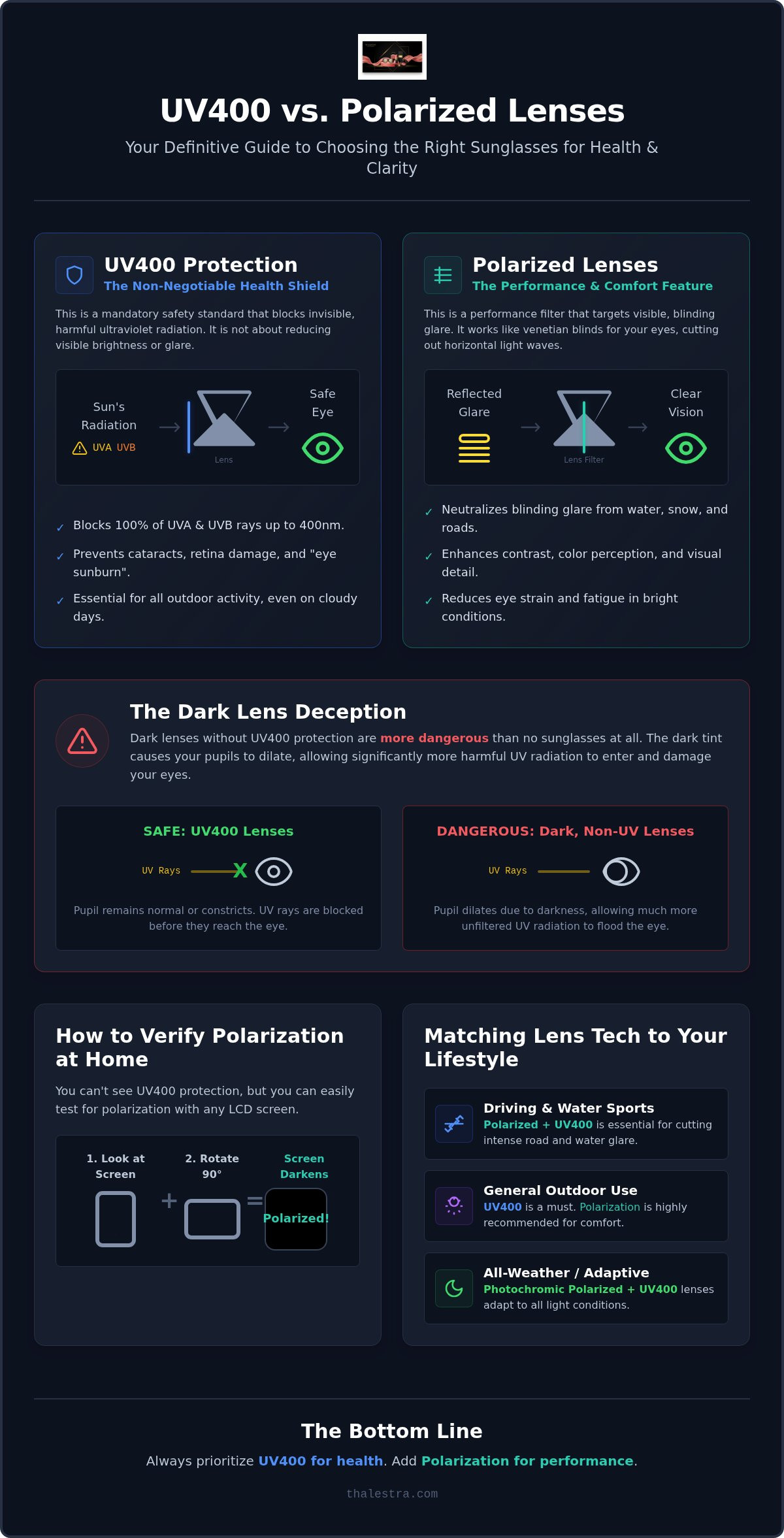
A critical misconception involves lens tint. Darker shades do not automatically provide better safety. In fact, dark lenses without a UV400 filter are more hazardous than no glasses at all. They cause the pupils to dilate, which allows a higher volume of unfiltered UV radiation to reach the sensitive internal structures of the eye. For general sunglass information, experts emphasize that lens color is a stylistic choice, while UV400 is a non-negotiable health necessity. Always prioritize certified protection over aesthetic darkness.
What is UV400 Protection?
UV400 protection is your invisible shield against the sun's most damaging rays. This specification means the lens blocks all light rays with wavelengths up to 400 nanometers. This range covers 100% of UVA and UVB radiation. It is a mandatory requirement for any high-quality 2025 vacation sunglasses for men.
- UVA Blocking: Prevents long-term damage to the retina and deep eye tissue.
- UVB Blocking: Guards against 'eye sunburn' or photokeratitis, often caused by intense sunlight reflections.
- Standard Compliance: Meets global safety benchmarks for maximum radiation shielding.
This technology is either built into the lens material or applied as a specialized coating. It functions constantly regardless of lighting conditions. It is the primary defense against cataract development and other radiation-related eye conditions.
What is a Polarized Lens?
Polarized lenses function as a sophisticated visual filter. While UV400 blocks what you cannot see, polarization blocks the blinding glare you can see. This technology uses a chemical film applied in a vertical pattern. It effectively cancels out horizontal light waves. These waves are responsible for the intense, concentrated reflections seen on flat surfaces. Classic Mens Polarized Sunglasses are the preferred choice for high-glare environments.
- Surface Glare Reduction: Neutralizes reflections from water, snow, and highway asphalt.
- Contrast Enhancement: Sharpens visual details and improves color perception in bright conditions.
- Fatigue Prevention: Minimizes eye strain by creating a more comfortable viewing environment.
This filter acts like a set of vertical venetian blinds. It allows useful vertical light to pass through while stopping the horizontal "noise" that causes squinting. Understanding the uv400 vs polarized relationship ensures you never sacrifice health for comfort during outdoor activities.
UV400 Protection: The Invisible Shield Against Radiation
Radiation represents a silent, cumulative threat to ocular health. While the visible glare addressed in the uv400 vs polarized comparison is immediate, UV damage is often delayed and irreversible. UVA rays penetrate deep. They hit the lens and retina directly. This exposure drives aging and cataract formation. UVB radiation delivers high-energy waves. These cause immediate surface damage like photokeratitis. This condition is often called "eye sunburn." Safety isn't optional. It's a functional requirement for every outdoor environment.
UV rays penetrate clouds with ease. This means eye protection remains essential even on overcast or gloomy days. Clouds don't block radiation; they only diffuse visible light. For more detailed information on the risks of inadequate lenses, read our guide on The Hidden Dangers of Non-UV Protected Sunglasses. High-utility eyewear ensures constant shielding against these invisible threats.
UVA vs UVB: Understanding the Spectrum
The solar spectrum contains different types of ultraviolet radiation with varying energy levels. UVA accounts for approximately 95% of the UV radiation reaching the Earth's surface. It penetrates windows and deep into the human eye. UVB is more intense. It's mostly absorbed by the ozone layer but remains potent enough to cause painful surface inflammation. 400nm is the critical safety threshold for 2026 standards, ensuring that all harmful rays up to that wavelength are filtered out. Following FDA sun safety tips ensures you maintain 100% protection against these invisible threats.
The Long-Term Health Benefits of UV400
Consistent use of UV400 rated eyewear provides a multi-layered defense for your vision. It significantly reduces the risk of macular degeneration and other age-related ocular issues. Beyond the eyeball itself, these lenses protect the thin, sensitive skin of the eyelids. This reduces the likelihood of developing specific skin cancers in the orbital area. Certain groups require higher-grade vigilance:
- Children: Large pupils and clear lenses allow more UV to reach the retina.
- Seniors: Cumulative exposure over decades increases cataract susceptibility.
- Outdoor Professionals: High-volume exposure necessitates top-tier shielding.
Choosing the right gear is a matter of long-term health. Our 2025 Vacation Sunglasses For Men provide the necessary UV400 rating to keep your vision secure in any climate. Prioritize technical specifications over basic aesthetics for maximum safety.
Polarized Lenses: Mastering Visible Light and Glare
Polarization serves as a tactical performance layer for modern eyewear. While UV400 acts as a safety barrier, polarized lenses function as a sophisticated visual filter. These lenses utilize a specialized chemical film. This film works like a series of microscopic "venetian blinds" for light. It permits useful vertical light waves to enter while obstructing the intense horizontal waves that cause blinding glare. Understanding the technical divide in the uv400 vs polarized comparison is essential for high-intensity activities like driving or coastal vacations. For a detailed look at iconic styles featuring this tech, see our Men's Aviator Sunglasses guide.
The Science of Glare Reduction
Glare occurs when sunlight bounces off flat surfaces like wet asphalt, snow, or water. This reflected light travels horizontally, creating concentrated "hot spots." Polarized filters neutralize these reflections instantly. This process provides superior depth perception and true-to-life color saturation. It's a critical tool for improving reaction times during high-speed transit. Reducing the constant need to squint also lowers ocular fatigue during long driving shifts or full days on the beach. While polarization enhances comfort, remember that UV protection for eye health remains the primary medical priority for long-term vision safety. This ensures both visual clarity and biological protection.
When Polarized Lenses Might Not Be Ideal
High-utility gear requires awareness of operational limitations. Polarized filters interact with the liquid crystals in digital displays. This can cause a "blackout" effect on smartphone screens, GPS units, and certain vehicle dashboards. If you frequently monitor digital instrumentation, standard UV400 protection might be the more practical choice.
- Digital Distortion: Viewing LCD or LED screens at specific angles can make them appear dark or rainbow-streaked.
- Professional Constraints: Pilots and heavy machinery operators often avoid polarization to ensure clear visibility of cockpit instruments.
- Contrast Requirements: In low-light environments or during dawn/dusk, the light-reduction properties of polarization may obscure necessary visual contrast.
Classic Mens Polarized Sunglasses remain the gold standard for bright-light performance. They provide the visual clarity required for tactical environments where glare is a constant obstacle. Selecting the right lens depends on your specific environment and the technology you use daily.
How to Test and Verify Your Sunglasses Protection
Market saturation in 2026 makes verification a critical step for consumer safety. Third-party marketplaces often feature budget eyewear with misleading labels. A lens might look dark but offer zero radiation shielding. The uv400 vs polarized debate matters only if the technical specifications are genuine. Counterfeit indicators include mismatched branding, flimsy hinges, and the absence of standardized safety markings. Professional-grade gear must be validated before it is trusted in high-exposure environments.
Official certifications provide the first line of defense. Look for the CE mark, UKCA marking, or ANSI Z80.3 code usually printed on the inner temple of the frame. These symbols indicate the product meets specific regional safety requirements for light transmission and UV filtration. If these marks are missing or easily rub off with a finger, the protection level is likely compromised. High-quality manufacturers always ensure these markings are permanent and legible.
The Digital Screen Test for Polarization
True polarization is easily verified at home using a digital screen. Most modern monitors and smartphones use polarized filters to control light. You can exploit this relationship to confirm your lens quality in seconds without specialized equipment.
- Step 1: Hold your sunglasses in a horizontal position in front of a computer or phone screen.
- Step 2: Rotate the glasses 90 degrees to a vertical orientation while looking through one lens.
- Step 3: Observe the visual change. If the lens is truly polarized, the screen will appear to turn black or significantly darken at the 90-degree mark.
If the screen remains clear or only slightly dims, the lenses are likely standard tinted glass or plastic without a polarized filter. This test is a reliable way to ensure you are getting the glare-reduction performance required for driving or beach activities. It's an essential check for any new pair of performance eyewear.
Verifying UV400 Protection
Confirming UV400 protection is more complex because UV light is invisible to the human eye. A simple home method involves using a UV flashlight and a fluorescent object, such as a credit card or a modern banknote with UV-reactive security features. Shine the light through the sunglass lens onto the object. A high-quality UV400 lens will block the rays, preventing the security feature from glowing. If the feature illuminates, the lens is failing to filter out harmful radiation.
While home tests are useful, professional optical shops remain the only way to achieve 100% certainty. Many retailers use a photometer to measure the exact nanometer cutoff of a lens. To avoid these risks entirely, purchase from trusted sources that specialize in adaptive vision. Shop certified Classic Mens Polarized Sunglasses to ensure your eyewear meets all 2026 safety standards.
Matching Lens Tech to Your Lifestyle: Choosing the Right Pair
Selecting the right eyewear involves a precise calculation of activity level versus light intensity. High-exposure environments like high-altitude mountains or tropical coastlines require distinct technical layers. The uv400 vs polarized decision isn't a binary choice; it's about layering protection to match your specific 2026 vacation destination. Efficiency-oriented travelers prioritize gear that performs across multiple lighting scenarios without requiring constant equipment changes.
The Hybrid Solution: Photochromic + Polarized
Adaptive lens technology represents a major shift in high-performance eyewear. LIOUMO Top Quality Photochromic Polarized Sunglasses offer a versatile solution by combining reactive tinting with a fixed polarized filter. These lenses utilize molecules that change structure when exposed to UV radiation, darkening the lens automatically. The latest photochromic lenses in 2026 can transition from clear to dark in as little as 35 seconds. This photochromic tech saves time during travel because you don't need to switch between indoor and outdoor glasses as you move through airports, hotels, and tourist sites. It provides a seamless transition from low-light interiors to high-brightness exteriors while maintaining constant glare reduction and radiation shielding.
Activity-Based Recommendations
Your environment determines the necessary lens specifications. A tactical approach ensures visual clarity and long-term health. Use this framework to align your gear with your itinerary.
- Driving: Focus on polarization. Classic Mens Polarized Sunglasses neutralize blinding asphalt reflections and "hot spots" on the hood. This improves safety by sharpening depth perception and reducing ocular strain during long hauls.
- Hiking and Mountaineering: Focus on UV400. Higher altitudes result in thinner atmospheres and increased radiation intensity. Durable frame materials like lightweight polycarbonates or titanium are essential for rugged terrain.
- Beach and Water Sports: Mandatory dual-protection. Water surfaces reflect up to 100% of visible light, creating intense horizontal glare. You need the polarized filter for clarity and the 400nm cutoff to prevent surface eye burns.
Balancing trend-aware silhouettes with technical requirements is simple with the right curator. The 2025 Vacation Sunglasses For Men collection features softened rectangles and geometric shapes that don't compromise on safety. Neutral tones like amber, olive, and smoky grey provide a "quiet luxury" aesthetic while housing high-utility filters. Selecting a pair with both UV400 and polarization ensures you're prepared for any light intensity or activity level on your schedule. Don't sacrifice safety for style; select a pair that provides the necessary 400nm cutoff while matching your personal aesthetic.
Optimize Your Vision Strategy for 2026
UV400 remains the essential health standard for blocking radiation up to 400nm. Polarization provides the tactical edge needed for glare reduction during driving or beach vacations. Understanding the uv400 vs polarized technical balance ensures you don't trade ocular safety for visual comfort. Verified protection is the only way to prevent long-term ocular damage from cumulative exposure. High-utility eyewear must offer both radiation shielding and visual clarity to meet modern performance standards.
Our curated selection features high-performance frames with certified UV400 lenses and advanced adaptive vision technology. We provide global shipping on all designer frames to ensure accessibility for every international demographic. Every pair in our inventory undergoes rigorous quality checks to verify technical specifications. It's time to upgrade your outdoor gear with specifications that match your high-intensity lifestyle and travel demands.
Shop the 2026 Polarized Photochromic Collection at THALESTRA.COM and experience the difference of precision engineering. Secure your vision today with professional-grade protection.
Frequently Asked Questions
Can a lens be polarized but not UV400 protected?
Yes, a lens can feature a polarized filter without providing UV400 protection. These technologies serve different purposes; polarization targets visible glare while UV400 blocks invisible radiation. Many low-cost manufacturers apply a polarizing film to standard plastic lenses but skip the essential UV-blocking treatment. This leaves your eyes vulnerable to radiation damage despite the reduced glare. Always look for specific UV400 certification to ensure total safety in high-exposure environments.
Are all UV400 sunglasses also polarized?
No, UV400 is a health-standard requirement for radiation shielding, while polarization is an optional performance feature. Many high-quality sunglasses prioritize 100% UV protection but omit polarized filters to maintain visibility for certain digital screens or low-light conditions. When comparing uv400 vs polarized features, remember that safety is mandatory while glare reduction is a lifestyle choice based on your specific outdoor activities and visual comfort requirements.
How can I tell if my sunglasses have UV400 protection at home?
Accurate home testing for UV400 is difficult because ultraviolet light is invisible to the human eye. You can perform a basic check using a UV flashlight and a fluorescent object like a modern banknote with security features. Shine the light through the lens; a true UV400 lens will block the rays and prevent the bill's security features from glowing. However, this is not as precise as a professional photometer test at an optical shop.
Do polarized sunglasses protect your eyes better than regular ones?
Polarized lenses protect your eyes from visual fatigue and blinding glare, but they don't inherently offer better radiation protection than standard UV400 lenses. They improve comfort by neutralizing horizontal reflections from surfaces like water or roads. For total protection, you need a pair that combines both technologies. This dual-layer approach ensures your eyes are safe from invisible UV rays and comfortable in high-brightness environments where glare is a persistent issue.
Why do my polarized sunglasses make my phone screen look weird?
This phenomenon occurs because most digital screens also use polarized filters to manage light. When the polarized filter in your sunglasses aligns at a specific angle with the screen's filter, it can block the light entirely or create rainbow patterns. This "blackout" effect is a common technical limitation. If you frequently use outdoor GPS units or digital dashboards, you might prefer non-polarized lenses that still offer certified UV400 protection for safety.
Is UV400 protection the same as 100% UV protection?
Yes, UV400 protection and 100% UV protection are functionally identical in the eyewear industry. Both terms indicate that the lenses block all light rays with wavelengths up to 400 nanometers. This spectrum includes 100% of both UVA and UVB radiation. This is the highest level of shielding available for consumer sunglasses. It ensures your eyes are fully protected against the silent, cumulative damage caused by solar radiation during prolonged outdoor exposure.
Do I need polarized lenses for driving in the rain?
Polarized lenses are highly effective for driving in the rain because they cut through the glare reflected off wet road surfaces. Rain creates a mirror-like effect on asphalt, which can be blinding when hit by headlights or sunlight. A polarized filter neutralizes these horizontal reflections, significantly improving your visual clarity and reaction times. This performance enhancement makes them a superior choice for maintaining safety and reducing eye strain during difficult weather conditions.
Are more expensive sunglasses better at blocking UV rays?
Price doesn't always correlate with UV protection quality. Many affordable sunglasses provide certified UV400 protection that meets all international safety standards. Higher price points often reflect brand names, premium frame materials, or advanced lens technologies like polarization and photochromic transitions. When evaluating uv400 vs polarized options, focus on the technical certification markings rather than the retail cost to ensure your eyes receive the necessary radiation shielding for long-term health.