
Why do your eyes still hurt even when you're wearing dark sunglasses? You've likely reached for the highest tint available only to find yourself still squinting against the midday glare. Finding the right sunglasses for sensitive eyes is about more than just dark lenses; it's about managing light transmission and peripheral coverage. Persistent light sensitivity often leads to nagging headaches and visual fatigue that standard frames cannot resolve. It's a common frustration for those managing photophobia or post-surgery recovery who need immediate, functional relief.
This 2026 comfort guide helps you eliminate eye strain by focusing on precise VLT ratings and advanced glare reduction. High-utility polarized lenses. Adaptive photochromic transitions. UV400 protection standards. You'll discover how specific lens categories optimize visibility and why wrap-around designs provide necessary peripheral coverage. We'll explore lightweight carbon fiber frames and technical specifications designed for all-day visual comfort. Clear understanding of lens categories. Reduced eye fatigue. Modern style without health compromises. This is your gateway to superior eye protection and streamlined functional design. Discover the synergy of high-coverage architecture and adaptive lens technology today.
Key Takeaways
- Identify light sensitivity triggers like iris color and post-LASIK recovery to determine specific protection needs.
- Optimize visual comfort using sunglasses for sensitive eyes with polarized filters and non-negotiable UV400 protection.
- Block peripheral light leakage using high-wrap 8-base frame architecture for superior side protection.
- Master Visible Light Transmission (VLT) categories to maintain clear vision in varying light intensities.
- Leverage adaptive photochromic lens technology for automatic light adjustment and reduced eye fatigue.
Understanding Photophobia: Why You Need Sunglasses for Sensitive Eyes
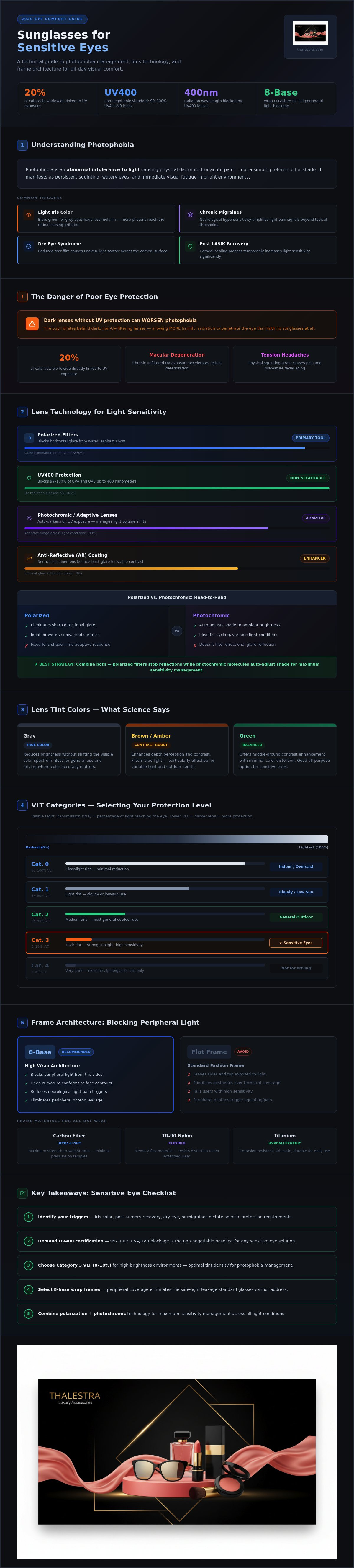
Photophobia is an abnormal intolerance to light causing physical discomfort or acute pain. It's not a simple preference for shade. This condition manifests as persistent squinting, watery eyes, and immediate visual fatigue in bright environments. Common triggers include light iris pigmentation, chronic migraines, dry eye syndrome, and post-LASIK recovery. Standard retail eyewear often fails users with high sensitivity because these products prioritize aesthetic tint over technical light management. The primary goal for effective sunglasses for sensitive eyes is reducing total light volume while maintaining high visual contrast. Functional protection: high-density filters, polarized layers, wrap-around architecture, and technical UV400 coatings.
The Role of Iris Color and Pupil Size
Understanding Photophobia starts with ocular anatomy. Lighter eyes, specifically blue, green, or grey, possess less melanin in the iris. Less pigment results in a decreased ability to block stray light; this allows more photons to reach the retina and cause irritation. Pupil size also dictates light entry; larger pupils or those that react slowly to changes increase sensitivity levels. Age-related changes further impact how the eye processes brightness, often making older adults more susceptible to glare. Specialized optics are necessary to compensate for these biological variances. They're the essential barrier that natural pigmentation lacks, providing a stable visual environment in high-glare conditions.
The Hidden Dangers of Poor Eye Protection
Light sensitivity is a warning signal for potential long-term ocular damage. Approximately 20% of cataracts worldwide are linked directly to UV exposure. Chronic exposure without adequate filtration accelerates these risks and contributes to macular degeneration. Significant dangers of non-UV protected sunglasses exist; they can worsen existing photophobia by dilating the pupil behind dark but ineffective lenses. This allows more harmful radiation into the eye. Beyond internal health, the physical strain of squinting leads to premature facial aging, deep-set wrinkles, and tension-based headaches. Proper sunglasses for sensitive eyes provide a comprehensive shield. They combine UV400 protection, glare-blocking polarization, and physical coverage to ensure all-day comfort and long-term safety. High-utility frames prevent peripheral light leakage, reducing the neurological triggers associated with light-induced pain.
Lens Technology: The Best Features for Light Sensitivity
Effective lens technology distinguishes professional optics from standard fashion accessories. For those seeking sunglasses for sensitive eyes, polarization is the primary tool for blocking horizontal glare. This technology filters intense reflections from asphalt, water, and snow; it prevents the blinding flash that triggers immediate squinting. UV400 protection remains the non-negotiable industry standard. It ensures 99 to 100 percent blockage of UVA and UVB radiation up to 400 nanometers. Understanding how sunglasses can help protect long-term ocular health requires looking beyond simple tint darkness. Photochromic lenses add adaptive utility; they darken automatically upon UV exposure to manage light volume shifts without manual frame changes. Anti-reflective (AR) coatings further enhance comfort by neutralizing bounce-back glare from the inner lens surface. This combination ensures a stable, high-contrast visual field.
Polarized vs. Photochromic: Which is Better?
Polarization targets glare direction while photochromic technology manages overall light volume. For maximum sensitivity management, combining these features is the superior strategy. Polarized filters stop sharp reflections; photochromic molecules adjust the lens shade to match ambient brightness. This dual-action approach is critical for high-intensity activities. Consider photochromic sunglasses for cycling where lighting conditions change rapidly under tree cover or open roads. Users don't have to choose between glare reduction and adaptive shading. High-performance models like the LIOUMO Top Quality Photochromic Polarized Sunglasses integrate both technologies into a single high-utility lens.
The Science of Lens Tints: Gray, Brown, and Green
Tint selection directly impacts visual comfort levels. Gray lenses provide the most neutral color perception; they reduce overall brightness without distorting natural hues. Brown and amber tints enhance contrast and depth perception. These are ideal for variable light or overcast conditions where shadows can be difficult to distinguish. For migraine-related photophobia, specific FL-41 rose-colored tints are often recommended to filter problematic blue-green light frequencies. Green lenses offer a balance between gray and brown; they provide high contrast while maintaining color accuracy. Selecting the correct tint ensures sunglasses for sensitive eyes perform effectively across different environments. Technical precision in lens choice leads to reduced ocular fatigue and improved clarity.
Frame Architecture: Blocking Peripheral Light Leakage
Peripheral light leakage occurs when unfiltered rays enter from the sides, top, or bottom of the eyewear. For users requiring sunglasses for sensitive eyes, this stray light is as disruptive as direct glare. It triggers involuntary squinting and can exacerbate neurological symptoms like migraines. Standard flat frames often leave significant gaps. High-wrap architecture, specifically 8-base frame curves, provides a contoured shield that follows the face's natural anatomy. This design creates a physical barrier against lateral light entry. A close-to-face fit is equally vital. It minimizes top-down light entry from the sun's highest point, ensuring a consistent internal lighting environment. To effectively protect your eyes from UV damage, the frame must act as a complete enclosure rather than a simple lens holder. This structural integrity reduces the constant ocular adjustment needed in shifting light environments.
Wrap-Around Styles vs. Flat Frames
Flat frame silhouettes like traditional aviators or thin-wire frames often fail sensitive eyes. Their open-sided construction allows reflected light to bounce off the inner lens surface directly into the eye. Wrap-around designs are the functional standard for high-glare environments like open water or snow-covered landscapes. They offer maximum coverage without visual gaps. If a sporty aesthetic isn't desired, consider vintage designer sunglasses featuring thick, wide temples. These iconic silhouettes provide substantial side protection through frame thickness rather than extreme curvature. They offer a sophisticated balance between trend-aware style and technical light management. Total coverage. Zero leakage. Maximum comfort.
Material Matters: Carbon Fiber and Polycarbonate
Material choice dictates long-term wearability for those with physical sensitivity. Heavy frames create pressure points on the temples and nose bridge; this worsens light-induced headaches. Carbon fiber frames offer an elite strength-to-weight ratio. High-utility. Ultra-lightweight. Impact-resistant. Corrosion-proof. These frames provide all-day comfort without the fatigue associated with dense plastics. Polycarbonate lenses complement these frames perfectly. Superior impact resistance. Natural UV filtration. Low-density composition. Minimal chromatic aberration. High-density carbon fiber weave. Precision-molded polycarbonate. Reinforced screw-lock hinges. Ergonomic nose pads. This additive approach to design prioritizes the user's immediate need for comfort and durability. Lightweight durability for constant use. Technical specifications for global performance. Modern materials for sunglasses for sensitive eyes. Maximum protection for the modern traveler.
Selecting Your Category: VLT Ratings for Maximum Comfort
Visible Light Transmission (VLT) defines the exact percentage of light passing through a lens to the eye. For those choosing sunglasses for sensitive eyes, VLT data is more important than simple aesthetic tint. Lower VLT percentages indicate darker lenses with higher light blockage. The ISO 12312-1:2022/Amd 1:2026 standard provides a clear framework for these categories. Selecting the wrong category results in insufficient protection or dangerous visibility loss. High-utility selection requires matching lens density to environmental intensity. Precision optics. Technical filtration. Ocular comfort. Professional light management.
- Category 2 (18-43% VLT): Moderate filtration. Ideal for overcast days, late afternoon light, or urban environments with frequent architectural shade.
- Category 3 (8-18% VLT): High-density protection. This is the recommended standard for bright, sunny conditions and general outdoor use for sensitive individuals.
- Category 4 (3-8% VLT): Maximum light blockage. These are specialized lenses for extreme sun exposure in high-altitude or desert environments.
Safety compliance is mandatory. Category 4 lenses are not suitable for driving because they restrict too much visible light for safe vehicle operation. For daily transit, Category 3 remains the superior choice for high-sensitivity users. It provides the necessary darkness to stop squinting without compromising road safety.
Environmental Matching: Beach, Snow, and City
Terrain dictates the necessary VLT level. High-altitude snow fields and open water environments reflect up to 80 percent of UV rays. These conditions demand Category 3 polarized lenses to prevent snow blindness and acute ocular fatigue. Urban environments present a different challenge. Frequent transitions between direct sun and building shadows make Category 2 or adaptive photochromic lenses highly effective. Adaptive lenses provide a seamless experience by shifting VLT levels automatically. View the LIOUMO Top Quality Photochromic Polarized Sunglasses for a versatile tool that adjusts to your surroundings. Environmental precision ensures all-day comfort without the need to remove frames.
Maintenance for Long-Term Protection
Lens surface integrity is critical for light-sensitive users. Scratches degrade performance by scattering light across the lens surface. This creates internal glare and forces the eye to work harder to focus. This leads to immediate strain and tension headaches. Proper care protects specialized anti-reflective and UV400 coatings. Follow the professional steps on how to clean polarized sunglasses to avoid micro-abrasions. Always use a microfiber cloth. Store frames in a hard-shell case when not in use. Avoid high-heat environments like car dashboards. Technical maintenance preserves visual clarity. Long-term protection. Professional durability. Ocular safety.
Thalestra Eyewear: Precision Protection for Sensitive Eyes
Thalestra provides technical solutions for chronic photophobia through high-utility, trend-aware eyewear. The LIOUMO Top Quality Photochromic Polarized Sunglasses serve as the primary adaptive tool for light sensitivity. These frames combine automatic darkening with horizontal glare filtration to manage shifting environments. All designer-inspired models feature UV400 rated lenses to meet international safety standards like ISO 12312-1:2022. High-coverage square frames and lightweight carbon fiber models ensure maximum protection against peripheral light leakage. Global shipping. Multilingual support. Trend-aware selection. International eye health accessibility. Our inventory focuses on immediate value and functional density for a global audience. Reliable protection for sunglasses for sensitive eyes remains the core objective. Clear vision. Reduced fatigue. Modern aesthetics. Technical precision.
Technical Specifications of Thalestra Lenses
Thalestra lenses utilize a multi-layer additive construction designed for maximum durability and light management. Integrated UV400 filter. High-efficiency polarized film. Scratch-resistant protective coating. Impact-resistant polycarbonate core. Anti-reflective inner treatment. The 2025 Vacation Sunglasses For Men prioritize functional density for high-exposure environments like beaches or high-altitude resorts. These models use 8-base wrap architecture to block stray rays from every angle. Lightweight carbon fiber. Reinforced screw-lock hinges. Ergonomic nose pads. Matte finish options. Select your frame. Verify your VLT needs. Secure your visual comfort. Shop the latest technical arrivals to eliminate squinting and eye strain. Practical design meets contemporary style for the modern traveler.
The Global Merchant Advantage
Efficiency defines the Thalestra experience. A high-volume digital marketplace provides immediate access to specific sunglasses for sensitive eyes across various styles and materials. There is no delay or complex brand mythology; the focus is on direct access to trend-aware inventory and technical specifications. The Classic Mens Polarized Sunglasses collection offers a streamlined gateway to high-utility goods. This collection features timeless silhouettes updated with modern polarization technology. It's the ideal choice for those seeking reliable protection without excessive bulk. The brand operates as an efficient curator, staying synchronized with current market demands and global shipping standards. Rapid delivery ensures availability for those requiring immediate relief from glare and visual fatigue. Access the curated catalog. Upgrade your protection. Shop Polarized Sunglasses for Sensitive Eyes today for all-day comfort and clear understanding of lens performance.
Upgrade Your Visual Comfort for 2026
Achieving all-day ocular relief requires a technical combination of adaptive lens technology and high-coverage frame architecture. You now understand the necessity of Category 3 VLT ratings for bright conditions and the critical role of 8-base wrap designs in blocking peripheral light leakage. Selecting specialized sunglasses for sensitive eyes eliminates the constant physical strain of squinting and light-induced headaches. Technical precision. Ocular health. Modern style. Functional density. High-utility polarized filters and UV400 certified lenses provide the non-negotiable barrier your eyes require for long-term safety.
Secure your visual health with professional-grade optics designed for immediate performance. Polarized photochromic technology. UV400 certified lenses. Global shipping available for international accessibility. Explore Thalestra’s High-Protection Polarized Sunglasses to find your perfect functional match. It's time to experience clear vision without the fatigue of light sensitivity. Reliable protection is just one click away. Your eyes deserve the highest standard of technical care.
Frequently Asked Questions
What color lens is best for sensitive eyes?
Gray lenses are the standard for high-sensitivity users because they reduce overall brightness without distorting natural color perception. Brown and amber tints enhance contrast and depth; this is helpful in variable light conditions. For migraine-related photophobia, rose-colored FL-41 tints provide specialized relief. Choose a tint based on your primary environment. Gray for open sun; brown for mixed conditions. Technical precision in color selection reduces ocular fatigue significantly.
Are polarized sunglasses better for light sensitivity?
Polarized filters are essential for managing light sensitivity because they specifically block horizontal glare from surfaces like asphalt and water. Standard tinted lenses only reduce light volume; they don't stop the blinding flashes that trigger squinting. Using polarized sunglasses for sensitive eyes ensures a stable visual field and prevents sudden ocular shocks. This technology is critical for driving or coastal environments where reflected glare is most intense.
How can I tell if my sunglasses have UV400 protection?
Verify UV400 protection by checking for a specific sticker or imprint on the frame temple indicating compliance with ANSI Z80.3-2025 or ISO 12312-1 standards. This rating guarantees that the lenses block 99 to 100 percent of UVA and UVB rays up to 400 nanometers. Without professional testing equipment, you must rely on reputable merchant specifications. High-utility eyewear from Thalestra includes these technical certifications across all polarized and photochromic collections for guaranteed safety.
Can I wear Category 4 sunglasses for driving?
Category 4 sunglasses are not suitable for driving under any circumstances. These lenses feature a Visible Light Transmission (VLT) of 3 to 8 percent; this is dark enough to obscure critical road details and traffic signals. This creates a safety hazard for vehicle operation. Use Category 3 lenses for driving. These offer high-density protection (8-18% VLT) while maintaining the necessary visibility for safe transit in bright, sunny conditions.
Why do my eyes still hurt with dark sunglasses?
Dark tints alone don't solve photophobia if the lenses lack polarization or proper frame architecture. Light still enters from the sides or bounces off the inner lens surface without anti-reflective coatings. If your sunglasses for sensitive eyes don't have a high-wrap design, peripheral light leakage triggers persistent squinting and headaches. Ensure your eyewear includes a polarized filter to block glare and a close-to-face fit to minimize stray rays from the top and sides.
What are the best frame shapes for blocking peripheral light?
Wrap-around frames with an 8-base curve provide the most effective barrier against peripheral light. These designs contour to the face and eliminate gaps where rays leak through the sides. Large square frames and silhouettes with wide temples also offer superior coverage. Avoid thin-wire aviators or flat frames that leave the ocular area exposed to lateral glare. High-coverage architecture is a functional requirement for maximum comfort in high-intensity light environments.
Do photochromic lenses work for people with photophobia?
Photochromic lenses are highly effective for photophobia because they automatically adjust their tint based on UV exposure levels. This prevents the shock of moving between shaded urban areas and direct sunlight. The LIOUMO Top Quality Photochromic Polarized Sunglasses provide this adaptive response while maintaining a polarized filter for glare reduction. This dual-action technology ensures that light-sensitive individuals don't have to manually swap frames when light intensities shift throughout the day.
Is carbon fiber a good material for sensitive eye sunglasses?
Carbon fiber is an elite material for sensitive individuals due to its exceptional strength-to-weight ratio. Lightweight frames reduce physical pressure on the temples and nose bridge. This is critical because facial pressure often worsens light-induced headaches. These frames provide all-day durability and comfort without the bulk of traditional plastics. High-utility carbon fiber models stay secure during activity while remaining light enough to prevent the tension associated with heavy, poorly balanced eyewear.