
The most durable frame for your 2026 summer getaway might actually be the lightest one in your hand. You want eyewear that won't snap at the hinges or warp under high heat during a long beach day. Selecting the right material is a balance of weight, strength, and skin comfort. This guide settles the metal vs plastic sunglasses frames debate by comparing technical specifications, impact resistance, and 2026 style profiles.
You expect metal to be tougher, but modern high-density acetate and carbon fiber offer surprising resilience without the heavy feel. We explore how new 2026 safety standards for nickel leaching affect metal frame selection for those with sensitive skin. You'll identify materials that maintain shape in extreme temperatures and silhouettes that dominate the current global marketplace. We compare classic metal aviators against sculptural acetate frames to ensure your vacation gear meets functional and aesthetic demands. High-performance polarized lenses. UV400 protection. Impact-resistant polycarbonate construction. This analysis provides the direct technical data needed for an efficient and informed purchase.
Key Takeaways
- Compare technical specifications of metal vs plastic sunglasses frames to identify the optimal balance of weight and structural strength for 2026.
- Identify the durability benefits of hypoallergenic titanium and corrosion-resistant stainless steel for sleek, minimalist profiles.
- Evaluate high-gloss cellulose acetate and flexible TR90 nylon frames for superior impact resistance and bold vacation styling.
- Match material properties to specific environments, selecting salt-resistant plastics for beach use and thin-templed metals for driving peripheral vision.
- Discover high-tech carbon fiber and hybrid frame options that maximize strength while maintaining a lightweight, comfortable fit.
What is the Difference Between Metal and Plastic Sunglasses Frames?
The fundamental distinction in the metal vs plastic sunglasses frames debate centers on material density and structural engineering. Metal frames rely on high-tensile alloys like monel, titanium, and stainless steel. These materials support ultra-thin, minimalist profiles that offer a professional, classic aesthetic. Plastic frames utilize zyl, also known as cellulose acetate, high-performance nylon, or impact-resistant polycarbonate. These allow for oversized, bold silhouettes and experimental shapes impossible to achieve with thin wire.
Structural differences extend to the fit mechanism. Metal frames almost universally feature adjustable nose pads. This allows for a customized height and grip on the face. Plastic frames typically use a fixed bridge design. This integrated structure provides a smooth, continuous contact surface that many find more comfortable for all-day wear. The style impact is equally distinct, moving from the sophisticated, refined look of metal to the trendy, colorful expressions found in modern polymers.
Key Characteristics of Metal Eyewear
Metal eyewear prioritizes precision and durability in extreme conditions. The following attributes define high-quality metal construction:
- Slim wire-frame architecture. Provides a lightweight, unobtrusive feel for all-day comfort.
- Professional malleability. Allows for fine-tuned adjustments to temple curvature and bridge width to suit individual face shapes.
- Thermal stability. Components resist warping in high-temperature environments, such as a car dashboard in peak summer heat.
Titanium remains the premium choice for 2026. It's hypoallergenic and compliant with new international safety standards regarding nickel leaching. These frames provide a high-strength-to-weight ratio. They ensure the glasses remain secure without causing skin irritation during prolonged outdoor use in humid climates.
Key Characteristics of Plastic Eyewear
Plastic and acetate frames offer superior color depth and environmental resilience. They're characterized by the following features:
- Aesthetic versatility. Available in crystal-clear, deep gloss, or matte finishes with rich patterns like tortoise.
- Superior pressure distribution. The wide, fixed bridge prevents localized indentations on the nose by spreading weight evenly.
- Saltwater resistance. Non-porous polymers don't oxidize or pit when exposed to ocean spray or sweat.
For active users, high-grade nylon frames like TR90 provide extreme flexibility. They absorb impact and return to their original shape, making them safer for sports and outdoor recreation. Acetate, a plant-based plastic, offers the deep colors and high-gloss finishes currently dominating 2026 eyewear trends. These frames provide a substantial feel without the density of heavy metal alloys.
The Strength and Sophistication of Metal Frames
In the metal vs plastic sunglasses frames comparison, metal alloys dominate the high-performance and executive categories. Titanium represents the 2026 industry benchmark for premium eyewear. It's characterized by an exceptional strength-to-weight ratio; roughly 40% lighter than traditional steel while offering superior structural integrity. Titanium frames are inherently hypoallergenic. This is a critical feature following the 2026 implementation of new mandatory safety standards regarding nickel leaching in metal components. Users seeking a permanent, corrosion-resistant investment prioritize titanium for its longevity and skin-safe properties.
Stainless steel serves as a high-utility, cost-effective alternative. It provides excellent resistance to oxidation and sweat-induced pitting. For those requiring maximum flexibility, memory metals like Flexon allow frames to be bent or twisted without permanent deformation. These alloys return to their original silhouette immediately, making them ideal for high-activity vacations. The iconic Aviator legacy relies on these specific metal properties. Pilot-style sunglasses require thin, double-bridge constructions and slim temples that don't interfere with headgear; a technical feat best achieved through high-tensile metal alloys.
Durability and Longevity Factors
Metal construction offers distinct advantages in mechanical reliability. Unlike plastic frames where hinges are often molded directly into the material, metal eyewear utilizes barrel hinges or spring-loaded mechanisms secured with screws. These components are easily tightened or replaced if they loosen over time. Professional repair is often possible through precision soldering, extending the life of the frame significantly beyond its plastic counterparts. You can explore these technical advantages further in our guide to Men's Aviator Sunglasses: 2026 Guide to Style and Lens Tech.
Who Should Choose Metal Sunglasses?
Metal frames provide specific ergonomic solutions for diverse face shapes. They're the primary choice for individuals with narrow bridges or small faces. The inclusion of adjustable silicone nose pads allows for precise positioning, preventing the frames from sliding down the nose. This adjustability ensures the lenses sit at the correct optical center for maximum clarity. Metal is also the superior choice for high-temperature environments. While some polymers may lose their shape or become brittle when left in a hot vehicle, metal alloys remain structurally stable.
The aesthetic profile of metal is inherently refined. It projects a professional, executive image suitable for business travel and upscale resort environments. If you prefer a minimalist, high-end look that prioritizes technical utility, browse the Classic Mens Polarized Sunglasses selection at THALESTRA.COM featuring premium metal finishes. These frames offer a barely-there feel while maintaining the ruggedness required for global travel.
Versatility and Comfort in Plastic and Acetate Frames
High-quality polymers redefine the metal vs plastic sunglasses frames comparison through superior color depth and structural flexibility. Cellulose acetate stands as the premium plant-based choice for 2026. Handcrafted from wood pulp and cotton fibers. Hypoallergenic material. Exceptional color depth. Unlike injected plastics using surface paints, acetate patterns are embedded throughout the material. Scratches don't reveal a different color underneath. High-performance TR90 and blended nylon cater to active lifestyles. Extreme flexibility. Temples bend significantly without snapping. Impact-resistant construction for global travel.
The "Wayfarer" silhouette remains a dominant 2026 vacation trend. These frames provide the necessary rim thickness to support high-performance polarized lenses. Thin metal rims often struggle with the edge thickness of specialized polarized filters. Plastic frames offer a secure, deep groove. Rim depth protects lens edges from chipping. Long-term optical alignment. Robust eyewear construction handles travel rigors while maintaining high-end lens security. Ideal for high-glare environments.
Style and Aesthetic Freedom
Plastic frames allow for complex visual textures impossible to replicate in metal. Designers utilize acetate for rich tortoiseshell patterns, multi-colored gradient fades, and translucent "crystal" finishes. Bold, square frame sunglasses for men provide a strong architectural look. Sharp lines define the jawline and balance rounder face shapes. These designs utilize material volume for a style statement without excessive density. For a detailed breakdown of these silhouettes, see our Wayfarer Style Polarized Sunglasses: The 2026 Buyer’s Reference.
Comfort and Weight Distribution
Integrated saddle bridges are a hallmark of plastic frame comfort. This design eliminates the "nose pad dig" associated with metal eyewear. Weight distribution across a larger surface area of the nasal bridge. Ideal configuration for long-duration wear during driving or high-altitude hiking. For those seeking a minimalist plastic option, the vintage oval designer sunglasses available at THALESTRA.COM offer a lightweight retro appeal. Classic 90s aesthetic. Modern, low-density polymers. Secure fit without pressure points behind the ears or on the bridge. Comfort maintained after hours of continuous sun exposure.
High-flexibility nylon models conform to the wearer's head shape. No manual adjustment required. Integrated "memory" property ensures glasses stay in place during physical activity. Non-restrictive fit. Users prioritizing a "barely-there" feel in a bold silhouette find the optimal solution in these advanced plastics. Technical utility meets modern aesthetic demand.
Metal vs Plastic: Comparison for Different Lifestyles
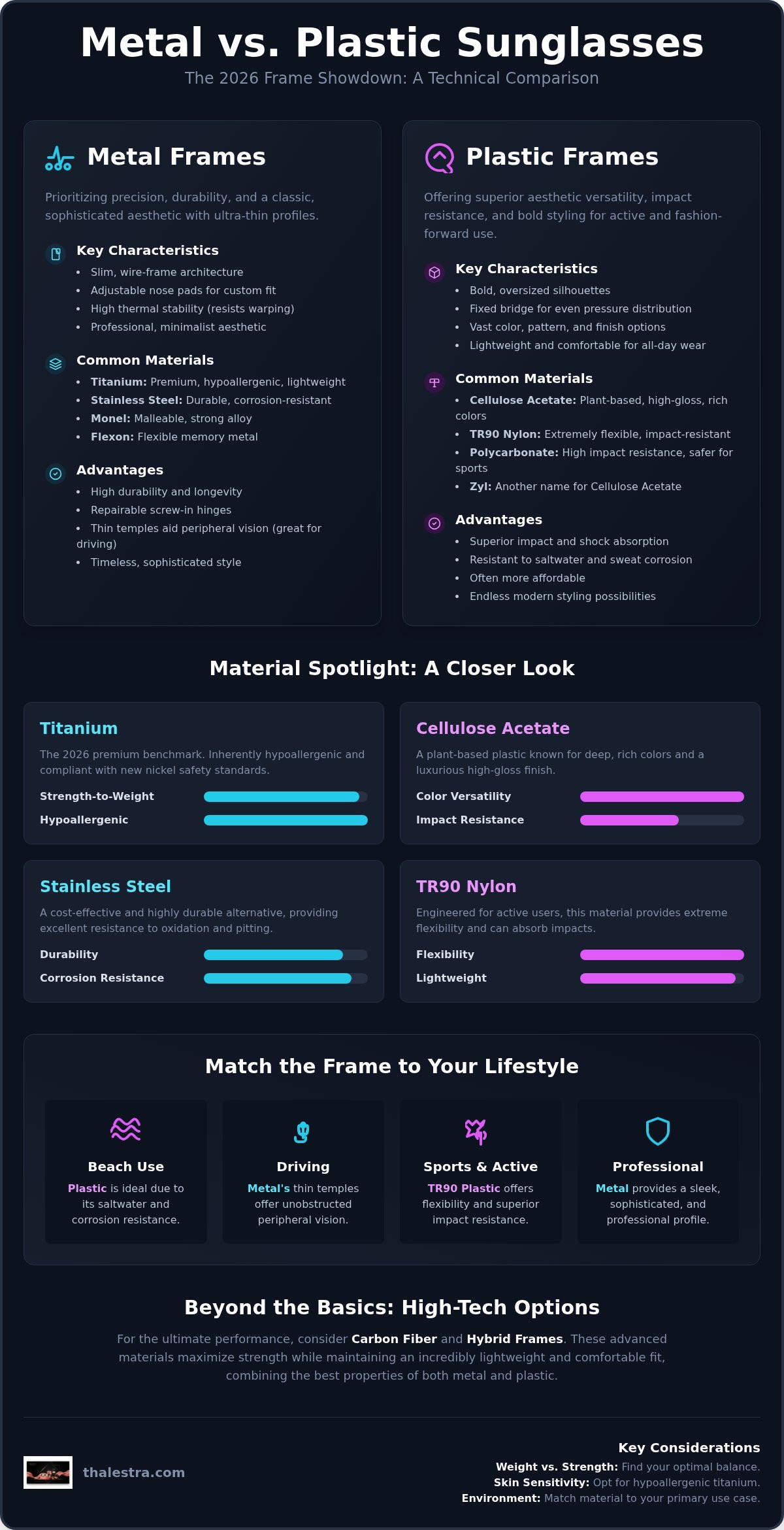
Matching metal vs plastic sunglasses frames to your specific environment requires an analysis of movement and exposure. Driving safety demands maximum peripheral awareness. Thin metal temples allow for unobstructed mirror checks and better situational awareness. Coastal environments favor high-grade polymers. Salt spray and high humidity often lead to the green oxidation or surface pitting seen on lower-quality metal alloys. For high-impact sports, flexible nylon is the safety standard. It absorbs kinetic energy during physical contact without shattering. Daily fashion allows for a strategic split. Minimalist metal provides a professional executive look. Bold plastic frames make a definitive style statement for casual vacation wear.
The Environmental Durability Test
Metal alloys offer superior thermal stability. They maintain their shape in high-heat scenarios, such as inside a vehicle parked in direct sunlight where temperatures can exceed 60°C. Modern plastics provide excellent chemical stability. They resist degradation from the ingredients found in sunscreens, insect repellents, and skin oils. Frame housing affects optical performance. Secure plastic rims ensure stable placement for high-performance polarized lenses. This prevents light leakage around the edges and maintains the integrity of the UV400 filter. For more on road safety, see our Anti-Glare Driving Sunglasses: 2026 Guide to Safer Vision. Accurate lens alignment is vital for glare reduction in varying light conditions.
Maintenance and Adjustability
Metal eyewear involves specific mechanical upkeep. Small hinge screws require periodic tightening to prevent temple wobble. Silicone nose pads need replacement every six to twelve months for hygiene and grip. Plastic frames are generally low-maintenance. They don't have small parts that loosen; however, they require professional heating if they warp under extreme physical pressure. THALESTRA.COM recommends high-density nylon or carbon fiber for multi-destination travel. These materials offer high tensile strength and minimal deformation. Browse the 2025 Vacation Sunglasses For Men selection at THALESTRA.COM for durable, high-performance options. This catalog features corrosion-resistant hardware and lightweight, stress-resistant frames. High-utility eyewear for the global traveler. Fast shipping. Multilingual support. Premium material selection.
Beyond the Basics: Carbon Fiber and Hybrid Frames
The 2026 eyewear market introduces advanced composites that transcend the standard metal vs plastic sunglasses frames categorization. Carbon fiber represents the peak of technical utility. This material offers tensile strength exceeding steel while maintaining a weight profile lower than traditional cellulose acetate. Hybrid designs bridge the gap between aesthetics and function. These frames often pair lightweight metal bridges with high-density acetate temples. This configuration optimizes weight distribution, preventing the frames from feeling front-heavy when equipped with thick, high-performance polarized lenses.
Thalestra focuses on integrating top-quality photochromic and polarized filters into these tech-forward housings. The matte black carbon fiber square frame is the definitive tactical look for 2026. It provides a non-reflective, high-durability finish suitable for both professional and recreational environments. These frames resist environmental stressors that typically fatigue standard polymers or thin metal alloys. The result is a robust, high-performance tool that maintains its structural integrity across diverse climates.
Why Carbon Fiber is the New Gold Standard
- Extreme tensile strength. Virtually unbreakable construction resistant to crushing or snapping under physical pressure.
- Optimal weight-to-strength ratio. Provides the structural security of heavy metal with the comfort of ultra-light nylon.
- Premium woven aesthetic. Visible carbon fiber weave patterns signal high-end manufacturing and technical sophistication.
Carbon fiber frames are immune to the thermal expansion issues found in some plastics. They don't lose their grip in high-heat desert climates or become brittle in freezing alpine conditions. This makes them the ultimate choice for global travelers who require consistent performance across diverse geographical zones. The material's rigidity ensures that the optical alignment of polarized lenses remains perfect, even after years of daily use.
Final Selection Checklist
Choosing the right frame requires a final assessment of utility and facial geometry. Use this checklist to finalize your 2026 vacation eyewear purchase:
- Assess face shape. Select wide, architectural square frames to balance rounder faces; choose softer, rounded lines for square or angular jawlines.
- Verify lens compatibility. Confirm the frame housing supports high-spec polarized or photochromic lenses without compromising the structural integrity of the rim.
- Evaluate hinge mechanics. Look for reinforced barrel hinges or spring-loaded temples for long-term mechanical reliability.
Balanced weight and technical durability ensure your eyewear remains a functional asset throughout your trip. For a curated selection of high-performance gear, explore Thalestra’s Carbon Fiber and Polarized Sunglasses Collection. This catalog prioritizes precision engineering, global shipping, and trend-aligned silhouettes for the modern traveler. Direct-to-consumer value. Premium materials. High-performance polarized optics. Secure your 2026 vacation essentials today.
Select Your High-Performance 2026 Eyewear
Identifying the ideal material in the metal vs plastic sunglasses frames comparison ensures long-term comfort and technical reliability. Titanium and stainless steel alloys provide the adjustable, professional fit necessary for long-duration wear in high-temperature climates. Modern plant-based acetate and flexible TR90 nylon deliver superior impact resistance and deep color saturation for bold vacation styling. Carbon fiber stands as the definitive 2026 innovation, offering a weight-to-strength ratio that exceeds traditional metals while maintaining a high-tech tactical appeal.
Every frame in our collection is engineered for extreme durability. We provide Polarized UV400 Protection as a standard across all Premium Carbon Fiber and Titanium Options. These Trend-Aware 2026 Designs ensure your eyewear remains a functional asset from the airport to the coast. It's the perfect time to upgrade your travel gear with technical specifications that meet international safety standards. Shop Thalestra High-Utility Sunglasses to access direct-to-consumer value on world-class materials. Secure your vision with high-performance optics designed for the modern global traveler. Enjoy your next adventure with the confidence of superior frame durability.
Frequently Asked Questions
Which is more durable: metal or plastic sunglasses?
Durability depends on the specific alloy or high-grade polymer used in construction. Titanium and stainless steel provide superior tensile strength and resistance to snapping under pressure. High-performance plastics like TR90 nylon offer better impact absorption for active environments. In the metal vs plastic sunglasses frames comparison, metal is more resistant to heat-induced warping. Plastic frames are immune to the corrosion and pitting that affect lower-quality metal alloys in coastal regions.
Are metal frames better for driving than plastic ones?
Metal frames are often preferred for driving because of their ultra-slim temple designs. These thin profiles minimize obstructions in your peripheral vision, making it easier to check side mirrors and blind spots. Many driving-specific models utilize lightweight metal alloys to ensure comfort during long-duration trips. While some plastic frames offer excellent coverage, the barely-there feel of a wire frame reduces visual interference in the vehicle interior for safer navigation.
Do plastic sunglasses frames stretch out over time?
Lower-quality injected plastics can lose their original shape with prolonged exposure to heat and physical stress. High-grade cellulose acetate and TR90 nylon possess better shape memory. These materials return to their intended silhouette after minor bending. If a plastic frame feels loose, it often requires a professional heat adjustment to restore the correct temple curvature. Avoid leaving plastic eyewear on hot car dashboards to prevent permanent material deformation and stretching.
What are the best frame materials for people with sensitive skin?
Titanium and cellulose acetate are the most reliable choices for users with sensitive skin or nickel allergies. Pure titanium is naturally hypoallergenic and complies with the 2026 international safety standards for nickel leaching. Plant-based cellulose acetate is non-reactive and lacks the harsh chemicals found in cheap petroleum-based plastics. These materials prevent the skin irritation, redness, and itching often caused by base-metal alloys or low-quality coatings during humid vacation conditions.
Are carbon fiber sunglasses better than titanium?
Carbon fiber offers a higher strength-to-weight ratio than titanium, representing the peak of 2026 eyewear innovation. It's lighter than most metals while providing extreme rigidity and impact resistance. Titanium remains superior for users who require highly adjustable nose pads and flexible temple tips for a custom fit. Choosing between them depends on whether you prioritize the tactical, lightweight feel of carbon fiber or the classic aesthetic of premium titanium alloys.
Can metal sunglasses frames rust at the beach?
High-quality stainless steel and titanium are corrosion-resistant but can suffer from salt buildup. Lower-grade metal alloys will oxidize and pit when exposed to ocean spray and sweat. In the metal vs plastic sunglasses frames debate for beach use, non-porous plastics are technically superior. They don't react with salt or moisture. If you wear metal frames near the water, rinse them with fresh water daily to remove corrosive residues and maintain finish integrity.
Why do some plastic frames feel more expensive than others?
The difference lies in the manufacturing process and material density. Hand-polished cellulose acetate feels substantial, balanced, and smooth compared to lightweight, hollow-feeling injected plastics. High-end frames feature integrated metal wire cores in the temples for added weight and adjustability. Premium finishes, reinforced barrel hinges, and deep color saturation throughout the material signal a higher quality standard than frames with simple surface-painted designs or molded plastic joints.
Which frame material is best for high-intensity sports?
TR90 nylon is the industry benchmark for high-intensity sports and outdoor recreation. It's exceptionally flexible, lightweight, and impact-resistant. This material can bend under extreme pressure without shattering, reducing the risk of facial injury during a fall or collision. While metal is strong, it can bend permanently or break upon impact. High-performance nylon frames stay secure on the face and maintain their grip during rapid movements and heavy perspiration in active environments.