
Your 2026 eyewear is no longer just a fashion accessory; it's a high-performance optical tool designed for extreme clarity and long-term durability. You've likely dealt with blinding road glare and frames that feel heavy or snap easily. It's difficult to distinguish between overpriced heritage labels and the high-utility wayfarer style polarized sunglasses actually needed for daily performance during driving or water activities. This reference guide helps you master the technical specifications, material benefits, and face-shape compatibility required to navigate the current market.
You'll learn how to identify authentic quality without the brand-name markup. We'll examine high-durability carbon fiber construction, UV400 protection standards, and the latest photochromic lens technology found in classic mens polarized sunglasses. This overview covers everything from frame geometry to specialized lens coatings. Expect a detailed breakdown of 2025 vacation sunglasses for men alongside technical insights into LIOUMO top quality photochromic polarized sunglasses. By the end, you'll have a clear path to glare-free vision and a timeless look that fits modern trends.
Key Takeaways
- Identify essential trapezoidal frame geometry and signature wingtip features to distinguish authentic silhouettes.
- Understand how polarized film layers eliminate blinding glare while maintaining full UV400 protection standards.
- Evaluate the superior weight-to-strength ratio of carbon fiber compared to traditional acetate in modern wayfarer style polarized sunglasses.
- Calculate the ideal frame width and bridge dimensions to ensure optical alignment and a secure fit.
- Review high-utility specifications for LIOUMO photochromic hybrids and the 2025 Vacation Sunglasses For Men collection.
The Anatomy of Wayfarer Style Sunglasses
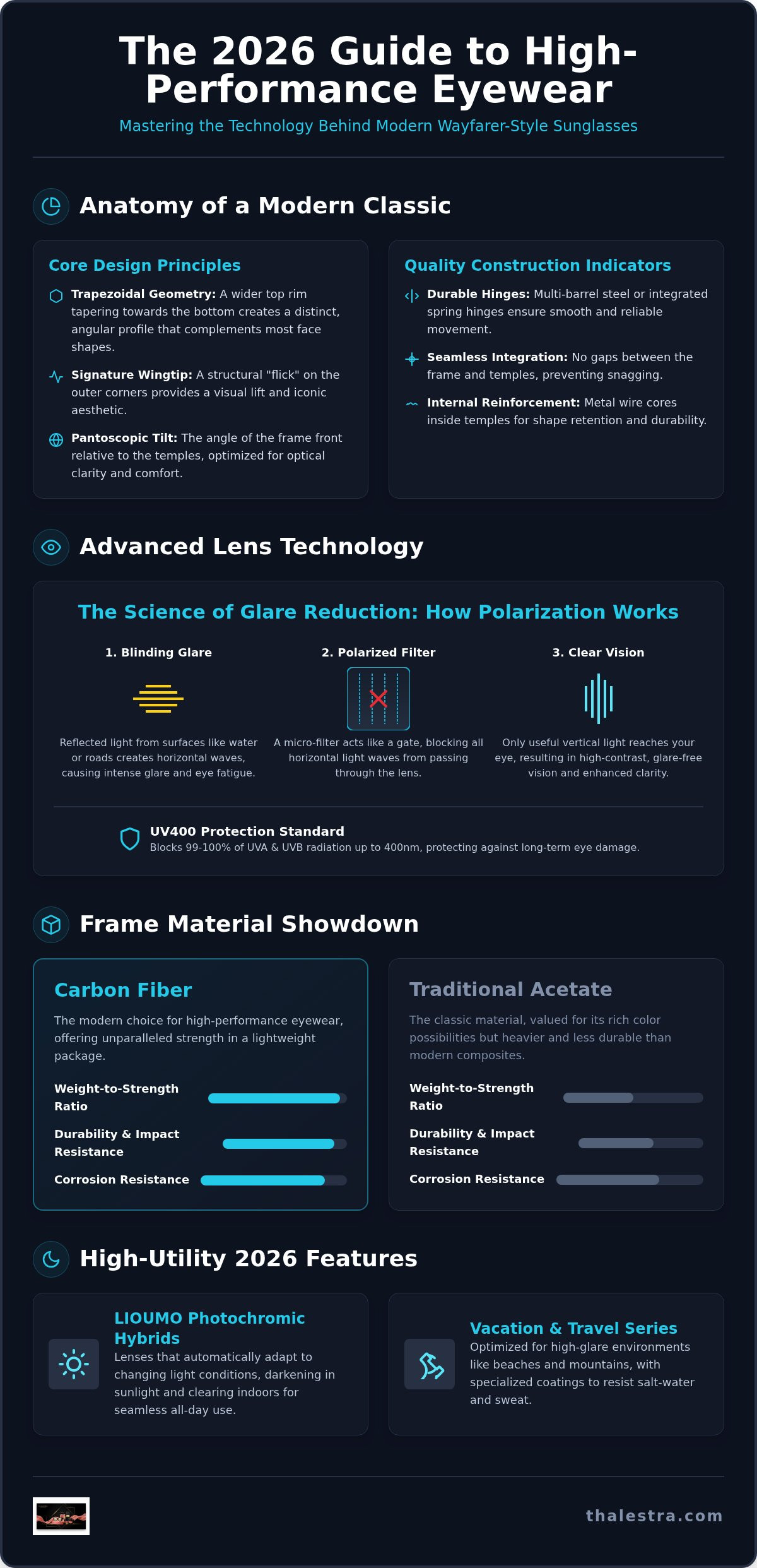
Wayfarer style polarized sunglasses define the modern optical standard through a specific trapezoidal geometry. This silhouette uses a wider top rim that tapers sharply toward the bottom; creating a distinct angular profile. The design integrates a signature "flick" or wingtip on the outer frame corners. This structural detail provides a visual lift that complements most face shapes. While the aesthetic is iconic; the utility is what drives its 2026 market dominance.
Since the mid-20th century; the design has evolved significantly to meet performance demands. The History of Wayfarer Sunglasses shows a transition from heavy 1950s acetate to the lightweight 2026 high-tech composites used today. Modern iterations prioritize technical utility. Carbon fiber and advanced polymers now replace traditional plastics to ensure durability without added weight. This versatility makes the style a primary choice for professional office settings and high-intensity weekend leisure.
Trapezoidal Geometry and Visual Balance
The angled bottom of the frame provides immediate facial definition by following the cheekbone line. This geometry prevents the "drowning" effect often seen with oversized circular frames. Bridge design remains critical for stability. A properly contoured bridge ensures the frame rests securely on the nasal bone without pinching or sliding during movement. The wayfarer silhouette represents a balance of horizontal strength and vertical softness.
Identifying Quality Wayfarer-Style Construction
High-quality wayfarer style polarized sunglasses feature specific engineering markers. Examine the hinges first. Look for multi-barrel steel hinges or integrated spring mechanisms for smooth temple movement. Frame-to-temple integration should be seamless; showing no gaps where hair or skin could snag. Precision manufacturing is evident in lens-to-rim flushness. In polarized models; the lens must sit perfectly within the groove to prevent light leaks or vibration during high-speed activities like driving or boating.
Design proportions vary between "Original" and "New" style variations. Original designs feature a steeper pantoscopic tilt; the angle of the frame front relative to the temples; and a larger lens height. New Wayfarer variations offer a shallower tilt and a more rectangular; streamlined profile. These variations allow users to select frames based on specific orbital bone structures and personal comfort preferences. Key indicators of quality include:
- Internal temple reinforcement: Metal wire cores in acetate frames for shape retention.
- Weight distribution: Balanced center of gravity to prevent forward sliding.
- Surface finish: Impact-resistant coatings that resist salt-water corrosion and sweat.
Polarized Lens Technology: Beyond the Classic Aesthetic
Polarized lens technology transforms standard eyewear into high-performance optical gear. Most wayfarer style polarized sunglasses utilize a specialized chemical film applied to or embedded within the lens material. This filter acts like a microscopic Venetian blind; it blocks horizontal light waves that cause blinding glare off flat surfaces like wet roads or open water. By only allowing vertical light through; the lenses provide a high-contrast view that standard tinted lenses cannot match. This technical advantage is mandatory for maintaining safety and visual awareness in high-glare environments.
The Science of Glare Reduction
Glare reduction occurs through precise molecular orientation within the polarizing filter. Standard tinted lenses merely darken the entire visual field; reducing overall brightness but leaving reflected glare intact. Polarized filters specifically target reflected light; which is essential for marine environments and high-altitude vacations where light intensity is extreme. Eliminating these harsh reflections significantly reduces squinting and the resulting eye fatigue during long-duration wear. Professional drivers and outdoor enthusiasts rely on this technology to maintain focus without the strain associated with traditional non-polarized optics.
UV400 Standards and Eye Health
Full spectrum protection is a non-negotiable requirement in 2026 climate conditions. UV400 standards ensure the lenses block 99% to 100% of UVA and UVB radiation; covering wavelengths up to 400 nanometers. This protective layer works in synergy with the polarized film to prevent long-term ocular damage from cumulative sun exposure. High-utility lenses integrate these layers to ensure clarity doesn't come at the cost of safety. For those operating in coastal or water-heavy areas; specialized gear is required. Review our Polarized Fishing Sunglasses: 2026 Buyer’s Guide for specific marine applications and technical specs.
The current market introduces a critical distinction between standard polarized lenses and high-tech photochromic polarized hybrids. Standard models maintain a fixed tint level regardless of light intensity. In contrast; photochromic hybrids automatically adjust their darkness based on ambient UV exposure levels. This adaptability is ideal for driving through tunnels or moving between indoor and outdoor environments frequently. Choosing Classic Mens Polarized Sunglasses or LIOUMO photochromic options with these advanced lens specifications ensures optimal visual clarity across varied lighting conditions without needing to switch frames. This hybrid approach represents the pinnacle of 2026 eyewear efficiency.
Frame Materials: Carbon Fiber vs. Traditional Acetate
Wayfarer style polarized sunglasses require specific material properties to ensure long-term utility. Heritage brands often prioritize traditional acetate; yet the 2026 market demands high-tech composites for better performance. Thermal stability is a primary differentiator. Frames stored on car dashboards often face temperatures exceeding 60 degrees Celsius. Traditional acetate frames warp under these conditions; resulting in loose hinges and misaligned temples. High-performance carbon fiber and reinforced polycarbonate maintain structural integrity across extreme temperature ranges; ensuring a consistent fit regardless of the environment.
Carbon Fiber: The High-Performance Choice
Carbon fiber is the 2026 standard for active-lifestyle wayfarers. This material uses a multi-layered construction where carbon filaments are bonded with specialized resins. The result is a temple that is corrosion-resistant; salt-water proof; and virtually unbreakable. Its weight-to-strength ratio is significantly higher than acetate; with carbon frames often weighing up to 50% less than their plastic counterparts. This ensures the frames remain comfortable during all-day wear without slipping or causing nasal pressure. The visible weave aesthetic provides a modern; technical look that separates these frames from generic plastic alternatives.
Acetate and Polycarbonate: Style vs. Utility
Choosing between acetate and polycarbonate involves weighing aesthetic depth against impact utility. High-grade acetate allows for deep color saturation and complex "tortoise" patterns. It provides a classic; premium feel but carries more weight and requires more maintenance. Polycarbonate is the utility-driven alternative. It offers extreme impact resistance for sports-oriented wayfarer styles. It is the ideal choice for environments where physical durability is the priority. High-quality injection-molded frames are identified by specific markers:
- Seamless mold lines: Smooth transitions between frame components without visible ridges.
- Surface density: A non-porous finish that resists chemical degradation from sweat and salt.
- Internal reinforcement: Steel cores in the temples to maintain the wrap-around fit.
These material choices ensure that wayfarer style polarized sunglasses perform as high-utility optical tools rather than simple fashion accessories. High-durability materials also reduce damage rates during international transit; supporting global shipping efficiency. Selecting the correct material ensures your eyewear survives the rigors of travel and daily professional use.
Selection Guide: Finding the Perfect Wayfarer Fit
Selecting the correct wayfarer style polarized sunglasses requires precise measurement of facial diameter and frame width. For optimal optical alignment; the frame width must match the zygomatic arch width. This ensures the lenses sit centered over the pupils; preventing peripheral light leakage. Bridge width is equally critical for high-utility performance. A bridge that is too narrow causes nasal pinching and skin irritation. Conversely; a bridge that is too wide results in constant frame sliding during physical activity. Proper bridge selection ensures a secure; stable fit that maintains its position regardless of head movement.
Temple length and the "wrap" feel determine comfort during active use. Temples should extend past the ear with enough length to provide a gentle grip without applying excessive pressure. 2026 designs prioritize ergonomic temple curvature to accommodate high-intensity environments like boating or driving. High-utility wayfarer style polarized sunglasses integrate these measurements to provide a zero-gravity feel. Proper fitment prevents the frames from bouncing or shifting; ensuring your wayfarer style polarized sunglasses maintain optical center alignment during long-duration wear.
Face Shape Compatibility
Matching frame geometry to face shape is essential for visual balance. Round faces benefit from structured; wider frames with sharp angles to add facial definition. Oval faces offer maximum versatility; supporting almost all wayfarer proportions due to naturally balanced facial ratios. Square faces require wayfarer styles with slightly softened or rounded lower rims. This specific design choice helps offset a strong jawline and provides a more streamlined aesthetic. Selecting the correct lens height is also vital; larger lenses suit longer faces; while shorter lens heights prevent overwhelming smaller facial structures.
Lens Color and VLT (Visible Light Transmission)
VLT ratings dictate lens performance across specific light environments. Category 3 lenses; featuring 8% to 18% VLT; are the standard for bright; open-sun conditions. Grey lenses are the preferred choice for true color perception; making them ideal for daily driving. Amber and copper lenses enhance contrast and depth perception; providing a technical advantage in marine environments or on overcast days. 2026 travelers increasingly opt for polarized photochromic lenses to manage varying light levels automatically. Compare these selection criteria with other silhouettes in our Men's Aviator Sunglasses: The 2026 Guide.
Secure your ideal pair today. Browse the Classic Mens Polarized Sunglasses collection for high-performance frames with immediate global shipping availability.
Thalestra’s 2026 Selection: Trending Wayfarer Styles
Curated for the 2026 market; Thalestra’s eyewear lineup focuses on high-utility specifications and global shipping efficiency. The current inventory features wayfarer style polarized sunglasses engineered for specific light environments and lifestyle demands. This selection moves beyond heritage plastics; integrating carbon fiber frame square glasses that offer a superior weight-to-strength ratio. These technical iterations ensure your eyewear remains a functional tool rather than a fragile accessory. High-density construction and precision-engineered hinges define the entire collection.
The LIOUMO Series: Adaptive Vision
The LIOUMO Top Quality Photochromic Polarized Sunglasses integrate a high-performance hybrid lens system. These lenses react dynamically to UV intensity; providing a rapid transition from a clear state to a dark tint. This high-speed adaptation is essential for maintaining visibility during fluctuating light conditions; making the LIOUMO series the primary choice for 2026 driving safety. The photochromic layer works in tandem with a high-efficiency polarizing filter to eliminate dashboard reflections and road glare simultaneously. LIOUMO lenses meet international UV400 and polarization standards.
Vacation and Travel Essentials
Thalestra’s 2025 Vacation Sunglasses For Men collection prioritizes lightweight construction for international travelers. These models utilize reinforced polycarbonate and high-grade composites to ensure frames don't break during transit or high-intensity activity. The ergonomic design ensures a secure fit for coastal environments; while the classic trapezoidal silhouette allows for seamless style pairing. You can wear these wayfarer-style frames from the beach to a business meeting without compromising professional aesthetics. The matte black finishes and subtle carbon fiber weaves provide a modern; trend-aware look.
The Classic Mens Polarized Sunglasses remain the essential daily driver for those requiring consistent optical performance. These models feature reinforced hinges and impact-resistant lenses designed for high-frequency use. They provide the necessary glare reduction for daily commutes and outdoor professional work. Explore the Classic Mens Polarized Sunglasses for timeless utility.
Optimize Your Vision for the 2026 Season
Selecting the right wayfarer style polarized sunglasses involves more than just picking a frame. It requires a focus on high-utility materials like carbon fiber and advanced lens technology that manages glare effectively. You've learned how to identify quality construction through trapezoidal geometry and proper bridge fitment. UV400 Certified Protection and high-strength carbon fiber temples ensure your eyewear survives the demands of driving, marine activities, and international travel.
Modern eyewear must adapt to your environment. Whether you choose the LIOUMO photochromic series or the classic vacation models, the priority remains optical clarity and long-term durability. We provide global order tracking to ensure your high-performance gear arrives efficiently, no matter where you're located. It's time to upgrade your daily driver with technical specifications that match current market trends. Take control of your visual clarity and secure a timeless look today.
Shop the 2026 Polarized Wayfarer Collection at Thalestra
Frequently Asked Questions
What is the difference between Wayfarer and Wayfarer-style sunglasses?
Wayfarer is a trademarked brand name; while wayfarer-style refers to the generic trapezoidal frame geometry. Wayfarer style polarized sunglasses provide the same iconic silhouette and visual lift without the heritage brand markup. These frames prioritize modern material utility; such as carbon fiber and high-strength polymers. This distinction allows users to focus on technical lens specifications and frame durability rather than brand mythology.
Are polarized wayfarer sunglasses better for driving?
Polarized lenses are the optimal choice for driving because they specifically eliminate horizontal glare from wet roads and metallic surfaces. This technology improves reaction times by providing a high-contrast view of the environment. Standard tinted lenses only darken the visual field without removing blinding reflections. Using wayfarer style polarized sunglasses reduces eye fatigue during long commutes and prevents temporary blindness caused by sudden sun flares.
How can I tell if my wayfarer-style sunglasses are actually polarized?
Perform a simple rotation test using a digital screen. Hold the lenses in front of an LCD or LED display and rotate them 90 degrees. If the lenses are polarized; the screen will appear to turn black or significantly darken at a specific angle. This occurs because the polarized filter blocks the light waves emitted by the display. Authentic wayfarer style polarized sunglasses will consistently demonstrate this light-blocking effect.
Do polarized lenses protect my eyes from UV rays better than tinted lenses?
Polarization and UV protection are distinct technologies that serve different functions. Polarized filters block glare; while UV400 coatings block harmful radiation up to 400 nanometers. A dark tinted lens without UV protection is hazardous because it causes pupils to dilate; allowing more radiation to enter the eye. All Thalestra models; including the Classic Mens Polarized Sunglasses; integrate both technologies to ensure comprehensive ocular safety and clarity.
What face shape is best for wayfarer-style frames?
Oval and round face shapes benefit most from the structured trapezoidal geometry of wayfarer style polarized sunglasses. The angular lines provide facial definition and visual balance by adding structure to softer features. Square faces should select variations with slightly rounded lower rims to offset a strong jawline. Matching the total frame width to your facial diameter ensures proper optical alignment and long-term wearing comfort.
Is carbon fiber better than acetate for sunglass frames?
Carbon fiber provides a superior weight-to-strength ratio compared to traditional acetate. It is virtually unbreakable; corrosion-resistant; and maintains structural integrity in extreme heat; such as on a car dashboard. Acetate is heavier and prone to warping over time. For active users; carbon fiber offers a zero-gravity feel and higher impact durability. This material represents the 2026 standard for high-utility professional eyewear and active-lifestyle frames.
Can I wear polarized wayfarer sunglasses for fishing and water sports?
Polarizing filters are specifically engineered to cut through water surface glare; making them essential for fishing and marine navigation. This allows for better depth perception and the ability to see beneath the water surface. Wayfarer style polarized sunglasses provide the necessary lens coverage to block peripheral light. For marine environments; the 2025 Vacation Sunglasses For Men collection offers lightweight; salt-water resistant construction designed for high-intensity water activities.
How should I clean my polarized lenses to avoid scratching the film?
Clean your lenses using a dedicated microfiber cloth and a pH-neutral lens cleaning solution. Avoid using paper towels; shirt sleeves; or household glass cleaners; as these contain abrasive fibers or harsh chemicals that degrade the polarized film and UV400 coatings. Rinse lenses with lukewarm water first to remove grit or salt before wiping. Consistent maintenance preserves the optical integrity and prevents surface scratches on your high-utility polarized eyewear.