
Why do most ultra-light frames feel like they might snap during your first beach trip? The common trade-off between heavy, headache-inducing frames and flimsy, low-quality plastic is a persistent frustration for active men. You need relief from nose bridge pressure and blinding glare during driving or water activities without sacrificing structural integrity. Finding the perfect pair of lightweight polarized sunglasses for men requires a focus on advanced material density rather than just making frames thinner.
This 2026 guide delivers the essential technical specifications for maximum all-day comfort and eye protection. We promise to show you how to select high-performance polarized lenses and ultra-light frames that withstand daily wear. You'll explore high-utility materials like carbon fiber and TR90, engineered for strength and weightless performance. We preview the latest 2025 vacation styles, photochromic lens tech, and specific frame attributes for a modern, trend-aware look. Our breakdown covers everything from glare reduction to impact resistance for the global traveler. Get ready to upgrade your vision with streamlined, high-volume inventory insights designed for speed and efficiency.
Key Takeaways
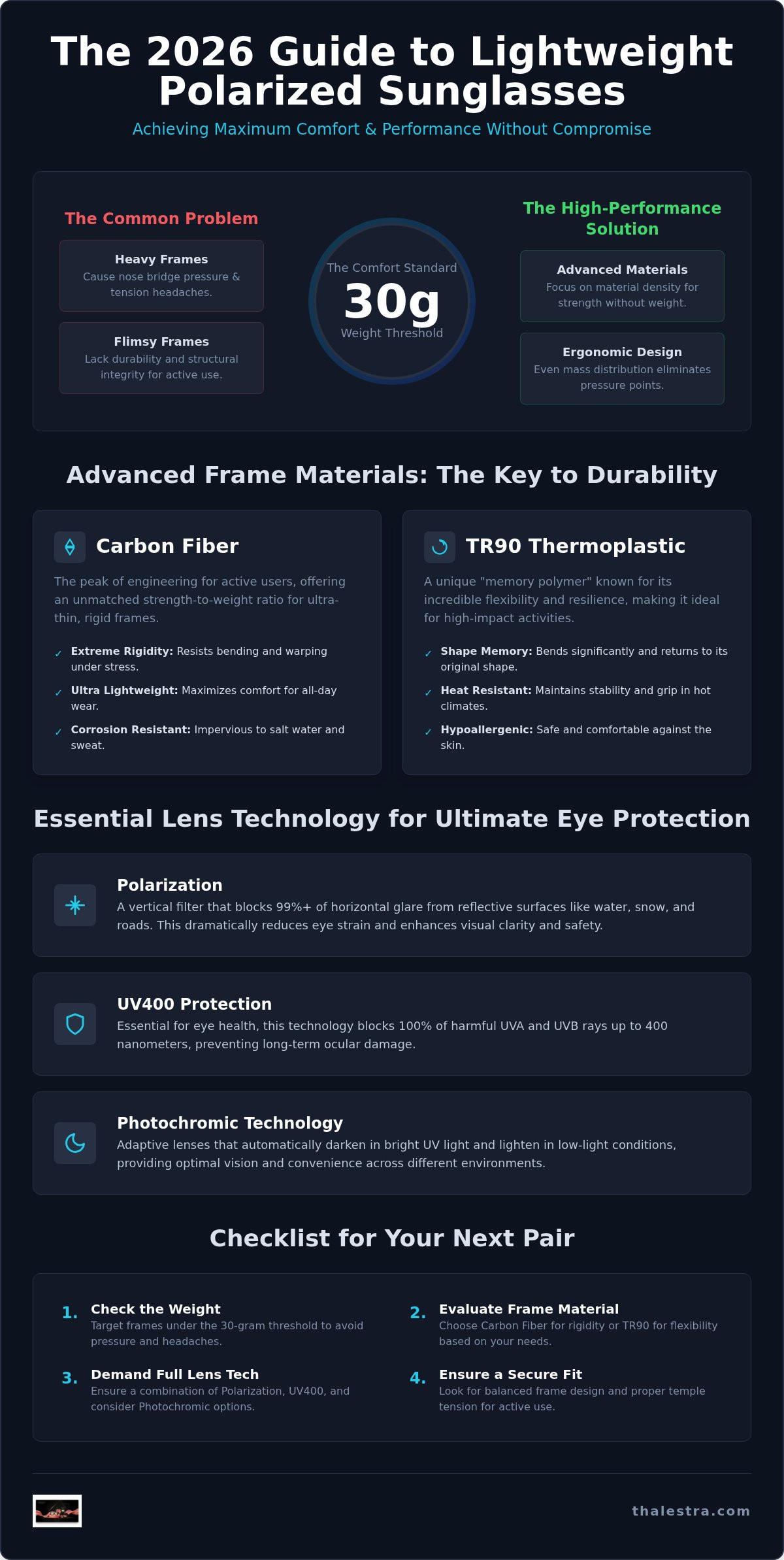
- Identify the 30-gram weight threshold as the critical standard for preventing nose bridge pressure and tension headaches during extended wear.
- Evaluate the performance benefits of Carbon Fiber and TR90 thermoplastic to secure maximum frame durability without the weight of traditional materials.
- Learn to combine UV400 protection with adaptive photochromic technology when selecting high-performance lightweight polarized sunglasses for men.
- Optimize frame balance and temple tension to ensure secure fitment during high-movement activities like driving, cycling, or water sports.
- Discover the top-rated 2025 and 2026 styles including LIOUMO adaptive lenses and classic polarized designs for global vacation utility.
Defining Lightweight: Why Weight and Polarization Matter for Men
Modern eyewear performance relies on precise material density management. In 2026, the industry standard for lightweight polarized sunglasses for men is established at under 30 grams. This specific weight threshold ensures maximum all-day comfort during high-intensity activities like coastal driving, hiking, or water sports. Heavier frames often lead to physical strain, making mass reduction a functional priority for active users. Achieving this balance requires a technical focus on lens thinness and frame equilibrium to prevent the glasses from feeling front-heavy.
The physics of polarization involves a specialized vertical light filter. This technology targets horizontal glare, which is the blinding light reflecting off flat surfaces like asphalt or the ocean. By blocking these horizontal waves, polarized lenses provide sharp visual clarity and reduced eye strain. High-performance models in 2026 prioritize this filtering efficiency to enhance safety and visual performance in bright environments. Modern sunglass technology continues to evolve, integrating these filters into increasingly thinner lens profiles without compromising impact resistance.
The Ergonomics of Eyewear Weight
Pressure point analysis identifies the nose bridge and temples as the most vulnerable areas for user discomfort. When frames exceed the 30-gram limit, they often cause localized fatigue and skin irritation. Lightweight frames solve this by distributing mass more evenly across the face. This design also prevents the common issue of frames sliding down the nose during sweat-heavy activities or high-movement sports. Frame fatigue is the primary cause of eyewear dissatisfaction. By selecting ultra-light polymers or carbon fiber, men can maintain a secure fit without the need for constant adjustment.
Polarization vs. Standard Tinting
Standard tinted lenses merely darken the field of vision without addressing the underlying issue of glare. They lack the specific vertical alignment needed to neutralize reflected light. This deficiency becomes apparent during driving or water activities where glare levels are extreme. Relying on basic tinting also introduces the dangers of non-uv protected sunglasses, which can cause long-term ocular damage in high-glare environments. The 2026 standard for glare reduction demands a minimum of 99% horizontal light blockage. Choosing lightweight polarized sunglasses for men ensures that technical protection and physical comfort work in tandem for the wearer.
Advanced Frame Materials: Carbon Fiber, TR90, and Ultra-Light Polymers
Aerospace-grade engineering defines the 2026 eyewear market. High-performance lightweight polarized sunglasses for men now leverage material density over simple frame thinning. Strength-to-weight ratios dictate comfort levels. Carbon fiber and TR90 thermoplastic lead this technical evolution. These materials provide structural integrity without the burden of traditional mass. Impact resistance remains a priority. Modern polymers ensure that weight reduction doesn't result in fragility.
Carbon Fiber Frame Technology
Carbon fiber represents the technical peak for active users. Interlocking weave patterns provide extreme structural rigidity. The weight-to-strength ratio of carbon fiber is significantly higher than traditional metals. This allows for ultra-thin temple arms that don't bend or warp. It's the primary choice for the best sunglasses for hiking due to its resilience in rugged terrain. Maintenance is straightforward. Periodic cleaning with a microfiber cloth preserves the matte or gloss finish. Longevity is a key feature. These frames resist corrosion from salt water and sweat. Explore our carbon fiber eyewear selection for maximum durability.
TR90: The Memory Polymer
TR90 thermoplastic offers unique utility for outdoor adventures. It's a memory polymer. The material returns to its original shape after significant bending. This flexibility prevents breakage during high-impact activities. Heat resistance ensures the frames stay stable in tropical climates. They won't soften or lose grip. TR90 is also hypoallergenic. Skin irritation on the nose bridge or ears is non-existent. Compare the weights below:
- TR90: Approximately 15 to 20 grams for a standard frame.
- Acetate: Often exceeds 35 grams.
- Polycarbonate: Typically 25 to 30 grams.
Titanium alloys offer a metallic aesthetic for those seeking a classic look. High-grade polymers can mimic this finish while maintaining lower weight profiles. Users must verify the actual UV protection in sunglasses regardless of the frame material. Darker lenses don't always mean better safety. 2026 standards require a fusion of material science and optical health. Choosing lightweight polarized sunglasses for men made from TR90 or carbon fiber ensures a secure, pressure-free fit for global travel.
Lens Technology Breakdown: Polarization, UV400, and Photochromic Options
Lens mass significantly impacts frame equilibrium and user comfort. UV400 protection serves as the non-negotiable baseline for 2026 eye health. It blocks 99 to 100 percent of UVA and UVB radiation, preventing long-term ocular damage. High-performance lightweight polarized sunglasses for men utilize specialized materials like Triacetate Cellulose (TAC) to minimize thickness. TAC lenses feature a multi-layer construction that prioritizes weight reduction while maintaining high polarization efficiency. Polycarbonate remains the standard for high-velocity impact resistance, though it carries a slightly denser profile than TAC alternatives. Modern coating technology adds durability without significant mass. Anti-scratch layers and hydrophobic treatments ensure longevity in salt-water or high-humidity environments. These coatings prevent lens degradation during extended global travel.
TAC lenses are specifically engineered for maximum light filtering. They typically consist of seven to nine layers, including the polarizing core and protective UV-blocking films. This modular construction allows for a lens that is significantly thinner than traditional glass or standard plastic. Polycarbonate lenses are preferred for mountain biking or tactical use where impact safety is paramount. 2026 durability standards also include advanced hydrophobic coatings. These layers shed water instantly, preventing salt spots from obstructing vision during marine activities. This technical focus ensures that optical protection does not compromise the frame's overall weight profile.
Polarized vs. Photochromic: 2026 Utility
Choosing between uv400 vs polarized depends on the specific light environment. Polarized filters excel in high-glare coastal or road conditions. Photochromic lenses provide adaptive darkening that responds to UV intensity. 2026 market trends indicate a rise in polarized-photochromic hybrid lenses. These adaptive options, such as the LIOUMO series, offer glare reduction and light-sensitive transitions in a single lens. Lens thickness directly influences the frame's center of gravity. Thinner lens profiles prevent the glasses from pulling forward. This maintains the balanced feel established by lightweight carbon fiber or TR90 frames discussed in previous sections.
Visual Contrast and Color Enhancement
Specific activity profiles require tailored lens tints for optimal performance. Grey lenses provide neutral color perception for general use and driving. Brown and copper tints enhance depth perception, making them ideal for fishing or hiking. Green lenses offer high contrast in varied light conditions. Mirror coatings provide additional heat reduction by reflecting infrared radiation. These ultra-thin metallic layers improve thermal comfort without adding measurable weight. Optical precision is measured by the Abbe value. The Abbe value defines the level of light dispersion in a lens material, where higher numbers indicate superior clarity and minimal color distortion. Selecting lenses with high Abbe values ensures sharp vision during high-speed activities. High-utility coatings like oleophobic layers prevent oil smudges, maintaining clear sightlines for active users.
All-Day Comfort Selection: Matching Frame Weight to Lifestyle
Selecting lightweight polarized sunglasses for men requires balancing physical mass with facial geometry. High-movement activities like running or cycling demand a center of gravity shifted toward the temples rather than the nose bridge. Front-heavy frames cause constant sliding during exertion, forcing frequent manual adjustments. Proper weight distribution ensures the eyewear remains anchored without excessive clamping force. Men with wider facial structures should prioritize frames with flexible hinges to avoid temple pinch. Technical fit guidance suggests that the bridge width should match the nasal bone structure to prevent red marks and skin irritation. Pressure point management depends on the contact area of the nose pads. High-utility designs use hypoallergenic silicone to increase friction without adding weight. This keeps the frame stable during lateral head movements. Sizing is equally critical. A frame that is too large will feel loose regardless of its weight. Choosing a narrow or medium fit ensures that the lightweight properties translate to a secure, weightless feel on the face.
Driving and Commuting Comfort
Long road trips expose the flaws in heavy eyewear. Temple pressure often leads to tension headaches when worn for over two hours. Lightweight polarized lenses are essential here. They reduce the total load on the ears and nose while providing necessary glare reduction. Thin temple designs improve compatibility with hats or communication headsets used by professional commuters. Adaptive lenses are particularly useful for transitioning from bright highway sun to shaded tunnels or urban canyons. This eliminates the need to remove or swap glasses while driving, maintaining constant eye protection and visual safety. High-speed commuting requires gear that responds as fast as the driver. Reducing the physical burden of the frame allows for better focus on the road during extended travel.
Vacation and Leisure Durability
Global travel demands gear that survives harsh environments. High-utility polymers used in modern vacation eyewear offer natural resistance to saltwater and sand. These materials don't corrode or peel like traditional metal or painted plastics. Packability is another functional advantage. Flexible TR90 or carbon fiber frames survive being crushed in travel luggage or carry-on bags. They return to their original shape instantly. Modern styling ensures these frames work for both beach leisure and formal outdoor events. Performance doesn't mean a bulky, athletic look. Sleek, minimalist designs provide a professional aesthetic for the global traveler. Secure your next pair of high-performance frames from our curated 2025 vacation sunglasses collection for maximum travel utility. Choosing the right material ensures your eyewear remains a long-term asset rather than a fragile accessory.
Curated Performance: Top Lightweight Polarized Styles at Thalestra
Thalestra provides a high-volume, trend-aware inventory of advanced eyewear. The selection focuses on immediate value and specific technical utility. Finding high-performance lightweight polarized sunglasses for men is streamlined through our modular catalog. Each model prioritizes material density management over simple aesthetic choices. The 2026 lineup features Carbon Fiber Square Frames for the modern user. These frames leverage aerospace-grade weaving patterns for extreme rigidity and low mass. They provide a high-tech, durable solution for daily wear. Product listings offer direct access to trending goods with global shipping availability. Technical specs for the carbon fiber series include multi-layer carbon weaves, impact-resistant polarized lenses, and corrosion-proof hinges. These attributes ensure longevity for the global traveler.
The LIOUMO Performance Series
The LIOUMO Top Quality Photochromic Polarized Sunglasses represent the peak of adaptive vision technology. Technical architecture includes a high-sensitivity photochromic layer integrated into the polarized core. This layer transitions between light states in seconds based on UV exposure levels. The frame architecture utilizes ultra-light polymers to maintain a sub-30-gram profile. User feedback highlights zero nose bridge pressure and maximum comfort during 12-hour wear cycles. This adaptive choice eliminates the need for multiple pairs during global travel. It's an efficient, all-in-one vision solution for fast-paced environments. The LIOUMO series remains a top-tier choice for driving, coastal activities, and urban commuting where light conditions fluctuate rapidly.
Classic and Retro Lightweight Frames
The Classic Mens Polarized Sunglasses offer timeless aesthetics without the weight of traditional acetate. These vintage-inspired designs use 2026 ultra-light TR90 materials. We balance thick-rimmed aesthetics with low-density polymers to ensure all-day comfort. Each piece reflects our commitment to high-utility, noun-dense product excellence. The 2025 Vacation Sunglasses For Men collection adds trendy, travel-optimized options. These models feature saltwater-resistant coatings and flexible hinges for maximum luggage packability. Global shipping and multilingual support ensure these trending goods remain accessible. The inventory stays synchronized with current market demands for speed and efficiency. Key attributes of the vacation collection include:
- TR90 Flex-Memory: Frames survive high-pressure luggage packing and return to shape instantly.
- Thermal Stability: Materials resist warping in high-heat tropical climates.
- Chemical Resistance: Frames withstand exposure to sunscreen and saltwater.
- Hypoallergenic Surfaces: Prevents skin irritation during sweat-heavy activities.
- Low-Friction Nose Pads: Keeps eyewear secure without adding physical mass.
Thalestra acts as a modern, streamlined gateway to these high-performance goods. We prioritize accessibility and global reach. Our curated collections for 2025 and 2026 vacation trends ensure you stay synchronized with current market styles. Choosing lightweight polarized sunglasses for men from our selection guarantees a practical, weightless feel for any activity. Explore the full catalog for immediate availability and fast-paced digital navigation.
Secure Your 2026 High-Performance Vision Standards
Selecting lightweight polarized sunglasses for men requires a technical focus on material density and optical precision. Carbon fiber and TR90 thermoplastic remain the primary choices for achieving sub-30-gram frames without sacrificing structural integrity. You now understand how specialized vertical light filters neutralize horizontal glare while UV400 certified protection blocks harmful radiation. These technical specifications provide all-day comfort, eliminating nose bridge pressure and temple fatigue during extended wear. High-utility coatings and impact-resistant materials ensure your eyewear survives the rigors of global travel and outdoor activities.
Explore our curated inventory for immediate value and streamlined navigation. All 2026 models feature high-utility materials, certified lens technology, and trend-aware designs. We prioritize accessibility through global shipping on all 2026 models and multilingual support for a seamless browsing experience. Shop Thalestra's Lightweight Polarized Collection to secure your next pair of carbon fiber or TR90 frames. Upgrade your eyewear gear for the ultimate weightless experience and sharp visual clarity today.
Frequently Asked Questions
What is the best material for the lightest men's sunglasses?
Carbon Fiber and TR90 thermoplastic are the premier materials for weight reduction. Carbon fiber offers an elite strength-to-weight ratio, while TR90 provides flexible, low-density performance. These materials ensure frames remain under the 30-gram threshold for all-day comfort. Choosing lightweight polarized sunglasses for men made from these polymers prevents nose bridge pressure and sliding during active 2026 lifestyles. This material choice prioritizes functional durability for global merchants and travelers alike.
Are polarized sunglasses better for your eyes than regular ones?
Polarized lenses provide superior visual safety by neutralizing horizontal glare from roads and water. While standard tinted lenses only darken the field of vision, polarized filters eliminate blinding reflections that cause eye strain. This technology is critical for driving and marine environments. Combining polarization with UV400 certification ensures comprehensive protection against both light intensity and harmful UVA/UVB radiation. It's a functional requirement for maintaining long-term ocular health in high-glare vacation settings.
How much should a pair of lightweight sunglasses weigh?
High-performance lightweight frames typically weigh between 15 and 25 grams. Any pair weighing under 30 grams is considered optimized for extended wear. This weight range prevents tension headaches and skin irritation at pressure points like the temples and nose bridge. Modern material science allows for durable, ultra-thin profiles that maintain structural integrity while minimizing the physical load. These specs ensure a weightless feel during daily commutes or high-movement sports without compromising on frame balance.
Can I use lightweight polarized sunglasses for driving at night?
Standard polarized sunglasses aren't recommended for night driving due to their high light-reduction properties. Dark lenses can dangerously limit visibility in low-light conditions. However, specialized photochromic polarized sunglasses, like the LIOUMO series, adapt their tint based on UV exposure. Even with adaptive tech, most polarized lenses are designed for daytime glare reduction. Night driving requires clear or specifically tinted non-polarized lenses to maximize light transmission and road safety for the modern driver.
Do lightweight frames break more easily than heavy ones?
Weight reduction doesn't equate to fragility when using advanced polymers like TR90 or carbon fiber. These materials are engineered for high impact resistance and flexibility. TR90 features memory-retention properties, allowing frames to bend and return to their original shape without snapping. Carbon fiber provides extreme rigidity for thinner components. These high-tech options are often more durable than heavier, rigid acetate or low-grade metal frames, ensuring long-term utility for active users and global travelers.
Is UV400 the same as polarization?
UV400 and polarization are distinct technologies serving different protective functions. UV400 blocks 99 to 100 percent of harmful UVA and UVB radiation, which is essential for preventing long-term eye damage. Polarization is a filter that specifically targets horizontal glare to improve visual clarity. High-quality lightweight polarized sunglasses for men integrate both features to provide comprehensive safety. This combination protects against both invisible radiation and visible light reflections in bright, high-intensity 2026 environments.
How do I clean polarized lenses without damaging the coating?
Use a dedicated microfiber cloth and a lens-safe cleaning solution to maintain polarized surfaces. Avoid using paper towels, clothing, or harsh household chemicals, as these can scratch multi-layer TAC lenses or degrade protective coatings. Rinse away sand or grit with lukewarm water before wiping to prevent surface abrasions. Regular maintenance ensures the longevity of hydrophobic and anti-scratch layers. This preserves clear sightlines and optical performance during extended 2026 travel or water-based activities.
What are the benefits of carbon fiber frames for sunglasses?
Carbon fiber offers an unparalleled strength-to-weight ratio, allowing for ultra-thin and rigid frame architectures. This material is naturally resistant to corrosion from sweat and saltwater, making it ideal for coastal use. Carbon fiber frames maintain their shape under extreme temperatures and provide a modern, high-tech aesthetic. The lightweight nature of these frames reduces physical fatigue, ensuring a secure and balanced fit during hiking or long-distance driving. It's the gold standard for durable, high-utility eyewear.