
Why do your premium photochromic lenses stay frustratingly clear the moment you get behind the wheel? It's a common annoyance for daily commuters who expect seamless protection but end up blinded by sudden road glare. Most standard transition sunglasses for driving fail because modern windshields block the UV rays needed to trigger the darkening effect. You want clear, comfortable vision without the constant annoyance of switching between prescription glasses and sunglasses during your commute. Lenses that remain transparent inside the car leave eyes strained and vulnerable to harsh, high-intensity reflections.
This 2026 road safety guide reveals how specialized visible-light activation and polarized layers solve this technical hurdle. Discover high-performance LIOUMO photochromic technology designed to react effectively behind automotive glass. We provide a deep dive into the updated ANSI Z80.3-2025 standards; 90% glare reduction statistics; and lightweight carbon fiber frame options for maximum durability. This overview covers essential lens categories, traffic signal recognition, and stylish frame designs that prioritize functional utility. Gain the technical edge needed for peak road safety and visual clarity in any weather condition while maintaining a modern, trend-aware aesthetic.
Key Takeaways
- Understand the technical limitations of standard photochromic lenses behind UV-blocking automotive glass and how visible-light activation technology provides the solution.
- Discover the safety advantages of specialized transition sunglasses for driving that integrate polarized layers to eliminate up to 90% of hazardous road glare.
- Learn to identify lens categories that meet the updated ANSI Z80.3-2025 standards for optimal traffic signal recognition and visual clarity.
- Evaluate frame utility based on peripheral vision coverage and the lightweight durability of carbon fiber materials for extended driving comfort.
- Explore the performance features of LIOUMO photochromic polarized sunglasses for seamless adaptation between high-glare highways and overcast urban environments.
The Science of Adaptive Vision Behind the Windshield
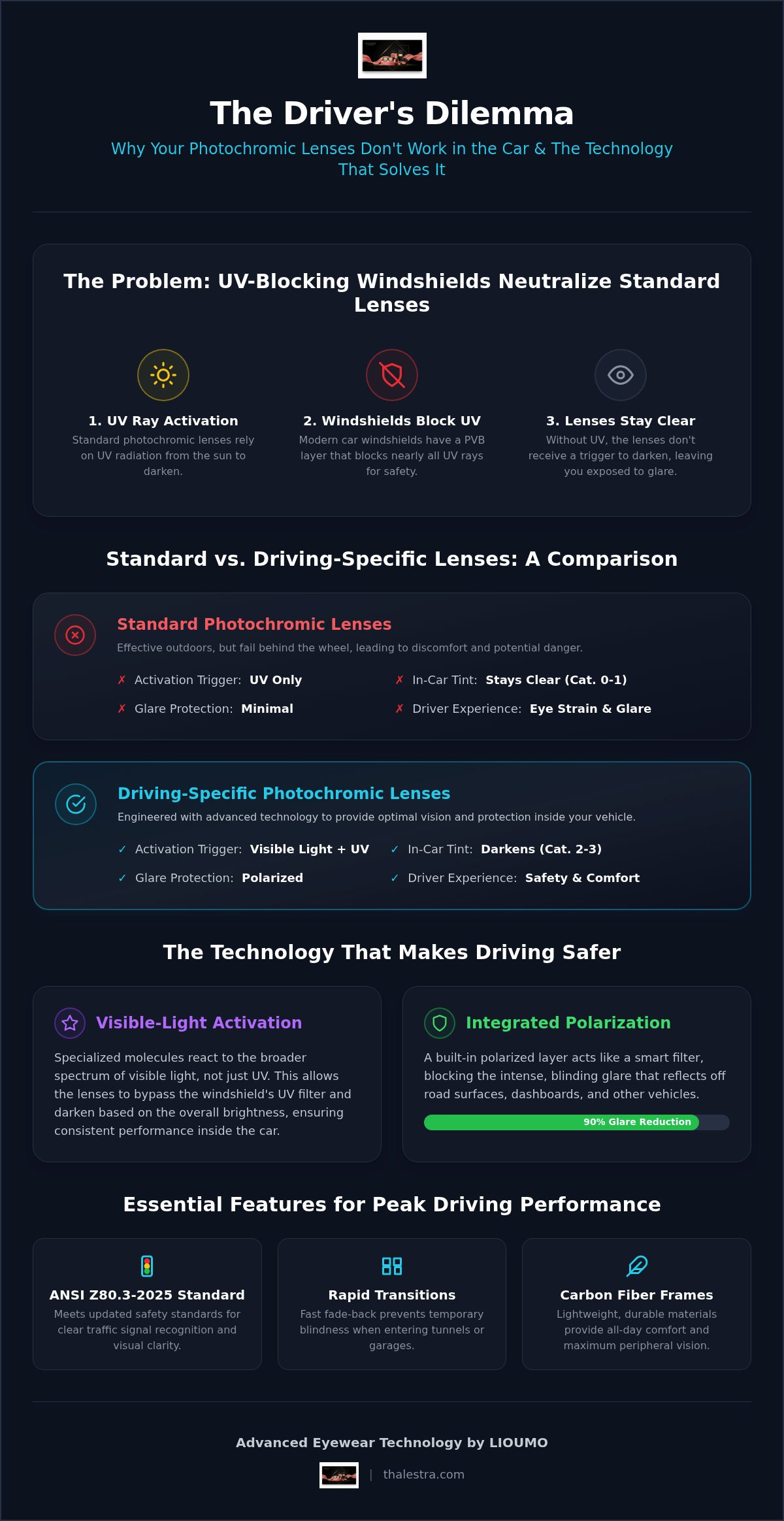
Standard photochromic technology relies on high-energy ultraviolet (UV) radiation to trigger a molecular change. When UV rays hit the lens, carbon-based molecules restructure to absorb light, resulting in a darker tint. This chemical reaction is highly effective in open-air environments. However, the automotive environment presents a unique technical barrier. Modern vehicle engineering prioritizes occupant safety and interior longevity through advanced glass lamination. These windshields are designed to filter out nearly all UVA and UVB rays, effectively "turning off" the darkening mechanism in traditional adaptive eyewear. For the driver, this results in a clear lens that fails to mitigate intense road glare or dashboard reflections.
Premium 2026 eyewear solutions address this through visible-light activation. By utilizing molecules that respond to the broader spectrum of light beyond UV, these specialized transition sunglasses for driving darken reliably behind automotive glass. This ensures a seamless visual experience where the lens adjusts based on brightness rather than just UV exposure. It's a critical upgrade for commuters seeking consistent eye comfort without the need to swap frames mid-drive.
UV-Blocking Glass vs. Photochromic Activation
Automotive windshields utilize specialized polyvinyl butyral (PVB) interlayers. This construction provides structural integrity and superior UV filtration. While beneficial for skin protection and preventing upholstery fade, it creates a "clear lens" trap for standard photochromic users. The technical shift toward visible-light sensitivity allows eyewear to bypass this UV barrier. High-performance lenses now incorporate a dual-trigger system:
- UV-Active Molecules: Provide maximum darkening in direct outdoor sunlight.
- Visible-Light Molecules: Ensure consistent tinting inside vehicles by reacting to the light passing through the glass.
- Active-State Maintenance: Keeps lenses at a functional tint level even in overcast or high-glare conditions.
Temperature Sensitivity and Transition Speed
Lens chemistry is inherently sensitive to ambient temperature. Heat provides energy that encourages photochromic molecules to return to their clear state, a process known as thermal bleaching. In extreme summer heat, standard lenses may struggle to reach their full darkness potential. Conversely, cold winter air allows for faster and deeper darkening. Modern 2026 driving lenses are engineered to maintain a stable performance across diverse climates. Optimizing transition speed is essential for road safety. Rapid fade-back capabilities ensure that vision remains clear when transitioning from bright highways into dark tunnels or parking structures, preventing temporary "blind spots" during the drive.
Standard vs. Driving-Specific Photochromic Technology
Lens categorization depends primarily on the activation trigger. Standard photochromic options rely strictly on high-energy UV exposure. Driving-specific versions utilize a hybrid trigger system involving both UV and visible light. This technical distinction prevents the common "clear lens" failure inside modern vehicles. While standard lenses remain at Category 0 or 1 (clear to light tint) behind a windshield, specialized transition sunglasses for driving reach Category 2 or 3 levels. This provides a functional 50% tint or deeper, ensuring consistent eye protection during bright daylight commutes.
Visual comfort directly impacts safety metrics. Insufficient tinting causes excessive pupil dilation and eye fatigue. Driving-optimized lenses maintain a stable "active state," reducing the physiological stress of constant light adjustment. This stability improves depth perception and shortens driver reaction times when encountering sudden obstacles or changing road surfaces. High-performance molecules ensure the lens remains dark enough to mitigate the dangers of glare without compromising interior dashboard visibility.
Visible-Light Sensitive (VLS) Lenses
VLS technology utilizes advanced molecules that respond to the broader spectrum of light passing through automotive glass. This bypasses the UV-blocking barrier of laminated windshields. Performance varies by lens material, with polycarbonate VLS options offering superior impact resistance and lightweight comfort. Users can expect significant darkening even in indirect light or overcast conditions. This versatility makes them an essential tool for drivers who face variable lighting throughout their journey. For maximum adaptive performance, the LIOUMO photochromic series integrates these visible-light triggers into high-durability frames.
Tint Depth and Color Neutrality
Maintaining color signal integrity is a critical safety requirement. Grey and brown tints are the industry standard for driving due to their neutral color reproduction. Grey lenses provide the most accurate color perception, while brown and amber tones enhance contrast in low-light or hazy environments. Adherence to ANSI Z80.3-2025 standards ensures these tints don't interfere with traffic light or brake light recognition. Balancing these functional requirements involves:
- Signal Recognition: Lenses must allow accurate identification of red, green, and amber lights.
- VLT Optimization: Maintaining a Visible Light Transmission (VLT) between 8% and 43% for safe daytime use.
- Aesthetic Versatility: Modern designs ensure these high-utility lenses fit a contemporary, trend-aware style.
The Critical Role of Polarization in Driving Safety
Road glare is a distinct visual hazard caused by light reflecting off horizontal surfaces like asphalt, car hoods, and wet pavement. While standard transition sunglasses for driving manage overall light intensity, they don't inherently block the blinding reflections that cause temporary vision loss. Polarization is the technical solution for this specific safety risk. It involves a chemical filter applied to the lens that allows only vertical light waves to pass through, effectively neutralizing the horizontal waves that create glare. For 2026 commuters, relying solely on darkening technology is insufficient in high-glare environments like coastal highways or rain-slicked city streets.
The synergy of high-performance lens coatings ensures visual clarity remains high even in challenging conditions. Specialized polarized photochromic sunglasses for men combine an adaptive tint with a permanent polarized filter. This dual-action approach provides a 90% glare reduction on wet or reflective surfaces, a key performance metric for professional-grade eyewear. While the photochromic molecules respond to light levels, the polarized layer works continuously to sharpen contrast and reduce eye strain. For a deep-dive into glare-reduction technology used in other high-intensity environments, see our 2026 Buyer's Guide for Polarized Fishing Sunglasses.
Polarized vs. Photochromic: The Safety Hybrid
The gold standard for modern road safety is a hybrid lens construction. The "Always-On" polarized filter provides constant protection against reflections, regardless of the lens tint level. This is paired with the "Adaptive" photochromic layer that adjusts to ambient brightness. This combination is particularly effective for drivers who experience rapid changes in lighting, such as moving from shaded forest roads to open sun-drenched freeways. It eliminates the need for multiple pairs of glasses while maintaining Category 2 or 3 protection levels as defined by ANSI Z80.3-2025. This integrated technology ensures the driver's pupils don't have to constantly adjust to extreme light shifts, significantly reducing physiological fatigue.
Digital Dashboard Compatibility
Polarized lenses can occasionally interfere with digital interfaces. This "blackout" effect occurs when the polarized filter in the eyewear aligns at a specific angle with the polarized filter used in older LCD screens. Modern vehicle interiors often utilize updated display technology to mitigate this issue. High-quality polarized lenses are generally compatible with modern Head-Up Displays (HUDs) and digital instrument clusters, but drivers should verify visibility before use. Testing your specific vehicle's digital interface ensures that critical speed and navigation data remain visible during your commute. High-performance frames from the LIOUMO collection are designed to balance these optical requirements for the modern tech-integrated cockpit.
Selecting Your Pair: Frame Styles and Driving Utility
Frame geometry dictates road safety by determining the extent of your peripheral vision. While standard silhouettes focus on aesthetics, high-performance transition sunglasses for driving prioritize unobstructed lateral views. Wrap-around designs and wide-frame configurations are the preferred choice for 2026 commuters. These styles block intrusive light from the side while ensuring blind spots remain visible. For those seeking a classic aesthetic without sacrificing technical utility, explore Vintage Designer Sunglasses for timeless silhouettes that offer excellent coverage.
Long-distance travel requires a focus on pressure point reduction. Heavy frames cause nose fatigue and temple discomfort during extended commutes. Optimizing frame weight is essential for maintaining driver focus. Modern materials allow for a high strength-to-weight ratio, ensuring the eyewear remains secure without causing irritation. Professional drivers often select frames with adjustable nose pads and rubberized temple grips to maintain stability during sudden vehicle maneuvers.
Carbon Fiber Frames: The Lightweight Driving Essential
Carbon fiber represents the pinnacle of frame material technology. This industrial-grade material offers extreme durability paired with minimal mass. It effectively prevents nose fatigue during multi-hour road trips. Key attributes include:
- Heat Resistance: Carbon fiber frames maintain structural integrity and won't warp when left on a hot dashboard.
- High Tensile Strength: Exceptional resistance to impact and daily wear.
- Modern Aesthetic: Popular square frame sunglasses men options utilize carbon fiber for a sleek, masculine profile.
Lens Coatings and Maintenance
Technical coatings enhance the performance of adaptive lenses. Backside anti-reflective (AR) coatings are critical for reducing ghost images and bounce-back glare from the interior of the car. This is especially beneficial for late-afternoon driving. Hydrophobic layers ensure clear vision by repelling water and oil during rainy or misty conditions. Maintaining these high-tech layers is vital for longevity. Learn How to Clean Polarized Sunglasses correctly to avoid damaging specialized filters. For the ultimate combination of lightweight comfort and adaptive tech, browse our carbon fiber driving collection today.
Upgrading Your Drive with Thalestra Eyewear
THALESTRA.COM provides high-performance optical solutions for the modern commuter. Selecting the right transition sunglasses for driving requires a balance of technical specification and contemporary style. Our curated selection focuses on high-utility features that address the specific challenges of automotive glass and road glare. With a focus on rapid delivery and global accessibility, we ensure drivers have access to 2026-standard protection. These adaptive eyewear options eliminate the need for multiple frames, providing a seamless visual experience from the driver's seat to the sidewalk.
The LIOUMO Top Quality Photochromic Polarized Sunglasses represent our premium offering for adaptive driving. These frames integrate visible-light sensitive molecules with a permanent polarized filter, ensuring the lenses reach functional Category 2 or 3 tint levels inside the car. This dual-action technology provides consistent eye comfort in variable light environments. Our inventory focuses on trend-aware designs that prioritize durability and visual clarity, making them an essential tool for any 2026 road safety kit.
Why LIOUMO is Built for the Road
The LIOUMO series is engineered for high-frequency use in demanding automotive environments. A technical breakdown of the adaptive lens response time shows rapid darkening and fade-back capabilities, which are essential for safety when entering tunnels or garages. Durability testing confirms that these high-performance materials withstand the temperature fluctuations common in vehicle interiors. Customer feedback consistently highlights a significant reduction in eye fatigue and improved road clarity during long-distance travel. The precision-engineered polycarbonate lenses provide 100% UV400 protection while maintaining the lightweight profile required for all-day wear.
Choosing Your 2026 Driving Aesthetic
Selecting the right silhouette involves matching functional coverage with professional or casual attire. Carbon fiber square frames offer a modern, sleek profile that complements a business aesthetic while providing the lightweight strength needed for comfort. For those planning seasonal travel, our 2025 Vacation Sunglasses For Men provide a high-comfort alternative with maximum coverage. Classic Mens Polarized Sunglasses remain a staple for their timeless appeal and reliable signal recognition. Before completing your order, use this final checklist to ensure peak performance:
- Visible Light Activation: Confirms the lens will darken behind UV-blocking windshields.
- Integrated Polarization: Essential for neutralizing hazardous road and hood reflections.
- Frame Material: Prioritize carbon fiber or high-grade polycarbonate for lightweight durability.
- Safety Compliance: Ensure lenses meet ANSI Z80.3-2025 standards for traffic signal recognition.
Secure your 2026 driving eyewear through our streamlined global shopping platform. We offer efficient processing and international shipping on all adaptive models, including the LIOUMO and classic polarized lines. Upgrade your visual experience today with eyewear built for the modern road.
Elevating Your 2026 Driving Performance
Achieving peak visual clarity behind the wheel requires an integrated technical approach. Modern road safety relies on visible-light activation to overcome the UV-blocking limitations of automotive glass. High-performance transition sunglasses for driving must combine this adaptive response with permanent polarized layers. It's the technical solution for neutralizing hazardous reflections from asphalt and vehicle hoods while maintaining optimal contrast. Utilizing carbon fiber frames ensures long-haul durability and lightweight comfort. This prevents nose fatigue during extended commutes and high-intensity travel.
Our curated catalog features LIOUMO top-quality adaptive tech designed for immediate response to shifting light conditions. Every pair meets the updated ANSI Z80.3-2025 standards for traffic signal recognition and optical safety. Secure your professional-grade gear through our efficient global e-commerce platform. Shop high-performance photochromic polarized driving sunglasses at Thalestra.com. Benefit from carbon fiber frame durability and rapid worldwide shipping available on all adaptive models. Drive with confidence knowing your vision is protected by the latest in adaptive optical science.
Frequently Asked Questions
Do transition sunglasses work inside a car?
Standard transition sunglasses for driving often stay clear inside vehicles because modern laminated windshields block the UV rays required for activation. High-performance models like the LIOUMO series utilize visible-light triggers to bypass this technical barrier. This technology ensures the lenses darken effectively behind automotive glass, reaching functional Category 2 or 3 tint levels. Without specific visible-light sensitivity, adaptive eyewear remains transparent, leaving drivers vulnerable to high-intensity sunlight and eye strain.
What is the difference between photochromic and polarized lenses for driving?
Photochromic lenses adjust their darkness level based on ambient light intensity to manage overall brightness. Polarized lenses utilize a specialized chemical filter to block horizontal light waves, specifically neutralizing hazardous reflections from asphalt and car hoods. While photochromic tech manages comfort, polarization is critical for safety. The most effective transition sunglasses for driving integrate both technologies to provide a glare-free, adaptive visual experience across rapidly changing road environments.
Are grey or brown lenses better for driving safety?
Grey lenses are ideal for bright, sunny conditions because they reduce brightness without distorting natural colors. Brown or amber tints are superior for variable light, such as overcast days or dusk, as they enhance depth perception and contrast. Both options are safe for road use provided they meet ANSI Z80.3-2025 standards. Drivers should choose based on their typical commute conditions and personal preference for color fidelity versus contrast enhancement.
Can I use my transition glasses for night driving?
You shouldn't use tinted adaptive lenses for night driving unless they return to a fully clear state with high visible light transmission. Any residual tint reduces visibility in low-light environments, increasing the risk of accidents. Standard driving-specific lenses are designed to fade back quickly, but it's essential to verify they reach Category 0 before operating a vehicle after dark. Lenses in Category 4 are never safe for road use.
How fast do adaptive driving lenses change color?
Modern adaptive lenses feature rapid activation and fade-back speeds to ensure road safety. While specific times vary by ambient temperature, premium lenses often darken in under thirty seconds when exposed to light. Fading back to clear typically takes less than five minutes. This speed is vital when transitioning between bright highways and dark tunnels. Performance is often faster in cold weather due to the thermal stability of the photochromic molecules.
Will transition lenses interfere with my car's digital dashboard?
Transition technology itself does not interfere with digital displays. However, if your adaptive eyewear includes a polarized layer, you may experience a blackout effect on older LCD screens or certain Head-Up Displays. This occurs when the polarized filters align in a way that blocks the screen's light waves. Most modern vehicle interfaces are designed to be compatible with polarized filters, but testing your specific dashboard is recommended before long-distance travel.
Do all transition sunglasses block 100% of UV rays?
Most high-quality adaptive eyewear, including the LIOUMO collection, provides 100% protection against UVA and UVB rays. These are typically labeled as UV400, meaning they block light waves up to 400 nanometers. This protection is present even when the lenses are in their clear state. Ensuring your sunglasses meet these standards is essential for preventing long-term eye damage from solar radiation, regardless of whether you are driving or walking outdoors.