
The most flattering sunglasses for a square face might not be the roundest pair on the shelf. Advice about sunglasses for square face shapes often focuses on softening a defined jaw and broad forehead, but face-shape labels are guides, not rules. Frame width, position, comfort, and personal style all affect how a pair looks and feels.
If you’re unsure whether your face is square, or getting mixed messages about round, oval, and angular frames, start with the proportions you can see and the fit you can feel. This guide explains how to identify a square face without forcing yourself into a category, compare round, oval, cat-eye, aviator, and browline silhouettes, and judge frame proportions beyond a product photo. You’ll also learn what to check at the bridge and temples, and why lens features such as polarization or photochromic tint are separate decisions from frame shape. The goal is to find sunglasses that feel comfortable, suit your preferences, and work for your day-to-day needs.
Key Takeaways
- Use facial proportions as a starting point, not a strict label, when exploring sunglasses for square face shapes.
- Compare rounded, oval, aviator, and angular silhouettes by their outline and how they sit on your face.
- Check frame width, bridge position, and temple comfort during a try-on. A secure pair shouldn’t pinch or slide with ordinary movement.
- Choose a silhouette you enjoy, then narrow your options by comfortable dimensions and everyday style.
- Consider polarized or photochromic lenses separately from frame shape, based on your practical preferences.
How to Recognize a Square Face Before Choosing Sunglasses
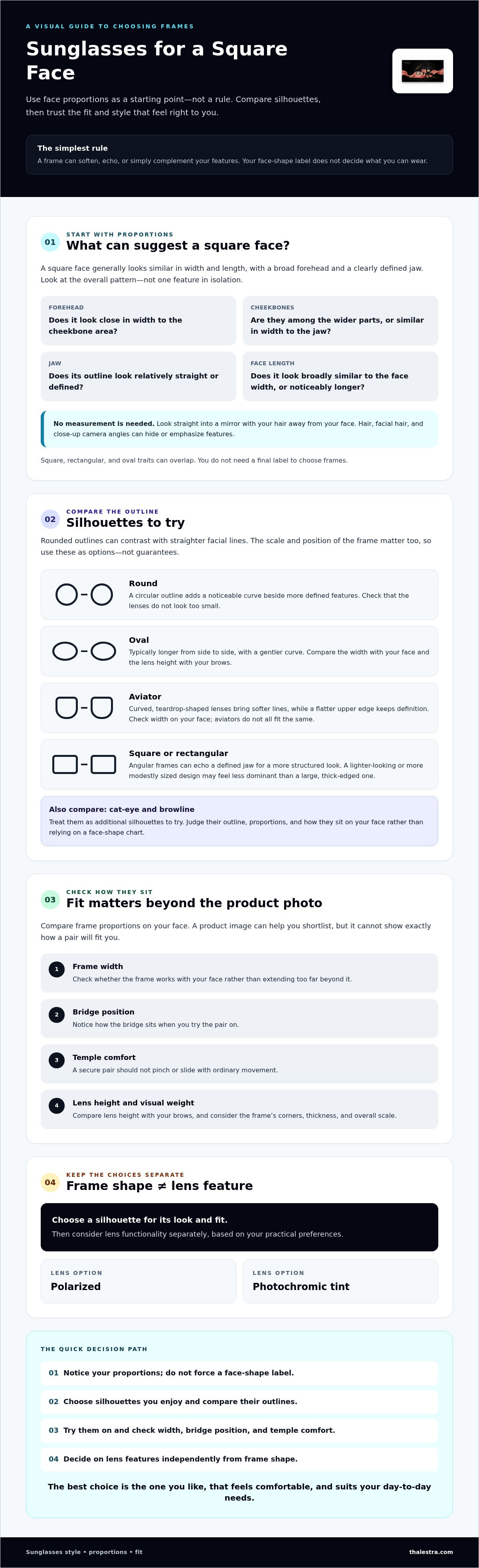
A square face generally has a similar width and length, with a broad forehead and a clearly defined jawline. That’s a useful starting point, not a strict category. Face shape describes visible proportions influenced by underlying facial bone structure, but it doesn’t dictate which frames you can wear. When choosing sunglasses for square face proportions, look at several features together rather than judging your reflection by a single line.
What are the common features of a square face?
Look for a forehead, cheekbone area, and jaw that appear broadly similar in width, alongside a face length that doesn’t seem much greater than its width. A prominent jaw may give the lower face a straighter, more defined outline. These traits can be subtle, so assess the full face rather than relying on jaw shape alone.
Hair can hide or emphasize the forehead, facial hair can change how the jaw appears, and a close-up camera angle may distort proportions. For a steadier view, look straight into a mirror with your hair away from your face. Compare your forehead, cheekbones, jaw, and overall face length. No measurement is needed.
Can your face have more than one shape?
Yes. Square, rectangular, and oval traits can overlap, and your face may not fit one label neatly. You might notice a defined jaw and balanced width, for example, but also see a longer outline. That combination doesn’t require a final verdict. Face-shape categories simply describe general proportions.
Use the label as a frame-shopping clue, then let comfort and preference guide your choice. If you like a silhouette and it sits well, you don’t need to rule it out because it doesn’t match a face-shape chart.
A quick mirror check:
- Forehead: Does it look close in width to the cheekbone area?
- Cheekbones: Do they appear to be among the wider parts of your face, or similar in width to the jaw?
- Jaw: Does its outline look relatively straight or defined?
- Face length: Does your face look broadly similar in length and width, or noticeably longer?
Consider the overall pattern, not a perfect match. Your answers can help you compare frame proportions, but they don’t set rules for what you can wear.
Which Sunglasses Shapes Balance a Square Face?
Rounded outlines create visual contrast with the straighter lines of a square face. Round and oval frames are common starting points because their curves add a softer shape beside a more defined jaw. The effect depends on the frame’s scale and how it sits on you, so treat this as a styling option, not a guarantee that one silhouette will suit everyone.
Try round, oval, or gently curved aviator frames first if you want to contrast angular features with softer lines. These shapes are often suggested for square faces, as in this sunglasses style and fit guide. Use that advice to build a shortlist, then assess width, lens height, and the overall look on your own face.
Do round or oval sunglasses suit square faces?
Round frames have a circular outline that adds a noticeable curve. Oval frames are typically longer from side to side, with a gentler curve, so they may feel less dramatic while still contrasting with angular features. Neither shape is mandatory or universally flattering.
Proportion matters as much as outline. Round frames with lenses that look too small, or wide oval frames that extend far beyond your face, can create a different impression from a well-scaled pair. Compare the top edge with your brows and check whether the lens height looks balanced. Product photos can help you shortlist, but they can’t show exactly how a frame will sit on your face.
Can angular sunglasses work on a square face?
Yes. Square or rectangular frames can echo a defined jaw and create a more structured, deliberate look rather than softening facial lines. If you like that effect, there’s no reason to rule them out based on a face-shape chart.
Scale and visual weight affect the result. A lighter-looking or more modestly sized angular frame may feel less dominant than a large, thick-edged design, though the best choice depends on your preferences and proportions. Consider the frame’s corners, thickness, and width together. A sharp, graphic look can be intentional, not a styling mistake.
Aviators offer another option. Their curved, teardrop-shaped lenses can add softer lines, while a flat upper edge keeps more definition. Check that the width works with your face rather than assuming every aviator will fit the same way. Once you have a preferred silhouette, browse sunglasses styles and compare the shapes available. Consider lens functionality separately from appearance.
How to Compare Sunglasses Frames for a Square Face
Use silhouette as a first filter, then compare proportions and how each frame looks on your face. This makes advice about sunglasses for square face shapes more practical: shape influences appearance, while fit and personal preference determine whether a pair works for you.
| Silhouette | Outline and likely visual effect | Fit considerations |
|---|---|---|
| Round | Curved outline creates contrast with straighter facial lines. | Check that the lenses feel appropriately scaled, not too small or oversized for your face. |
| Oval | Elongated curves offer a softer outline with less circular emphasis. | Compare lens height and total width. A wide oval can extend noticeably beyond the face. |
| Aviator | Often combines a curved, teardrop lens with a defined upper edge. | Check the bridge position and width. For more on this silhouette, see our guide to men's aviator sunglasses. |
| Angular | Square or rectangular lines echo facial angles for a more defined look. | Pay attention to corner placement and width so the frames don’t overhang excessively. |
What frame proportions should you compare?
Start with overall width. A frame should relate comfortably to your face. Too much overhang can make it look oversized, while a narrow frame may appear out of proportion. Compare lens height as well as width. Taller lenses create a different visual balance from a slim, shallow shape, even when both frames share the same outline.
The browline matters, too. A straight, prominent top edge can make a frame look more structured, while a curved edge may appear softer. If you already own sunglasses that sit comfortably, check their listed dimensions and use them as a reference when reviewing product measurements. Compare like with like, including total frame width and lens height.
How do frame materials and details affect the look?
Thin rims can give a frame a quieter appearance, while bold rims make its outline more noticeable. Neither is a face-shape rule. Colour and finish also affect visual prominence: a high-contrast finish may draw attention to the frame, while a subtler tone can make the outline less dominant. Choose based on the look you want, not assumptions about a material’s weight, durability, or comfort.
Keep styling separate from lens performance. Frame shape and finish determine appearance; lens features are a different consideration. Check product details for the specific lens information you need rather than inferring performance from the frame’s silhouette or colour.
How to Check Sunglasses Fit on a Square Face
A flattering silhouette still needs to feel right in motion. Use this quick fit check to assess sunglasses for square face proportions without relying on appearance alone.
- Check the width. The frame should sit across your face without extending far beyond your temples or squeezing them. Look for a balanced fit rather than choosing a width based only on face-shape advice.
- Check the bridge. The bridge should rest comfortably on your nose and help keep the frames in position. They shouldn’t slide down during ordinary movement.
- Check the temples. The arms should follow the sides of your head without pressing painfully or feeling loose. Notice pressure near your ears, especially after wearing the frames for a few minutes.
- Move naturally. Turn your head, look down, and smile. The sunglasses should stay secure without pinching or shifting, and the lenses shouldn’t rest against your cheeks when you smile.
How should sunglasses sit across your face?
A balanced pair sits evenly at your temples, with no obvious overhang or uncomfortable pressure. The bridge should feel stable, so you don’t have to keep adjusting the frames. Check the fit from the front and side. A pair that looks centered straight on may still sit too close to your cheeks or press at the temples.
Comfort is personal, so pay attention to pressure points instead of assuming a frame will loosen or settle into place. If you notice pinching, repeated slipping, or lens-to-cheek contact as you smile, try another size or shape.
How can you judge fit when shopping online?
Use measurements as a comparison tool. Check the listed total frame width and lens dimensions, then compare them with a pair you already wear comfortably. Product images from the front and side, when available, can help you assess shape and placement, but they can’t confirm how the frame will fit your face. Review the retailer’s published return terms before ordering, and don’t assume a policy that isn’t stated.
Once the fit looks promising, consider lens function separately from frame style. For background on UV protection, read this guide to UV-protected sunglasses, then verify lens details on the individual product listing. Browse sunglasses options and compare published measurements and lens information before choosing.
Choose Sunglasses for a Square Face by Style, Fit, and Lens Needs
Make your choice in three steps: pick a silhouette you like, confirm the dimensions look comfortable, then compare lens features with how you plan to use the sunglasses. This keeps sunglasses for square face shapes from becoming a rigid checklist. Rounded, oval, aviator, or angular frames can all work if the proportions and overall look suit you.
Should polarized or photochromic lenses affect your style choice?
Treat lens functionality as a separate decision from frame shape. Polarized lenses are commonly chosen to reduce reflected glare. Photochromic lenses adjust their tint in response to light conditions. Neither feature determines whether a frame suits your face shape, and neither should be taken as proof of UV protection. Check the product listing for specific lens details, including any stated UV protection, rather than inferring them from lens type, darkness, or frame style.
Your intended use can help narrow the options. Consider whether reducing reflected glare or having lenses that adjust to changing light is useful for your routine, then choose a frame outline and finish you enjoy. Lens features don’t need to dictate your style.
What should you check before choosing a pair?
Before deciding, review the current product listing. Confirm the frame and lens dimensions, the lens information provided, and whether the item is currently available. Compare measurements with sunglasses you already find comfortable, and consider the front and side views if the listing includes them. Product photos can help you assess appearance, but they can’t confirm how a frame will feel on your face.
- Silhouette: Choose a shape that matches your preferred look, whether softly curved or more defined.
- Dimensions: Check the listed measurements against a familiar, comfortable pair.
- Lens needs: Look for product-specific information about polarization, photochromic function, and UV protection.
- Availability: Verify the listing is current before making a decision.
The best choice comes down to personal style, comfort, intended use, and verified product details, not a face-shape label alone. If you’ve settled on the look and features you want, browse THALESTRA.COM’s current sunglasses assortment and compare the available options at your own pace.
Choose the Pair That Feels Like You
Face-shape advice can help you build a shortlist, but it doesn’t set rules. For sunglasses for square face shapes, try silhouettes with curves if you want contrast, or angular frames if you prefer a more defined look. Then check the frame width, bridge position, and temple comfort so your choice feels as good as it looks.
Keep lens features separate from styling. Polarized and photochromic lenses serve different preferences, so review each product’s details and choose based on how you plan to use your sunglasses. A face-shape label is only a starting point. Your comfort, personal style, and practical needs matter just as much.
THALESTRA.COM serves international customers through its online store, with polarized and photochromic sunglasses among its offerings. Explore the current assortment and compare styles and product details at your own pace. Browse THALESTRA.COM’s current sunglasses and choose a pair that suits your look and everyday needs.
Frequently Asked Questions
What sunglasses shape is best for a square face?
Round, oval, and softly curved frames are common starting points because their curved outlines contrast with angular features. Aviators may also work, depending on their width and shape. There isn’t one best option for everyone: compare the frame’s scale, lens height, and browline, then choose what feels comfortable and fits your style. A square or rectangular frame can also be a deliberate choice if you prefer a more defined look.
Do round sunglasses suit a square face?
Round sunglasses can suit a square face by adding a curved outline beside a more defined jaw. Check the frame’s proportions as well as its shape: very small lenses may look out of scale, while a frame that extends too far beyond your face may feel oversized. Compare round frames with oval styles, which have a longer outline, and choose based on the appearance and fit you prefer.
Can I wear square sunglasses if I have a square face?
Yes, you can wear square sunglasses with a square face. Their straight edges may echo your facial angles rather than soften them, creating a more structured look. If that’s your preferred style, face-shape advice doesn’t need to rule it out. Compare different frame widths and rim thicknesses, then check that the temples feel comfortable and the frames don’t pinch or slide during ordinary movement.
How do I know if my face is square?
A square face usually appears similar in width and length, with a relatively broad forehead and a more defined jawline. Look in a mirror with your hair away from your face and compare the forehead, cheekbone area, jaw, and overall face length. Don’t base your decision on one feature alone. Hair, facial hair, and camera angles can affect how proportions appear, and face-shape labels are only general guides.
Should sunglasses be wider than your face?
Sunglasses are often best when their width is close to, or slightly wider than, the cheekbone area, without extending far beyond your temples. The right balance depends on your facial proportions and the frame design. Look for even positioning, comfortable temples, and no excessive overhang. If shopping online, compare the listed frame width with a pair you already own and find comfortable.
Are polarized sunglasses better for a square face?
Polarization is a lens feature, not a face-shape feature. Polarized lenses are commonly selected to reduce reflected glare, but they don’t make a frame more or less suitable for a square face. Choose your silhouette and fit based on appearance and comfort, then consider polarization separately according to your needs. Check the product listing for lens details, including any stated UV protection, rather than assuming polarization confirms it.
Are photochromic sunglasses suitable for everyday wear?
Photochromic lenses adjust their tint in response to light conditions, which may suit everyday use if you prefer lenses that adapt as lighting changes. Whether they work for your routine depends on where and how you plan to wear them, so review the product’s stated lens details before choosing. Photochromic functionality doesn’t determine face-shape suitability or confirm UV protection. Treat lens features and frame fit as separate checks.