
The lightest sunglasses aren’t always the most comfortable. If your frames slide, pinch, or leave tender marks on your nose and temples, weight may be only part of the problem. Lightweight sunglasses that don't leave marks depend on balanced fit and even pressure, not just a low-weight frame. It’s frustrating to take off a pair that seemed comfortable at first and find pressure spots afterward.
This guide explains how frame weight, fit, and pressure points work together, so you can compare sunglasses for regular wear. Learn what to check around the nose and temples, how materials and construction affect comfort, and why a lightweight label alone can’t tell you whether a frame will suit your face. Use practical fit checks alongside the lens features and style you want, including polarized, photochromic, and classic options.
Key Takeaways
- Light frames can still create pressure marks when the bridge or temples don’t fit well.
- Compare frame materials and construction alongside dimensions, rather than judging comfort by material alone.
- Use frame width, bridge fit, temple contact, balance, and stated weight to compare sunglasses with a pair you already own.
- Try a simple wear test to spot slipping, pinching, or repeated pressure before choosing lightweight sunglasses that don't leave marks.
- Match fit, stability, and lens features to your routine, whether you wear sunglasses for driving, outdoor activity, or everyday use.
Why lightweight sunglasses can still leave marks
A light frame can still feel uncomfortable if it rests unevenly. Sunglasses contact the nose bridge or nose pads and the sides of the head near the temples. If one area bears more of the frame’s pressure, you may notice it during wear, even when the sunglasses feel light in your hand.
Pressure marks are temporary impressions or contact-area changes that can appear where sunglasses press against the face. Their likelihood depends on fit, pressure distribution, and how long the frames are worn. Weight matters, but it isn’t the only factor. A frame’s shape and construction influence where it rests, as this general overview of sunglass construction illustrates.
What causes sunglasses marks on the nose and temples?
Concentrated contact is often the issue. A narrow or poorly matched bridge can put more pressure on a small area of the nose, while temples that grip too tightly may press against the sides of the head. Frames that slide can shift repeatedly, creating friction or prompting you to push them back into place. Skin sensitivity and wear time can also affect how the same contact feels from person to person.
A localized impression at a nose pad, bridge, or temple is different from general skin irritation. Redness, itching, or discomfort that doesn’t follow the frame’s contact points may have another cause. Notice where and when the sensation appears instead of assuming every mark means the frames are too heavy.
Does a lighter frame always feel more comfortable?
No. Lower weight may reduce the load on your face, but it can’t make an unsuitable fit comfortable by itself. A bridge that’s too narrow may press on your nose, while tight temples can pinch even on a light frame. If the fit is loose or unbalanced, the sunglasses may slide and need frequent adjustment.
Comfort depends on how weight and contact work together. A frame that sits steadily and spreads pressure across its intended contact points may feel better than a lighter pair that shifts or pinches. No material or design can prevent marks for everyone, because faces and wear habits differ. For lightweight sunglasses that don't leave marks, compare weight with bridge fit, temple pressure, and balance, then assess how the frames feel during wear.
How frame materials and construction affect all-day comfort
Material is one clue, not a comfort rating. Frame thickness, shape, dimensions, hinges, and lens size all contribute to the finished weight and how it sits on your face. Two pairs made from the same broad material can feel different, so don’t assume a slim-looking frame is light. Compare stated weight and material specifications when they’re available.
Comparing lightweight frame materials
Acetate frames often have a more substantial, structured feel, while metal frames can have slimmer profiles. Composite frames cover a broad range of designs and flexibility. These are general tendencies, not guarantees: thickness, construction, and specific material blends change the result. Material choice can influence feel and flexibility, but it can’t guarantee a comfortable fit or prevent marks. Check the stated material and weight instead of relying on appearance.
Which design details influence balance and pressure?
Frame width and temple length affect where the arms meet your head and how securely the sunglasses stay in place. A frame that doesn’t suit your face may feel loose or create pressure at the sides. Bridge shape and nose-pad design also matter: their position and contact area affect how the front of the frame rests. Lens size and construction contribute to balance, so consider the complete design rather than one component.
Use these specifications to compare options:
- Overall width: Compare it with a pair that sits securely on your face.
- Bridge and nose contact: Check how the frame is shaped to rest on your nose.
- Temple length and construction: Consider where the arms may contact your head.
- Published weight: Compare stated figures, not visual impressions.
Your routine can guide the trade-offs. Sunglasses for active outdoor use may need a secure feel, while casual pairs may prioritize a different balance of shape and stability. REI’s guide to Finding the right pair also considers eyewear by activity and lens features. For lightweight sunglasses that don't leave marks, use material and weight as comparison points, then assess the dimensions and contact areas that determine how the frame sits.
Explore the sunglasses selection and compare listed features with these fit checks. Don’t assume a particular frame is lightweight or mark-free based on its appearance.
How to compare sunglasses for fit, weight, and pressure points
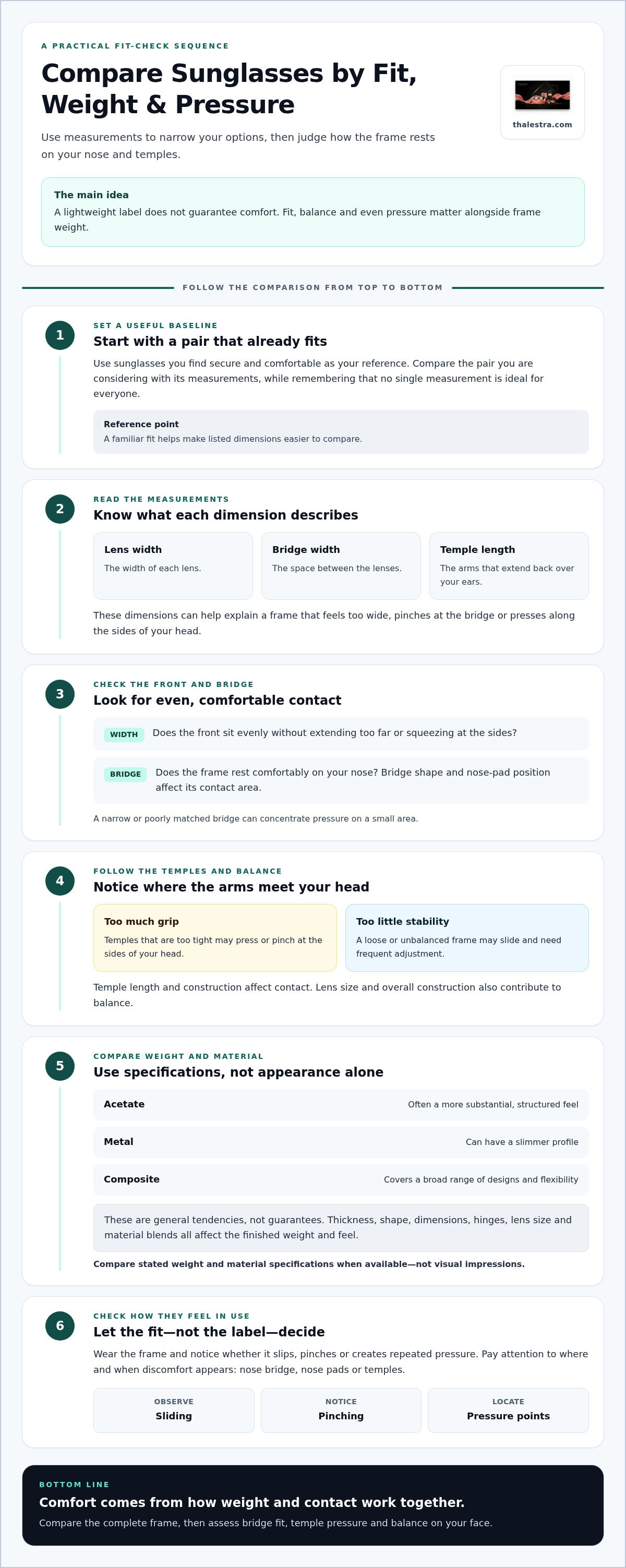
Use the same checks for every pair instead of relying on labels such as “lightweight” or “comfortable.” Compare measurements and stated weight where available, then consider how the frame sits across your nose and temples. Specifications can narrow the options, but how the sunglasses feel on your face helps you judge the fit.
Which frame measurements should shoppers compare?
Lens width describes the width of each lens, bridge width measures the space between them, and temple length describes the arms that extend back over your ears. These dimensions can help explain why a pair feels too wide, pinches at the bridge, or presses along the sides of your head.
Start with a familiar pair that feels secure and comfortable. Compare its listed measurements with the sunglasses you’re considering, but don’t treat any one number as ideal for everyone. Face shape and frame design affect how measurements translate to fit.
- Frame width: Does the front sit evenly without extending too far or squeezing at the sides?
- Bridge fit: Does the frame rest steadily without concentrated pressure or sliding?
- Temple contact: Do the arms feel secure without pinching?
- Balance and weight: Does the frame feel evenly supported, and is its weight stated in the specifications?
Compare the details together. A similar lens width doesn’t guarantee the same fit if the bridge, temples, or overall construction differ. Measurements from a pair you own can provide a useful reference, but they aren’t a universal template.
How should you weigh comfort against lens features?
Consider frame comfort separately from lens function. Polarization reduces glare from reflective surfaces, but it doesn’t determine whether the frame presses on your nose or temples. UV protection is also a separate consideration from fit and weight. Review the stated UV protection when comparing lenses, and see this guide to sunglasses and UV protection for more detail.
For regular wear, consider lens features suited to your activities as well as whether the frame stays comfortable. Lens care matters too: if you choose polarized lenses, follow appropriate cleaning guidance to help care for them. See cleaning polarized sunglasses for practical tips.
The best comparison balances stated specifications with fit. For lightweight sunglasses that don't leave marks, prioritize a stable, even-feeling fit alongside the lens features you need.
How to test sunglasses for slipping, pinching, and marks
A quick try-on can reveal an obvious fit issue, but comfort may change as you wear the frames. Check how they sit before moving, then notice whether they stay in place through ordinary head movements. Pay attention to specific contact points, not just whether the pair feels light at first.
A quick at-home fit check
Position the sunglasses naturally and check that the front sits evenly. Turn your head, look down, and move as you normally would. Notice whether the frames slide repeatedly or whether the bridge and temples feel secure without pinching. After your usual wear period, reassess those same areas. A brief impression after removing the frames is one observation; discomfort that continues or keeps returning is another.
- Set the fit: Place the frames as you’d normally wear them. Don’t push them into a position they won’t hold on their own.
- Move naturally: Turn your head and look down. Note any shifting that makes you readjust the frames.
- Check contact: Notice pressure at the bridge, behind the ears, and along the temples.
- Reassess later: After your usual wear period, check whether the frames still feel comfortable and stable.
Fit-check rule: a comfortable pair stays put during normal movement without pinching, repeated readjustment, or pressure building at one contact point.
What to do when sunglasses leave marks
First, identify where the mark or pressure appears. An impression on the nose bridge points you to the bridge contact; discomfort behind the ears or at the temples suggests checking the arms and their fit. A brief impression that fades after removal differs from discomfort that persists or returns during wear. This check can help you compare fit, but it isn’t a way to diagnose skin concerns.
Before choosing another pair, compare its frame width, bridge shape, and temple length with the pair that caused trouble. Look for differences in where the frame rests, and consider whether it shifts or presses in the same spot. If discomfort persists, pause wearing that pair rather than continuing to test it. A lighter feel alone isn’t enough; stable, even contact matters too.
Evaluate lightweight sunglasses that don't leave marks by fit and wear experience, not weight claims alone. Browse sunglasses for your routine and compare available styles with your fit checklist.
Choose lightweight sunglasses that fit your face and routine
The right choice balances how the frame feels, how securely it sits, and what you need from the lenses. Start with your usual activities, then compare fit and specifications instead of choosing by weight or appearance alone. Lightweight sunglasses that don't leave marks aren’t defined by one material or feature; comfort depends on how the whole frame works with your face.
Which comfort priorities matter most for your routine?
For extended wear, pay close attention to how evenly the frame rests across the bridge and temples. A pair that feels balanced at first but develops pressure during regular use may not suit all-day wear. For outdoor activity, stability matters alongside weight, since frames that shift can distract you and need repeated adjustment.
For driving or everyday use, consider lens features suited to your needs as well as frame fit. If sunglasses are mainly for occasional styling, compare proportions and published specifications, then check that the frame still sits comfortably. A sleek look or lightweight feel alone doesn’t tell you how it will fit.
A final checklist before choosing sunglasses
Use this quick review to compare options:
- Dimensions: Compare the frame width, lens width, bridge width, and temple length with a pair you already find comfortable.
- Published details: Check any listed weight and material rather than guessing from a photo or frame thickness.
- Contact and stability: Consider whether the bridge and temples feel secure without pinching, slipping, or concentrating pressure in one spot.
- Lens features: Evaluate UV protection and polarization separately from frame comfort. Polarization can reduce glare, but it doesn’t determine fit.
- Routine: Choose priorities based on how often and where you plan to wear the sunglasses.
There may be trade-offs. A frame that feels light still needs to stay stable, and a material preference can’t replace a suitable shape or fit. Compare the complete design, using your own comfortable pair as a practical reference point.
THALESTRA.COM offers polarized, photochromic, and classic men’s sunglasses to browse by style and lens features. Explore the sunglasses selection and use this checklist to narrow your options. Assess each frame on its own fit rather than assuming a specific pair is mark-free.
Choose comfort with confidence
Frame weight matters, but a comfortable fit depends on more than a number. Bridge shape, temple pressure, frame balance, and dimensions all affect how sunglasses feel over time. Compare published specifications with a pair you already find comfortable, then pay attention to slipping or pinching during a normal wear test.
For lightweight sunglasses that don't leave marks, consider the complete fit rather than assuming a lighter frame will suit everyone. Keep comfort checks separate from lens choices: polarization helps reduce glare, while UV protection is its own important feature. Match both the frame and lenses to how you plan to wear your sunglasses.
THALESTRA.COM’s online selection includes polarized, photochromic, and classic men’s sunglasses. Browse THALESTRA.COM sunglasses and compare available styles with your fit priorities in mind. Use the checklist above to choose a pair that suits your routine and comfort preferences.
Frequently Asked Questions
Can lightweight sunglasses still leave marks?
Yes. Lightweight sunglasses can still leave marks or cause discomfort if the bridge, temples, or overall frame fit poorly. Lower weight may reduce one source of pressure, but balance, contact points, skin sensitivity, and wear time matter too. Compare the frame dimensions with a pair that feels comfortable, and notice where it rests on your face. A lightweight label isn’t a guarantee of mark-free wear.
How do I stop sunglasses from leaving marks on my nose?
Check whether the frame sits evenly and whether pressure is concentrated at the bridge. Compare the bridge width and nose-contact design with a pair that feels comfortable. A lighter frame may help, but it won’t make an unsuitable fit comfortable by itself. Notice whether the sunglasses slide or press on one spot during wear. If discomfort persists, pause wearing that pair rather than forcing the fit.
What type of sunglasses is best for sensitive skin?
There isn’t one frame type that suits everyone with sensitive skin. Consider how the material contacts your skin, whether the fit creates pressure or friction, and how long you wear the sunglasses. Compare the listed material and frame dimensions, then pay attention to how the pair feels during use. No material guarantees a reaction-free experience for every wearer, so don’t rely on material alone to judge comfort.
Do nose pads prevent sunglasses from leaving marks?
No, nose pads don’t automatically prevent marks. Their position and contact with the bridge can affect how the frames rest, while frame balance and temple fit also influence pressure. Look at the design details and assess whether the sunglasses feel secure without pinching or needing constant adjustment. If pressure builds in one area, compare the bridge fit and overall frame dimensions with a pair that feels comfortable.
How should sunglasses fit so they do not pinch behind the ears?
The temples should rest securely without pressing sharply behind your ears. Check whether the frame width feels balanced and the arms sit comfortably along the sides of your head. If the sunglasses slide or pinch, compare their dimensions, including temple length and frame width, with a pair that fits well. A secure fit shouldn’t feel constricting, and frame weight alone can’t tell you whether the fit is right.
Are plastic or metal sunglasses lighter?
Neither plastic nor metal sunglasses are always lighter. Actual weight depends on the specific frame’s design, dimensions, and construction, so compare published specifications instead of judging by material or appearance. Also consider balance and contact points. A lighter pair can still feel uncomfortable if it slips, pinches, or rests unevenly on your face. Use both the listed details and your experience of the fit to compare options.
How can I tell whether sunglasses are too tight?
Persistent pressure at the bridge or temples, pinching behind the ears, or discomfort that prompts repeated adjustments can signal a poor fit. A secure pair should stay in place without feeling constricting. Compare frame width and temple length with sunglasses you find comfortable, and notice whether pressure increases during wear. Don’t use weight alone to judge fit; how the frame rests and balances on your face matters too.