
What if your eyewear could survive a 500-mile road trip or a packed suitcase without adding a single gram of pressure to your nose? You've likely felt the frustration of heavy frames that leave painful marks after an hour or snap the moment they're tossed into a travel bag. Finding authentic carbon fiber sunglasses shouldn't feel like a gamble against cheap, "carbon-look" plastic imitations that fail under pressure. High-performance gear must be both indestructible and weightless for all-day wear.
This 2026 guide reveals why aerospace-grade materials are the ultimate solution for modern, high-utility eyewear. You'll discover how the 1:1 ratio of strength to weight provides vacation-proof durability for any destination. We'll explore technical specifications of carbon fiber frame square glasses, polarized lens tech, and genuine high-tech construction markers. From long-duration driving comfort to streamlined aesthetic appeal, this is your roadmap to the most resilient eyewear on the global market.
Key Takeaways
- Understand carbon fiber reinforced polymer (CFRP) specifications for aerospace-grade durability and superior strength-to-weight ratios over traditional metal frames.
- Identify structural differences between woven and forged carbon fiber sunglasses for selecting high-tech 2026 travel aesthetics.
- Compare weight and hypoallergenic properties against titanium and acetate for optimized long-duration wear comfort.
- Utilize temperature tests and visual markers to distinguish genuine high-performance composites from imitation plastic frames.
- Integrate polarized and photochromic lens technology into vacation eyewear strategies for maximum utility in global environments.
The Rise of Carbon Fiber Sunglasses: Aerospace Tech for Your Face
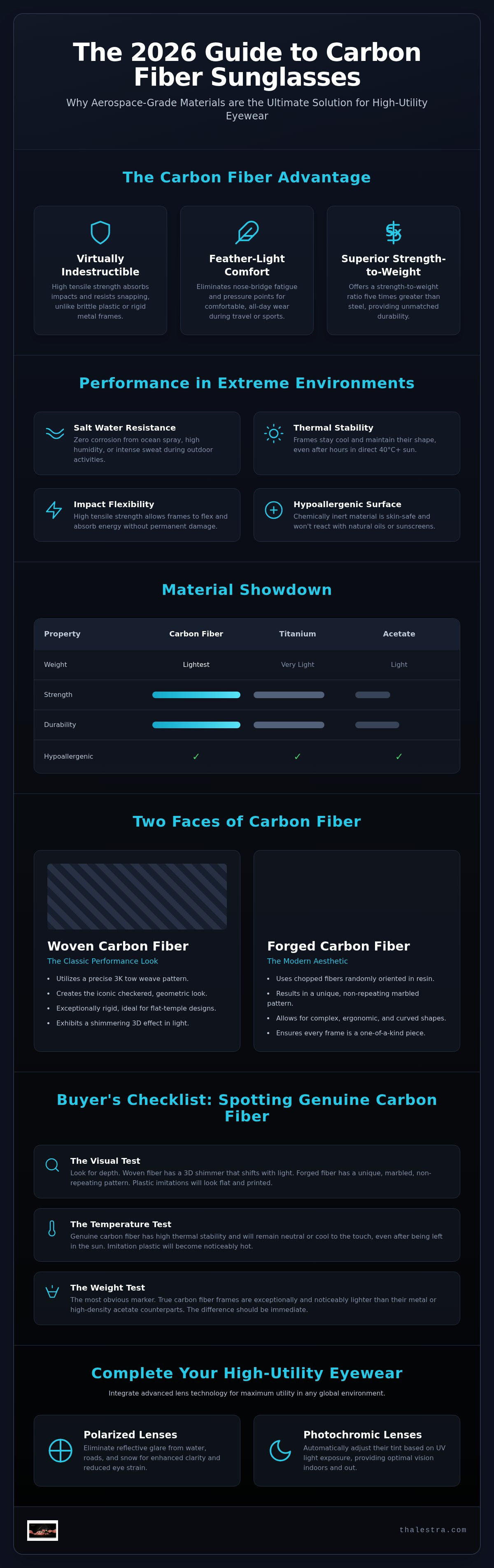
High-performance eyewear in 2026 prioritizes utility and material science over traditional luxury branding. Carbon fiber sunglasses represent the pinnacle of this shift, moving from the race track to daily wear. Originally developed for Formula 1 chassis and aerospace engineering, this material provides a strength-to-weight ratio that exceeds traditional steel by a factor of five. It perfectly aligns with the 2026 stealth wealth tech-wear trend: high-value, durable gear that avoids loud logos for a minimalist, high-utility aesthetic. The unique Carbon fiber properties allow for frames that are virtually indestructible yet significantly lighter than traditional acetate or metal alternatives.
Why Weight Matters in 2026 Eyewear
Nose-bridge fatigue remains a primary pain point for long-duration eyewear users. Heavy frames cause slippage, pressure points, and skin irritation during high-intensity activity or extended travel. Carbon fiber eliminates this physical burden through extreme mass reduction. CFRP is a composite of carbon strands and resin. This lightweight profile improves performance during active sports like cycling, sailing, or marathon running where every gram affects personal endurance. It's the ideal material for 2026 vacation-proof frames, ensuring total comfort during 12-hour transit days or long-duration driving across varying climates.
Durability Beyond the Beach
Unlike metal frames that oxidize or plastic that warps under intense heat, carbon fiber remains structurally stable in extreme environments. It offers a level of resilience that traditional materials cannot match. This level of durability makes carbon fiber sunglasses the preferred choice for 2026 high-performance eyewear. Consider these functional advantages for high-utility use:
- Salt water resistance: Zero corrosion from ocean spray, high humidity, or intense sweat during outdoor activity.
- Thermal stability: Frames remain neutral to the touch and maintain their shape even after hours in direct 40-degree Celsius sun.
- Impact flexibility: High tensile strength allows frames to absorb energy and bend slightly without snapping, unlike rigid aluminum or brittle plastic.
- Hypoallergenic surface: Carbon fiber is skin-safe and won't react with oils or sunscreens.
This construction ensures your investment survives packed suitcases, accidental drops, and rugged outdoor environments. It's a pragmatic choice for the global traveler who demands equipment that performs as well as it looks.
Material Science: Woven vs. Forged Carbon Fiber Frames
Choosing high-performance carbon fiber sunglasses requires understanding the two primary construction methods: woven and forged composites. Each technique offers specific structural advantages and distinct visual signatures. While both materials provide the aerospace-grade durability discussed previously, their manufacturing processes dictate the frame's final geometry, weight distribution, and aesthetic profile. High-utility eyewear in 2026 relies on these material differences to meet specific user demands for strength and style.
Woven Carbon Fiber: The Classic Performance Look
Woven carbon fiber remains the industry standard for high-utility performance gear. It utilizes a 3K tow weave pattern, where 3,000 individual carbon filaments are interlaced in a precise bidirectional grid. This interlacing creates the iconic "checkered" look synonymous with professional racing equipment. This material is exceptionally rigid along the weave's axes, making it ideal for classic square frames and flat-temple designs. The visual depth is a hallmark of quality; real woven layers exhibit a shimmering 3D effect that shifts under varying light conditions. This depth is a key indicator of genuine composite construction over printed plastic imitations.
Forged Carbon Fiber: The Modern Aesthetic
Forged carbon fiber represents the next evolution in 2026 eyewear trends. Unlike the structured grid of woven sheets, forged carbon uses chopped fibers randomly oriented within a resin matrix. These fibers are compressed in high-pressure molds to create a solid, marbled aesthetic. The resulting pattern is organic and non-repeating, ensuring every frame is a unique piece of functional art. This manufacturing flexibility is why it's a popular choice for carbon fiber sunglasses that require complex, ergonomic shapes. It allows for curved surfaces and intricate designer profiles that woven sheets cannot easily achieve.
Frame geometry is directly influenced by the chosen composite type. Forged carbon allows for ultra-thin temple arms that maintain high tensile strength, reducing total weight even further. Woven frames offer superior lateral rigidity for a more traditional, secure fit during high-speed activity. When selecting gear for a 2026 travel itinerary, browsing a curated selection of carbon fiber frame square glasses helps you find the specific balance of classic woven texture and modern ergonomic design. This material science ensures your eyewear remains a high-utility asset in any global environment.
Performance Comparison: Carbon Fiber vs. Titanium vs. Acetate
Selecting high-performance eyewear in 2026 requires a direct evaluation of material specifications. While titanium offers premium metallic appeal and acetate provides traditional color depth, carbon fiber sunglasses lead in functional utility for global travel. Carbon fiber excels in three critical areas: weight reduction, shape retention, and skin compatibility. Unlike titanium, which can contain nickel traces, carbon fiber is naturally hypoallergenic. It won't cause skin reactions during intense heat or heavy perspiration. The material also features a high elastic modulus, meaning it returns to its original form even after significant stress. This 'memory' effect ensures your frames maintain a consistent fit over years of use.
Price-to-performance ratios favor carbon fiber for the frequent traveler. While the initial investment matches high-end titanium, the replacement frequency is significantly lower. Acetate frames often warp in hot cars or snap under pressure in a carry-on bag. Carbon fiber composites resist these common failure points, providing a more reliable asset for 2026 vacation planning. It's the pragmatic choice for those who prioritize long-term equipment reliability over fast-fashion trends.
Weight and Comfort Head-to-Head
Mass is the primary differentiator in all-day comfort. Average carbon fiber sunglasses weigh under 20g, whereas standard acetate frames typically exceed 30g. This 33% weight reduction directly impacts long-duration wearability. It effectively eliminates the 'red mark' pressure points on the nose bridge and the dull ache behind the ears. The 'forget you're wearing them' factor is a tangible result of this engineering. Titanium frames are also lightweight but often feel more rigid and less forgiving during active movement compared to the subtle flex of carbon strands.
Longevity and Impact Resistance
Accidents are inevitable during transit. If you sit on a pair of metal frames, they bend, often requiring professional realignment. Acetate frames usually crack or shatter under similar force. Carbon fiber exhibits superior impact resistance, absorbing energy and snapping back to its factory geometry. The frame surface is also naturally scratch-resistant, maintaining a clean aesthetic despite rugged use. To maintain this high-tech finish, follow the specific steps in our guide on how to clean polarized sunglasses. Proper maintenance ensures the lens technology matches the indestructible nature of the frame.
The Buyer's Checklist: Identifying Real Carbon Fiber and Choosing Your Style
Market saturation in 2026 leads to an influx of "carbon-look" fakes. These are low-utility plastic frames with surface-level prints or hydro-dipped textures. Authentic carbon fiber sunglasses require specific material verification to ensure you receive the aerospace-grade durability and weightless comfort promised. High-tech material validation prevents paying premium prices for cheap synthetic imitations that fail under travel stress.
Spotting the Fakes in a Saturated Market
Perform the temperature test first. Real carbon fiber has specific thermal properties; it remains neutral or cool to the touch because it doesn't conduct heat like metal or retain it like plastic. Plastic fakes feel warm almost immediately when held. Visual inspection reveals depth and shimmer. Genuine 3K woven layers exhibit a 3D effect that shifts and catches light when rotated. Static, flat patterns indicate a machine-printed surface that lacks structural integrity.
Weight verification is mandatory for high-performance gear. Genuine carbon frames are ultra-lightweight, high-tensile, and low-mass, typically weighing under 20g. If the eyewear feels heavy on the nose bridge or ears, it's likely a plastic core. Look for minor weave variations or tiny imperfections. These are authentic markers of the hand-layered resin curing process. Perfect, repetitive symmetry usually signals a low-cost, machine-printed imitation rather than a genuine composite.
Styling Carbon Fiber for Your Face Shape
Select frame thickness and geometry based on your facial structure. Square carbon frames add sharp angles and necessary definition to round or oval faces, creating a balanced, modern silhouette. For iconic inspiration and silhouette ideas, review our roadmap of vintage designer sunglasses. This helps bridge the gap between classic heritage styles and 2026 technical materials.
The 2026 "Modern Tech" aesthetic utilizes the material's distinct woven or forged texture. It's a versatile asset for global travel. These frames transition from rugged outdoor activity to professional environments without losing functional appeal. Carbon fiber's deep charcoal and black tones integrate with any wardrobe palette. To invest in authentic, high-performance gear, explore the carbon fiber frame square glasses available for international delivery. These curated styles provide the durability and lightweight comfort required for a demanding 2026 travel schedule.
Elevate Your Eyewear Strategy with THALESTRA.COM Carbon Fiber
THALESTRA.COM serves as a global gateway to high-utility, trend-aware eyewear. Choosing carbon fiber sunglasses is the logical upgrade for users demanding aerospace-grade resilience and zero-gravity weight. This material choice aligns with 2026 vacation planning requirements, providing a vacation-proof frame capable of surviving rigorous transit and extreme environmental exposure. By focusing on pragmatic performance markers, THALESTRA.COM ensures every pair delivers maximum value through durability, UV400 protection, and advanced material science. High-performance gear must be functional, lightweight, and indestructible.
Lens Tech Integration: Polarized and Photochromic
High-tech frames deserve high-tech lenses for a complete eyewear solution. THALESTRA.COM integrates LIOUMO Top Quality Photochromic Polarized Sunglasses technology into its carbon fiber selections. This pairing offers adaptive light management; lenses darken in direct sunlight and clear in low-light environments, making them ideal for long-duration driving or mixed-weather travel. UV400 protection remains a non-negotiable standard across all models, blocking 100% of harmful UVA and UVB rays. For those comparing classic filter types with modern polarized tech, review our analysis of retro aviator sunglasses. This synergy between frame and lens ensures optimal visual clarity in high-glare environments like open water or snow.
Global Accessibility and Trend Curation
THALESTRA.COM operates as an efficient, high-volume digital marketplace. We provide rapid access to international trends with comprehensive global shipping coverage. This streamlined merchant model prioritizes clarity, ease of navigation, and immediate product availability. Our curated selection emphasizes high-utility attributes and specific technical features:
- 2025 Vacation Sunglasses For Men: Optimized for travel durability and modern style.
- Classic Mens Polarized Sunglasses: Traditional silhouettes with high-performance lens technology.
- Carbon fiber frame square glasses: Aerospace-grade composites for maximum strength and impact resistance.
- Photochromic lens integration: Adaptive light filtering for varying global environments.
Explore our full collection of carbon fiber sunglasses today. Secure high-performance gear for your 2026 travel schedule. The 2026 eyewear market demands equipment that performs under pressure. Carbon fiber frame square glasses provide the ultimate solution for users who prioritize all-day comfort and long-term durability. With THALESTRA.COM, you receive a curated, high-performance product designed for the immediate present. Secure your high-tech eyewear today to experience the 1:1 ratio of strength to weight that only genuine carbon fiber can provide.
Future-Proof Your Eyewear Strategy
High-performance eyewear in 2026 relies on material science to deliver all-day comfort and aerospace-grade durability. You now understand how the superior strength-to-weight ratio in carbon fiber sunglasses outperforms traditional titanium and acetate frames. Authenticity markers like the temperature test and weave depth ensure you invest in genuine composites rather than plastic imitations. Pairing these indestructible frames with UV400 polarized tech creates a vacation-proof asset for any global destination. It's the logical upgrade for anyone who values equipment reliability, high-tech aesthetics, and streamlined functional performance over temporary fast-fashion alternatives.
Shop Premium Carbon Fiber Sunglasses at THALESTRA.COM to access our curated selection of high-utility eyewear. We offer global shipping coverage and focus on advanced polarized and photochromic lens technology for maximum visual clarity in high-glare environments. Our frames utilize high-durability aerospace-grade materials to ensure they survive the rigors of frequent international travel and rugged outdoor activity. Equip yourself with gear that remains weightless and resilient throughout your next journey. Experience the immediate value of modern material engineering today.
Frequently Asked Questions
Are carbon fiber sunglasses actually made of real carbon?
Real carbon fiber sunglasses utilize carbon fiber reinforced polymer (CFRP). This composite material consists of thousands of microscopic carbon filaments bonded with a high-strength resin matrix. Unlike cheap plastic imitations that use surface prints, real composite frames provide the actual structural advantages discussed in our material science breakdown. The material's rigidity and unique visual depth serve as primary indicators of authentic aerospace-grade construction.
Are carbon fiber sunglasses better than titanium frames?
Carbon fiber provides a superior strength-to-weight ratio compared to high-end titanium. While titanium is a premium metallic option, carbon fiber is significantly lighter and features a memory effect that maintains frame geometry after stress. Titanium frames can warp or bend over time, requiring manual realignment. For users prioritizing maximum weight reduction and vacation-proof durability, carbon fiber remains the more pragmatic choice for high-performance use.
Can you put prescription lenses in carbon fiber frames?
THALESTRA.COM focuses on high-utility ready-to-wear models like the LIOUMO Top Quality Photochromic Polarized Sunglasses and does not provide prescription lens fitting services. Consult a local optician to assess if specific carbon fiber sunglasses can accommodate custom lenses. Many high-performance frames use specialized retention systems that require professional handling to avoid compromising the structural integrity of the composite material.
Do carbon fiber sunglasses break easily if dropped?
Carbon fiber is exceptionally resilient and doesn't shatter under normal impact conditions. It possesses high tensile strength, allowing frames to absorb energy rather than cracking like traditional acetate. Dropping these frames on hard surfaces typically results in zero structural damage. This rugged profile makes them ideal for 2026 travel planning and high-intensity outdoor activity where equipment reliability is paramount for the global traveler.
How do I clean carbon fiber sunglass frames without damaging them?
Clean your frames using lukewarm water and a mild, non-abrasive dish soap to remove salt, oils, and perspiration. Dry the surface with a clean microfiber cloth to prevent water spots. Avoid chemical solvents, alcohol-based cleaners, or ultrasonic tanks, as these can degrade the protective resin coating. Proper maintenance preserves the high-tech finish and extends the functional life of your performance eyewear during long-duration travel.
Why are carbon fiber sunglasses more expensive than acetate?
The price reflects complex manufacturing requirements and high raw material costs associated with aerospace-grade composites. Carbon fiber production involves precision layering and specialized resin curing, whereas acetate is often mass-produced through heat molding. This investment yields a material five times stronger than steel. The long-term value is realized through extreme durability and a reduced need for frequent replacements during demanding travel schedules.
Is carbon fiber safe for people with skin allergies?
Carbon fiber is a naturally hypoallergenic material, making it ideal for users with metal sensitivities or skin allergies. It contains no nickel or reactive alloys commonly found in metallic frames. The inert resin matrix doesn't react with skin oils, sweat, or sunscreens. This ensures a comfortable, irritation-free experience during long-duration wear in high-temperature environments or during intense physical exertion across different global climates.
How can I tell if my sunglasses are real carbon fiber or just plastic?
Identify real carbon through the temperature test and light reflection. Genuine carbon fiber feels neutral to the touch because it doesn't retain heat like plastic or conduct it like metal. Under light, real 3K woven layers exhibit a shimmering 3D effect that shifts as the frame rotates. Static, flat patterns indicate a low-cost print. Additionally, real composite frames are significantly lighter than plastic fakes.