
The toughest-looking sunglasses aren’t always the ones that hold up best. Durable sunglasses for everyday wear depend on more than price or a broad “premium quality” claim: frame material, hinge construction, lens care, and a comfortable fit all affect how a pair stands up to regular use.
It makes sense to worry about bent frames, loose hinges, or scratched lenses when your sunglasses go everywhere with you. A few practical checks can help you compare options without relying on vague promises. This guide explains which parts are most exposed to wear, what to look for in materials and construction, and how fit can reduce unnecessary handling.
You’ll also find simple care habits that help prevent avoidable damage, from storing your sunglasses safely to cleaning the lenses carefully. Whether you’re browsing polarized or photochromic styles, use this checklist to weigh everyday practicality alongside appearance and choose with confidence.
Key Takeaways
- Durable sunglasses for everyday wear depend on balanced materials, construction, fit, and care, not price alone.
- Compare hinges, joints, and lens features alongside frame material to spot details that can affect everyday use.
- Weigh comfort, weight, flexibility, and stability against how and where you plan to wear your sunglasses.
- Use careful handling, secure storage, gentle cleaning, and occasional frame checks to help reduce avoidable damage.
- Apply the checklist when browsing polarized or photochromic options, including THALESTRA.COM styles such as Classic Mens Polarized Sunglasses and LIOUMO Top Quality Photochromic Polarized Sunglasses.
What Makes Sunglasses Durable Enough for Everyday Wear?
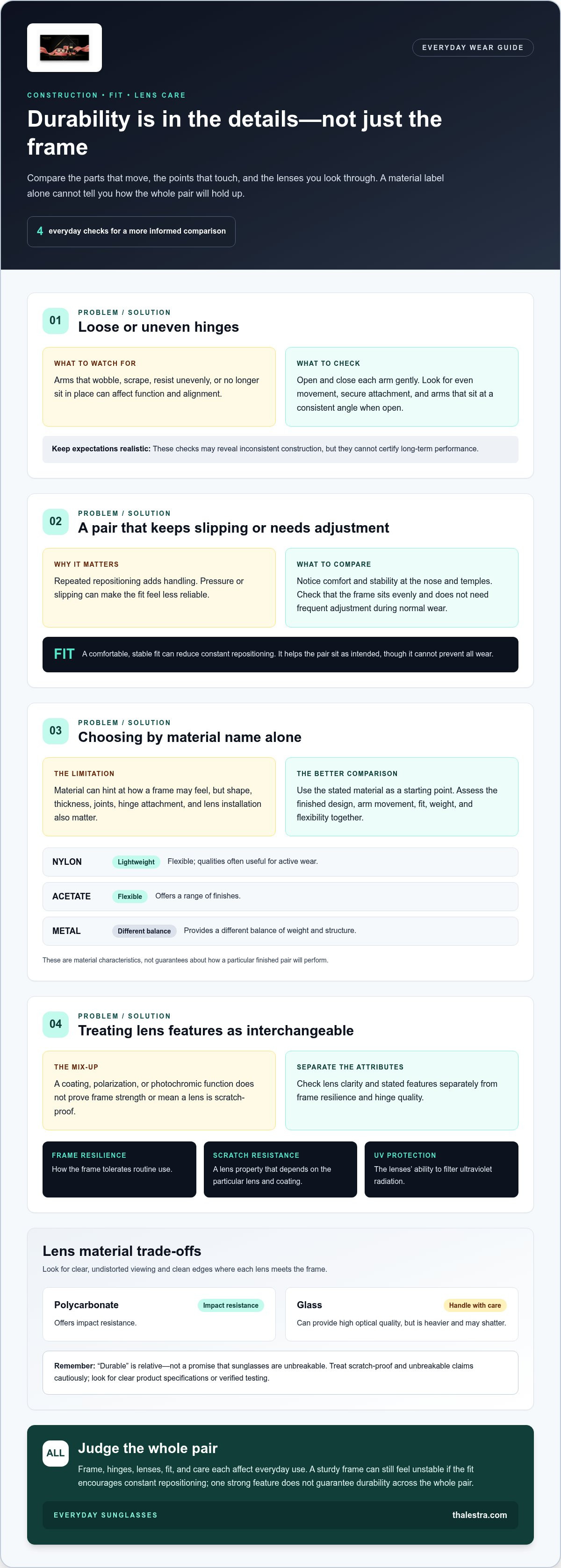
Durable sunglasses for everyday wear should tolerate routine handling, frequent use, and ordinary changes in how they’re carried or stored. That doesn’t mean every part lasts equally well. A frame may stay aligned while a lens gets scratched, or the lenses may remain clear while a hinge loosens. Durability depends on the whole pair, how often and roughly it’s used, how well it fits, and how it’s cared for.
Assess the whole pair rather than relying on a broad quality label. The range of materials used in sunglasses helps explain why frames and lenses can have different properties, but a material name alone doesn’t show how a particular pair will perform.
- Frames: Look for a shape that holds its alignment during normal wear and doesn’t need frequent adjustment.
- Hinges and joints: Check how the arms open and close. The connection should feel stable, not loose or uneven.
- Lenses and coatings: Consider viewing clarity and any stated scratch-resistance features separately from frame resilience.
- Nose and temple contact points: Notice whether the pair sits securely and comfortably. Pressure or slipping can lead to repeated adjustments.
These areas work together. Even a sturdy frame can become uncomfortable or unstable if the fit encourages constant repositioning. When comparing a pair, check whether the arms sit evenly when open and whether the lenses and frame appear aligned. Appearance alone doesn’t prove construction quality.
Which sunglasses parts experience the most everyday wear?
Putting sunglasses on and taking them off repeatedly puts movement through the hinges and frame joints. A loose fit can lead to extra adjustments, while handling one arm more often than the other may create uneven movement. Watch for changes in alignment or arms that no longer stay in place. Small cosmetic marks mainly affect appearance; unstable arms or a shifting fit affect function.
Contact points matter, too. Sunglasses that slide down may be pushed back into place throughout the day, adding handling and making the fit feel less reliable. A comfortable, stable fit can reduce that cycle. It won’t prevent all wear, but it helps the pair sit as intended without constant repositioning.
Does durable mean scratch-proof or unbreakable?
No. “Durable” is a relative description, not a promise that sunglasses can’t be damaged. Frame resilience concerns how the frame tolerates routine use; scratch resistance describes a lens property; UV protection concerns the lenses’ ability to filter ultraviolet radiation. These are separate attributes, so one doesn’t prove another. Treat scratch-proof or unbreakable claims cautiously, and look for clear product specifications or verified testing rather than assuming every pair offers the same protection.
How Frame, Hinge, and Lens Construction Affect Sunglasses Durability
Frame material can hint at how sunglasses may feel and respond to everyday use, but it doesn’t tell the whole story. The shape, thickness, joints, hinge attachment, and lens installation matter as well. A lightweight frame may feel comfortable during extended wear, while a flexible design may tolerate routine movement differently from a rigid one. Neither trait alone proves that a finished pair will resist damage.
Material categories have different practical trade-offs. Nylon is lightweight and flexible, qualities often useful for active wear. Acetate can offer flexibility and a range of finishes, while metal frames provide a different balance of weight and structure. For an overview of common durable sunglass frame materials, compare each material’s properties with your needs rather than treating one label as a guarantee.
How should shoppers compare frame materials?
Use the material name as a starting point, then assess the finished design. Frame thickness, shape, joint construction, and the feel of the arms when opened all influence day-to-day handling. Consider weight and flexibility alongside comfort: a lighter frame may suit extended wear, while a more flexible frame will feel different from a rigid one. Check product specifications for the actual frame material instead of guessing from appearance.
For everyday sunglasses, component-level construction matters more than any single material label. This is especially true where the arms meet the front frame, because repeated opening and closing puts movement through the connection. A well-known material can’t compensate for an uneven fit or a hinge that feels loose. Look for arms that move evenly, attach securely, and sit at a consistent angle when open.
What should you inspect on hinges and lenses?
Open and close each arm gently. Notice scraping, uneven resistance, excess wobble, or a visible difference between the sides. Check that the front frame and arms appear aligned, without twisting the sunglasses to make them sit flat. These observations can’t certify long-term performance, but they may reveal inconsistent construction before regular use.
For lenses, look for clear, undistorted viewing and clean edges where each lens meets the frame. A coating is a surface feature, distinct from the lens material beneath it. Scratch resistance depends on the particular lens and coating, so don’t interpret “coated” as “scratch-proof.” Lens materials also have trade-offs: polycarbonate offers impact resistance, while glass can provide high optical quality but is heavier and may shatter. Handle either with care.
Polarization and photochromic function describe lens features, not frame strength or hinge quality. A polarized option or photochromic style may suit a particular viewing need, but those terms don’t establish overall durability. For example, browse polarized and photochromic sunglasses while comparing construction details separately, including frame material, hinge design, lens information, and fit.
How to Compare Durable Sunglasses for Everyday Comfort and Use
Durable sunglasses for everyday wear should suit how you actually use them, not just look sturdy in a product photo. Compare the frame, hinges, lenses, fit, and care needs as a group. A light frame may feel comfortable on a long commute, while a snug, stable fit may matter more if you’re frequently moving between errands. No single feature is a universal measure of quality.
| Feature | What to compare | Everyday trade-off |
|---|---|---|
| Frame feel | Weight, flexibility, and how the frame feels during normal handling. | Lightness can feel comfortable, but the frame still needs to sit securely and maintain alignment. |
| Hinge construction | Even arm movement, secure attachment, and consistent opening and closing. | Arms that need repeated adjustment can be inconvenient and lead to more handling of the hinges. |
| Lens features | Clarity, stated lens material and coatings, and the function you need. | Lens options serve different viewing needs; they don’t establish frame or hinge durability. |
| Fit | Whether the pair stays comfortably in place without pinching or slipping. | A stable fit can reduce readjustment, while excessive pressure can make extended wear uncomfortable. |
| Care needs | How you’ll clean and store the pair as part of your routine. | Loose storage or a lack of cleaning supplies during a commute can make careful handling harder. |
Which durability trade-offs matter most for daily wear?
Start with your routine. If you put your sunglasses on and take them off throughout the day, prioritize a comfortable fit and arms that move smoothly, so you’re less likely to keep adjusting them. If you carry them in a bag between commutes, plan for a protective case or another secure storage spot. Weight and flexibility matter, but neither should outweigh stable, comfortable wear.
Specific activities can shift your priorities. Cycling may call for a secure fit during movement; fishing may make glare management an important lens consideration. Those needs differ from walking, driving, or moving between indoor and outdoor settings. Choose for your typical use rather than assuming a design suited to one activity is automatically the best everyday option.
How do lens features relate to everyday use?
Polarized lenses are intended to reduce reflected glare, while photochromic lenses change tint in response to light. These functions address viewing preferences, not structural strength. Match the lens choice to your regular environments, and assess UV protection separately by looking for clear product specifications. For more eye-protection context, see the UV protection guide.
Use comparison tables as decision aids, not performance guarantees. Results depend on specifications, construction details, fit, handling, and how often the sunglasses are worn. Choose features that match your routine, then care for the pair accordingly.
How to Protect Sunglasses from Everyday Wear and Damage
Simple habits can reduce avoidable wear on frames, hinges, and lenses. Handle sunglasses gently, store them securely, clean them with suitable materials, and check their fit and alignment periodically. These steps won’t make any pair damage-proof, but they can help prevent small knocks and scratches from accumulating during regular use.
What daily habits help sunglasses last longer?
Use both hands to put sunglasses on or take them off. Pulling one arm repeatedly can place uneven strain on the frame and hinge. When you’re not wearing them, store the pair in a protective case instead of leaving it loose in a bag, on a desk, or on a car seat.
- Keep them separate: Loose keys, coins, and other objects can rub against lenses or frames in a bag.
- Avoid pressure: Don’t place sunglasses under books, bags, or other items that could bend the frame.
- Choose a safe surface: Set them down folded, with the lenses away from rough or gritty surfaces.
- Limit heat exposure: Avoid leaving them where high heat may affect the frame or lens components.
Commuting can make these precautions easy to overlook. Choose a consistent storage spot, such as a case in your bag, rather than slipping sunglasses into a pocket or leaving them somewhere they might be sat on. A steady routine reduces loose storage, pressure, and contact with abrasive items.
How can you clean and check sunglasses safely?
Start by following the care instructions for the specific lenses and coatings. If no special method is stated, handle the lenses gently and use clean materials intended for eyewear. Avoid dry-wiping visible grit across the surface, since particles can leave marks. Don’t assume household cleaners or rough cloths are suitable for every lens or coating.
- Rinse away loose dust with clean water when appropriate for the product’s care guidance.
- Use a clean microfiber cloth or lens-safe cleaner only when compatible with the manufacturer’s instructions.
- Dry with a clean, soft cloth, and keep fingers off the lens surfaces where possible.
- Periodically check whether the arms move evenly, the frame sits straight, and visible screws remain secure.
If a hinge feels unusually loose or the frame looks misaligned, avoid forcing it back into shape. For more detailed steps, follow this polarized sunglasses cleaning guide, while keeping the care directions for your particular pair in mind.
Consistent handling, protected storage, gentle cleaning, and quick periodic checks are practical ways to reduce everyday wear. Put these habits to use with a pair that fits your routine, and browse sunglasses for everyday wear.
Choosing Everyday Sunglasses at THALESTRA.COM
Use a short checklist to turn durability advice into a practical choice. Start with fit and intended use, then compare construction and lens needs. Consider where the sunglasses will go when you take them off, too. A pair that suits your routine and is easy to store and care for may be more practical than one chosen for a broad quality claim alone.
What should you check before choosing a pair?
Prioritize a comfortable, stable fit before style or extra lens features. Then review the product details for frame material, hinge or construction information, lens functions, and care guidance. Specific details are more useful than general durability language because they help you understand what the pair is made for and how to handle it.
- Fit: Consider whether the frames sit comfortably and securely for as long as you expect to wear them.
- Construction: Look for clear information about the frame and components, rather than assuming material names alone establish durability.
- Lens needs: Match lens features to your typical settings and distinguish those functions from frame strength.
- Storage and care: Plan to protect the sunglasses in a case and follow the care information provided for the lenses.
If a description uses broad terms such as “durable” without explaining the relevant construction or testing, focus on specific supporting details. Don’t infer scratch resistance, hinge strength, or impact performance from the product name or appearance.
How can you match THALESTRA sunglasses to your routine?
THALESTRA offers polarized and photochromic sunglasses, giving you different lens functions to compare. Polarization and photochromic features relate to how lenses perform in different light conditions, not to whether a frame or hinge is more durable. Let your regular environments guide which lens category you consider, then compare the construction and care details on each listing.
THALESTRA styles include 2025 Vacation Sunglasses For Men, LIOUMO Top Quality Photochromic Polarized Sunglasses, and Classic Mens Polarized Sunglasses. Their names indicate different style or lens categories, but they don’t establish a particular frame material, hinge design, scratch resistance, or durability testing. Compare the product details on each listing rather than assuming one category is automatically better suited to everyday wear.
Before deciding, picture your usual day: how long you’ll wear the pair, what kind of light you encounter, and where you’ll store it between uses. That context helps you balance comfort, lens preferences, construction details, and care habits. Browse THALESTRA sunglasses and compare the listed details to find a style suited to your everyday routine.
Choose a Pair That Fits Your Daily Rhythm
Make your next choice around a typical day, not an ideal one. Think about where you’ll wear your sunglasses, how often you’ll take them off, and where you can store them safely. Then decide which details matter most for comfort and use. Durable sunglasses for everyday wear should suit your routine, with product information that helps you compare instead of relying on broad promises.
THALESTRA’s polarized and photochromic options offer different lens functions to explore. Styles include men’s vacation and classic polarized sunglasses, useful starting points for browsing by category and appearance. Treat each description as a guide to the listed style and lens features, not as proof of a particular durability level.
Compare the details that matter to you, then choose a pair you’ll feel comfortable wearing and caring for regularly. Browse sunglasses for everyday wear and find a style that fits your day.
Frequently Asked Questions
Is a more expensive pair of sunglasses always more durable?
No. Price alone can’t show how a frame, hinge, lens, or coating will hold up with frequent use. For durable sunglasses for everyday wear, compare the specific construction details, care guidance, fit, and any documented testing instead. A higher price may reflect factors beyond durability, so don’t treat it as a promise of longer use. Consider your routine, too: a pair carried loose in a bag faces different risks from one stored carefully.
Can damaged sunglasses be repaired?
Some damage may be repairable, but the best option depends on its location and severity. A loose screw or slightly misaligned arm may be simpler to address than a cracked frame, damaged lens, or failed coating, which may require replacement. Don’t force a hinge or use household adhesive; either can make the problem worse or affect how the sunglasses sit. Follow the product’s care guidance before attempting any repair.
What happens if a sunglasses hinge becomes loose?
A loose hinge can make the frame sit unevenly or feel unstable, and continued flexing may put additional strain on the joint. Avoid repeatedly opening and closing the arm to test it. You can look to see whether a screw appears loose, but don’t overtighten it or force the hinge. If the sunglasses remain unstable, stop wearing them until you’ve followed the product’s repair guidance.
Can heat damage sunglasses when they are not being worn?
Yes, heat exposure can affect eyewear materials or lens coatings, depending on the product and conditions. A sun-exposed vehicle interior, for example, can become very hot, so avoid leaving sunglasses there. Store them in a protective case away from direct heat and pressure. Since frames and lenses can respond differently, use the manufacturer’s care instructions for product-specific temperature guidance rather than assuming every pair has the same limits.
Do scratch-resistant lenses prevent all scratches?
No. Scratch-resistant describes added resistance, not immunity to scratches. Lens material, coatings, contact with grit, and cleaning choices all influence the risk. For example, wiping a dusty lens with a rough sleeve can drag particles across its surface. Keep lenses away from keys and abrasive fabrics, and follow the product’s cleaning guidance. Coatings may have specific care needs, so don’t assume every lens should be cleaned the same way.
How often should you replace everyday sunglasses?
There’s no single replacement schedule that fits every pair. Consider replacing sunglasses if lens damage obstructs your view, the frame no longer sits securely, or a component can’t be maintained safely. Cosmetic marks alone may not make them unusable, but functional damage deserves attention. Check the pair periodically, especially after a drop or a change in fit, and use the product’s care instructions to decide whether repair or replacement is appropriate.
Can polarized lenses make sunglasses more durable?
No. Polarization is a lens feature for managing reflected glare; it doesn’t establish the strength of the frame, hinges, or lens material. Polarized pairs can have different frame designs and construction details. Compare those specifications separately, along with fit and care needs. Don’t use polarization as a substitute for evidence of impact resistance or scratch resistance, since those are distinct performance attributes.