
The black pair may seem like the obvious answer to what color sunglasses go with everything, but it isn’t the only versatile option. Brown and tortoiseshell frames can work with a wide range of outfits too, with a softer, warmer effect.
If you’re choosing between black, brown, and a patterned frame, consider more than color: lens tint also changes the look and can affect how you see your surroundings. You don’t need one shade for every outfit or occasion. Start with the colors you wear most, then compare frames and lens features separately.
This guide explains how black, brown, and tortoiseshell frames work with different clothes, and how gray, brown, and amber lenses differ. You’ll also learn why a dark tint doesn’t automatically mean better protection and what to check before you choose. By the end, you can match an adaptable style with practical features and compare sunglasses by frame style and lens type with more confidence.
Key Takeaways
- Neutral frames are easy to coordinate, but the best choice depends on the colors and styles you wear most.
- Frame color usually has more impact on outfit coordination; lens tint influences the look across your eyes and how you see.
- To decide what color sunglasses go with everything, compare black, brown, and tortoiseshell with your wardrobe and preferred style.
- Use a simple selection process: review your everyday clothes and accessories, choose a frame palette, then consider lens features and intended use.
- Balance color with fit and lens specifications to find an everyday pair that suits your outfits and plans.
What Color Sunglasses Go with Everything? Start with Versatile Neutrals
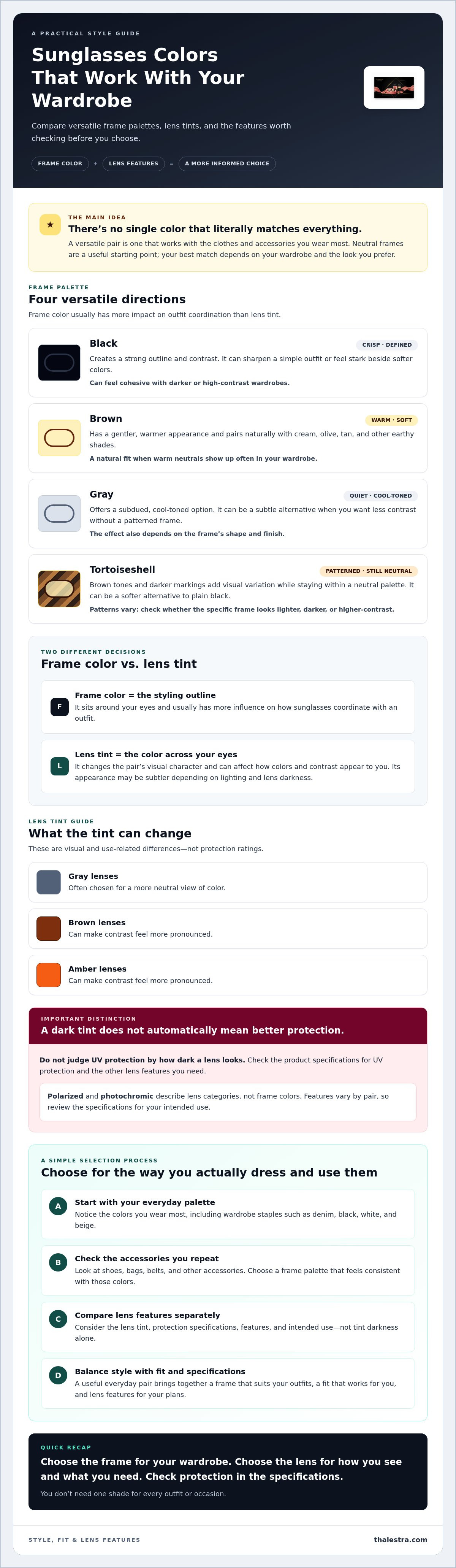
Neutral frames are usually easier to coordinate than bright, distinctive shades, but no color literally matches every outfit. Black, brown, gray, and tortoiseshell each create a different effect, so the answer to what color sunglasses go with everything depends on your wardrobe and the look you want. Black gives a crisp outline, brown feels warmer, gray is more subdued, and tortoiseshell adds pattern while staying within a neutral palette.
A versatile sunglasses color is one that works with several outfits you wear regularly, not just one carefully planned look. A bold frame may be ideal for a particular outfit or occasion, while a neutral is more likely to get repeat wear across different colors and settings. For background on how frame design and lens choices contribute to a pair’s overall look, see this overview of the history and design of sunglasses.
Why neutral sunglasses colors are easy to coordinate
Black, brown, and gray sit comfortably beside common wardrobe colors such as denim, white, navy, and earth tones. Black creates stronger contrast and a defined edge, which can sharpen a simple outfit but may feel stark beside softer colors. Brown has a gentler, warmer appearance that pairs naturally with cream, olive, tan, and other earthy shades. Gray offers a quieter, cool-toned option, though the effect also depends on the frame’s shape and finish.
Choose based on the clothes you reach for most, rather than a single outfit. If your wardrobe is mostly dark or high-contrast, black may feel cohesive. If warm neutrals appear often, brown could blend in more softly. Gray can be a subtle alternative when you want less contrast without a patterned look.
Are tortoiseshell sunglasses a neutral?
Often, yes. Tortoiseshell combines brown tones with darker markings, adding visual variation without relying on a bright, solid color. It can complement warm, earthy, and classic outfits, while its pattern offers a softer alternative to a plain black frame. The balance varies: some patterns look lighter and more amber, while others appear darker or higher-contrast. Check the specific frame rather than assuming every tortoiseshell shade will have the same effect.
For everyday use, notice which frame colors already repeat across your clothes, shoes, bags, or other accessories. A neutral pair can coordinate across many looks, while a distinctive color may be more rewarding if you’re choosing it for one particular outfit. The goal isn’t a universal match; it’s a pair that feels consistent with the way you dress most often.
Frame Color vs. Lens Color: Which One Changes the Look Most?
Frame color is the visible structure around your eyes; lens tint is the color seen across the lenses. Both shape a pair’s appearance, but the frame usually has more influence on outfit coordination because it creates a clear outline near your face. Lens tint adds another color element, though it may appear subtler depending on the lighting and how dark the lenses are.
Frame color is a styling choice; lens tint is not a measure of UV protection. A dark-looking lens doesn’t automatically provide more protection. Check product specifications for UV protection and other lens features instead of judging by appearance alone.
How frame color affects outfit matching
Think of the frame as an accessory that either contrasts with or blends into your outfit. A dark frame can create a defined edge against light clothing, such as a white shirt or pale jacket. Brown frames can feel more at home beside warm neutrals, while a patterned frame may pick up tones from both your clothing and accessories.
Look beyond your clothes when choosing a frame. Note the colors you wear most in shoes, bags, belts, and other accessories, along with wardrobe staples such as denim, black, white, or beige. A frame that fits this palette is likely to coordinate with more of your regular outfits. That’s a more useful test than asking only which color looks best with one specific outfit.
How lens tint affects the overall impression
Lens tint changes the visual character of sunglasses and can affect how colors and contrast appear to you. Gray lenses are often chosen for a more neutral view of color, while brown or amber tints can make contrast feel more pronounced. Other tints create a more noticeable style statement. These are visual and use-related differences, not protection ratings.
Polarized and photochromic describe lens categories, not frame colors. Features vary by pair, so review the product specifications for the protection level and lens features you need. Don’t assume tint alone tells you whether a pair is suitable for your intended use.
After choosing a frame palette that works with your wardrobe, compare lens features as a separate decision. You can browse sunglasses by style and lens type, then check each listing’s specifications before choosing a pair.
Black vs. Brown vs. Tortoiseshell Sunglasses: Which Is Most Versatile?
Black, brown, and tortoiseshell are all strong everyday options, but they create different effects. Black offers a crisp, high-contrast outline; brown brings warmth; tortoiseshell adds tonal variation. The most versatile choice depends on the colors you wear regularly and whether you prefer your sunglasses to stand out or blend in.
| Frame color | Visual effect | Outfit pairings | Styling consideration |
|---|---|---|---|
| Black | Bold, defined, high contrast | Monochrome looks, denim, and classic staples | Can feel stark beside soft or warm-toned outfits |
| Brown | Warm and softer | Tan, cream, olive, and casual earth tones | Choose a shade that suits your usual palette |
| Tortoiseshell | Patterned, with mixed light and dark tones | Warm neutrals and classic outfits | Patterns vary in color and contrast |
When black sunglasses are the simplest choice
Black frames are an easy option if your wardrobe includes monochrome outfits, denim, or other simple staples. Their crisp outline can make a light shirt or jacket look more defined, and they suit outfits where you want a clear accessory rather than a subtle blend. Still, black isn’t an automatic match: its contrast may feel bold alongside soft fabrics or warm, muted colors.
When brown or tortoiseshell frames fit better
Brown frames can complement warm neutrals and relaxed outfits, especially if tan, cream, or earthy shades show up often in your closet. Tortoiseshell offers a patterned alternative to a solid neutral, with mixed tones that can echo different parts of an outfit. Since patterns and brown shades vary, compare the frame with clothes you wear regularly rather than relying on the color name alone.
To decide what color sunglasses go with everything in your wardrobe, consider which option repeats most naturally across your clothes and accessories. Pick black for a sharper outline, brown for a warmer effect, or tortoiseshell for extra tonal detail. There’s no universal winner; your everyday palette and personal preference determine which pair feels easiest to wear.
How to Choose Sunglasses Colors for Your Wardrobe and Everyday Plans
Make the choice in three steps: review the colors you wear most, select a frame palette that works with them, then check lens features for your routine. This keeps style and function in view without expecting one pair to suit every outfit or activity.
Start with the colors you wear most
Look at the clothes you reach for across a typical week. Are denim and black your regulars, or do you wear more cream, olive, tan, and other warm neutrals? Note accent colors too, along with accessories such as shoes and bags. These repeated shades are a practical starting point for choosing a frame.
Decide whether you want coordination or contrast. A frame close to the colors in your outfits can feel understated; a darker frame against a pale shirt or jacket creates a more defined look. There’s no fixed rule based on personal coloring. Compare the frame with an outfit you actually wear, or hold it beside a small group of your wardrobe’s main colors. Ask yourself: Would I reach for this with my usual clothes, or only with one specific look?
Match the pair to how and where you wear it
Separate everyday style from activity needs. For general wear, choose a frame color you like with your regular outfits. For driving, sport, or bright conditions, check whether the lens features and specifications suit that use. Tint or darkness alone doesn’t confirm a pair’s protection level. Review the product details and consult reliable guidance on UV protection when comparing options.
Polarized and photochromic are lens categories, so treat them as feature choices rather than color choices. Check the listing to confirm which features a particular pair has, and consider how those features fit your plans. The right balance is a frame you’ll wear often and lens specifications that match your intended use.
After considering your wardrobe and routine, explore sunglasses by style and lens features and compare the details before choosing.
Choose an Everyday Pair: Put Sunglasses Color, Style, and Features Together
The best everyday pair balances wardrobe fit with personal style and practical lens features. Solid neutral frames keep the look simple; warmer brown tones add softness; patterned frames bring more visual detail. There’s no single answer to what color sunglasses go with everything, so focus on a frame you can picture wearing with several outfits, not just your favorite one.
Use this quick checklist before deciding:
- Check the color: Does the frame work with several outfits you wear often, or only one?
- Choose the look: Would you rather have a solid shade or a pattern that makes the frames stand out?
- Review the lenses: Do the listed features and specifications suit your intended activities?
- Consider fit: Do the frame dimensions and shape look appropriate for your face and comfortable for regular wear?
Color narrows the style direction, but fit and use matter too. A frame may coordinate well yet feel too bold or understated for your taste. Review product details carefully, especially if you plan to wear the pair for a particular activity. THALESTRA.COM offers polarized and photochromic sunglasses; check each listing to see which features apply to that pair.
Compare styles after choosing your color direction
Once you know whether you want a solid neutral, a warmer brown look, or a patterned frame, compare the styles currently listed rather than assuming a particular shade or pattern is available. For a patterned or retro-inspired look, use vintage designer sunglasses as a style reference, then check actual product descriptions and images for the details of each frame.
As a final test, picture the pair with your most common outfit, then with another look you wear regularly. If it works with both and suits the way you plan to use it, it may be a more adaptable option. No color needs to match everything perfectly; it just needs to earn a place in your regular rotation.
Ready to compare? Browse current sunglasses options and review the style and lens details for each pair.
Choose a Pair That Fits Your Everyday Style
The most useful answer to what color sunglasses go with everything is a frame shade that works with the clothes you wear often. Black gives a defined, high-contrast look; brown feels warmer; tortoiseshell adds pattern while staying versatile. Choose based on your wardrobe and the style you enjoy wearing, not the idea that one shade must match every outfit.
Keep frame color and lens features as separate choices. The frame shapes the look, while lens tint and specifications matter for how you use the sunglasses. Check fit, intended activity, and product details before choosing. THALESTRA.COM offers polarized and photochromic sunglasses, with features to confirm on each listing.
Ready to compare styles and lens options? Browse sunglasses at THALESTRA.COM and look for a pair that balances your wardrobe, comfort, and everyday plans.
Frequently Asked Questions
What color sunglasses go with everything?
Black, brown, and tortoiseshell are adaptable frame colors, but no shade literally matches every outfit. Black creates a defined, high-contrast look; brown is warmer and softer; tortoiseshell combines tones in a patterned finish. Choose by the colors you wear most and the effect you prefer. A versatile pair should work with several regular outfits, not just one carefully matched look.
Are black or brown sunglasses more versatile?
Neither is automatically more versatile. Black frames can coordinate easily with denim, monochrome outfits, and classic wardrobe staples, but may look bold beside soft or warm-toned clothing. Brown frames often blend more naturally with cream, tan, olive, and other earthy shades. Review your everyday clothes and accessories, then choose the option that feels cohesive with more of your regular looks.
Do tortoiseshell sunglasses go with everything?
Tortoiseshell can be highly adaptable because its mixed tones bring more variety than a single-color frame. It often complements warm neutrals, earthy shades, and classic outfits. However, patterns vary: some look lighter and more amber, while others are darker or more contrasting. Check the specific frame against clothes you wear often, rather than assuming every tortoiseshell pattern will have the same effect.
Should sunglasses frames match your outfit?
No, your frames don’t need to match your outfit exactly. They can coordinate with colors you wear often, echo another accessory, or create contrast against your clothes. For example, a dark frame can add definition to a light top, while a warmer frame may blend with earthy tones. Consider the whole outfit, including shoes or a bag, instead of matching one color precisely.
Does lens color matter as much as frame color?
For outfit coordination, frame color usually has more impact because it forms a visible outline around your face. Lens tint still changes the overall impression and can affect how colors and contrast appear while you look through the lenses. Treat tint as a visual and functional choice, not a protection rating. Check product specifications for UV protection and any other lens features you need.
Are darker sunglasses lenses better for your eyes?
No, a darker tint doesn’t necessarily mean better UV protection. Look for sunglasses labeled UV400, the recommended standard for blocking 100% of harmful UVA and UVB rays. Check the product label or specifications instead of judging protection by how dark the lenses look. Lens tint and UV protection are separate considerations, so confirm both when choosing sunglasses for regular outdoor wear.
Can I wear brown sunglasses with black clothes?
Yes, brown sunglasses can work well with black clothes. The warm frame creates contrast against an all-black outfit and can make the overall look feel less stark. If you want the combination to feel connected, repeat a brown or warm tone in another accessory, or keep the rest of the outfit simple. There’s no strict matching rule; choose the contrast you enjoy wearing.
Ready to find a pair for your wardrobe? Compare THALESTRA.COM sunglasses by style and lens features, and review each listing before choosing.