
Your premium eyewear shouldn't be the most fragile item in your carry-on. You pack for durability and performance, yet many sunglasses for travel fail at the first sign of a crowded overhead bin or a high-altitude trek. It's frustrating to arrive at a tropical destination only to find your lenses aren't dark enough or your frames snapped during transit. You need gear that handles the pressure of global movement without requiring a backup pair for every lighting change.
We understand that efficiency is your priority when selecting travel equipment. This guide provides a functional roadmap to high-performance eyewear designed for 2026 global conditions. You'll discover how to identify durable carbon fiber frames, UV400 safety standards, and adaptive photochromic technology. We're reviewing the essential checklist for 2025 Vacation Sunglasses and top-quality polarized options. Expect a direct breakdown of technical specifications, lens categories, and impact-resistant materials that ensure your vision remains clear from the airport lounge to the mountain peak. This is your streamlined guide to professional-grade utility and modern style.
Key Takeaways
- Identify high-performance sunglasses for travel that combine adaptive lens technology with high-durability frame architecture for global versatility.
- Compare the technical advantages of polarized and photochromic lenses for managing intense glare and shifting light conditions across different time zones.
- Select lightweight carbon fiber or high-grade polymer frames to ensure maximum resilience and long-haul comfort during extended transit days.
- Match specific eyewear specifications to your destination's environmental demands, from high-humidity coastal zones to high-altitude alpine regions.
- Implement essential maintenance protocols using hard-shell protection and field-cleaning tools to ensure your gear survives crowded carry-on luggage.
Why Dedicated Travel Sunglasses are a Packing Essential
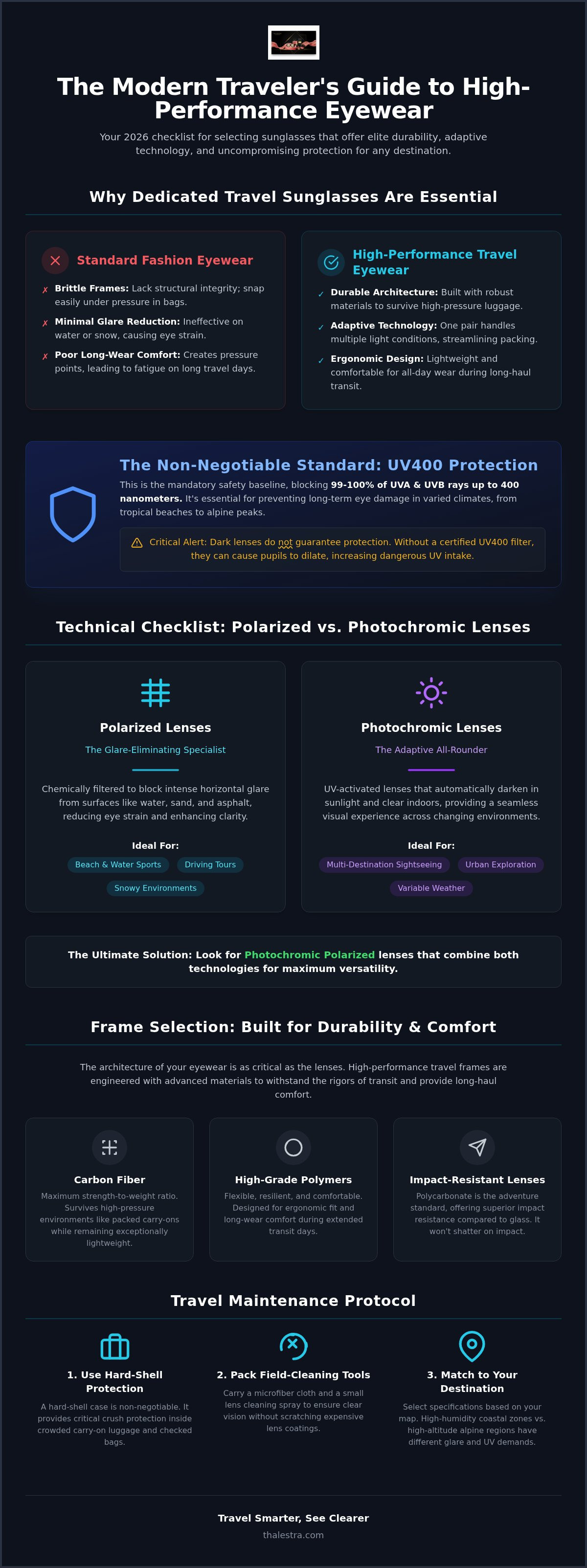
High-utility sunglasses for travel represent a specific gear category. These are technical instruments built for durability, light versatility, and long-wear comfort. Most travelers prioritize a single-pair goal. You want one high-performance solution that replaces three specialized pairs. This streamlines your packing list. It reduces the risk of loss during transit. Selecting the right sunglasses for travel ensures you aren't constantly switching gear between different environments. Efficiency is paramount when moving between climate zones and transit hubs.
Long-haul trips demand specific architectural features. Carbon fiber frames. Reinforced hinges. Lightweight polymers. These materials survive high-pressure luggage environments where standard frames fail. High-altitude flights and coastal excursions increase UV exposure significantly. Protecting your investment means choosing frames designed for high-activity transit. The 2025 Vacation Sunglasses For Men focus on this specific durability requirement to prevent mid-trip breakage.
The Risks of Standard Fashion Eyewear
Standard frames lack structural integrity. They snap easily in overhead bins or packed bags. They provide minimal glare reduction on water or snow. While the comprehensive history of sunglasses details the evolution of frame materials, modern fashion acetate is often too brittle for adventure. Pressure points on the ears and nose cause fatigue during 12-hour travel days. You need ergonomic designs like the Classic Mens Polarized Sunglasses to maintain comfort during extended wear. High-reflection environments require professional-grade filtration that basic fashion lenses cannot provide.
UV400 Protection: The Non-Negotiable Standard
UV400 is the mandatory safety baseline for 2026. It ensures 99-100% blockage of UVA and UVB rays up to 400 nanometers. This is critical for international travel across varied climates. Dark lenses don't guarantee protection. They often cause pupils to dilate; this increases UV intake if the lens lacks a proper filter. The LIOUMO Top Quality Photochromic Polarized Sunglasses combine this protection with adaptive light management. Reliable eye safety is functional, not optional. It prevents long-term damage like cataracts or macular degeneration during intense tropical or alpine exposure. Verified UV400 ratings are the only way to ensure ocular health on the road.
The Technical Travel Checklist: Polarized vs. Photochromic Lenses
Selecting functional sunglasses for travel requires a technical assessment of lens performance. You must choose between specialized polarization and adaptive light filters. High-glare environments like coastal highways or snowy peaks demand specific optical solutions. Modern 2026 standards prioritize impact resistance and clarity. Efficiency in your eyewear choice eliminates the need for multiple backups. High-utility gear adapts to shifting environmental variables without compromising vision.
When to Choose Polarized Lenses
Polarized lenses eliminate horizontal glare from water, sand, and asphalt. They are essential for beach vacations, boat trips, and long driving tours. This technology reduces eye strain by filtering reflected light waves through a chemical layer. Adhering to UV protection guidelines ensures long-term ocular health during high-exposure activities. Be aware of digital interface interference. Polarized filters sometimes distort GPS screens or aircraft dashboards. For pure driving utility, the Classic Mens Polarized Sunglasses offer high-definition clarity and reduced ocular fatigue.
The Photochromic Advantage for Sightseeing
Photochromic lenses are UV-activated adaptive filters. They darken in direct sunlight and clear indoors. This is the ultimate travel hack for multi-destination sightseeing. You move seamlessly from bright outdoor monuments to dim museum interiors. This eliminates the repetitive on-off cycle of standard eyewear. Travelers moving between sun and shade find this efficiency indispensable. It's a modular solution for urban exploration and historical tours. The LIOUMO Top Quality Photochromic Polarized Sunglasses provide this dual-action utility for the modern traveler. Explore the full technical range at thalestra.com for your next expedition.
Lens material selection impacts durability. Polycarbonate is the industry standard for adventure. It provides superior impact resistance compared to traditional glass. It won't shatter during high-activity transit or accidental drops. It's a lightweight, high-tensile material. Color tints serve specific functional roles. Grey lenses maintain true color perception across all environments. Brown or amber tints increase contrast for mountain landscapes or low-light conditions. For a versatile all-rounder, the 2025 Vacation Sunglasses For Men utilize high-clarity polycarbonate for maximum weight reduction and 12-hour wearability. These technical specifications ensure your gear remains a functional asset throughout your journey.
Frame Selection: Durability and Comfort for Long-Haul Trips
Frame architecture determines the survival rate of your gear during transit. Traditional acetate often warps in high-heat environments like car dashboards or tropical tarmac. It's a heavy material prone to cracking under luggage compression. High-performance sunglasses for travel utilize advanced material science to mitigate these risks. Carbon fiber and high-grade polymers offer superior resilience. These materials maintain structural integrity during 12-hour travel days. Integrated expert advice on choosing sunglasses highlights the necessity of matching frame flexibility to your activity level. Durable frames reduce replacement costs and ensure consistent performance across multiple climate zones.
Hinge integrity is a critical failure point. Standard hinges snap under lateral pressure. Reinforced or spring-loaded hinges allow for frequent handling and accidental over-extension. This is vital for the single-pair goal. Anti-slip nose pads provide essential ergonomics for humid or high-activity destinations. They prevent frame slippage during movement. High-utility frames like the 2025 Vacation Sunglasses For Men prioritize these mechanical details. They ensure a secure fit without creating pressure points on the temples or bridge. Lightweight construction is the baseline for professional travel gear.
Carbon Fiber: The Traveler’s Secret Weapon
Carbon fiber frames provide an exceptional strength-to-weight ratio. This material is virtually indestructible in standard backpacks. It remains stable across extreme temperature fluctuations. It won't expand in desert heat or contract in alpine cold. The technical aesthetic works for urban sightseeing and rugged trails. It's a low-volume, high-density solution for the global merchant. Carbon fiber's rigid structure protects the lenses from twisting forces. This preserves the optical alignment of high-end filters. It's the primary choice for travelers who prioritize gear longevity.
Comfort Metrics for Transit
Weight management is the most overlooked factor in travel eyewear. Barely-there frames prevent the fatigue common with heavy wire styles. Wide temples distribute pressure more evenly than thin metal arms. Hypoallergenic materials ensure skin safety in varying humidity levels. Compatibility with other gear is essential. Your frames must fit comfortably under travel hats and over-ear noise-canceling headphones. The Classic Mens Polarized Sunglasses feature streamlined temple tips for this specific purpose. Efficient design prioritizes long-duration wearability over temporary trends. This creates a reliable interface between the traveler and their environment. High-utility frames disappear during use, allowing you to focus on the destination.
Destination-Based Eyewear: Matching the Checklist to Your Map
Environmental variables dictate gear performance. You need to match your sunglasses for travel to the specific atmospheric conditions of your destination. Equatorial light intensity requires different filtration than the high-contrast shadows of metropolitan corridors. Efficient travelers analyze regional data before packing. High-utility eyewear isn't universal; it's situational. Adapting your optical checklist to your map ensures maximum eye safety and visual clarity throughout your journey.
The Coastal Selection
Maritime environments present unique challenges. Intense water glare. High humidity. Corrosive salt spray. Mirror coatings are essential for equatorial sun because they reflect concentrated thermal energy away from the lens surface. This keeps the eye area cooler and reduces visible light transmission to manageable levels. Classic polarized squares offer a timeless beach aesthetic with professional-grade utility. Frames must feature high-humidity grip technology to prevent slippage during active coastal use. The 2025 Vacation Sunglasses For Men provide this specialized salt-water resistance for beach-focused itineraries. Secure your pair for your next island expedition at thalestra.com today.
Alpine and snow destinations require maximum filtration. Snow surfaces reflect up to 80% of UV radiation, significantly increasing the risk of photokeratitis. You need Category 3 or 4 darkness levels. Wrap-around styles are mandatory to block peripheral side-glare that standard frames bypass. This architectural feature protects the eyes from wind-chill and ice particulates at high altitudes. Close-fitting frame geometry is the baseline for mountain safety.
The Urban Explorer
Metropolitan navigation involves constant light fluctuations. You move between sun-drenched monuments and dim metro interiors. Style-versatility is a priority for urban photography and social environments. Vintage oval or designer frames provide a contemporary look without sacrificing function. Lightweight builds are critical for all-day walking tours. The LIOUMO Top Quality Photochromic Polarized Sunglasses serve as the ultimate city tool; they eliminate the need to remove your eyewear when entering shops or museums. These adaptive filters respond instantly to UV shifts, providing seamless city navigation.
Desert and high-dust regions demand mechanical protection. Arid climates feature wind-blown sand and fine particulates. Close-fitting frames act as a physical barrier for the ocular surface. High-density polymers resist the abrasive nature of desert environments. This prevents frame pitting and lens scratching in harsh, high-wind zones. Matching your checklist to these specific geographical variables ensures your gear remains a functional asset rather than a liability.
Travel Maintenance: Ensuring Your Eyewear Survives the Journey
Maintenance is a functional requirement for gear longevity. High-performance sunglasses for travel require structural protection during transit. A hard-shell case is a non-negotiable asset for carry-on luggage. Soft pouches fail under the compression of overhead bins or packed backpacks. Rigid housing prevents frame deformation and hinge snapping. This protective layer ensures your technical investment survives the mechanical pressures of global movement. High-density outer shells with soft interior linings provide the necessary impact resistance for long-haul flights. Secure storage is the first step in gear preservation.
Cleaning Lenses on the Move
Field cleaning protocols impact lens clarity. Avoid the common shirt-tail trap. Dust particles and microscopic debris on clothing act as abrasives. Using a shirt to wipe lenses causes permanent surface scratching. Use high-density microfiber cloths or pre-moistened travel lens wipes. These tools lift oils and grit without compromising lens coatings. Dedicated lens cleaners are superior to hotel soap; many commercial soaps contain chemicals that degrade polarized layers and anti-reflective treatments. Rinse frames with fresh water after coastal use. Dried salt crystals cause hinge corrosion and frame pitting. Proactive rinsing prevents mechanical failure in high-humidity environments. Salt-water resistance is a key feature of the 2025 Vacation Sunglasses For Men.
Emergency repairs are a practical necessity for adventure. A small travel screwdriver kit prevents vacation-ending failures. Tightening loose temple screws maintains frame alignment during high-activity tours. This proactive approach ensures your gear remains operational across multiple destinations. Thalestra provides curated bundles for the modern voyager. These frames prioritize weight management and impact resistance. Don't wait for a failure to occur; prepare your kit before departure.
Selecting Your Thalestra Travel Pair
The LIOUMO Top Quality Photochromic Polarized Sunglasses offer adaptive light management for tech-focused travelers. These models integrate UV400 protection with durable architecture. Classic Mens Polarized Sunglasses provide a high-contrast solution for driving and coastal exploration. Every model features reinforced hinges and lightweight polymer construction. These are travel-ready instruments designed for the global merchant. Explore the complete Thalestra Sunglasses Collection to find your specific travel match. High-volume inventory ensures immediate availability for upcoming expeditions. Direct shipping options facilitate quick procurement before departure. Focus on functional utility and technical specifications to ensure your sunglasses for travel survive the journey.
Optimize Your 2026 Expedition Vision
Prioritizing functional eyewear is a critical step in your trip preparation. High-performance sunglasses for travel must provide a hybrid of adaptive lens technology and extreme frame durability. You've seen how UV400 protection serves as the non-negotiable safety baseline for international transit. Carbon fiber architecture and polarized filters ensure your gear survives the mechanical pressures of global movement while maintaining optical clarity in high-glare environments. Efficiency on the road starts with selecting one versatile pair. This eliminates the need for redundant backups. Photochromic technology allows you to move between sun and shade without interruption. It is the ultimate hack for the modern explorer.
Streamline your packing list with professional-grade utility. We provide technical solutions including carbon fiber frames and photochromic polarized lenses designed for immediate deployment. Every model features guaranteed UV400 protection to maintain ocular health across all climate zones. Take advantage of our high-volume inventory and reliable global shipping to secure your essential gear before departure. High-utility gear is an investment in your comfort and long-term safety. Shop the 2026 Travel Sunglasses Collection at Thalestra today. Prepare your kit with confidence and focus on the destination ahead.
Frequently Asked Questions
What are the best sunglasses for long-haul flights and transit?
The best sunglasses for long-haul flights feature lightweight, pressure-distributing frames designed for 12-hour wearability. You need builds that are compatible with over-ear noise-canceling headphones and travel hats. The 2025 Vacation Sunglasses For Men utilize high-grade polymers to prevent temple pressure during extended transit. These frames remain comfortable in pressurized cabins and during long layovers. Prioritize barely-there ergonomics to ensure your gear doesn't cause fatigue before you reach your destination.
Do I really need polarized sunglasses for a city-break vacation?
Polarized lenses are highly beneficial for city-break vacations due to intense reflections from glass buildings, wet pavement, and vehicle windshields. Urban environments present complex glare patterns that cause significant ocular fatigue during walking tours. Using polarized sunglasses for travel improves visual contrast and color perception in metropolitan settings. This technology allows you to navigate crowded streets and historical monuments with reduced eye strain. It's a functional upgrade for any high-activity city itinerary.
How can I protect my sunglasses from getting crushed in my suitcase?
A rigid hard-shell case is the only reliable way to prevent frame deformation in packed luggage. You must avoid soft microfiber pouches; they offer zero protection against the compression of overhead bins or heavy suitcases. High-density outer shells act as a mechanical barrier against twisting forces and impact. This preservation method is essential for maintaining hinge integrity and lens alignment. Always store your eyewear in its dedicated case before placing it in a carry-on bag.
Are photochromic lenses dark enough for a tropical beach?
Modern photochromic lenses reach Category 3 darkness levels, which is sufficient for most tropical beach environments. The LIOUMO Top Quality Photochromic Polarized Sunglasses adapt to intense UV exposure by darkening rapidly in direct sunlight. While mirror coatings offer additional thermal reflection, high-quality adaptive filters provide the necessary light management for coastal use. These lenses clear automatically when you move into shaded beach bars or hotel lobbies. They offer a seamless transition between varied light intensities.
What is the difference between UV protection and polarization for travel?
UV protection is a health requirement that blocks harmful radiation, while polarization is a comfort feature that manages light reflections. UV400 filters stop 99-100% of UVA and UVB rays to prevent long-term ocular damage. Polarization uses a chemical filter to eliminate horizontal glare from surfaces like water or roads. You need both for comprehensive travel safety. Many dark lenses lack proper UV filters, so verify the UV400 rating independently of the lens tint or polarization.
Which frame material is most durable for adventure travel?
Carbon fiber is the most durable frame material for adventure travel because of its exceptional strength-to-weight ratio. It resists the warping and cracking common with cheap plastics or heavy acetate in extreme temperatures. This material survives the high-pressure environments of backpacks and rugged transit. Carbon fiber maintains its structural integrity across desert heat and alpine cold. It's a low-volume, high-density solution for travelers who require gear that lasts through multiple high-intensity expeditions.
Can I use one pair of sunglasses for both hiking and city sightseeing?
You can use a single pair of sunglasses for travel across both hiking and city environments if you select adaptive photochromic polarized lenses. This technology provides the high-contrast glare reduction needed for mountain trails and the style-versatility required for urban sightseeing. Selecting a lightweight, neutral frame design ensures the gear looks appropriate in metropolitan settings while performing on the trail. This single-pair approach maximizes packing efficiency and reduces the risk of losing specialized equipment during transit.