
The boldest frames aren’t always the ones that make you look more confident. The best pair often feels like a natural extension of your style, not a costume. If you’re unsure which shapes suit your features, or worry that statement sunglasses will draw more attention than you’d like, you’re not alone. Sunglasses can influence a first impression, but they can’t create confidence on their own.
This guide will help you choose sunglasses to look more confident by focusing on frame shape, comfortable fit, and styling that feels intentional. You’ll learn how proportions can complement your features, why ease of wear matters, and how to balance a standout look with everyday versatility without relying on rigid rules.
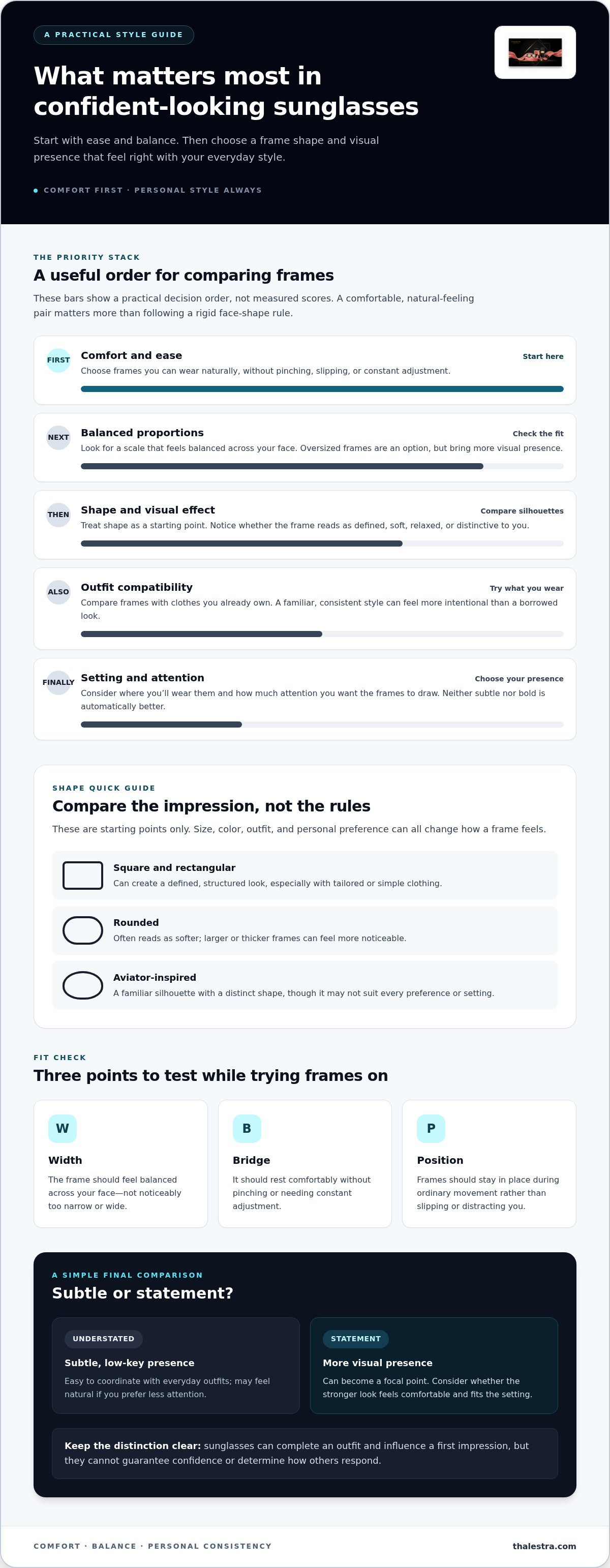
As you compare options, preview a few different shapes and notice which ones feel comfortable and recognizably you. Consider the width, bridge, and visual weight of each frame, then compare it with clothes you already wear. These practical checks can help you find frames that feel polished in the mirror and natural once you step out.
Key Takeaways
- Confident-looking sunglasses can complement your style, but they don’t replace confidence or guarantee a particular first impression.
- Use rounded, square, rectangular, and aviator-inspired frames as starting points, not strict rules based on face shape.
- Compare understated, classic, and statement styles by their visual presence, outfit compatibility, and comfort.
- Use a simple try-on process to find sunglasses to look more confident in, comparing frames with clothes you already wear.
- Choose frames that feel comfortable and intentional, with lens function suited to your everyday needs.
How sunglasses can help you look more confident, without changing who you are
A confident-looking style isn’t about wearing the loudest frame or copying someone else’s look. It comes from a combination of intention, comfort, and personal consistency: the sunglasses suit the outfit, feel right on your face, and still look like something you’d choose for yourself.
An intentional style choice supports your look; it can’t guarantee confidence. Sunglasses can add a clear finishing touch and influence a first impression, but they don’t determine how self-assured you feel or how others respond. Fit, facial expression, posture, and setting all contribute. A frame that sits comfortably and suits a relaxed weekend outfit may feel out of place at a formal event, while the same pair can feel right at home outdoors.
Eyewear has long served both practical and stylistic purposes. For context on its evolution as an accessory, explore this history of sunglasses. The useful takeaway for choosing your own pair is simple: style and function can work together, without turning frames into a shortcut to confidence.
What makes a pair of sunglasses look intentional?
Look at shape, scale, and outfit as a group. A frame with proportions that feel balanced on your face can complement a clean, familiar outfit without demanding attention. The same frame can create a stronger statement when paired with simpler clothing. Neither approach is automatically better.
A trend chosen only because it stands out may feel awkward if you keep adjusting the frames or avoid wearing them. Personal preference and ease matter more than a face-shape rule. If a pair feels comfortable and you’d reach for it with clothes you already own, it’s more likely to look considered rather than like a borrowed persona.
Can sunglasses really make you feel more self-assured?
Perceived style and internal confidence are different. A pair of sunglasses may make an outfit feel more complete, but it can’t promise a change in mood, social comfort, or other people’s reactions. Your own experience is the best guide.
For example, a man who usually wears simple, classic clothes might feel more put together in a familiar square frame than in an oversized style he picked just to attract attention. That doesn’t mean the frame created confidence. It simply fits his preferences and the way he likes to present himself. When comparing sunglasses to look more confident in, notice whether you feel at ease, not just whether the frames make a bold impression.
Choose confident-looking sunglasses by balancing frame shape and facial features
Frame shape is a practical place to start, not a strict face-shape formula. Instead of trying to “correct” your features, compare silhouettes and notice their visual effect. Then consider whether the proportions feel comfortable and suit your everyday style. The same shape can look different depending on its size, color, and the rest of your outfit.
Which frame shapes create a bold, polished, or relaxed impression?
Angular square and rectangular frames can create a defined, structured look, especially alongside tailored or simple clothing. Rounded silhouettes often read as softer, though a larger or thicker frame can make them more noticeable. Aviator-inspired frames are a familiar option with a distinct shape, but they don’t suit every preference or setting. Treat these impressions as starting points, not rules about which frames look confident.
Try comparing a few silhouettes with clothes you already wear. A rectangular frame might feel polished with a button-down, while a rounded pair may feel more relaxed with a casual outfit. If you’re interested in how that silhouette can work with different looks, explore this guide to men’s aviator sunglasses and styling.
How should frame size and fit affect your choice?
Proportion matters as much as shape. A frame that looks balanced across your face is less likely to dominate your features, while an intentionally oversized style will have more visual presence. Neither is automatically the better choice. Comfort helps you decide whether the look works beyond a quick glance in the mirror.
Check three points as you compare frames:
- Width: The frame should feel balanced across your face, not noticeably too narrow or wide.
- Bridge: It should rest comfortably without pinching or needing constant adjustment.
- Position: The sunglasses should stay in place during ordinary movement rather than slipping or distracting you.
If a frame feels awkward, don’t assume you need to change your style. Try a different scale or silhouette. The best sunglasses to look more confident in are often the pair you can wear naturally, without adjusting them or feeling that they’re wearing you. Compare men’s polarized and photochromic sunglasses by style and function as you narrow your options.
Compare sunglasses styles by the impression and setting you want
A useful comparison starts with how much visual attention you want your frames to draw and where you expect to wear them. An understated pair may blend into daily outfits; a statement frame may become a focal point. Neither choice signals confidence or personality on its own. The right direction depends on your preference, setting, and comfort.
| Frame direction | Visual presence | Outfit compatibility | Comfort consideration |
|---|---|---|---|
| Understated | Subtle, low-key | Easy to coordinate with everyday outfits | Often a natural choice if you prefer less attention |
| Classic | Familiar, balanced | Works across casual and more polished looks | Choose a shape and fit you’ll enjoy wearing regularly |
| Statement | Noticeable, visually strong | Can anchor a simple outfit or add contrast | Make sure the extra scale or detail still feels comfortable |
Should you choose classic frames or a more noticeable style?
Classic frames can suit men who want subtle coordination and a versatile option for repeated wear. Statement styles put more emphasis on the sunglasses themselves, which can work well if you like a stronger accessory. Try both directions with outfits you already wear often, such as a casual shirt or a jacket. That makes it easier to judge whether a pair fits your actual wardrobe, not an imagined new look.
How do lens features fit into a confidence-focused choice?
Separate the frame’s appearance from what its lenses are designed to do. Polarized sunglasses can help reduce reflected glare, while photochromic lenses adjust to changing light conditions. These are functional considerations, not signals of confidence or style. Think about where and how you’ll use the pair, then choose a frame you like within that practical context.
For a retro-inspired direction, browse this vintage designer sunglasses guide for ideas on classic silhouettes. The best sunglasses to look more confident in aren’t necessarily the boldest or most traditional; they’re the ones that suit your setting and feel like a considered choice. Explore men’s polarized and photochromic sunglasses to compare styles with function in mind.
Use this sunglasses try-on checklist to find a style that feels natural
A useful comparison starts with your real routine, not an imagined version of yourself. Consider where you’ll wear the sunglasses, how they sit, and whether you still feel like yourself in the reflection. When comparing frames online, use the available product images to assess the shape, color, and proportions from different angles. Then consider the fit and comfort of the pair as you wear it.
What should you check when trying sunglasses on?
Check the physical feel as well as the appearance. Frames that slip, pinch, or need constant adjustment can distract from their style. Notice whether the width feels balanced and whether the frame’s visual weight suits your preference. Smile, talk, and relax your face, too. Sunglasses should feel like part of your look, not something you have to pose around.
How can you tell whether a style feels like you?
Compare each option with familiar clothing and occasions, such as a weekend outfit or the jacket you wear regularly. Put a subtle style beside a more expressive alternative. Look at the frames from the front and side, and compare the images in ordinary lighting if possible. A trend or someone else’s face can offer inspiration, but neither is a reliable substitute for your own comfort and taste.
Quick sunglasses checklist
- Choose a setting: Picture where you’ll wear the pair most often.
- Try a silhouette: Compare a familiar shape with a different direction.
- Check the fit: Notice frame width, bridge comfort, and whether the pair stays in place.
- Assess comfort: Wear the frames long enough to notice pressure or slipping, and see whether your expressions feel natural.
- Decide with your wardrobe in mind: Check the look from several angles alongside clothes you already wear.
Use this checklist to keep the choice practical. The aim isn’t to look like someone else, but to find sunglasses to look more confident in because they feel comfortable and suit your everyday style. Compare options by silhouette, lens function, and the way each pair fits into your routine.
Find confident-looking sunglasses that match your style and everyday needs
Your final choice doesn’t need to follow a universal formula. Look for a comfortable fit, a shape that feels intentional, and a style you’d be happy to wear with your regular clothes. Then consider lens function based on how and where you’ll use the sunglasses. Confidence comes from how you carry yourself; eyewear can complete a look, but it can’t supply self-assurance on its own.
What is the simplest way to make a final choice?
Shortlist two or three pairs that suit your face, routine, and taste. If you’re unsure, compare a familiar, understated option with a more expressive style. Consider each with outfits you already own and in settings where you’d reach for it, from everyday errands to time outdoors.
Choose the pair that feels comfortable and easy to imagine wearing repeatedly. A frame may look striking in a product photo but feel less natural as part of your everyday wardrobe. Personal preference matters more than a supposed confidence formula. If one style feels like you, that’s a useful reason to choose it.
Explore sunglasses by style and function
Browse men’s and women’s sunglasses by the shapes and overall look you prefer, then narrow your options by practical needs. Polarized sunglasses may suit situations where reflected glare is a concern. Photochromic sunglasses are an option if you want lenses that respond to changing light. These functions can help guide your selection, but they don’t determine whether a frame feels polished or personal.
THALESTRA.COM offers sunglasses for men and women, including polarized and photochromic options. Compare the styles and functions that fit your shortlist, keeping comfort and everyday wear in view. The right choice is the one that fits your routine and feels natural, not the one that promises to change how others see you.
Explore sunglasses at THALESTRA.COM
Choose a Pair You’ll Feel Good Wearing
The best sunglasses to look more confident in are the ones that feel comfortable, suit your personal style, and work for the settings you actually spend time in. Frame shape can guide your comparison, but it isn’t a strict rulebook. A familiar classic or a more noticeable silhouette can both look intentional when you feel at ease wearing them.
Keep fit and function in the decision, too. A comfortable pair you can wear naturally is a stronger choice than one that only looks good in a photo. Consider lens features according to your needs: THALESTRA.COM offers sunglasses for men and women, including polarized and photochromic categories.
Confidence comes from how you carry yourself, not from eyewear alone. Compare a few styles, trust your own preference, and choose a pair that feels like you. Explore sunglasses at THALESTRA.COM to find options by style and function.
Frequently Asked Questions
Can sunglasses make you look more confident?
Sunglasses can make an outfit look more intentional, which may contribute to a confident impression, but they can’t guarantee confidence or control how others respond. Choose frames that feel comfortable, suit your style, and fit the setting. Your expression, posture, and ease wearing them also shape the overall impression. Think of sunglasses as one part of your look, not a replacement for feeling self-assured.
What sunglasses shape makes you look more confident?
No single shape makes everyone look more confident. Square or rectangular frames can give an outfit a defined appearance, while rounded styles may feel softer; aviator-inspired shapes offer another familiar option. Use these impressions as starting points, not strict rules. Compare shapes with your usual clothes and choose a pair that feels balanced on your face and comfortable enough to wear naturally.
Do oversized sunglasses make you look more confident?
Oversized sunglasses can create a noticeable look, but size alone doesn’t signal confidence. A larger frame may suit someone who enjoys bold accessories, while another wearer may prefer a more understated scale. Consider how the frame’s width and visual weight feel on your face, and whether it works with outfits you actually wear. If it feels awkward or distracting, try a smaller proportion.
How do I choose sunglasses that suit my personality?
Start with your everyday preferences rather than a trend or someone else’s look. If your wardrobe is simple, compare classic frames with one more expressive option. If you already enjoy standout accessories, try a shape with more visual presence. Check each pair alongside familiar clothing and consider where you’ll wear it. The right choice should feel like a natural extension of your style.
Are dark lenses better for looking confident?
Dark lenses aren’t inherently more confident-looking. Lens tint affects appearance, but darkness alone doesn’t indicate UV protection. For eye protection, look for a UV400 or 100% UV protection label rather than judging by how dark the lenses appear. Then choose a tint based on your preference and use. A lighter lens can still complete an outfit if its protection rating meets your needs.
Should sunglasses match your outfit to look confident?
Your sunglasses don’t need to match every detail of an outfit. Aim for a combination that feels coordinated: a classic frame can work with several clothing styles, while a statement pair can add contrast to simpler clothes. Consider color, shape, and visual presence together. Most importantly, compare the frames with outfits you already wear, so your choice feels practical rather than limited to one look.
Can men and women wear the same sunglasses styles?
Yes. Frame shapes such as square, round, rectangular, and aviator-inspired styles can suit anyone, depending on personal taste, proportions, and comfort. Labels can help organize shopping, but they don’t determine which frame someone should wear. Compare the actual shape and fit instead. THALESTRA.COM offers sunglasses for men and women, including polarized and photochromic categories to browse by style and function.