
Your most attractive pair of sunglasses may not be the trendiest one. The best sunglasses that make you look attractive are the ones that suit your features, feel comfortable, and reflect your personal style, rather than simply copying a popular look.
Choosing a frame can be difficult when a style looks great online but feels different on your face. Fit matters: sunglasses should sit securely and comfortably, and suit the way you plan to wear them. Colour and lens features can add more decisions, but a few clear comparisons can help.
This guide explains how to compare frame shapes, choose colours, and assess comfort and everyday function. You’ll also learn how polarized lenses, which reduce glare, differ from photochromic lenses, which darken in UV light and lighten indoors. Use these practical checks to find sunglasses that express your style and suit your routine.
Key Takeaways
- Use frame shape and proportion as a guide, not a strict rule, when choosing sunglasses for your features.
- Find sunglasses that make you look attractive by balancing personal style with a comfortable frame suited to your everyday plans.
- Compare frame colours and silhouettes to see which ones complement your look, rather than relying on trends alone.
- Choose polarized lenses to reduce glare or photochromic lenses that darken in UV light and lighten indoors.
- Use the same checklist to compare fit, appearance, and lens function across men’s and women’s sunglasses styles.
What Makes Sunglasses Look Attractive? Start With Balance and Personal Style
Flattering sunglasses balance your features, match your personal style, and suit the way you plan to wear them. That balance is different for everyone. A bold frame can feel natural on one person, while someone else may prefer a simple silhouette. There isn’t one universally attractive shape. The aim is to choose sunglasses that look right to you and feel comfortable in everyday use.
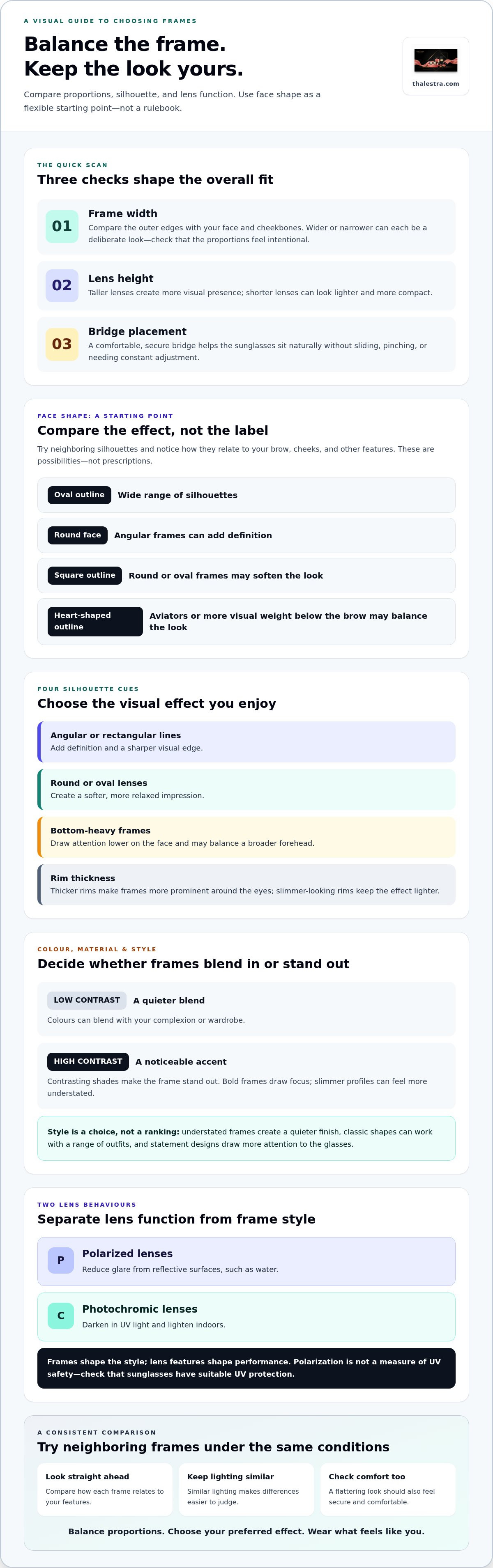
Small details can change the overall effect. Frame width affects how the glasses sit in relation to your face and cheekbones, while lens height influences how substantial the frame looks. Bridge placement affects both the spacing of the frames and how comfortably they stay in place. For general background on sunglasses and their design variations, see Sunglasses.
Start by balancing proportions, personal style, and intended use. Treat these as helpful considerations, not a strict formula.
How frame proportions shape the overall look
Compare the frame’s outer edges with the width of your face and cheekbones. A frame that extends well beyond them can look oversized; one that seems much narrower may feel visually compressed. Neither effect is automatically wrong. Check that the proportions look intentional from the front and feel comfortable when worn.
Lens height matters too. Taller lenses create more visual presence, while shorter lenses can make a frame look lighter and more compact. Check that the bridge rests comfortably without sliding or pinching. A secure, natural position helps the glasses look settled rather than needing constant adjustment.
Why personal style matters as much as face shape
Understated frames create a quieter finish; classic shapes can work with a range of outfits; statement designs draw more attention to the glasses. These are different style choices, not a ranking. Think about what you usually wear, where you’ll use the sunglasses, and the impression you want to make, such as polished, relaxed, or expressive.
Face shape can help you narrow the options, but it shouldn’t dictate your choice. Use proportion and contrast as guides, then consider how the frame looks and feels on you. The next section explores face-shape comparisons in more detail.
Which Sunglasses Suit Your Face Shape, Features, and Style?
Face shape can help you shortlist frames, but it works best as a flexible starting point. The goal isn’t to follow a rulebook. Notice how each silhouette changes the balance of your features, then decide whether that effect suits your personal style. When comparing sunglasses that make you look attractive, look at neighboring shapes too. A rectangular frame beside a soft square, for example, can help you see which lines feel more natural.
Use face shape as a flexible starting point
Oval outlines can work with a wide range of silhouettes. Round faces can explore angular frames for added definition, while round or oval frames may soften a square outline. For a heart-shaped outline, aviators or frames with more visual weight below the brow can create a sense of balance. These are possibilities, not prescriptions. Real features don’t always fit neatly into one category, and contrast is only one way to find a look you enjoy.
Compare the effect, not just the shape label. These frame characteristics can suggest different styling directions:
- Angular or rectangular lines: add definition and a sharper visual edge.
- Round or oval lenses: create a softer, more relaxed impression.
- Bottom-heavy frames: draw attention lower on the face and may balance a broader forehead.
- Thicker rims: make the frames more prominent around the eyes; slimmer-looking rims keep the effect lighter.
Compare two nearby shapes in similar lighting, looking straight ahead in each. Keep your hairstyle and viewing distance consistent, then notice how the frames relate to your brow, cheeks, and other features. A consistent comparison makes differences easier to judge than looking at one pair in bright light and another in a dim room.
Choose colour, material, and visual weight
Low-contrast colours tend to blend quietly with your complexion or wardrobe, while high-contrast shades make the frame stand out. Think about the colours you wear most often and whether you want sunglasses to coordinate or act as an accent. Material and rim thickness also affect visual weight: bold frames draw focus, while slimmer profiles can feel more understated. Neither is better. Choose the effect you prefer.
If retro silhouettes appeal to you, explore the guide to vintage designer sunglasses for more style inspiration. For a broader comparison, browse sunglasses styles for men and women and look for shapes, colours, and frame weights that match your preferences.
Do Polarized or Photochromic Sunglasses Change Your Look? Compare Style and Function
Lens features affect how sunglasses work, while frame shape, colour, and visual weight have more influence on their style. Lens tint still contributes to the finished look, especially when it contrasts with the frame or changes in different lighting. A functional lens feature, however, doesn’t automatically make a pair more flattering.
Frames shape the style; lens features shape how sunglasses perform. Keep those decisions separate as you compare pairs. Polarized lenses reduce glare from reflective surfaces, while photochromic lenses change tint in response to light conditions. Neither feature replaces checking that the sunglasses have suitable UV protection, and polarization itself isn’t a measure of UV safety.
When polarized sunglasses may fit your everyday needs
Polarized lenses can be useful around reflective surfaces such as water and pavement, where glare may interfere with comfortable viewing. They’re worth considering for outdoor activities or driving, depending on your needs and conditions. Polarization reduces glare, but it doesn’t guarantee that a pair is suitable for every situation. For a deeper lens comparison, consult the polarized sunglasses guide.
What photochromic lenses add to a sunglasses choice
Photochromic lenses darken in response to UV light and lighten indoors. This change can affect the appearance of the eyewear across settings: the lenses may look more visibly tinted outside and clearer inside. The experience depends on the lens, light, and surroundings. If you’re comparing adaptive tint, the photochromic sunglasses guide can help you consider lens function separately from frame style.
To compare how style and function work together, first look at the frame’s silhouette, colour, and visual weight from the front. Then consider whether its lens function suits where you’ll wear it. This helps you choose sunglasses that make you look attractive without treating a technical feature as a style shortcut.
How to Choose Sunglasses That Make You Look Attractive: A Practical Try-On Checklist
A consistent comparison helps you judge appearance, comfort, and function together. Use these five steps to narrow your options instead of choosing a pair based on one flattering angle or a passing trend.
A five-step way to compare sunglasses
- Start with your routine. Think about where you’ll wear the sunglasses, what you usually wear, and the impression you want, such as classic, understated, or bold.
- Shortlist frame shapes. Pick a few silhouettes and proportions to compare. Include a neighboring option, such as a soft square alongside a rectangular frame, to see how a small shape change affects the look.
- Compare colour and visual weight. Decide whether you prefer frames that blend with your wardrobe or stand out. Notice whether thicker or slimmer-looking rims better match your style.
- Check fit and function. The frames should sit securely without pinching or sliding, and the bridge should feel comfortable. Review the lens protection information, then consider whether polarized or photochromic functionality suits your planned use.
- Compare your finalists consistently. Look straight ahead in similar lighting and from the same distance. If possible, check how each pair looks in the settings where you’ll wear it, not only in a close-up mirror view.
Separate must-haves from preferences
It’s easier to decide when you distinguish essentials from style preferences. Use this checklist to assess each pair:
| Decision level | What to assess |
|---|---|
| Must-haves | Comfortable, stable fit; suitable UV protection information, such as a UV400 or 100% UVA/UVB protection label. |
| Preferences | Frame shape, colour, material, visual weight, and how well the style fits your wardrobe and desired impression. |
| Optional lens features | Polarization for reducing reflected glare, or photochromic lenses that change tint with light conditions. Choose based on your activities, not as a substitute for UV protection. |
Dark tint alone doesn’t indicate UV protection, so check the lens information separately from frame colour and appearance. For a focused explanation of protection, refer to the UV protection guide. Then compare your top choices in similar lighting and from a front-facing view. This makes it easier to identify sunglasses that make you look attractive and feel right for regular wear.
Ready to use the checklist? Explore sunglasses styles and compare frame shapes with polarized and photochromic lens options.
Find Your Attractive Sunglasses Style at THALESTRA.COM
A strong choice brings four things together: frame proportions that feel balanced, a style that reflects your preferences, a comfortable fit, and lens functionality that suits how you’ll wear the sunglasses. No single shape or feature is right for everyone. Use your shortlist to find sunglasses that make you look attractive and feel like a natural part of your everyday style.
Match a frame style to the impression you want
Think in broad aesthetic directions. Classic frames can give an outfit a familiar, versatile finish; contemporary designs may feel current; retro-inspired shapes add a distinct reference to an earlier era. These are starting points, not rules. Consider the outfits and settings where you’ll wear your sunglasses, then choose a frame that complements them and feels natural to you.
THALESTRA.COM features men’s and women’s sunglasses, including designer frames. As you compare styles, consider proportions and visual weight as well as the overall silhouette. A frame can look appealing but still feel uncomfortable or out of place with your usual wardrobe. Comfort and personal preference matter more than choosing a shape simply because it’s trending.
Make your final choice with confidence
Revisit your checklist before deciding. Compare your strongest options from a front-facing view and in similar lighting. Check that each pair sits securely and comfortably, then consider whether its shape, colour, and size suit your features and the impression you want to make.
Choose lens features for their function, not as a shortcut to a more attractive look. Polarized lenses reduce glare from reflective surfaces, while photochromic lenses change tint in response to light. THALESTRA.COM offers sunglasses with polarized and photochromic options, so you can weigh those functions alongside frame style. Neither replaces checking the lens protection information.
Compare designs, proportions, and lens categories against your everyday routine. The right pair should suit your personal style and feel practical for the way you plan to wear it. Browse sunglasses styles and find an option that feels right for you.
Choose a Pair That Feels Like You
The most flattering sunglasses balance frame proportions with your features, personal style, and everyday needs. Face-shape suggestions can help you explore, but they’re flexible guides, not rules. Compare frame width, colour, and visual weight, then choose a pair that feels comfortable and reflects the impression you want to make.
Consider appearance and function together. Polarized lenses reduce reflected glare, while photochromic lenses change tint in response to light. These features serve different purposes, so choose based on how you plan to wear your sunglasses. A comfortable fit, a style you enjoy, and suitable lens function can work together to help you find sunglasses that make you look attractive and feel right for your routine.
THALESTRA.COM offers sunglasses for men and women, including polarized and photochromic options. Browse sunglasses and find a style that suits you. Trust your preferences, compare thoughtfully, and choose a pair you’ll be glad to wear.
Frequently Asked Questions
What sunglasses make your face look more attractive?
The most flattering sunglasses balance frame proportions with your features, personal style, and intended use. Angular frames may add definition to softer features, while round or oval shapes can soften sharper lines. These are starting points, not fixed rules. Compare frame width, lens height, colour, and how comfortably the pair sits. The best sunglasses that make you look attractive feel balanced and look like a natural choice for you.
Do sunglasses look better when they contrast with your face shape?
Contrast can create visual balance, but it’s a styling option rather than a requirement. Angular frames may add definition to rounder features, while curved frames can soften a more angular outline. You can also choose a similar shape for a cohesive look or select a bold silhouette simply because you like it. Compare a few shapes in similar lighting, then let your preference guide the final choice.
Can sunglasses make your face look slimmer?
Sunglasses can change how your face appears by shifting visual emphasis, but they can’t change its actual shape. Frame width, lens height, and rim weight affect that impression. A frame much wider than your face may emphasize width, while a balanced, well-fitting shape can look more harmonious. Compare different proportions from a front-facing view instead of relying on a “slimming” label.
Are oversized sunglasses flattering on everyone?
Oversized sunglasses aren’t automatically flattering on everyone; their effect depends on frame proportions and personal style. Larger lenses can make a strong statement, while a frame that overwhelms your features may feel visually heavy or uncomfortable. Compare the frame’s width with your face and check that it sits securely without pressing on your cheeks. If you like the bolder look, wear it with confidence.
Which sunglasses frame colour suits my skin tone?
The most suitable frame colour depends on the look you want, not just your skin tone. Low-contrast colours can blend with your complexion and wardrobe for a quieter effect; high-contrast colours draw attention to the frames. Compare a few shades beside your face in consistent lighting, and consider the colours you wear most. Choose a tone that works with your everyday outfits or adds the accent you want.
Do polarized sunglasses look different from regular sunglasses?
Polarized sunglasses may look similar to other tinted pairs from the outside because polarization is a lens function, not a frame style. Their purpose is to reduce glare from reflective surfaces such as water or pavement. Frame shape, colour, and lens tint contribute more directly to visible style. Polarization doesn’t indicate UV protection, so check lens protection information separately when comparing sunglasses.
How should sunglasses fit to look good and feel comfortable?
Sunglasses should sit securely and evenly without pinching your nose, pressing into your cheeks, or sliding as you move. The frame should look balanced from the front, and the bridge should rest comfortably. Check that the arms feel stable without squeezing the sides of your head. A pair that needs constant adjustment can distract from its style, so include comfort in your comparison.