
Sunglasses for water sports need to balance glare control, UV protection, fit, and the light conditions you’ll face. The darkest lens isn’t automatically the best choice on the water, whether you’re fishing, paddling, or sailing.
Bright reflections can make it harder to see comfortably, and terms such as polarized, UV400, and photochromic can complicate comparisons. They describe different things: polarization reduces reflected glare, while UV protection shields your eyes from ultraviolet rays. A secure, comfortable frame matters too, especially when movement or spray is part of the activity.
This guide explains how lens tint and features affect visibility, what to consider when assessing frame fit, and how your sport and changing light conditions shape your choice. You’ll also learn how to compare useful specifications rather than relying on marketing language. THALESTRA.COM offers polarized-sunglasses options, including LIOUMO Top Quality Photochromic Polarized Sunglasses and Classic Mens Polarized Sunglasses.
Key Takeaways
- Choose Sunglasses for water sports based on your activity, visual tasks, and expected light, not lens darkness alone.
- Compare polarized lenses for glare reduction, and consider how they may affect visibility on digital screens.
- Match frame fit and lens features to your activity, whether you’re boating, fishing, or moving through waves. One setup won’t suit every use.
- Use a simple pre- and post-activity routine, and follow the eyewear’s care instructions before cleaning or storing it.
- Use the shopping checklist to compare key features, then explore THALESTRA.COM’s polarized-sunglasses options against your priorities.
Why Sunglasses for Water Sports Need More Than a Dark Lens
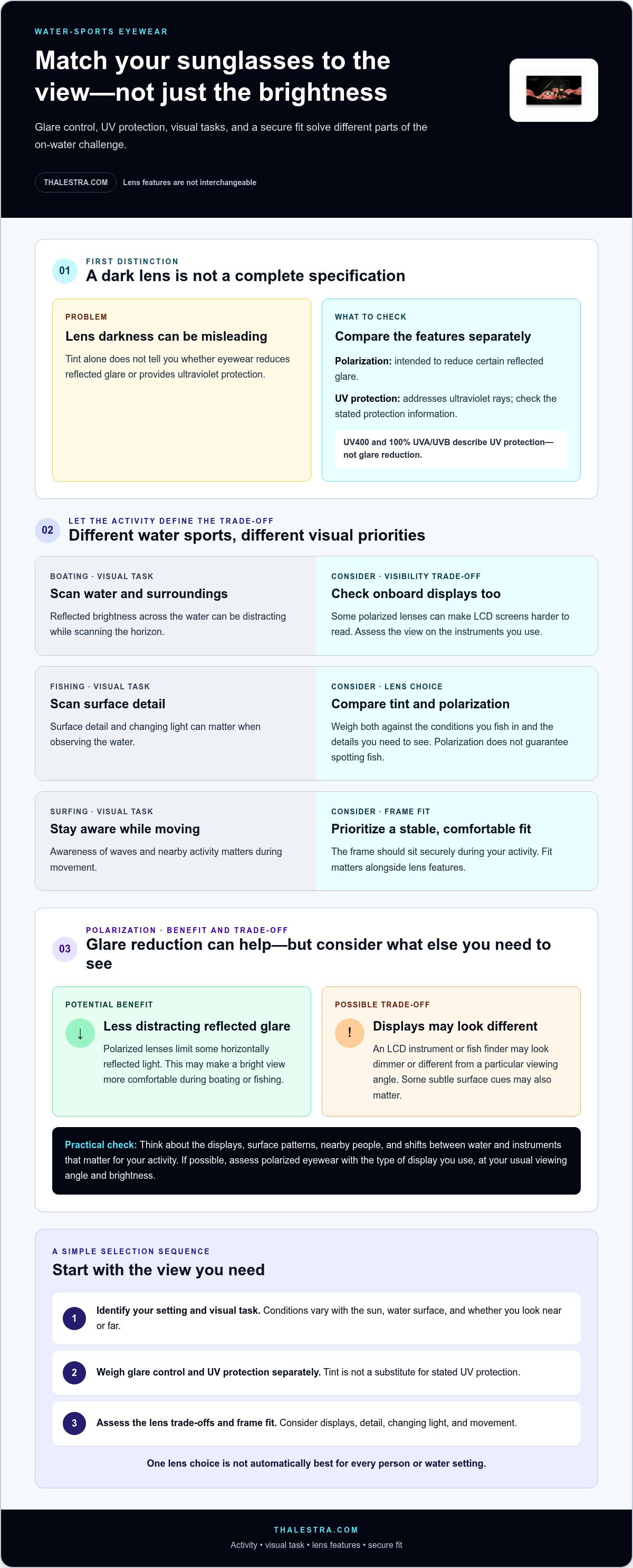
Sunglasses for water sports are eyewear chosen for the light, visual tasks, movement, and fit demands of activities on or around water. A dark lens may feel comfortable in bright sun, but its darkness alone doesn’t tell you whether it reduces reflected glare or provides ultraviolet protection. Treat those as separate considerations, then compare them with what you need to see and how securely the frame fits during your activity.
Water changes the view. Sunlight can reflect off the surface, adding distracting brightness to the direct light reaching your eyes. That glare may make it harder to look across the water or pick out details. Polarization is intended to reduce certain reflected glare, while UV protection addresses ultraviolet rays. Check the stated protection information on eyewear rather than using lens tint as a substitute. Labels such as UV400 or 100% UVA/UVB protection describe UV protection, not glare reduction.
How water changes the visual environment
Conditions shift with the sun’s position, the water’s surface, and whether you’re looking near or far. A lens that feels comfortable in open sun may be less suitable when the light changes or when you need to read a screen. Consider the whole view, not just brightness: glare control, clear detail, and stated UV protection are distinct parts of the decision.
Which water activities call for different priorities?
Boating, fishing, and surfing create different visual tasks. Start with what you need to see, then consider the lens and fit accordingly:
- Boating: Balance glare management with visibility of your surroundings and onboard instruments. Some polarized lenses can make LCD screens harder to read, so check the view on the screens you use.
- Fishing: Surface detail and changing light can matter when scanning the water. Compare lens tint and polarization for the conditions you fish in.
- Surfing: Movement and awareness of waves and nearby activity make a stable, comfortable fit an important consideration.
These are starting points, not fixed rules. Someone fishing from a boat may care about both surface detail and screen readability. A surfer may also encounter changing brightness during a session. Your priorities depend on the setting, visual tasks, and how the eyewear sits during movement. For more activity-focused considerations, explore this polarized fishing sunglasses guide.
Use an activity-first approach: identify the conditions and visual tasks, consider glare reduction and stated UV protection separately, then assess fit. No single lens choice is automatically best for every person or water setting. This framework makes product terminology easier to interpret and helps you compare practical features instead of lens darkness alone.
Polarized Lenses on the Water: When Glare Reduction Helps
Polarized lenses are designed to reduce certain reflected light, including glare from water and other shiny surfaces. A filter in the lens limits some horizontally reflected light before it reaches your eyes. This can make a bright view feel more comfortable and reduce distracting reflection, though the effect depends on the setting and what you need to look at. The American Academy of Ophthalmology explains the benefits of polarized lenses, including glare reduction around water.
For boating, polarization may reduce reflected brightness across the water while you scan the horizon. For fishing, reducing surface glare can be useful when observing water conditions. It doesn’t guarantee that you’ll spot fish or improve results. Light, water conditions, lens tint, and the task at hand all shape what you see. Polarization is a lens property to weigh, not a promise of better performance in every aquatic setting.
When polarized sunglasses can be useful
Consider polarization if reflected glare regularly distracts you during bright-water activities. It may make the view more comfortable for boating or fishing, but it won’t replace clear vision, suitable UV protection, or a frame that fits your activity. Compare the stated lens details with your needs. THALESTRA.COM offers polarized sunglasses, including Classic Mens Polarized Sunglasses and LIOUMO Top Quality Photochromic Polarized Sunglasses.
When to weigh visibility trade-offs
Polarized lenses can change how some digital displays appear. A boat’s LCD instrument or fish finder may look dimmer or different from a particular viewing angle. Subtle surface cues may also matter for some activities, so consider which details you rely on and whether glare reduction could make another task less convenient.
Before choosing, think through the view you need in practice. If possible, assess polarized eyewear against the type of display you use, at the angle and brightness you’d normally encounter. Consider whether you need to distinguish changing surface patterns, see nearby people, or shift between water and instruments. These details help you decide whether glare control is a priority or one factor among several.
In short: polarization can reduce reflected glare, but suitability depends on the visual task. It’s not automatically the best choice for every pair of Sunglasses for water sports. To compare how lens properties serve different conditions, explore this polarized versus photochromic lens comparison. If polarized eyewear suits your priorities, browse THALESTRA.COM’s polarized sunglasses as part of your selection.
Compare Water-Sports Sunglasses by Activity, Fit, and Lens
Start with the view you need, then compare lens choices and frame fit for that task. Sunglasses for water sports aren’t a single-use category: a boater checking instruments, an angler watching the water, and a surfer moving through waves have different priorities. The table offers a starting point, not a universal ranking. Consider lens tint, polarization, stated UV protection, coverage, and comfort together.
| Activity | Visual priority | Lens consideration | Fit consideration |
|---|---|---|---|
| Boating | See surroundings and onboard instruments clearly. | Consider glare reduction alongside screen visibility; polarized lenses can affect how some displays look. | Assess coverage and comfort for the time you’ll wear them. |
| Fishing | Scan water detail and notice changing surface conditions. | Compare polarization and tint for the light and water conditions you encounter. | Choose a fit that feels comfortable while looking in different directions. |
| Surfing or other high-movement activities | Keep a clear view of waves and nearby activity while moving. | Consider changing light and the visual details you need to track. | Prioritize a stable-feeling fit; assess coverage and whether the frames slip during normal movement. |
Boating and fishing: glare, surroundings, and detail
Boaters may need to shift attention between open water, nearby surroundings, and instrument screens. Fishing puts more emphasis on observing water detail. Glare reduction may be useful, but it doesn’t guarantee better results. Think through your usual conditions and visual tasks before choosing lens features. Anglers can also use this polarized fishing sunglasses buyer’s guide as a focused comparison resource.
Surfing and other high-movement activities: fit first
Movement makes fit a practical selection criterion. Check whether the frames feel stable and comfortable as you turn your head, look down, or move at your usual pace. Consider how much of your peripheral view they cover and whether they shift or slip. Assess these points for any pair rather than assuming them from a product description.
Assess activity and fit together: lens priorities matter only if the frames feel comfortable and stay positioned for the task. Treat coverage, comfort, and a secure-feeling fit as evaluation criteria, not guarantees. When comparing options online, use the listed frame details and product images to judge the shape, then consider how it aligns with your activity. For a mixed-use day, rank your most important visual task first and decide which trade-offs you can accept.
Prepare and Care for Sunglasses Before and After Water Sports
A brief check before heading out and careful storage afterward can help keep your eyewear ready for its next use. For Sunglasses for water sports, don’t assume every lens or frame can be cleaned the same way. Start with the manufacturer’s care instructions, especially after exposure to spray, salt, sand, or sunscreen.
A simple pre-activity eyewear check
Before setting out, check the view and the fit. Smudges and dust can distract you, while a frame that shifts during ordinary movement may need adjusting or a different fit. Review the product’s stated care and protection information so you know how to handle the eyewear before conditions get wet or messy.
- Inspect the lenses. Look for smudges, dust, or visible damage that could interfere with your view. Follow the product’s directions for removing marks rather than wiping a dirty lens with any fabric at hand.
- Check the frame. Make sure it feels comfortable and sits as intended. Turn your head and look down as you normally would during the activity, noting whether the frame shifts or slips.
- Review the instructions. Check the stated care guidance and protection details before use. Keep the instructions accessible if you’re unsure how to clean or store the pair afterward.
This quick routine is an assessment, not a guarantee that eyewear will stay in place in every condition. Waves, movement, and activity intensity can change how a frame feels. If the fit already feels unstable during ordinary head movement, factor that into your choice before relying on it for a session.
Cleaning and storage after use
After an outing, follow the manufacturer’s lens and frame care instructions before cleaning. Salt, sand, and sunscreen may leave residue, but the right cleaning method depends on the eyewear. Avoid abrasive cloths or dry rubbing, which can drag particles across the lens. A protective case gives sunglasses a designated place when they’re off your face, but doesn’t imply water or impact resistance.
- Check for residue. Look over the lenses and frame after use, especially if they’ve been exposed to spray or sunscreen.
- Clean as directed. Use only the cleaning method and materials recommended by the manufacturer. If the instructions specify rinsing, follow them; don’t assume every pair is suitable for rinsing or immersion.
- Let the eyewear dry as instructed. Avoid putting damp sunglasses away if the care guidance calls for drying first.
- Store them in a case. Keep the pair protected between uses rather than loose in a bag where the lenses can rub against other items.
For additional lens-care tips, use this polarized sunglasses cleaning guide alongside the care instructions for your eyewear. If polarized lenses are part of your selection, explore THALESTRA.COM’s polarized sunglasses as you compare options for your activities.
Choose Sunglasses for Water Sports with a Clear Shopping Checklist
A useful comparison starts with your activity, not a trend or a single lens label. Before choosing Sunglasses for water sports, decide what you need to see, how the frames should feel during movement, and what protection details the product information states. Use these questions to clarify your priorities, then compare eyewear against them.
Five questions to answer before choosing
Answer these questions for the activity you do most often. If one pair needs to cover several settings, use your most demanding visual task and fit requirement as the baseline. This makes product descriptions easier to compare and helps separate useful specifications from broad performance language.
- Which activity will you do? Identify whether you’ll mainly boat, fish, surf, or take part in another water activity. Different settings place different demands on your view and frame fit.
- What do you need to see? Consider whether you’ll watch the water’s surface, scan your surroundings, follow nearby movement, or read onboard displays.
- Is reflected-glare reduction a priority? Decide whether polarization suits the visual task. If you use digital instruments, factor in that polarized lenses can affect how some screens appear.
- Does the fit feel right for your movement? Consider comfort, coverage, and whether the frame shifts during ordinary head movement. A fit that feels stable at rest may feel different as you move.
- What protection and lens details are stated? Read the product information for stated UV protection and lens features. Don’t use lens darkness or a marketing phrase as a substitute for specific details.
Keep your answers specific. “I need sunglasses for the water” is less helpful than “I need to see boat instruments and reduce distracting surface glare” or “I need comfortable coverage while moving.” If your priorities conflict, such as glare reduction and screen readability, decide which task matters most and weigh the trade-off.
Explore polarized sunglasses at THALESTRA.COM
With your checklist in hand, compare product information with your priorities rather than assuming a feature from a product name or category. THALESTRA.COM offers Classic Mens Polarized Sunglasses and LIOUMO Top Quality Photochromic Polarized Sunglasses. The names identify polarized options, and the LIOUMO product name also identifies photochromic lenses. Compare the listed details with the visual tasks and conditions you have in mind.
Use the product details to assess the stated lens information against your visual tasks, fit preferences, and protection needs. A considered choice doesn’t have to cover every activity equally. Focus on what you’ll do most, what you need to see, and which listed features support those priorities. Explore THALESTRA.COM sunglasses as you compare polarized options.
Make Your Next Pair a Deliberate Choice
Before your next outing, turn your priorities into a short personal brief: where you’ll use the sunglasses, what you need to see, and which fit and lens details matter most. Keep it handy while comparing options. This helps you focus on eyewear that suits your routine instead of getting distracted by broad performance claims.
THALESTRA offers polarized sunglasses, including Classic Mens Polarized Sunglasses and LIOUMO Top Quality Photochromic Polarized Sunglasses. Compare the product information with your activity needs, and choose based on the features and fit that align with how you plan to use the pair.
Ready to compare options? Explore THALESTRA sunglasses and use your checklist as you choose Sunglasses for water sports. Clear priorities make the decision easier and help you head out feeling prepared.
Frequently Asked Questions
Are polarized sunglasses good for all water sports?
No, polarized sunglasses aren’t automatically the best choice for every water sport or visual task. They can help reduce reflected glare, but consider what else you need to see, such as a boat display, changing wave patterns, or nearby people. For a mixed-use day, prioritize the task where clear vision matters most, then weigh glare reduction against any visibility trade-offs.
Do polarized sunglasses make it easier to see fish underwater?
They may reduce surface reflections that obscure the view, which can sometimes make underwater details easier to notice in suitable conditions. That doesn’t guarantee you’ll see fish: water clarity, depth, sunlight, and viewing angle all affect visibility. If spotting underwater features is your goal, consider how clearly you can see the water in the conditions where you usually fish, rather than treating polarization as a guaranteed advantage.
Can polarized sunglasses make boat screens harder to see?
Yes, some polarized lenses can make LCD displays appear dimmer or change their appearance, especially from certain viewing angles. Before relying on a pair aboard, view the actual screen through the lenses while seated or standing in your usual position. Tilt your head slightly and check whether essential information stays readable. This practical test can reveal a screen-visibility issue that may not be obvious outdoors without the display.
What should I look for in sunglasses for boating?
For boating, consider what you need to see during a typical trip: surroundings, other water users, onboard instruments, and the route ahead. Sunglasses for water sports should also have clearly stated lens-protection information and a fit that feels comfortable through normal head turns. If you use digital displays, include screen readability in your comparison. Think about how long you’ll wear them and whether the frame remains comfortable over time.
Are dark lenses enough protection for water sports?
No, lens darkness alone doesn’t tell you the level of UV protection. A lens can look dark without its tint specifying how well it blocks ultraviolet rays. Read the stated protection information, such as a clear UV400 or 100% UVA/UVB label, and treat glare reduction as a separate lens feature. This distinction helps you compare stated protection instead of judging by appearance alone.
How should I clean sunglasses after wearing them near water?
Follow the manufacturer’s cleaning instructions, especially after saltwater, sand, or sunscreen exposure. If the care directions allow rinsing, use fresh water to remove loose residue before cleaning, since wiping grit across a dry lens can scratch it. Use the recommended cloth or cleaning method, then store the pair in a protective case. Avoid household cleaners or abrasive fabric unless the eyewear instructions specifically allow them.
Can I use photochromic sunglasses for water sports?
That depends on the lens specifications and how the light changes during your activity. Photochromic describes a lens designed to adjust its tint in response to light, but the name alone doesn’t establish its UV protection, water-sports suitability, or how quickly and how far the tint changes. Review the stated lens details and consider whether its behavior suits your usual conditions, including time spent moving between sun and shade.