
What if a “sweat-proof” label matters less than where your sunglasses touch your face? If your frames slide down your nose in hot weather or during a run, you’re not alone. Sweat can make the contact points feel less secure, but fit, frame balance, and movement matter too. The right sunglasses for people who sweat a lot should stay steady without squeezing your head or creating pressure spots.
This guide explains what to assess before buying: how the bridge and temples sit, whether the frame stays put as you move, and whether the contact points remain comfortable. You’ll also learn how to compare lens choices, including polarized and photochromic options, without mistaking glare or light-control features for sweat resistance. Use the checks below to narrow your options for workouts, outdoor activities, and everyday wear.
Key Takeaways
- For sunglasses for people who sweat a lot, assess frame stability and comfortable contact points rather than relying on a “sweat-proof” label.
- Check that the bridge, temples, and frame width feel secure without uncomfortable clamping pressure.
- Choose polarized or photochromic lenses for your light conditions and activities; lens features don’t determine whether frames stay in place.
- Use a movement test and compare listed frame measurements with a pair you already find comfortable.
- Assess fit separately from lens preferences when comparing sunglasses for workouts and everyday wear.
Why Sunglasses Slip When You Sweat, and What a Better Fit Can Do
Sunglasses that slide down your nose can interrupt a run, cycling ride, or walk on a hot day. Repeatedly pushing them back into place is distracting, especially when your hands are occupied. For sunglasses for people who sweat a lot, stability depends on more than a product label. Perspiration, movement, frame fit, and individual face shape all affect how the glasses feel and stay positioned.
Moisture around the nose and temples can make the frames feel less secure. Activity changes the fit, too: running brings repeated impact, cycling keeps your head in a forward-leaning position, and bending can shift the frames in another way. A pair that feels steady while you’re standing still may move during exercise, so assess it with movements that resemble your intended use.
A secure fit should stay stable during movement without causing painful pressure. It should feel balanced, not depend on clamping tightly against your head. Sunglasses won’t prevent or reduce your body’s natural sweating. The goal is a comfortable fit that’s less likely to shift when moisture and movement are part of your day.
Why perspiration and movement can affect frame stability
The bridge and temple areas are the main points of contact. When sweat collects there, you may notice less grip or a change in how the frames sit. Head position and facial movement can also affect contact. A pair might feel steady on an easy walk but shift more during a run. Test the fit with movements related to your activity instead of relying on a quick, still try-on.
What “sweat-proof sunglasses” should, and should not, mean
Treat “sweat-proof” as a product claim to evaluate, not a guarantee that a frame will fit every face or stay put during every activity. Look for clear information about the frame and its fit, then consider whether the contact points feel comfortable and stable for your use. Sunglasses serve as protective eyewear, but UV protection, lens tint, and polarization are separate from frame stability. A lens feature won’t stop a frame from sliding by itself.
Compare two things separately: does the frame sit securely, and does the lens suit the light conditions you expect? Polarized lenses are an option for managing reflected glare, while photochromic lenses respond to changing light. Neither feature tells you how a frame will fit when you sweat. Focus first on what you can assess: steady contact, comfortable pressure, and little movement during an activity-relevant test. That’s more useful than relying on a broad label alone.
How Frame Fit and Contact Points Affect Sunglasses for Heavy Sweating
Frame stability starts with how the sunglasses meet your face. A bridge that’s too broad or narrow may let the frame slide or sit unevenly. Temple arms that are too short, long, or tight can shift or create pressure. Overall frame width matters as well: a pair that doesn’t suit your face may feel loose at the sides or squeeze your temples. Since these details vary from person to person, a style name alone can’t predict fit.
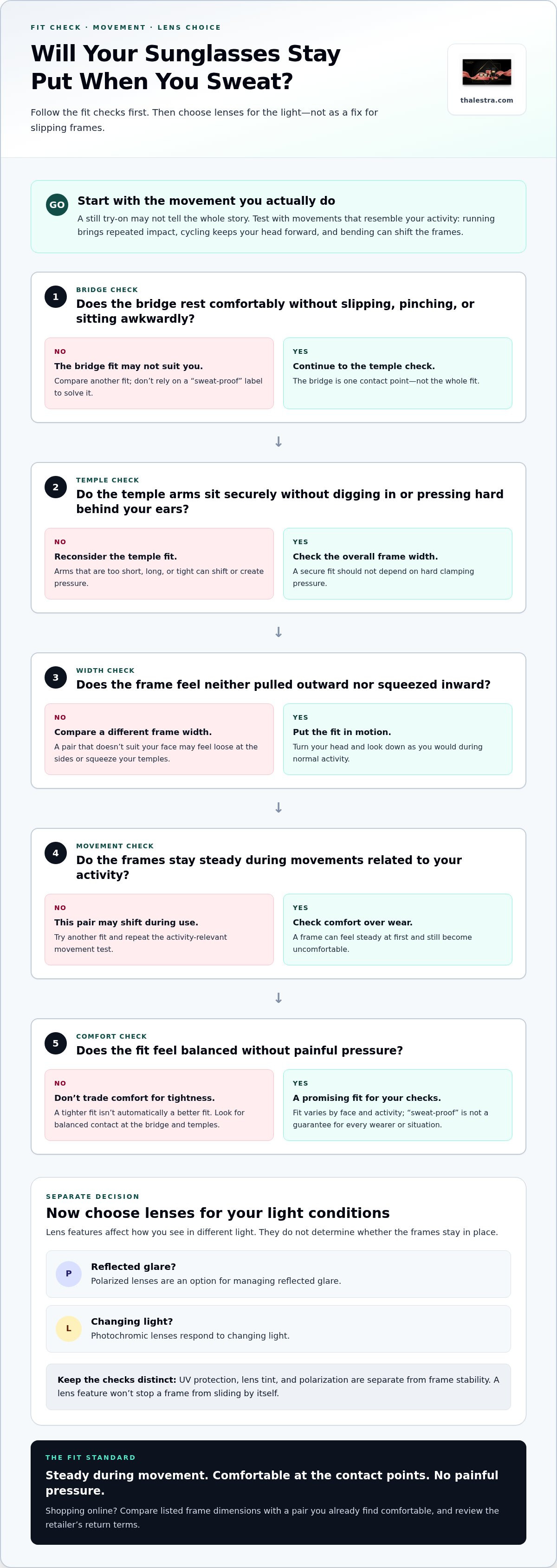
Check the bridge, temples, movement, and comfort: a good fit stays in place without pinching or causing pressure. That’s a practical standard for sunglasses for people who sweat a lot, whether you’re choosing frames for active days or regular wear.
Check the nose bridge, temples, and frame width
The bridge should rest comfortably without repeatedly slipping, pinching, or leaving the frame perched awkwardly. Temple arms should sit securely along the sides of your head without digging in or pressing hard behind your ears. Check the frame width from the front: the glasses shouldn’t feel pulled outward or squeezed inward. Then turn your head and look down as you would during normal activity. Notice whether the frames shift or create pressure.
Balance grip with all-day comfort
A tighter fit isn’t automatically a better fit. Excess pressure can become distracting over time, even if the frame initially seems secure. If you’re trying sunglasses in person, wear them briefly and move naturally before deciding. When shopping online, compare the listed frame dimensions with a pair you own and find comfortable. Review the retailer’s return terms so you understand the purchase conditions.
Pay attention to pressure points as well as movement. A frame can feel steady while you’re standing but become uncomfortable after extended wear. Another may feel comfortable at first yet shift when you move. Look for a balanced feel at the bridge and temples, rather than relying on one contact point to hold the frame in place. Face shape, frame width, and how the arms rest all affect that balance.
Keep fit and lens choice as separate decisions. Polarized or photochromic lenses may suit different light preferences, but those features don’t determine whether the bridge and temples fit your face. Once you’ve identified your comfort priorities, browse sunglasses styles and compare frame fit with lens options that match your routine.
Compare Sunglasses Features for Sweaty Workouts and Everyday Wear
Compare the frame and lenses as separate choices. For sunglasses for people who sweat a lot, frame fit affects how the pair sits during movement. Lens features affect how you see in different light. Polarization or photochromic performance won’t make a loose frame more secure, so assess fit independently from lens preference.
| What to compare | Workout use | Everyday use | Care consideration |
|---|---|---|---|
| Fit | Check for a stable feel during movements similar to your activity. | Prioritize comfort for longer wear and routine head movement. | Keep contact points and lenses clean, following care instructions. |
| Activity | Consider head position, movement, and how much coverage feels comfortable. | Choose a shape that suits your routine and feels balanced. | Store sunglasses carefully between uses to limit scratches or bending. |
| Lens preference | Choose based on glare and changing light conditions. | Consider the light you typically encounter outdoors. | Use appropriate lens-cleaning care to avoid smudges and damage. |
Choose lens features for the activity, not for sweat control
Polarized lenses are a glare-related choice to consider around reflective surfaces such as water. They don’t add grip at the nose or temples. For more on that use case, see this polarized fishing sunglasses guide. Photochromic lenses are an option when light conditions change during an outing. They respond to light, not frame movement. For cycling-specific lens context, read the photochromic cycling sunglasses guide.
Match frame coverage and style to how you move
Consider the movement and head position your activity involves, then choose a frame shape that feels secure and keeps your view comfortable. A style that fits one person may not fit another face the same way. Don’t assume a particular silhouette or material will prevent slipping. Check comfort, stability, and visibility first; treat color and fashion details as finishing choices.
Before deciding, ask three separate questions: Does the frame feel balanced? Does it stay comfortable when you move naturally? Does the lens suit the light you expect? Keeping fit and glare control distinct makes it easier to compare workout and everyday options.
Use This Try-On Checklist Before Buying Sunglasses for Sweaty Conditions
A repeatable check can help you compare sunglasses for people who sweat a lot before choosing a pair. Start with your intended use, assess how the frame sits, then consider whether its lens suits your usual light conditions. A try-on can reveal fit issues, though it can’t recreate every workout or predict how a frame will feel for every wearer.
Test frame stability with natural movement
If you’re trying frames in person, wear them briefly and move normally. Nod gently, turn your head, and look down. Notice whether the glasses shift, pinch, or need constant adjustment. A stable-feeling fit shouldn’t depend on forceful pressure. Repeat the movement check after walking around. Treat the result as a useful screen, not a guarantee of how the sunglasses will feel during every activity.
Assess online fit details before checkout
For online shopping, product dimensions and images can help you compare proportions with a pair you already find comfortable. Use this checklist to make the decision more practical:
- 1. Intended activity: Identify the main use, such as running, cycling, walking, or everyday wear. Consider the head position and movement involved.
- 2. Frame fit: Check the bridge, temples, and overall width, or compare them with a pair you own. Look for a balanced fit without pinching or looseness.
- 3. Movement test: Nod and turn your head gently. Check for shifting and discomfort, then repeat after moving around normally.
- 4. Lens needs: Decide whether polarization for glare or photochromic lenses for changing light suit your routine. These are lens preferences, not solutions for frame slippage.
- 5. Care and purchase terms: Review the care instructions and the retailer’s return terms before ordering. Policies can differ between retailers.
If measurements are shown, compare lens width, bridge width, and temple length with those of a comfortable pair you own. Product images can also help you assess frame coverage and how the arms appear to sit, though they can’t confirm how a frame will feel on your face. Use these details as comparison points, not as a substitute for assessing comfort.
Ready to compare options? Browse sunglasses styles and weigh frame fit separately from lens preference.
Choose Your Next Pair: Practical Sunglasses Options for Active Days
Choose your next pair by separating fit from lens features. For sunglasses for people who sweat a lot, start with comfortable, stable contact at the bridge and temples, then check how the frames feel during gentle movement. After that, match lens features to your activity and light conditions. A label or style name can’t replace assessing the fit.
Match the shopping choice to your main use
For running, cycling, or other active use, prioritize a frame that feels balanced and remains comfortable as you move your head. Don’t rely on a tight squeeze to keep it in place. If light changes during an outing, photochromic lenses may suit that need. In glare-sensitive settings, polarized lenses may be worth considering. Neither lens choice indicates better grip, so assess frame stability separately.
THALESTRA.COM offers sunglasses with polarized and photochromic lens options, giving you features to compare by use and light preference. Consider each option alongside your intended activity, then return to the fit basics: comfortable contact, a stable feel, and no distracting pressure. For everyday wear, include style in the decision, but keep comfort and visibility ahead of appearance alone.
Keep care and eye protection in the decision
Follow the care instructions provided with the specific sunglasses you choose. For eye protection, check the stated UV details rather than assuming a dark tint provides UV protection. Lens darkness and UV protection are not the same thing. Review this sunglasses UV protection guide for more information.
Before deciding, use a final quick check: Does the frame feel secure without pinching? Does it stay comfortable during natural movement? Does the lens suit the light conditions you expect? These questions help narrow the options without treating polarized or photochromic lenses as sweat-control features.
Explore sunglasses at THALESTRA.COM and compare styles, fit, and lens preferences for your active days.
Find a Pair That Fits Your Day
The right sunglasses for people who sweat a lot aren’t defined by a “sweat-proof” label. Prioritize a stable, comfortable fit at the bridge and temples, then check how the frames feel during natural movement. A pair should stay comfortable without relying on painful pressure.
Keep frame fit and lens choice separate. Polarized lenses may suit glare-sensitive settings, while photochromic lenses are an option for changing light. Neither feature determines whether the frames fit securely. Compare these choices with your activity, comfort needs, and everyday style.
THALESTRA.COM carries sunglasses styles for men and women, including polarized and photochromic options. Browse the selection with your fit checklist in mind, and compare lens preferences separately from frame comfort.
Explore sunglasses at THALESTRA.COM and compare styles and lens options for your routine. Start with fit, then choose the features that suit your day.
Frequently Asked Questions
Why do my sunglasses slip when I sweat?
Sweat can reduce the grip you feel where the frames touch your nose and temples. Head movement, frame width, weight distribution, and your face shape can also affect stability. A pair may feel secure while you’re standing still but shift when you run, bend, or look down. Check how the bridge and temple arms sit, and notice whether movement changes the fit.
What sunglasses are best for people who sweat a lot?
The best sunglasses for people who sweat a lot are the ones that fit securely without pinching. Look for balanced contact at the bridge and temples, then test whether the frames shift during gentle head movement. Choose lens features separately according to your activity and light needs. A “sports” style or “sweat-proof” label alone can’t tell you whether a pair will stay comfortable on your face.
Can sunglasses be sweat-proof?
“Sweat-proof” is a product claim to assess, not a guarantee that frames will stay in place for every wearer. Sweat, movement, and face shape all affect how sunglasses feel. Look for clear information about fit and frame contact points, then judge whether the pair feels stable without excessive pressure. Lens features such as polarization or tint address vision preferences, not sweat-related frame slippage.
How can I keep sunglasses from slipping during exercise?
Start with a frame that fits comfortably at the bridge and temples, then test it with gentle movements such as nodding, turning your head, and looking down. Avoid relying on a forceful, tight fit, which can become uncomfortable. If sweat builds up, pause safely and wipe your face and sunglasses according to their care instructions. A try-on test can help, but it can’t guarantee how frames will feel throughout every workout.
Are polarized sunglasses better for sweating?
No. Polarized lenses are a glare-related choice, not a feature that improves grip or prevents frames from slipping. They may suit activities around reflective surfaces, depending on your needs, while frame stability depends on fit and contact points. Assess the bridge, temples, and comfort separately from lens preference. THALESTRA.COM offers polarized sunglasses as a lens option, but polarization alone doesn’t indicate sweat resistance.
Are photochromic sunglasses suitable for outdoor exercise?
Photochromic sunglasses can be an option for outdoor exercise when light conditions change, because the lenses respond to light. Suitability depends on the activity and the specific lens, so review its product information for details relevant to your outing. Photochromic performance doesn’t determine whether frames will stay secure. Check fit and comfort through natural movement as a separate part of choosing sunglasses.
How should sunglasses fit if I sweat a lot?
Sunglasses should sit securely at the bridge and temples without pinching or creating painful pressure. The frame shouldn’t repeatedly slide, feel loose, or depend on clamping tightly to stay in place. Move your head naturally and notice whether the glasses shift or become uncomfortable. Fit varies by face shape, so compare frame measurements with a comfortable pair you own when shopping online.