
Stylish sunglasses for all seasons start with a frame you enjoy wearing and lens features that suit your routine. The right pair can work with changing outfits without requiring a new trend for every forecast. A bold seasonal look can be fun, but it may be harder to style when your wardrobe shifts.
It’s easy to choose a frame that works with one outfit and then leave it in its case. A practical approach is to compare shape, colour, and lens function separately, then picture the frame with clothes you wear regularly. This helps you choose sunglasses that feel coordinated in different settings and changing light.
This guide explains how to compare versatile frame styles and lens types, including polarized and photochromic options. You’ll also find ways to pair sunglasses with seasonal outfits and decide whether one adaptable pair or a small rotation suits your everyday wear.
Key Takeaways
- Stylish sunglasses for all seasons balance an adaptable frame with lens function to suit changing outfits and everyday needs.
- Compare frame appearance and lens type separately to make a clearer, more confident choice.
- Decide whether one versatile pair or a small seasonal rotation better fits your wardrobe and routine.
- Use layers and colour contrast to coordinate sunglasses with spring, summer, autumn, and winter outfits.
- Start with your wardrobe, then narrow your choice by frame look, lens function, and intended use.
Stylish Sunglasses for All Seasons: Why Versatility Matters
Seasonal outfits change, but your sunglasses don’t have to look out of place when the weather or your wardrobe shifts. Stylish sunglasses for all seasons are frames that coordinate with the clothes and everyday settings you return to throughout the year. The goal isn’t to find one pair that matches every look. It’s to choose a design that works across more of your routine.
Year-round sunglasses versatility means a frame can move comfortably between outfits and everyday settings without relying on a single season’s trend. Look at its proportions, colour, and overall style, then consider how naturally it fits the clothes you wear most. Lens function is a separate decision: a versatile frame appearance doesn’t necessarily mean the lenses suit every activity or light condition.
Personal style can outlast a trend without being plain or predictable. A clean, understated frame may be easy to wear often, while an expressive shape or colour can still work year-round if it connects with your usual clothes. Use trends for inspiration, not as a rule for what belongs in your rotation. For background on different designs and how sunglasses have developed, explore this overview of History and types of sunglasses.
What makes sunglasses versatile beyond summer?
Look for proportions that feel at home with both relaxed weekend clothes and more polished workday outfits. A highly distinctive frame can make a strong focal point; a simpler silhouette may blend more easily across different combinations. Neither is automatically more versatile. Decide how much attention you want your frames to draw, and whether that feels consistent with your usual style.
Colour is a styling choice, not a seasonal rule. Neutral shades can coordinate with a broad range of clothing, while a statement colour can add contrast to a simple outfit. Think about the tones you wear most and whether you want continuity or a deliberate accent. Rather than relying on face-shape rules, focus on the overall look you’ll enjoy wearing repeatedly.
Start with the outfits and settings you wear most
Choose for your real routine, not an imagined wardrobe. Consider the clothes you reach for, your daily activities, and how much contrast you like. A frame you wear often can bridge a workday outfit and weekend layers, especially if its shape and colour don’t compete with either. Begin with the settings you encounter regularly, then consider any particular uses that may call for a different lens function.
- Wardrobe: Identify the colours and outfit styles you wear repeatedly.
- Settings: Consider where you’ll use the frames during an ordinary week.
- Contrast: Decide whether you prefer a subtle finish or a noticeable accent.
- Repeat wear: Choose a look that still feels like you across different outfits.
These checks make “versatile” a practical standard. Instead of searching for a frame that suits every possible look, choose one that fits the clothes and settings already central to your year. For a quick test, picture it with a light top, a dark layer, and an everyday outfit. That gives you a useful starting point for comparing frame styles and lens functions in the sections ahead.
How Frame Style and Lens Function Shape All-Season Sunglasses
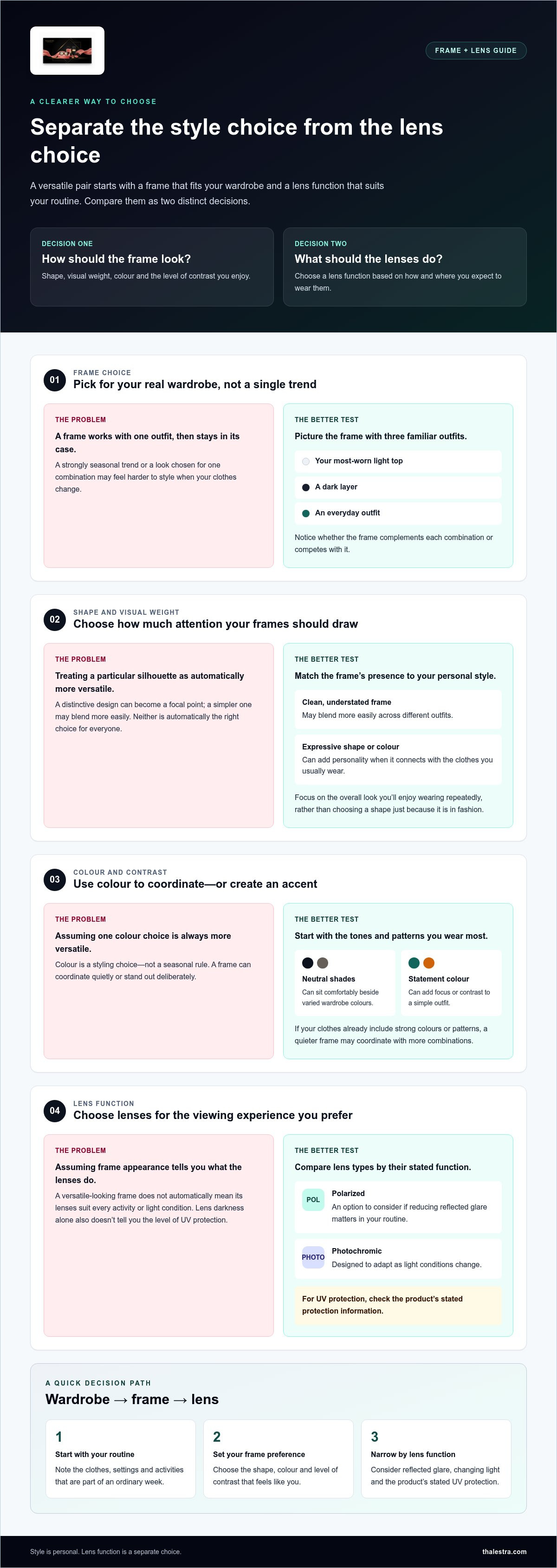
A useful way to compare sunglasses is to make two separate decisions: how you want the frame to look and what you want the lenses to do. These choices work together, but they answer different questions. Frame style shapes your outfit; lens function shapes your everyday viewing experience. Keeping them distinct makes it easier to find Stylish sunglasses for all seasons without treating appearance and function as the same feature.
Choose a frame look that coordinates across outfits
Classic, clean-lined frames often blend easily with different clothing, from a casual shirt to a neat jacket. More fashion-forward shapes, such as angular or rounded designs, can add a distinct accent without being limited to one season. Consider visual weight, too: a thicker-looking frame may stand out against light clothing, while a slimmer profile can feel quieter with both light and dark outfits.
Colour helps set the level of contrast. Black and other neutral tones can sit comfortably beside varied wardrobe colours; a brighter or less usual shade can bring focus to a simple outfit. Neither choice is automatically more versatile. If most of your clothes are understated, a statement frame can add personality. If your outfits already include strong colours or patterns, a quieter frame may coordinate with more combinations.
Try a quick wardrobe check before deciding: picture the frame with your most-worn light top, dark layer, and everyday outfit. Notice whether it complements each combination or competes with it. This practical test is more useful than choosing a particular silhouette just because it is currently in fashion.
Match lens function to your everyday preferences
Once the frame look feels right, consider lens type separately. Polarized lenses are an option to consider if reducing reflected glare matters in your routine. Photochromic lenses are designed to adapt as light conditions change. These functions suit different preferences, so think about where and how you expect to wear your sunglasses rather than assuming the frame’s appearance determines lens performance.
Lens darkness alone doesn’t tell you the level of UV protection. Check the product’s stated protection information, and use a dedicated UV-protection guide for more detail. If you prefer lenses that respond to changing light, a photochromic option may suit your preferences; the photochromic-lens guide explains that category in greater depth. The two functions can also be combined, as in the store’s photochromic polarized sunglasses.
Before browsing, note what matters most: a frame that coordinates with your clothes, a look with more visual impact, polarized lenses, or photochromic lenses. Compare the frame and lens details independently, so you don’t mistake a style feature for a lens feature. You can browse sunglasses by style and lens type with those preferences in mind, including classic polarized options and vacation styles.
One All-Season Pair or a Seasonal Sunglasses Rotation?
There’s no single right number of sunglasses for everyone. One adaptable pair can simplify getting dressed, while a small rotation gives you more room to change your look. The better choice depends on your personal style, how much your outfits vary, and whether you prefer familiar combinations or regular variety. Stylish sunglasses for all seasons can mean one dependable frame or a considered mix.
When one versatile pair makes sense
Choose one main pair if you value simplicity and tend to repeat familiar outfit combinations. A balanced frame in a colour that works with your regular clothing can make daily coordination easier. It may suit both casual plans and a more polished look, without needing a separate pair for each setting. That doesn’t mean one design suits every person, wardrobe, or occasion. It means finding a frame that fits your own most common combinations.
To test the idea, picture the same pair with the outfits you wear most during a typical week. If you’d reach for it with both relaxed and more structured clothes, a single-pair approach may feel practical. Also consider whether you like a consistent accessory look or would soon want more choice. Convenience only helps if you enjoy wearing that frame repeatedly.
When a small seasonal rotation adds variety
A small rotation can suit you if you enjoy changing silhouettes, switching between understated and expressive looks, or adding different colour accents. Start with a core everyday pair, then consider another frame that creates a clear contrast. For example, keep one quieter option for frequent wear and choose a more distinctive shape or colour for outfits where you want your sunglasses to stand out. Give each pair a role you can describe.
Think about outfit variety rather than assuming each season needs its own frame. A rotation might support changes in clothing across the year, but it can also suit someone whose style shifts from day to day. If you’re drawn to retro-inspired details, the vintage designer sunglasses guide can be a useful direction for exploring that look.
Before deciding, ask yourself whether you want fewer choices or more styling flexibility. If coordinating sunglasses feels like a chore, keep the rotation simple. If you enjoy switching accessories, build around a dependable everyday pair and add variety gradually. The aim is a selection you’ll actually wear, not a fixed number of frames.
How to Style Sunglasses Across Spring, Summer, Autumn, and Winter
Seasonal styling doesn’t require a new frame for every change in weather. Use sunglasses as a finishing detail that connects your outfit: repeat a familiar frame for continuity, or choose more contrast when you want it to stand out. Consider your clothing layers, the overall colour palette, and how much visual attention you want the frames to draw.
Spring and summer: lighter layers and brighter combinations
In spring, pair a versatile frame with a light jacket, a simple top, and everyday trousers. As temperatures rise, the same frames can work with lighter fabrics and relaxed warm-weather outfits. Neutral frames can echo understated clothing, while a brighter frame can add contrast to a pale or simple look. These are options, not seasonal rules: choose combinations that feel natural with the colours and silhouettes you already wear.
Autumn and winter: deeper tones and layered outfits
In cooler months, try a classic frame with a coat and knitwear, or use a more expressive shape to add definition to a layered outfit. Deeper clothing colours can make a lighter frame stand out; a darker frame can create a more continuous look with a dark coat. A familiar pair also adds a consistent detail as your clothing palette changes. Treat these pairings as starting points, not fixed colour formulas.
- Spring: Combine everyday frames with a transitional jacket and lighter layers.
- Summer: Pair sunglasses with a relaxed outfit, using frame colour for subtle coordination or contrast.
- Autumn: Wear a familiar silhouette with knitwear and a light coat for a cohesive look.
- Winter: Add a frame that complements or contrasts with a heavier coat and layered clothing.
To make a pairing feel balanced, check the outfit as a whole rather than matching every accessory. If your coat or top has a strong colour or pattern, a simpler frame can keep the look from feeling crowded. With plain layers, a more distinctive frame can become a deliberate accent. This makes Stylish sunglasses for all seasons easier to style as fabrics, layers, and colours shift.
Style is only one part of choosing sunglasses. Lens function remains a separate consideration, and lens darkness alone doesn’t establish UV protection. For more detail, consult dedicated guides to UV protection and photochromic lenses before deciding which lens type fits your preferences.
Use these seasonal pairings as a wardrobe test: picture your preferred frame with the outfits you wear most in spring, summer, autumn, and winter. Browse sunglasses in different styles and lens types to compare options for your everyday rotation.
Choose Stylish Sunglasses for All Seasons and Browse by Need
Turn your style preferences into a clear shortlist rather than choosing by trend alone. Start with the outfits you wear most, decide what frame appearance feels like you, then consider lens function and where you’ll wear the sunglasses. This order keeps the decision practical: the frame should suit your wardrobe, while the lens category should reflect your everyday preferences and intended use.
Use a quick checklist before choosing
Before browsing, answer four questions based on your routine, not every possible occasion. Think about the clothes you reach for on an ordinary workday and weekend, then decide whether you want your sunglasses to blend in or add a noticeable accent.
- Wardrobe: Which outfits, colours, and clothing layers do you wear most often?
- Frame look: Do you prefer a classic, understated appearance or a more expressive frame?
- Lens function: Is a particular lens category, such as polarized or photochromic, a priority for everyday wear?
- Intended use: Where will you wear the pair most, and does your choice fit those settings and your personal style?
Use your answers to narrow the options, not to create rigid rules. If your wardrobe ranges from casual to polished, look for a frame you’ll feel comfortable wearing with both. If lens function matters most, compare lens categories separately from frame style. For a final check, picture the pair in your most common settings and ask whether you’ll want to wear it regularly.
Browse sunglasses by style and lens category
THALESTRA.COM offers sunglasses across varied styles and lens types, including polarized and photochromic options. Use your shortlist to guide your search: consider the frame look first, then compare lens categories against your preferences. The selection includes Classic Mens Polarized Sunglasses and LIOUMO Top Quality Photochromic Polarized Sunglasses, alongside vacation styles for men. These options can help you focus your search without assuming one design or lens type suits everyone.
Keep your decision anchored to what you’ll wear. If you want a familiar everyday look, browse classic styles; if you enjoy outfit variety, compare different frame appearances. Then consider whether polarized or photochromic lenses better match your preferences. Stylish sunglasses for all seasons come down to a thoughtful fit between wardrobe, frame look, lens function, and intended use.
Ready to compare options? Browse sunglasses by style and lens type and find a pair that fits your year-round routine.
Make Your Next Pair a Year-Round Favorite
Turn your preferences into a simple shopping filter. Keep the outfits and settings you wear most in mind, then choose a frame look and lens category that suit your routine. Stylish sunglasses for all seasons don’t need to follow a passing trend; they should feel natural to wear across the year.
Explore THALESTRA.COM’s sunglasses in styles for men and women, including polarized and photochromic lens categories. Browse with your shortlist in mind, compare the details that matter to you, and choose a pair that fits your own sense of style.
Browse stylish sunglasses and take the next step toward a rotation you’ll enjoy wearing in every season.
Frequently Asked Questions
Can you wear the same sunglasses in every season?
Yes, one pair can work across seasons if it suits your regular outfits and feels comfortable in the settings where you wear it. For example, a frame you like with both a light shirt and a winter coat can stay in your rotation as layers change. Check that the pair remains comfortable during longer wear, and remember that a flexible style doesn’t make every lens function right for every activity.
What makes sunglasses suitable for year-round wear?
Sunglasses are suitable for year-round wear when their frame, fit, and lens features match your routine across different outfits and settings. Look for a frame you can wear comfortably without frequent adjustment, then review the lens information for the features you care about. If you spend time outdoors in varied conditions, consider how the pair feels and functions in those situations rather than judging it by appearance alone.
Are polarized sunglasses good for all seasons?
Polarized sunglasses can be useful in any season if reflected glare is a concern in your regular activities. Glare can come from surfaces such as wet roads, water, or snow, so the relevant conditions may occur outside summer. Polarization is a lens feature, not a guarantee that a pair suits every use. If you rely on screens while wearing sunglasses, check how your devices look through the lenses.
Do photochromic sunglasses work in winter?
They can be used in winter, but how much the lenses change depends on the specific lens design and light conditions. Outdoor light can vary even on cold or overcast days, so don’t assume the lenses will always look the same throughout the day. Check the product information to understand the intended lens behavior, and consider whether that changing appearance suits the way you use your sunglasses.
How do you style sunglasses with autumn and winter outfits?
Keep the frame visible and balanced with your outer layers. With a high collar or scarf, a less visually bulky frame can help avoid a crowded look around your face; with a simple coat, a more distinctive frame can add an intentional detail. Try the sunglasses with the coat and scarf together, not just with an indoor outfit. That quick check shows how the full combination works.
Should you choose one versatile pair or several seasonal pairs?
Choose one pair if you prefer a straightforward routine and regularly wear similar styles. A small selection may suit you better if your clothing changes noticeably or you enjoy switching accessories. Consider practical habits too: whether you’ll remember to rotate pairs, have a safe place to store them, and actually wear each option. The best choice is the one that fits your wardrobe and daily routine.
How can you match sunglasses to different clothing colours?
For an easy match, choose a frame colour that repeats a shade already present in your outfit, such as a detail in a patterned shirt. To create contrast, pair a light frame with darker clothing or a darker frame with pale colours. If your outfit has several strong colours, a quieter frame can keep the overall look balanced. Try the combination in natural light to judge the contrast before heading out.