
The most expensive rod and reel combo in your boat is useless if you can't see the fish. Selecting high-performance polarized sunglasses for fishing is the primary gear requirement for the 2026 season. It's the difference between staring at a mirrored surface and spotting a cruising predator near a submerged log. You've likely felt the stinging eye fatigue and dull headaches from fighting harsh sun reflections. It's frustrating when heavy frames slip down your nose during a critical cast.
We agree that equipment must deliver immediate functional value. This guide promises to help you identify the perfect lens tints to cut glare and ensure UV400 protection. You'll learn to choose durable, saltwater-resistant, carbon fiber frames that remain secure during high-activity movement. We'll preview the latest high-utility options, including LIOUMO top quality photochromic polarized sunglasses for variable light and the 2025 Vacation Sunglasses for men. Expect improved visibility, higher catch rates, and streamlined comfort on every expedition.
Key Takeaways
- Master the physics of vertical light filters to eliminate surface glare and spot fish below the waterline.
- Identify the ideal lens tints for offshore or inshore conditions to maximize visual contrast and clarity.
- Learn why carbon fiber frames and secure-grip designs are essential for durable, high-performance polarized sunglasses for fishing.
- Explore LIOUMO photochromic lens technology for seamless transitions between dawn, dusk, and direct midday sun.
- Confirm UV400 certification requirements to protect your eyes from harmful radiation during full-day expeditions.
Why Polarized Sunglasses are Non-Negotiable for Fishing
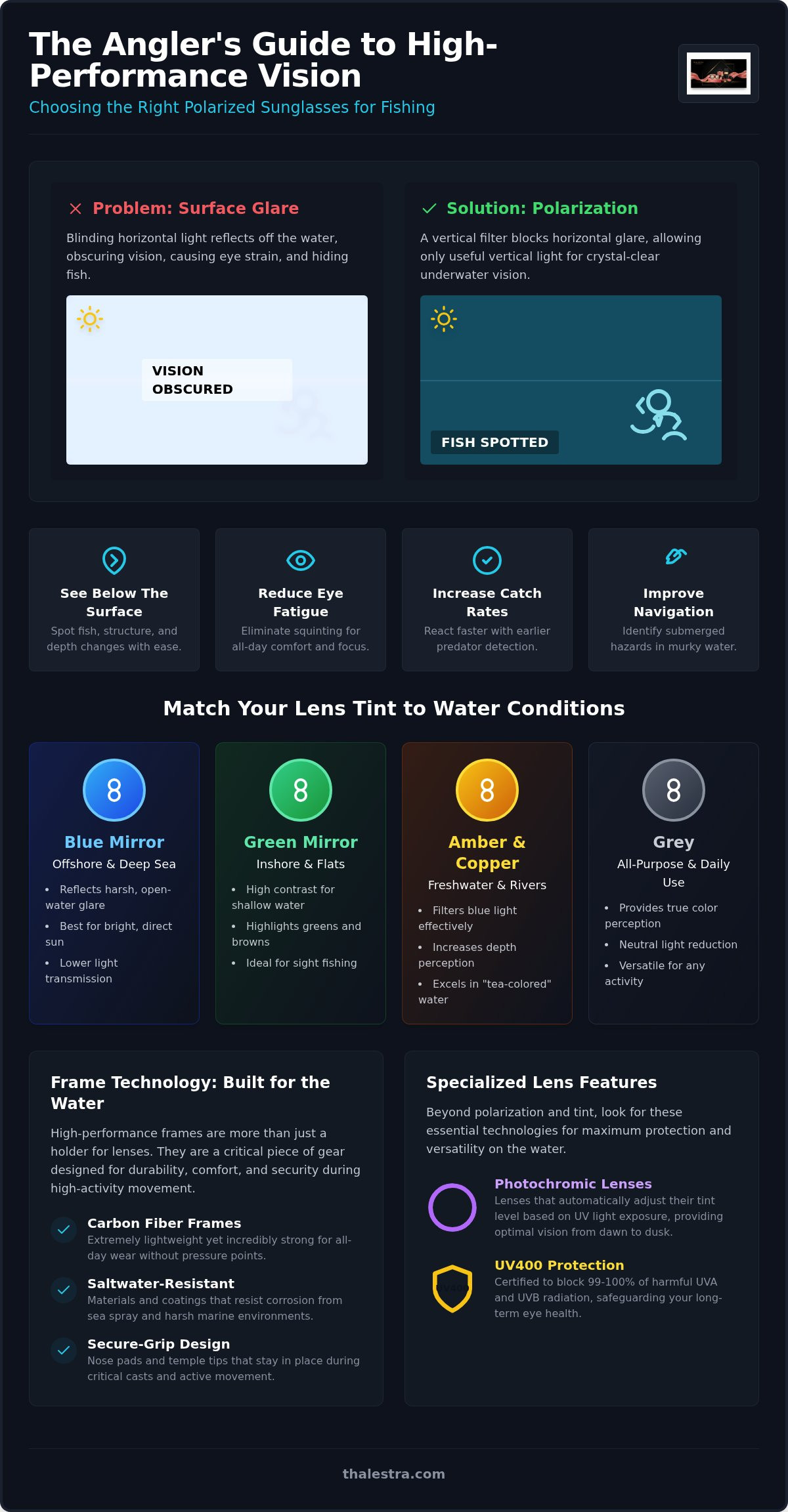
Fishing requires constant visual data. Surface glare is horizontal light bouncing off the water directly into your retina. Light waves travel in multiple directions, but when they hit a flat surface like a lake or ocean, they concentrate into a horizontal orientation. This concentrated light is what we call glare. It's a blast of brightness that obscures detail and hides the underwater world. Standard tinted lenses only dim the overall environment; they don't solve the glare problem. High-performance Polarized sunglasses function as a vertical filter to block this horizontal interference. It's a specific optical tool for the modern angler. This technology acts as a curtain, allowing only useful vertical light to pass through for superior visibility.
Standard UV protection isn't enough for the active angler. While UV400 ratings block harmful radiation, they don't address the blinding reflection from the water's surface. Anglers face a unique challenge: light from above and light reflected from below. This double exposure accelerates eye damage. You need a solution that manages both light frequency and light direction. High-utility eyewear provides this dual-layer defense. It's a functional necessity for professional and recreational expeditions alike. Durable, saltwater-ready, high-clarity lenses: these are the standards for 2026.
Seeing Below the Surface: The Advantage
Water surfaces act as a mirror. Without polarization, you see the sky's reflection rather than the target. Quality polarized sunglasses for fishing strip away this mirror effect instantly. You gain the ability to spot submerged logs, rock piles, and baitfish with high-contrast clarity. Spotting structure and submerged cover becomes effortless. Sight fishing depends on immediate reaction time. Seeing a cruising predator two seconds earlier determines the success of your cast. It's a tactical advantage for shallow water, mangroves, and flats fishing environments. Better visibility means higher catch rates and better navigation in murky areas.
Visual Comfort and Eye Fatigue
High-intensity reflection causes constant squinting. This physical strain leads to rapid eye fatigue and sun-induced headaches by midday. Polarization acts as a vertical light filter for maximum clarity. It allows for all-day comfort without the physical toll of light saturation. By eliminating the need to squint, you maintain focus on the water for longer periods. Durable frames like the Classic Mens Polarized Sunglasses provide this comfort through lightweight design and precision lenses. Long-term eye health depends on reducing this constant environmental stress. Professional-grade eyewear ensures you stay on the water until the last light without discomfort.
The Science of Lens Tints: Matching Colors to Water Conditions
Lens selection is a functional decision. Different water environments reflect specific wavelengths. Understanding how polarized lenses work allows you to choose a tint that isolates your target. For deep sea and offshore environments, blue mirror lenses are the industry standard. They reflect high-energy visible light in open water. This reduces the blinding effect of the white-capped ocean under direct midday sun. These lenses feature lower light transmission to protect eyes in harsh, high-glare offshore conditions.
Inshore and flats fishing require a different approach. Green mirror and amber lenses provide the necessary high contrast. These tints highlight green and brown tones found in shallow, brackish water. You need this contrast to distinguish a bonefish from a sandy bottom. Grey lenses remain the "true color" option. They provide neutral light reduction for all-day versatile use without altering the natural color spectrum. They're the standard for those who want one pair for driving, boating, and beach use.
Blue Mirror vs. Green Mirror Lenses
Open water demands maximum light blockage. Blue mirror lenses excel in these bright sun scenarios by reflecting glare away from the eye. In contrast, green mirror lenses are designed for sight fishing in shallow water. They enhance contrast, making it easier to see shadows and movement against grassy or rocky beds. Choosing between them depends on your primary fishing environment. Professional polarized sunglasses for fishing often come in these two specific configurations to handle varying light transmission levels and weather patterns.
Amber and Copper Lenses for Freshwater
Freshwater environments often feature "tea-colored" or muddy water. Yellow and copper tints excel here. They filter out blue light to increase depth perception in variable underwater terrain. This is critical for river and lake fishing where identifying submerged structure is the priority. Amber is the preferred choice for many stream anglers. It brightens the field of vision in shaded areas while maintaining polarization. Copper lenses cut through silt-heavy water to reveal hidden pockets and drop-offs. These specialized tints turn the water's surface into a transparent window. If you fish in shifting light from dawn to dusk, consider the LIOUMO top quality photochromic polarized sunglasses for automatic tint adjustment.
Low-light conditions like heavy overcast or early morning require high-transmission tints. Yellow lenses offer the highest visibility when the sun is low. They provide the necessary brightness to spot movement without sacrificing glare reduction. For the versatile angler, having a range of tints ensures peak performance regardless of the cloud cover or water clarity. Matching your gear to the environment is the most efficient way to improve your catch rate in 2026.
Frame Technology: Durability, Materials, and Fishing Fit
Frame construction determines the lifespan of your polarized sunglasses for fishing. High-utility gear must survive constant saltwater exposure without structural failure. Traditional plastics often degrade under intense UV stress and salt spray. Carbon fiber represents the 2026 standard for professional-grade frames. It provides an exceptional strength-to-weight ratio. This ensures the frames remain rigid and lightweight during ten-hour expeditions. You need equipment that functions as a tool, not a distraction. Efficiency in design means less bulk and more endurance for the active angler.
Carbon Fiber and Tech Materials
Carbon fiber is non-corrosive and structurally stable in extreme environments. It handles rapid temperature shifts on the deck without warping or becoming brittle. The carbon fiber square glasses available today are built for these rugged conditions. They offer a modern, streamlined look that transitions from the boat to the resort. Unlike heavy tactical frames, these technical materials reduce pressure on the temples. This prevents the common fatigue caused by pinching. High-performance hinges and saltwater-resistant coatings ensure long-term reliability. It's a pragmatic choice for the modern merchant of the sea.
Finding the Right Fit for Your Face
Light leak destroys the efficiency of a polarized lens. If sunlight enters from the sides or top, your eyes still fight reflected glare. Wrap-around styles are the traditional solution for maximum coverage. However, modern wide-frame square designs now offer similar protection with larger lens surfaces. These frames block peripheral light leak to maintain optical integrity. Proper weight distribution is essential for all-day wear. Look for frames that balance the load between the nose bridge and the ears. Wide-frame sunglasses provide full coverage for larger face shapes without creating painful pressure points.
Security matters during high-activity movement. High-utility frames feature integrated nose pads and rubberized temple grips. These components keep the glasses secure during a heavy fight or when leaning over the gunwale. Sweat and water won't cause these frames to slip. This focus on functional grip ensures your attention stays on the water. Whether you're wearing the 2025 Vacation Sunglasses or a classic sport silhouette, the frame must stay locked in place. Durable materials and a precise fit are the foundation of a successful fishing expedition.
Specialized Lens Features: Photochromic and UV400 Protection
Advanced polarized sunglasses for fishing now feature integrated photochromic layers to manage dynamic light. Photochromic technology uses molecules that change shape when exposed to UV radiation. This reaction causes the lenses to darken automatically in bright conditions. The latest 2026 models achieve this transition in as little as 35 seconds. This eliminates the operational friction of carrying multiple pairs of glasses. Polarized filters block horizontal glare while the photochromic layer regulates overall brightness. This hybrid advantage creates the ultimate tool for sight fishing and long-range navigation. It ensures a consistent visual experience regardless of cloud cover or sun position.
LIOUMO Photochromic Polarized Lenses
LIOUMO Top Quality Photochromic Polarized Sunglasses provide high-utility adaptive vision. These lenses are designed for the transition from a low-light dawn launch to the intense glare of high-noon sun. Anglers don't need to compromise between visibility in the early morning and protection during the midday peak. This adaptive precision is similar to the tech used in photochromic cycling sunglasses, where rapid environmental shifts are common. Using LIOUMO lenses improves safety by maintaining a constant visual baseline during fluctuating weather. They are ideal for driving to the dock and immediate boat deployment. The seamless transition ensures your eyes don't have to struggle to adjust to sudden brightness changes.
UV400 and Eye Safety Standards
UV400 certification is the mandatory requirement for any maritime environment. It guarantees 100% blockage of UVA and UVB rays up to 400 nanometers. Water surfaces reflect up to 80% of UV radiation, significantly increasing exposure compared to land-based activities. High-performance eyewear must meet the ANSI/ISEA Z87.1-2025 safety standard for impact resistance and optical clarity. Beware of budget lenses that claim polarization without verified UV ratings. These "fake" lenses dim the light, causing your pupils to dilate. Without a UV filter, this dilation allows more harmful radiation to enter the eye, increasing the risk of long-term damage. Professional gear avoids this risk through multi-layer certified construction.
Anti-reflective (AR) coatings further enhance the efficiency of polarized sunglasses for fishing. These coatings are applied to the back surface of the lens to prevent bounce-back glare. Light entering from the sides or behind the angler can reflect off the interior lens surface directly into the eye. AR coatings eliminate these distracting reflections, providing a cleaner and more focused field of view. This feature is essential for identifying subtle underwater movements in high-glare environments. For a complete gear upgrade, browse LIOUMO polarized sunglasses to find the right adaptive fit for your 2026 expeditions.
Top Polarized Fishing Sunglasses for Your 2026 Expeditions
Gear selection for 2026 must prioritize immediate utility. Choosing the right polarized sunglasses for fishing depends on your specific expedition type. High-performance eyewear isn't just about protection; it's about situational awareness. The current market offers specialized tools for every environment. From deep-sea charters to casual resort fishing, functionality remains the core requirement. We focus on durable, saltwater-resistant materials and precision lens tech. High-utility gear ensures you're prepared for the immediate present.
Style Meets Performance: The Vacation Series
Vacation fishing requires a specific hybrid design. You need frames that transition from the beach club to the deep-sea charter without a gear change. The 2025 vacation sunglasses for men are a top choice for global travelers. These models offer a modern, lightweight square silhouette. Key attributes: polarized filters, UV400 certification, impact-resistant lenses. They provide professional-grade glare reduction in a style suited for social environments. This versatility is essential for the modern traveler who values efficiency and curated selection. It's the intersection of technical fishing utility and contemporary appeal.
Classic Polarized Options for Every Angler
Reliability is the foundation of the Classic Mens Polarized Sunglasses line. These timeless silhouettes provide consistent performance for everyday fishing. Whether you're casting in freshwater streams or navigating coastal inlets, lens clarity is paramount. The frames are built for durability and long-term saltwater resistance. For those preferring a different aesthetic, check our guide on men's aviator sunglasses for 2026 style and lens tech details. These options ensure you don't sacrifice optical precision for a traditional look. Consistent performance leads to higher catch rates.
Dedicated anglers require the LIOUMO Photochromic Series. This is the ultimate tool for sunup to sundown expeditions. The lenses adapt to UV levels instantly. High-noon sun or overcast mornings, the visual baseline stays constant. It's a pragmatic solution for variable weather. No more switching glasses as the light shifts. This series prioritizes the speed of information delivery to your eyes, allowing for faster reaction times during sight fishing.
Comfort is a non-negotiable metric for polarized sunglasses for fishing. Lightweight square and wide frames ensure all-day wearability. They eliminate nose-bridge pressure and temple pinching. Wide frames offer maximum coverage to block peripheral light. This is critical for maintaining polarization efficiency. High-utility grips keep the glasses secure during high-activity movement. The 2026 collection focuses on these essential features:
- Carbon fiber construction for maximum strength.
- Saltwater-resistant coatings to prevent corrosion.
- Integrated rubberized nose pads for a secure fit.
- Multi-layer lens technology for superior contrast.
Upgrade Your Visual Advantage for the 2026 Season
The 2026 fishing season demands equipment that functions as a precise optical tool. We've analyzed the necessity of vertical light filters and the strategic application of lens tints for varying water depths. From the saltwater-resistant carbon fiber frames to the adaptive vision provided by photochromic technology, your choice of polarized sunglasses for fishing directly impacts your success on the water. It's the difference between a missed strike and a successful catch during a high-stakes expedition.
Our curated selection prioritizes immediate utility and professional-grade performance. We offer UV400 protection guaranteed and lightweight carbon fiber options designed for all-day comfort without pressure points. With global shipping and tracking, your high-performance gear is accessible for your next international trip. Secure your visual edge and improve your catch rate today. Shop Performance Polarized Fishing Sunglasses at THALESTRA.COM. Prepare for a season of unmatched underwater clarity.
Frequently Asked Questions
What is the best lens color for freshwater fishing?
Amber or copper tints are the optimal choice for freshwater environments. These specific colors improve depth perception in the tea-colored or murky water typical of lakes and rivers. They filter blue light to highlight submerged logs, rock piles, and cruising fish. For low-light mornings or heavy tree cover, yellow lenses provide maximum brightness. Matching the tint to the specific water clarity ensures better sight fishing results on every cast.
Can I use my polarized driving glasses for fishing?
You can use polarized driving glasses, but they often lack the technical features required for maritime use. Specialized eyewear for anglers usually includes saltwater-resistant coatings and wrap-around frames to block peripheral light leak. Driving lenses are often optimized for asphalt glare rather than water reflection. While they offer basic visibility, they might not provide the high-contrast tints needed to see through the water's surface effectively during an expedition.
Do polarized sunglasses for fishing protect against UV rays?
High-quality polarized lenses provide 100% protection against UVA and UVB rays when certified at the UV400 standard. It's a common misconception that polarization automatically equals UV protection. Always verify the UV rating before purchase. This certification is critical for blocking harmful radiation that reflects off the water's surface. Standard models like the Classic Mens Polarized Sunglasses include this protection as a baseline feature for long-term eye health in maritime conditions.
Is it worth getting photochromic polarized lenses for fishing?
Photochromic polarized lenses offer significant value for anglers fishing from dawn to dusk. These adaptive lenses darken or lighten based on UV intensity. This eliminates the need to carry multiple pairs for shifting cloud cover or sun positions. LIOUMO Top Quality Photochromic Polarized Sunglasses provide this hybrid advantage. It's an efficient solution for maintaining a constant visual baseline without operational friction during long fishing expeditions in 2026.
How do I clean saltwater off my polarized sunglasses?
Rinse your sunglasses with fresh water immediately after saltwater exposure. Salt crystals are abrasive; they will scratch the lens coating if wiped while dry. Use a mild, non-citrus dish soap to remove salt residue and skin oils. Dry the lenses with a clean microfiber cloth. Avoid using paper towels or clothing as these materials can cause permanent micro-scratches on the specialized lens surfaces. Proper maintenance extends the functional life of your gear.
What is the difference between polarized and standard tinted lenses?
Standard tinted lenses only reduce the overall intensity of light. They don't eliminate the blinding horizontal glare reflected from the water. Polarized sunglasses for fishing utilize a vertical light filter to act as a curtain for this specific glare. This technology allows you to see through the surface reflection rather than just looking at a darker version of the mirror effect. It's the primary tool for identifying underwater structure and spotting fish.
Why do my polarized sunglasses make it hard to see my fish finder screen?
Polarized lenses interact with liquid crystal displays (LCD) found in fish finders and GPS units. Both the sunglasses and the screen use polarizing filters. When these filters align at specific angles, the screen can appear dark or completely black. You might need to tilt your head or adjust the mounting angle of your marine electronics. Modern displays are now designed to minimize this blackout effect for active anglers on the water.
Should I get glass or polycarbonate lenses for fishing?
Glass lenses offer the highest optical clarity and superior scratch resistance. However, they are heavier and can shatter upon high impact. Polycarbonate lenses are lightweight and highly impact-resistant, making them safer for active fishing environments. Most modern polarized sunglasses for fishing use high-grade polycarbonate for better all-day comfort. Your choice depends on whether you prioritize maximum clarity or durable, lightweight performance for long expeditions on the water.