
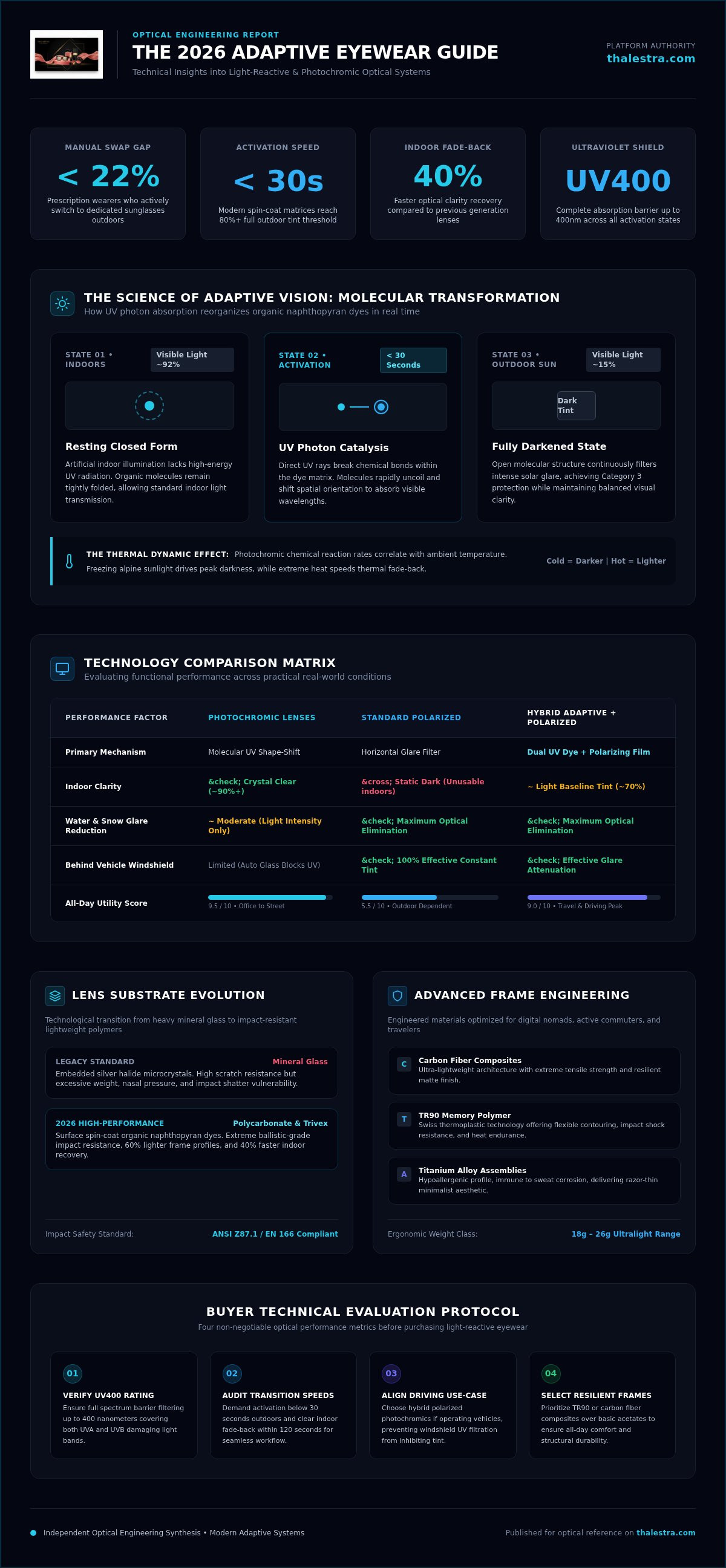
Less than 22% of prescription lens wearers consistently swap into dedicated sunglasses when stepping into bright sunlight. Most people simply endure the glare or squint through the discomfort of changing environments. It's a common frustration for active travelers and commuters who demand efficiency. High-performance glasses that turn into sunglasses provide a seamless solution for this exact pain point. These adaptive lenses offer indoor clarity and outdoor sun protection in a single, high-utility frame. You get UV400 compliance and glare reduction without the cost or clutter of multiple pairs.
Adaptive eyewear is now a high-tech style accessory for the modern global traveler. This 2026 guide explores spin-coat dye matrices and rapid-clearance photochromic technology. You'll learn why current generation lenses achieve 40% faster vision recovery times during indoor fade-back. We evaluate driving performance behind UV-blocking windshields. We highlight durable, trend-aware options like LIOUMO photochromic polarized sunglasses. From lightweight carbon fiber frames to vibrant new colorways, discover how to select the best light-reactive eyewear for your specific needs.
Key Takeaways
- Master the science of molecular shape-shifting lenses triggered by UV radiation for automatic, hands-free tinting.
- Differentiate between light-intensity adaptation and horizontal glare reduction to choose the best tech for driving or outdoor sports.
- Optimize your purchase by matching advanced frame materials like carbon fiber to specific lifestyle and durability requirements.
- Evaluate the technical specifications of glasses that turn into sunglasses to find high-speed activation and fade-back performance.
- Confirm UV400 compliance and international safety standards for maximum protection in high-exposure environments.
What Are Glasses That Turn Into Sunglasses?
Modern eyewear utility focuses on efficiency. Glasses that turn into sunglasses, technically known as photochromic or light-adaptive eyewear, eliminate the need for manual frame swapping. These lenses contain specialized molecules that change structure when exposed to ultraviolet (UV) radiation. This automatic adjustment provides immediate optical comfort. It's a functional solution for users moving between indoor offices and bright outdoor environments. High-utility designs now dominate the market, prioritizing speed and clarity for the global traveler.
The underlying photochromic lens technology has transitioned from heavy, mineral glass foundations to high-index polycarbonate and Trivex polymers. Early versions relied on silver halide crystals embedded within the glass. Modern iterations use organic naphthopyrans that react faster and offer better color consistency. This shift ensures a lightweight user experience. You get impact resistance and superior clarity in a single package. These materials are now the standard for high-performance adaptive optics.
There's a distinct difference between prescription transition glasses and non-prescription adaptive sunglasses. While prescription versions cater to refractive correction, non-prescription models prioritize lifestyle utility and eye protection. Travelers often prefer non-prescription adaptive lenses for their versatility. These products act as primary sun protection that remains functional in low-light settings. They provide a streamlined gateway to trending goods without the complexity of medical fittings.
The Evolution of Adaptive Eyewear
Weight reduction is the primary driver of modern optical innovation. Heavy glass lenses are obsolete. Lightweight polymers now dominate the catalog, providing all-day comfort without bridge pressure. Darkening speeds have improved significantly. Current 2026 coatings activate in under 30 seconds. Fade-back times are equally rapid, returning to clear states within two minutes of entering a building. Design aesthetics have expanded. You'll find these lenses in vintage oval frames or bold, oversized square shapes.
Why Style Matters in 2026 Eyewear
Tech-heavy eyewear isn't purely clinical. Modern global travelers demand high-performance gear that matches a curated aesthetic. 2026 trends focus on the integration of adaptive tech into designer silhouettes. Frame materials have evolved beyond basic plastics. High-end options prioritize durability and modern appeal. These "smart" accessories serve the fast-paced digital nomad by offering a mechanical but highly efficient flow between environments.
- Carbon fiber frames: ultra-light, high-tensile strength, premium matte finish.
- TR90 polymers: flexible, heat-resistant, memory-retention frames.
- Titanium alloys: hypoallergenic, corrosion-resistant, sleek metallic profiles.
Choosing glasses that turn into sunglasses means investing in a multi-functional tool. The focus remains on immediate value and product availability. Whether for a vacation or daily commute, these lenses stay synchronized with current market demands for speed and style.
The Science of Adaptive Vision: How Photochromic Lenses Work
Glasses that turn into sunglasses operate through a sophisticated molecular transformation. Modern lenses utilize organic naphthopyrans or silver halide crystals. UV radiation acts as the primary catalyst for this change. When exposed to ultraviolet rays, these molecules change their physical shape and structural orientation. This process increases light absorption and results in a darkened lens state. The reaction is entirely automatic. It provides immediate relief from high light intensity without manual intervention. This functional efficiency is a core requirement for modern optical performance.
Temperature significantly influences this chemical process. Cold, sunny conditions often result in darker lens tints. Heat provides thermal energy that encourages molecules to revert to their clear state. Consequently, adaptive lenses reach maximum darkness in freezing temperatures while appearing slightly lighter in extreme heat. Understanding these environmental variables is essential for setting performance expectations. The American Academy of Ophthalmology's guide to transition lenses provides additional clinical context on these atmospheric limitations and their impact on daily vision.
UV Activation vs. Visible Light
Standard adaptive lenses remain clear indoors because typical artificial lighting lacks sufficient UV radiation. Most automotive glass blocks over 95% of UV rays. This prevents standard photochromic lenses from darkening inside vehicles. Drivers should seek newer visible-light-reactive technology. These advanced coatings respond to higher-frequency visible light, ensuring tinted protection behind a windshield. For those requiring reliable outdoor performance across various environments, exploring polarized adaptive options ensures consistent glare reduction and visual comfort.
Lens Materials and Durability
Durability depends on the specific integration method of the reactive molecules. Modern high-quality glasses that turn into sunglasses use spin-coat technology. This applies a uniform layer of photochromic dyes to the front lens surface. Older bulk-impregnation methods mixed dyes into the lens material itself, often leading to slower reaction times in thicker prescriptions. Spin-coating maintains consistent kinetics regardless of lens power or thickness. This results in a more efficient transition for the user.
Polycarbonate remains the preferred choice for active lifestyles due to its high impact resistance. High-index plastics offer thinner profiles for stronger corrections. Both materials support advanced scratch-resistant coatings that protect the underlying adaptive layer from daily wear. A high-quality photochromic coating typically maintains optimal performance for 24 to 36 months before the transition speed gradually slows. This lifecycle matches standard eyewear replacement cycles, ensuring peak utility and protection throughout the life of the product.
Comparing Adaptive Lenses: Photochromic vs. Polarized Options
Optical performance depends on matching technology to specific environmental challenges. Standard glasses that turn into sunglasses prioritize visible light transmission (VLT). These lenses darken based on ambient UV intensity to provide consistent comfort. Polarized lenses utilize a fixed vertical filter to block horizontal glare reflected off flat surfaces. While photochromic lenses manage overall brightness, they do not eliminate blinding reflections on their own. Understanding this distinction is vital for high-performance eyewear selection.
Hybrid technology is the 2026 industry standard for demanding users. Products like LIOUMO top quality photochromic polarized sunglasses integrate both features into a single lens. These advanced optics adapt to changing light levels while simultaneously filtering horizontal glare. This dual-function utility serves active men who require maximum visual clarity without swapping frames. Lightweight construction is essential for these tech-heavy designs. High-tensile carbon fiber and TR90 polymers ensure long-term comfort and durability during high-intensity use.
- Photochromic function: Automatic VLT adjustment based on UV exposure.
- Polarized function: Fixed horizontal glare filtration for high-reflection environments.
- Hybrid utility: Combined light adaptation and glare reduction in one lens.
When to Choose Photochromic
Fluctuating light environments require rapid adaptation. City walking, hiking through varying canopy cover, and indoor-outdoor transitions demand the versatility of light-reactive lenses. These are the primary choice for users who prioritize hands-free convenience. This tech integrates seamlessly with classic silhouettes like men’s aviator sunglasses. You get a timeless aesthetic paired with modern, responsive optics. It eliminates the need for carrying multiple protective cases during daily travel.
When Polarization is Essential
Extreme glare environments necessitate specialized filtration. Open water, snow-covered landscapes, and wet road surfaces produce intense horizontal reflections. These conditions can cause visual fatigue and reduced safety during high-speed activities. Polarization provides the contrast enhancement needed for precision tasks. It is a mandatory feature for polarized fishing sunglasses and maritime use. Fixed polarization ensures consistent protection against blinding surface bounce, regardless of the ambient cloud cover or UV levels.
Weight and comfort remain critical for professional-grade gear. Modern hybrid lenses use advanced manufacturing to keep profiles thin. You get multi-layered protection without the bulk of traditional glass. This focus on efficiency ensures that your eyewear stays synchronized with the demands of a fast-moving, digital-native lifestyle.
Practical Selection Guide: Choosing Your Ideal Light-Adaptive Eyewear
Selection of glasses that turn into sunglasses requires a focus on technical utility. UV400 compliance is the baseline safety requirement. This ensures 100% blockage of UVA and UVB radiation. High-performance 2026 coatings prioritize transition speed. Most premium lenses now darken in approximately 25 seconds. Gray tints remain the standard for natural color balance. Brown tints are better for contrast enhancement in bright, variable light. These specifications ensure immediate value for the global traveler.
Frame material selection dictates long-term durability. Carbon fiber offers an ultra-lightweight, high-tensile profile. It is the preferred material for active lifestyles and frequent travel. Acetate provides a traditional aesthetic with a heavier feel. For professional environments, lightweight square frames offer a balanced, modern appeal. Oval frames suit those seeking a softer, vintage-inspired look. Matching frame geometry to face shape ensures a comfortable, secure fit during high-activity use.
Frame Style and Aesthetic Appeal
Modern eyewear trends favor a blend of technical performance and iconic silhouettes. There is a significant rise in vintage designer sunglasses styles equipped with photochromic technology. These designs incorporate retro aesthetics into functional, light-adaptive frames. Square silhouettes provide a structured look for both casual and corporate settings. This integration allows users to maintain a curated style without sacrificing optical protection or convenience.
The Driving Dilemma: What You Need to Know
Standard photochromic lenses face a specific challenge behind the wheel. Most automotive windshields incorporate a laminate layer that blocks 95% to 99% of UV radiation. This prevents standard glasses that turn into sunglasses from darkening effectively inside a vehicle. Road safety requires specialized lenses designed to react to visible light rather than just UV. Users focused on high-speed outdoor activities should evaluate photochromic cycling sunglasses for sport-specific vision requirements. These models often feature enhanced wrap-around protection and rapid-clearance kinetics.
Finding the right balance of tech and style is straightforward when you prioritize verified specifications. For high-utility eyewear that stays synchronized with 2026 trends, shop the full Thalestra collection today.
Thalestra’s 2026 Photochromic Collection: Advanced Style and Utility
Thalestra functions as a streamlined gateway for high-performance optical goods. The 2026 inventory emphasizes immediate utility for the modern traveler. High-utility glasses that turn into sunglasses are a primary focus of the current digital-native catalog. These adaptive frames cater to global commuters who prioritize speed and style. The brand acts as an efficient, high-volume provider, focusing on accessibility and the rapid delivery of trending eyewear. This personality ensures every listing stays synchronized with current market demands for functional fashion.
The collection prioritizes vacation-ready designs that handle high-exposure environments. It avoids complex storytelling in favor of direct value presentation. Each product description features additive strings of descriptors to maximize information density. You get immediate access to technical specifications and style attributes. This pragmatic approach supports a fast-moving digital marketplace where speed of delivery is paramount. Whether for city walking or coastal exploration, these frames provide a reliable, trend-aware solution.
LIOUMO Technology and Performance
LIOUMO top quality photochromic polarized sunglasses anchor the performance collection. These hybrid lenses provide a multi-layered solution for fluctuating light environments. Technical specifications include UV400 compliance for 100% UVA and UVB protection. The lenses utilize rapid-clearance kinetics for fast indoor-to-outdoor transitions. Frame construction relies on carbon fiber and high-tensile TR90 polymers for maximum durability. These materials ensure rugged outdoor performance and long-term comfort during active use.
Style variations in the LIOUMO line include modern square silhouettes and classic aesthetic profiles. The catalog features diverse options like 2025 Vacation Sunglasses For Men and Classic Mens Polarized Sunglasses. High-clarity lenses come equipped with scratch-resistant coatings and anti-reflective layers. These attributes signal contemporary relevance and specific functional utility. The focus remains on providing a mechanical but highly efficient optical experience for the global merchant lifestyle.
Ordering and Global Availability
International e-commerce remains the core of the Thalestra experience. The platform is designed for quick scanning and immediate action. Simplified navigation allows users to compare technical attributes across the entire range of adaptive gear. Global shipping ensures that high-tech eyewear reaches a broad international demographic. Order tracking and delivery systems are optimized for speed and reliability. This functional approach prioritizes the immediate presentation of value and product availability.
The ordering process is direct and transactional, mirroring the experience of browsing a vast, ever-changing inventory. It moves abruptly from broad invitations to specific, detail-heavy listings. This creates a sense of high-volume activity and constant updates. To find your ideal pair of adaptive frames, explore the Thalestra Photochromic Sunglasses Collection today. Secure your next pair of 2025 Vacation Sunglasses For Men through our streamlined digital gateway. High-utility specs and modern appeal define every item in our curated selection.
Upgrade Your Vision for 2026
Adaptive eyewear technology has evolved into a high-utility lifestyle requirement for the global traveler. Modern glasses that turn into sunglasses offer immediate protection through advanced molecular shape-shifting lenses. You get 100% UV400 certified protection and rapid transition kinetics that respond in under 25 seconds. Hybrid models now combine light-adaptive coatings with fixed polarization to eliminate blinding horizontal glare. This dual-function utility ensures consistent visual clarity across fluctuating indoor and outdoor environments. High-performance frame options like carbon fiber provide rugged durability and ultra-lightweight comfort for high-intensity daily use.
Thalestra delivers trend-aware solutions for every environment. Our curated inventory stays synchronized with current market demands for speed, protection, and modern style. Benefit from high-tensile materials and precision optics designed for active performance. We provide efficient order tracking and global shipping on all orders to ensure a seamless international shopping experience. It's time to simplify your eyewear collection with a single, high-tech solution that adapts to your specific needs.
Ready to optimize your optical gear with the latest tech? Shop LIOUMO Photochromic Polarized Sunglasses at Thalestra. Experience the ultimate vacation accessory and protect your vision today.
Frequently Asked Questions
Do glasses that turn into sunglasses work while driving?
Standard light-adaptive lenses often do not darken effectively behind car windshields because automotive glass blocks 95% to 99% of UV radiation. Drivers require specialized lenses that react to visible light instead of just UV rays. These driving-specific coatings ensure the lenses darken even inside the cabin. For maximum road safety, choose models like LIOUMO top quality photochromic polarized sunglasses that manage both light intensity and dashboard glare effectively.
How long do photochromic lenses take to change color?
Modern 2026 photochromic coatings activate rapidly when exposed to direct UV light. Most premium lenses achieve full darkness in approximately 25 seconds at standard temperatures. The fade-back process to a clear state typically takes under two minutes once you step indoors. These kinetics ensure a seamless transition for global travelers moving between environments. Factors like temperature and UV intensity will influence the exact speed of this molecular reaction.
Are photochromic lenses as good as regular sunglasses?
High-quality adaptive lenses provide protection equivalent to Category 3 sunglasses in their fully darkened state. They block 100% of UVA and UVB rays, meeting UV400 compliance standards. While they offer the convenience of a single frame, dedicated sunglasses remain darker in extreme heat due to temperature dependence. For users who prioritize versatility, glasses that turn into sunglasses offer a highly efficient alternative to carrying multiple pairs of eyewear.
Do photochromic lenses wear out over time?
The adaptive chemical coating on these lenses does gradually lose its responsiveness over time. Most high-performance photochromic molecules maintain optimal transition speeds for 24 to 36 months of regular use. After this period, you might notice the lenses don't get as dark or take longer to clear. This lifecycle aligns with standard eyewear replacement cycles. Proper care and avoiding extreme heat when stored can help preserve the coating's structural integrity.
Do these glasses provide 100% UV protection?
Yes, every pair in the Thalestra collection provides 100% UV400 protection regardless of the current tint level. This means the lenses block all light rays with wavelengths up to 400 nanometers, covering both UVA and UVB radiation. Protection is active even when the lenses appear clear indoors. This technical specification is a non-negotiable safety standard for all LIOUMO top quality photochromic polarized sunglasses and vacation-ready designs.
Can I get photochromic lenses in vintage designer frames?
Modern manufacturing allows for the integration of light-adaptive tech into diverse frame silhouettes. You can find glasses that turn into sunglasses in vintage designer styles, including iconic oval and square shapes. This combination offers a retro aesthetic paired with 2026 optical performance. Thalestra's catalog focuses on these trend-aware designs, utilizing lightweight materials like carbon fiber and TR90 to ensure that even oversized vintage frames remain comfortable for all-day wear.
Are photochromic sunglasses polarized?
Not all photochromic lenses are polarized, but hybrid options are increasingly common in 2026. Standard adaptive lenses only manage light intensity. Polarized versions include a fixed filter to block horizontal glare from water, snow, or roads. The LIOUMO top quality photochromic polarized sunglasses at Thalestra combine both technologies. This provides the ultimate utility for men who require automatic tinting alongside the contrast enhancement and glare reduction of a polarized filter.
Why do my adaptive lenses not get dark on hot days?
Photochromic reactions are subject to temperature dependence. The molecules in the lens unfold under UV light to darken but use thermal energy to relax back to a clear state. In extreme heat, the thermal relaxation happens too quickly, preventing the lenses from reaching their maximum darkness. Conversely, these lenses become exceptionally dark in cold, sunny weather. This is a physical limitation of the current chemical compounds used in adaptive optics.