
Searching for “Unisex sunglasses online shop” options can make it tricky to picture a frame on your face or compare lens features from a product page. The right choice has less to do with gender labels and more to do with fit, personal style, and how you plan to use your sunglasses. A few practical checks can make the decision easier.
Start with frame measurements, shape, and proportions, then compare lens features with the light and activities you encounter. Polarized lenses can reduce glare from reflective surfaces, while photochromic lenses respond to changing light. Neither feature replaces UV protection, so look for a stated UV400 or 100% UVA/UVB protection label.
This guide explains how to assess frame fit online, choose a look that suits your style, and decide which lens features matter for daily wear. You’ll also find a checklist for reviewing product details before ordering, including polarized and photochromic options.
Key Takeaways
- Unisex describes how frames are marketed, not a promise of universal fit. Use your proportions and comfort preferences to guide your choice.
- Compare lens width, bridge width, and temple length with a familiar pair to assess online frame measurements.
- Choose frame shapes, colours, and materials based on the look and feel you prefer, not gender labels.
- Use the Unisex sunglasses online shop checklist to compare product images, measurements, lens descriptions, and intended use before ordering.
- Match lens features to your routine instead of assuming one option suits every activity.
What Makes Unisex Sunglasses a Useful Everyday Choice?
Unisex sunglasses are frames marketed for people across gender categories, not frames guaranteed to fit every face. The label can broaden your style options, but comfort depends on a frame’s proportions and how it sits on you. Face width, nose shape, and personal preference all affect whether a pair feels balanced and secure.
Look beyond the category name. Shape, dimensions, lens features, and intended use are the practical factors that guide an everyday choice. For background on eyewear’s purpose and different designs, explore History and types of sunglasses. Then focus on how a frame may fit and what you want its lenses to do.
Does unisex mean one frame fits everyone?
No. “Unisex” describes how a frame is styled or marketed, not a standardized size. Lens width affects how much of the eye area the frame covers, bridge width influences how it rests on your nose, and temple length affects how the arms reach around your ears. Together, these measurements offer clues about fit, but proportions and comfort remain personal.
Compare the listed dimensions with a pair you already find comfortable. Similar measurements give you a useful reference when browsing an Unisex sunglasses online shop, although a different frame shape can still look and feel different.
Which everyday needs should guide your search?
Separate the look you prefer from what you want the lenses to do. Consider when and where you’ll wear the sunglasses: outdoors during a bright commute, around reflective surfaces, or as light changes through the day. Polarized lenses reduce glare from reflective surfaces; photochromic lenses respond to changing light. These are distinct features, so choose according to your routine rather than assuming one is right for everyone.
Use these questions to narrow your options:
- Style: Do you prefer a subtle frame or a more noticeable shape?
- Fit: Do your familiar sunglasses feel comfortable across the bridge and at the temples?
- Use: Are you mainly looking to reduce glare, or do you want lenses that respond to changing light?
THALESTRA.COM offers sunglasses styles for men and women, with polarized and photochromic options to compare. Judge each frame by its design and listed details rather than assuming every style is unisex. A considered match brings together a look you like, dimensions that make sense for your face, and lens features suited to where you expect to wear the pair.
How to Judge Sunglasses Frame Fit When Shopping Online
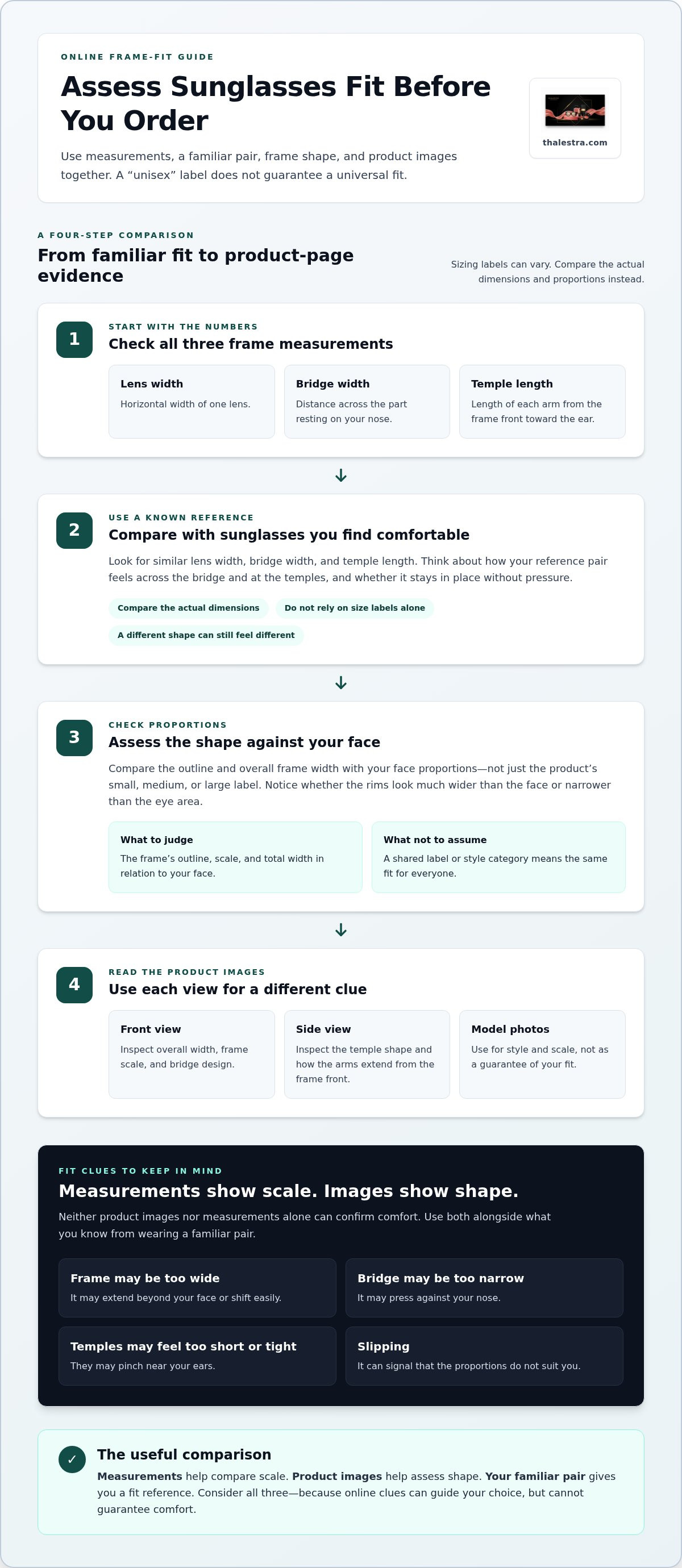
Online frame fit is easier to assess when you use measurements, a pair you already wear, and product images together. In an Unisex sunglasses online shop, don’t rely on a size label alone. Sizing conventions can vary, so check the actual dimensions and proportions rather than just a “small,” “medium,” or “large” description.
- Check the measurements. Note lens width, bridge width, and temple length, then compare each with a pair you find comfortable.
- Use a familiar frame as a reference. Look for similar dimensions and consider how that pair sits on your face.
- Assess the shape. Compare the frame’s outline and overall width with your face proportions, not only its size label.
- Review product images. Use front and side views to inspect the frame’s scale, bridge design, and temple shape.
What do sunglasses measurements tell you?
Lens width is the horizontal width of one lens, bridge width is the distance across the part resting on your nose, and temple length is the length of each arm from the frame front toward the ear. Together, these three measurements help you compare the scale of different frames. Sizing conventions can vary, so compare the numbers with a comfortable pair you own instead of assuming matching labels mean matching fit.
Think about how your reference pair feels. If it stays in place without pressure, its dimensions offer a practical starting point. A different frame shape can still sit differently, but comparing each measurement makes it easier to spot a significant size change before ordering.
How can you assess frame shape from product images?
Start with a front-facing image. Compare the frame’s total width with the face shown, and notice whether the rims extend far beyond the sides or appear narrower than the eye area. A side view can reveal the temple design and how the arms angle from the frame front. Model photos help show style and scale, but the model’s face proportions can’t guarantee the same fit for you.
Use the images alongside what you know from wearing glasses. Frames that are too wide may extend beyond the face or shift easily. A narrow bridge may press against the nose, while temples that feel too short or tight can pinch near the ears. Slipping can signal that the proportions don’t suit you, though images alone can’t confirm comfort.
Use each detail for what it can tell you: measurements for scale, images for shape, and your familiar pair for comparison. To compare frame options, browse sunglasses styles online and review each product’s listed dimensions and images.
Which Unisex Sunglasses Lens Features Match Your Routine?
Compare lens features by what they do. Polarized lenses reduce reflected glare; photochromic lenses change tint in response to light conditions. Neither is automatically the better choice. Think about where and when you expect to wear your sunglasses, then weigh each feature against that routine. An Unisex sunglasses online shop may offer these features across different frame styles, so compare lens descriptions separately from appearance.
| Use case | Lens function | Selection consideration |
|---|---|---|
| Bright settings with reflected glare | Polarization reduces glare from reflective surfaces. | Consider whether glare reduction is a priority, and remember some digital screens may look different through polarized lenses. |
| Changing light conditions | Photochromic lenses respond to light by changing tint. | Performance can vary with lens design and surrounding conditions; review the product description for the specific option. |
| Everyday UV protection | UV protection is a separate lens feature. | Darkness alone doesn’t establish UV protection. Look for a stated UV protection label rather than judging by lens colour. |
When might polarized sunglasses suit your needs?
Polarization may be useful in bright outdoor settings where reflected glare is distracting. It reduces glare, but it doesn’t automatically mean a lens blocks UV rays. Some phone, dashboard, or other digital screens may appear dimmer or different through polarized lenses. If screen visibility matters in your routine, factor that into your decision. A guide to choosing polarized sunglasses for men can offer another perspective on comparing this feature.
When are photochromic sunglasses worth considering?
Photochromic lenses change tint in response to light, making them worth considering if your day includes changing light conditions. The change isn’t identical across every lens: design and surrounding conditions can affect performance. Read the product description for the lens details rather than assuming all photochromic options behave alike. A photochromic sunglasses explainer can provide a closer look at how the technology works.
Keep UV protection on its own checklist. A dark-looking lens isn’t proof of UV protection, and polarization is a glare-reduction feature, not a UV rating. Look for explicit wording such as UV400 or 100% UVA/UVB protection in the product details. Don’t infer protection from tint, colour, or a polarized label alone.
THALESTRA.COM offers polarized and photochromic sunglasses as distinct lens options. Start with your main use case, then assess the stated lens function and UV information independently. This keeps your choice tied to what the lens does, rather than its appearance or a feature name alone.
How to Compare Unisex Sunglasses Styles Before You Buy
Style is more than a frame’s category label. Silhouette, colour, material appearance, and scale all affect how sunglasses work with your wardrobe and the settings where you wear them. In a Unisex sunglasses online shop, compare these visual details on their own terms, then consider fit and lens function. Round, square, or bold frames aren’t limited to one gender; the best choice is the one that feels consistent with your taste.
Start with clothes you wear often. A neutral frame may coordinate easily with varied outfits, while a stronger colour or thicker-looking design can become a focal point. Consider whether you want sunglasses for relaxed casual wear, travel, or a mix of everyday settings. That gives you a useful style direction without asking one pair to suit every occasion.
How do frame shapes change the overall look?
Round silhouettes create a softer, curved impression; oval frames feel elongated and streamlined. Square shapes bring defined angles, while rectangular frames can look narrower and more linear. Contrast also matters: a rounded frame can soften angular facial features, while a more geometric outline may add definition to softer features. These are styling cues, not fixed rules. A face-shape guide can help you explore silhouette contrasts in more detail.
Use product images to compare the frame’s scale and outline with the proportions you prefer. A wide, visually prominent frame makes a stronger statement than a narrow, minimal-looking one, even if both share a similar shape. Colour and material appearance add another layer: a glossy, dark finish may read differently from a lighter or more understated look. Match those details to your usual clothing palette and how noticeable you want the frame to be.
How can you balance style and practical features?
Choose an overall style direction first, then compare lens functions within it. For example, a frame you like for casual wear may also suit travel if its stated lens feature matches your needs. Polarized lenses reduce reflected glare, while photochromic lenses respond to changing light. Your intended use helps narrow the options, but it doesn’t dictate one perfect pair for every person or setting.
Before deciding, weigh these details together:
- Style: Does the silhouette and colour suit your wardrobe and preferred level of contrast?
- Scale: Does the frame look balanced for the proportions you’re seeking?
- Comfort: Do the listed measurements compare well with a pair you find comfortable?
- Lens function: Does the described feature fit your usual activities and light conditions?
A pair for travel might prioritize a style that coordinates with several outfits, while sunglasses for regular outdoor use may lead you to weigh lens function more heavily. Keep the product description in view as you compare: visual appeal can help you make a shortlist, but it doesn’t establish fit or lens performance on its own. Browse sunglasses styles and lens options to compare details that matter to your look and routine.
Shop Unisex Sunglasses Online With a Clear Final Checklist
A useful product page helps you compare stated details instead of guessing from a photo. Before ordering from a Unisex sunglasses online shop, bring your shortlist back to four essentials: frame measurements, images, lens description, and intended use. Each answers a different question, so review them together instead of letting a style label or attractive image make the decision for you.
What should you check on a sunglasses product page?
Compare the listed frame dimensions with a comfortable pair you already own. Then inspect the available front, side, and colour views for shape, proportions, and visible design details. Read the lens description separately from the photos: appearance alone can’t establish lens function or UV protection. Use the product text to assess stated features, and don’t treat an image or category name as proof of an unmentioned specification.
- Measurements: Compare the listed lens width, bridge width, and temple length with a familiar frame.
- Images: Check front and side views, and compare colour details across the available photographs.
- Lens description: Distinguish polarization, which reduces reflected glare, from photochromic lenses, which respond to changing light.
- Intended use: Match stated lens features to where and when you expect to wear the sunglasses.
How can you make a confident online selection?
Use a simple decision order: fit first, frame style next, lens function after that, and intended use as a final check. This keeps a strong visual preference from overshadowing comfort or the lens feature you want. If you’re considering retro frames, a vintage designer sunglasses guide can help you think through that look alongside the product details.
Separate stated information from assumptions. A model photo can suggest scale but can’t guarantee how a frame will fit your face. A dark tint doesn’t prove UV protection, and a “polarized” label describes glare reduction, not every lens property. Use product descriptions for stated features, measurements for size comparisons, and photos for visible design and colour. If a detail isn’t shown or described, don’t fill the gap with a guess.
THALESTRA.COM offers polarized and photochromic sunglasses as distinct options to compare. Review the product details against your checklist, then choose a style that suits your routine. Browse sunglasses at THALESTRA.COM to explore the available styles and lens options.
Make Your Next Pair a More Personal Choice
Your preferences can shift with your routine, wardrobe, and the places you spend time. Instead of searching for one pair to do everything, start with the use that matters most right now, then narrow your choice by frame character and lens function. Keep a note of the frame proportions and styles you like. That reference can make future online comparisons quicker and help you see what you want to keep or change.
An Unisex sunglasses online shop makes it easier to explore styles beyond gender labels. At THALESTRA.COM, browse sunglasses styles for men and women alongside polarized and photochromic lens options. You can place orders and track them through the website, keeping the shopping process in one place as you decide which option suits your plans.
Browse sunglasses and find your preferred frame style. Choose with your routine in mind, trust your own style, and find a pair that feels right for everyday wear.
Frequently Asked Questions
Can polarized sunglasses make phone screens harder to see?
Yes, polarized lenses can make some phone screens look dim, uneven, or difficult to read from certain angles. The effect depends on the screen and how you hold it. If visibility changes, rotate the phone or tilt your head to see whether the display becomes clearer. If you often use your phone outdoors, consider that alongside glare reduction when choosing sunglasses.
Do photochromic sunglasses darken inside a car?
They may darken less inside a car than outdoors, but the result depends on the lens design and conditions. A vehicle’s windows can reduce some of the light that triggers tint changes, so don’t assume photochromic lenses will reach the same tint behind the wheel as outside. If driving is part of your routine, read the lens description and consider whether its stated function suits that setting.
How do you clean sunglasses without scratching the lenses?
Rinse the lenses with clean water before wiping, so dust and grit are less likely to scrape the surface. Use a clean microfiber cloth and gentle pressure. Avoid dry-wiping dusty lenses, paper towels, clothing, and household cleaners, which can scratch lenses or affect their surface treatments. If the frames are also dirty, wash them gently with water and dry with a separate soft cloth.
Are darker sunglass lenses always more protective?
No. A deep tint changes how much visible light reaches your eyes, but it doesn’t by itself establish UV protection. Look for explicit UV information in the product details, such as a UV400 or 100% UVA/UVB protection label. In a Unisex sunglasses online shop, compare stated protection separately from lens colour and polarization, which describes glare reduction rather than UV filtering.
Can you wear sunglasses on a cloudy day?
Yes, sunglasses can still be useful on cloudy days because clouds don’t block all ultraviolet radiation. Choose a pair with clearly stated UV protection rather than relying on a dark tint. For overcast conditions, lighter-looking lenses may feel more comfortable for some people, but appearance doesn’t tell you the level of UV filtering. Check the product’s lens information and match it to your usual outdoor activities.
How should you store sunglasses when you are not wearing them?
Put sunglasses in a protective case when they’re not in use, especially in a bag where keys or other objects could scratch the lenses. If you set them down briefly, place them on a clean surface with the lenses facing up. Avoid leaving them on a car dashboard or in other hot places, since heat can affect frames or lens coatings over time.