
The lens that cuts the most glare may not be the one that helps you read a green comfortably. Sunglasses for golf need to balance bright light with a clear view of slopes, contours, and the ball. A popular lens feature isn’t automatically the right fit for every player.
Glare relief can be welcome on a sunny course, especially when light shifts between open fairways and shade. But polarized lenses can change how the green appears to some golfers, while photochromic lenses are designed to adapt as light conditions change. Your preference, course conditions, and comfort all matter.
This guide explains the main lens and frame choices, including tint, coverage, and a stable fit. It also shows how to compare product details without relying on unverified performance claims. THALESTRA.COM offers polarized and photochromic sunglasses in styles for men and women, giving you options to compare as you narrow your choices. By the end, you’ll have a practical way to choose a pair that suits your golfing conditions and feels comfortable beyond the course.
Key Takeaways
- Choose Sunglasses for golf by considering the light and conditions you usually play in, not just lens labels.
- Compare polarized and photochromic lenses with your own glare and green-reading preferences in mind.
- Assess frame stability, coverage, weight, and comfort during the movements you make on the course.
- Use a practical checklist to compare lens preferences, fit, coverage, comfort, and product details.
- Explore THALESTRA.COM’s polarized and photochromic sunglasses for men and women as options to compare with your preferences.
Why Sunglasses for Golf Need to Suit the Course
During a round, your view shifts between open fairways, shaded paths, bright sky, and greens with subtle slopes. Your sunglasses choice depends on the light, your comfort, and how you prefer to see your surroundings. Sunglasses for golf aren’t defined by one lens colour or frame shape. The useful choice is the one that feels comfortable and suits the conditions you commonly face.
A pair that feels pleasant in strong midday sun may seem too dark as clouds gather or you move beneath trees. Another golfer may welcome that same level of tint. Treat labels and marketing descriptions as starting points, then consider what you need to see during an actual round.
Which on-course visual tasks matter most?
Think about the different views you switch between. Following a ball against a bright sky is not the same as watching it travel across grass. On a green, you may want to notice changes in surface angle and contour. Tint can affect how colours and contrast appear, so your own preference matters. The general Sunglasses overview discusses tint choices and their uses, including green lenses in sport.
Comfort is a practical goal, not a promise of lower scores or better shots. If a tint makes the course look unfamiliar, or a frame distracts you, that experience matters more than a broad performance claim. Consider which views feel easiest to assess and whether you’ll wear the pair comfortably throughout a round.
How course conditions change the decision
Bright, open fairways expose you to more direct light than a tree-lined route or shaded tee. Cloud cover can also change the scene during a round. Think about the places you play and the times you usually start. An exposed course at midday may call for a different personal preference from a course with frequent shade or a late tee time.
Light doesn’t feel the same to every golfer. Some prefer more tint in bright conditions; others find a darker view less comfortable when the light softens. If your rounds include varied conditions, consider how you want your sunglasses to feel across those changes, rather than choosing only for the brightest moment.
Before comparing frames and lens categories, note your usual playing environment: open or shaded, consistently bright or changeable, and the views you find most demanding. This quick check helps separate what you need from what merely sounds impressive on a product page.
Course conditions shape your sunglasses choice: start with your usual light, then weigh visual preference and comfort. No single lens or frame suits every golfer, course, or round. Use your own playing conditions as the reference point for the options you compare next.
Golf Sunglasses Lenses: Compare Polarized, Photochromic, and Tint Options
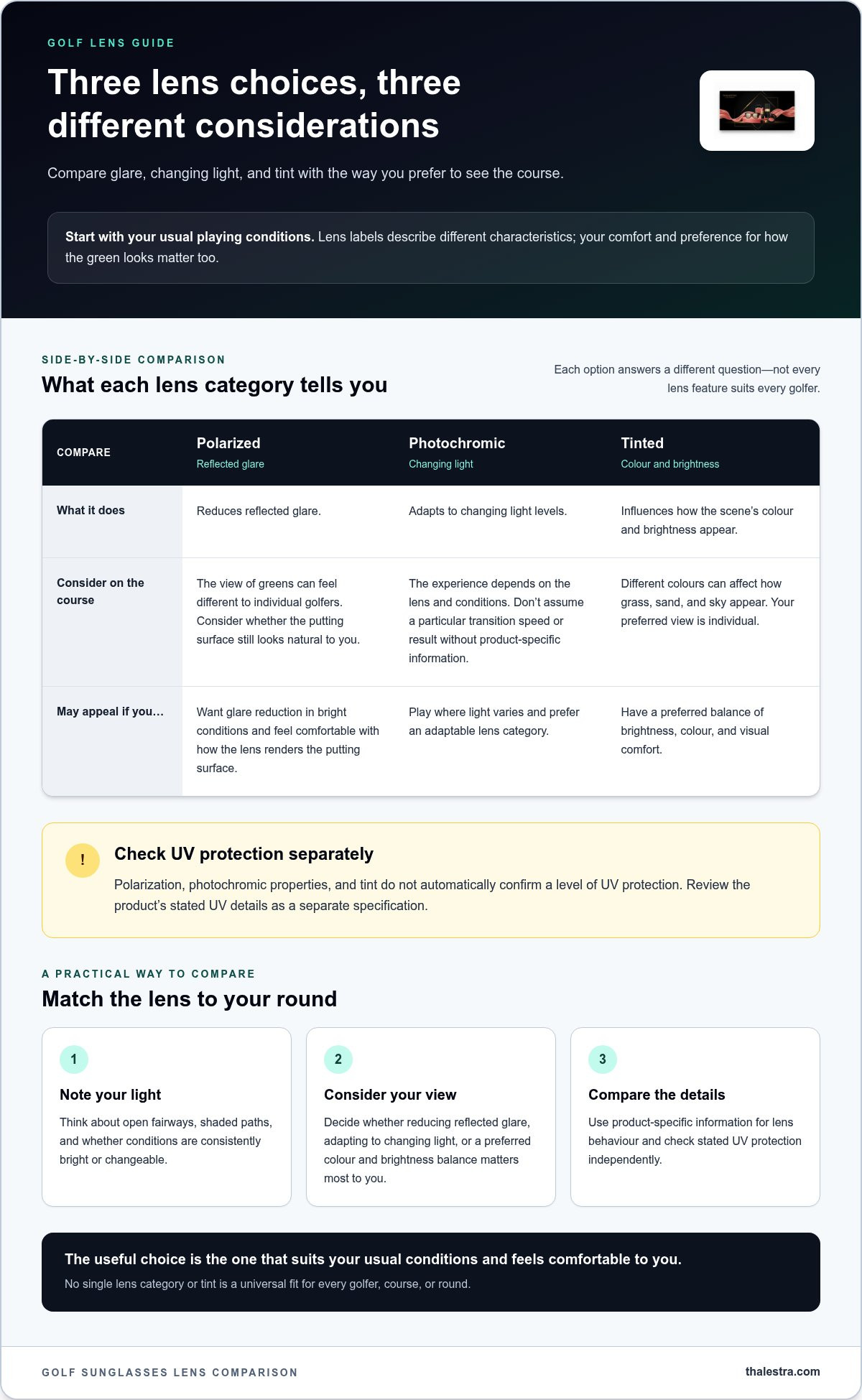
Lens labels describe different characteristics, so compare them with the light you play in and how you prefer the course to look. Polarization reduces reflected glare; photochromic lenses adapt to changing light; tint affects the colour and brightness of the view. These features may overlap, but they don’t answer the same question.
| Lens category | Practical consideration | May suit golfers who |
|---|---|---|
| Polarized | Reduces reflected glare, but the view of greens can feel different to individual golfers. | Want glare reduction in bright conditions and are comfortable with how the lens renders the putting surface. |
| Photochromic | Adapts to changing light levels; the experience depends on the lens and conditions. | Play in settings where light varies and prefer an adaptable lens category. |
| Tinted | Lens colour influences the way the scene appears. Tint alone doesn’t describe glare reduction or UV protection. | Have a preferred balance of brightness, colour, and visual comfort. |
Lens category describes how a lens behaves; UV protection is a separate product specification. Don’t assume that polarization, photochromic properties, or a particular tint automatically confirms a level of UV protection. Compare the stated UV details independently when evaluating Sunglasses for golf.
Are polarized lenses the right choice for golf?
Polarized lenses reduce reflected glare, which may appeal on bright fairways or near reflective surfaces. But golfers can differ in how they perceive green contours through polarization. If reading the putting surface matters to you, consider whether the filtered view feels natural instead of assuming glare reduction is always the best trade-off. Anglers considering the same glare question can explore a polarized sunglasses for fishing guide as a related use case.
Before choosing, weigh your usual conditions against your visual priorities. Do you mainly want less reflected glare, or do you prefer the most familiar view of the green? The answer is personal. A lens feature can be useful without being the right match for every golfer.
When might photochromic lenses or different tints appeal?
Photochromic lenses are worth considering if your playing conditions shift between brighter and dimmer settings. They adapt to changing light, though you shouldn’t assume a particular transition speed or result without product-specific information. Tint is another preference to compare: consider how different colours affect brightness and the appearance of grass, sand, and sky. The most comfortable view is individual, not a universal rule.
Include eye protection in your comparison. A tint that feels comfortable doesn’t by itself establish UV protection, so review the stated protection details separately. THALESTRA.COM offers polarized and photochromic sunglasses as categories to compare. Browse sunglasses options with your light conditions and visual preferences in mind. For broader context, the article’s 2026 guide to UV-protected sunglasses and eye health can help frame protection as a separate consideration from tint and polarization.
Golf Sunglasses Compared: Frame Fit, Coverage, and On-Course Comfort
Lens choice is only part of the decision. A frame that slides while you walk, presses at the temples, or blocks too much of your side view can become distracting over a round. Compare stability, coverage, weight, and comfort separately. A frame should feel secure without feeling tight or restricting the view you want when looking down at a ball or across the course.
There’s no universal frame shape for Sunglasses for golf. Face shape, personal comfort, and whether you wear a cap or visor all affect what feels right. Treat frame descriptions as useful comparison points, not a guarantee of how a pair will fit you.
What frame shape and coverage should golfers compare?
Wraparound frames and more conventional shapes offer different coverage. A wraparound shape may feel more enclosing, while a conventional frame may feel more open at the sides. Neither automatically provides the best view or comfort. Consider whether side light bothers you and whether broader coverage feels helpful or distracting during your usual movements.
Look for a balance: the frame should feel stable as you walk and turn your head, while leaving your field of view comfortable and unobstructed. Coverage is a personal preference, not a performance promise.
How can golfers assess fit from online product details?
Start with eyewear you already wear comfortably. If a product page lists frame width or lens dimensions, compare those measurements with your familiar pair. Size labels can differ between brands, so treat descriptions such as “large” as guides, not universal measurements. Frames with similar dimensions can still sit differently because their shapes vary.
Consider your cap or visor, too. A frame that sits comfortably on its own may feel different beneath a brim or against the sides of headwear. Product photos and listed measurements can help you compare, but they can’t establish your personal comfort on the course.
- Stability: Consider whether the frame appears suited to staying in place during walking and head movement.
- Coverage: Compare the shape and lens dimensions with how much side coverage you prefer.
- Weight: Review any product details provided and consider what feels comfortable for extended wear.
- Comfort: Look for a shape that seems compatible with your face and the cap or visor you usually wear.
Use listed details as practical comparison points, not proof that a frame will fit perfectly. If dimensions are available, compare them consistently with eyewear you know; if they aren’t, focus on the shape and coverage shown in the product information. The right choice balances a secure feel with unrestricted comfort during movement and the view you prefer.
A Practical Checklist for Choosing Sunglasses for Golf
A short, consistent checklist makes it easier to compare Sunglasses for golf without letting marketing language make the decision for you. Start with your playing conditions, then assess lens preferences, fit, coverage, comfort, and the product information provided. Review UV protection as a specification separate from lens category or tint.
Before choosing golf eyewear, check your usual light, lens preference, frame fit, coverage, comfort, and stated product details. Use these five steps to narrow your options.
A five-step pre-purchase check
- Note when and where you play. Think about your usual tee times and course settings. Open, bright courses, shaded routes, and rounds with changing cloud cover can lead to different preferences. Base your comparison on the conditions you actually encounter.
- Choose the lens feature that matters most. Decide whether reducing reflected glare or adapting to changing light is a higher priority. Polarized and photochromic describe different lens characteristics; neither automatically determines whether the view will suit your green-reading preference.
- Compare fit information and coverage. If frame width and lens dimensions are listed, compare them with eyewear that already feels comfortable. Consider whether the shape offers the coverage you prefer without making your field of view feel restricted.
- Review stated UV information and specifications. Check the product details for the UV protection information provided. Keep this separate from tint and polarization, and compare other listed specifications without assuming a feature the page doesn’t state.
- Weigh comfort against the details. Consider how the frame might feel while walking, looking down, and turning your head. Weigh that against your lens preference and the listed product information. Shortlist options using the same criteria rather than promotional wording.
How to make a confident final comparison
Keep the comparison simple. For each option, note your priorities for light and lens category, familiar frame measurements, coverage, comfort, and stated UV information. This makes differences easier to spot and helps separate practical details from claims that don’t answer your needs.
Lens care is another useful consideration, especially if you’re comparing polarized eyewear. Follow the care instructions provided for the specific pair. Use a clean, suitable cloth and avoid wiping dust or grit across the lenses to help prevent scratches.
THALESTRA.COM offers polarized and photochromic sunglasses in styles for men and women. Compare these categories against your checklist, then review the details for the specific pair you’re considering. Browse THALESTRA sunglasses and use the same criteria to assess the options.
Explore THALESTRA Sunglasses for Your Golf-Day Preferences
Use the checklist to guide your comparison. THALESTRA offers polarized and photochromic sunglasses in styles for men and women. Compare these lens categories with your course conditions and visual preferences, then use the product details to assess individual options.
As you browse, compare the details stated on each product page. Keep your priorities in view: the light you usually play in, the lens category you prefer, frame dimensions and shape, coverage, and any stated specifications. A clear comparison helps you focus on relevant information instead of assuming a product suits every golfer or condition.
Match the listed lens category to your preference
Polarized and photochromic describe different lens characteristics. A polarized option may be worth comparing if glare reduction is a priority; a photochromic option may appeal if you prefer a lens that adapts to changing light. These categories alone don’t establish tint, UV rating, durability, or on-course results. Use the product-specific details provided and consider how each category fits your preferences.
Browse and compare available sunglasses
Keep the comparison consistent from one option to the next. Start with the light and playing conditions you expect, then note your lens preference, frame fit, coverage, and stated product specifications. If a measurement or feature isn’t included in the product details, don’t infer it from a category label or image. This keeps your decision grounded in information you can actually compare.
For example, if glare reduction is high on your list, compare the polarized options and their stated details. If adapting to varying light matters more, consider photochromic styles and review the information provided for each. Then weigh those preferences against frame shapes and measurements that match eyewear you already find comfortable. Neither category is a universal choice; the right balance depends on what feels suitable for you.
THALESTRA’s range includes men’s and women’s styles, with polarized and photochromic options to browse. Compare the listed details with your course conditions and fit preferences, and choose based on the features that matter to you. Browse THALESTRA sunglasses to find options for your golf-day preferences.
Make Your Next Pair a Thoughtful Choice
Make a personal shortlist instead of searching for a universal “best” pair. Decide which details matter most to you, then compare them with the information on each product page. That keeps your choice grounded in your preferences rather than broad performance promises.
THALESTRA’s online range includes polarized and photochromic sunglasses, with styles for men and women. Focus on the product details that fit your priorities, including lens category, frame shape, and any stated specifications.
The right pair is one you feel comfortable choosing for your course conditions and everyday wear. Browse THALESTRA sunglasses and compare the options against your preferences.
Frequently Asked Questions
Are polarized sunglasses good for golf?
They can be a good choice if reducing reflected glare is a priority, but personal preference matters. Some golfers dislike how polarization changes the appearance of a putting surface. Consider whether the view feels natural to you, especially when assessing a green. The best choice is the one that suits your visual comfort, not a feature label alone.
Do golf sunglasses need a special golf-specific lens?
No, a golf-specific lens isn’t essential for every player. A general-purpose pair may suit you if its listed features match your needs for course light, comfort, and visibility. Check the actual product details rather than assuming a “golf” label guarantees a particular benefit. Lens category, tint, and stated UV information are separate details to compare. A special-purpose lens may appeal to some golfers, but your preferences should guide the decision.
Can photochromic sunglasses work when light changes during a round?
Yes, photochromic lenses are designed to adapt as light levels change, so they may suit a round that moves between open sun and shade. Their response can depend on the specific lens and conditions, so don’t assume a particular transition speed or darkness level. Review the product’s stated details and consider whether one adaptable pair fits your routine better than carrying separate sunglasses for different lighting.
Can I wear golf sunglasses over prescription glasses?
Possibly, if the sunglasses are designed to fit over prescription frames and the combined fit feels secure and comfortable. Standard sunglasses may sit awkwardly, press against your prescription frames, or limit your view. Look for clear product information about fit-over use and compare dimensions with your existing glasses. If you need vision correction, prescription sunglasses are another option to discuss with an eye-care professional.
How do I clean sunglasses after a round of golf?
Remove dust and grit before wiping, since rubbing particles across a lens can cause scratches. Follow the care instructions supplied with your sunglasses. If none are available, use clean water and a lens-safe cleaner with a clean microfiber cloth, then let the lenses dry or gently blot them. Avoid wiping with a shirt, paper towel, or a cloth that may hold grit, and store the pair in a protective case.
Can I use the same sunglasses for golf and driving?
Often, yes, if the lenses provide a comfortable view for both activities and the frame doesn’t obstruct your vision. Check how the tint feels when moving between bright sunlight and shaded roads. Polarized lenses can make some in-car screens harder to see at certain angles, so note your experience before relying on one pair for every trip. Don’t wear dark sunglasses at night or whenever they reduce visibility.
Are expensive sunglasses necessary for golf?
No, a higher price alone doesn’t show that sunglasses will suit your needs better. Compare the product details that matter to you, such as stated UV information, lens category, frame dimensions, and care guidance. Then consider comfort and how the view feels in your typical conditions. A pair with relevant, clearly stated features may be a better match than a costlier option whose details don’t fit your priorities.