
Choosing a new pair of sunglasses is easier when you focus on how the frame looks, how its proportions compare with pairs you already wear, and what you want from the lenses. The New arrival sunglasses collection gives you styles to browse, but product photos alone can’t show exactly how a frame will look on your face. Lens details can also be difficult to compare at a glance.
Start by narrowing your options by shape, fit, and intended use. Decide whether you prefer a classic aviator, a softer oval, or a bolder oversized look, then compare the listed frame measurements and product details. Consider how you’ll use your sunglasses, too. Polarized and photochromic options serve different preferences, so compare their stated functions with your routine.
This guide offers a practical way to shortlist frame styles, assess fit using online listings, and compare lens types for everyday use. THALESTRA.COM offers sunglasses for men and women, including polarized and photochromic options. Use the checklist to find styles that match your preferences, review the product details, and choose with greater confidence.
Key Takeaways
- Use the New arrival sunglasses collection to compare styles, not as a reason to choose based on novelty alone.
- Choose a frame shape for the look you want, then compare its proportions with your preferences.
- Compare stated lens types with your intended use, including polarized and photochromic options.
- Use frame details and listed dimensions as comparison clues, not a guarantee of fit.
- Build a shortlist by choosing a look, identifying your needs, comparing lens purpose, and reviewing product details.
New Arrival Sunglasses Collection: What to Browse First
Browse by appearance, lens purpose, and fit to turn a long product list into a focused shortlist. “New arrival” means a style has recently been added to the selection. It doesn’t promise a particular release date or mean the pair is right for every shopper. Start with the frame’s appearance, then assess its lens type and product details as separate decisions.
Three quick filters make browsing easier: choose a look, decide what you want from the lenses, and compare frame proportions. Keep those questions in mind as you explore the New arrival sunglasses collection. A frame creates the visual impression, while lens categories describe a different part of the choice. Considering each separately helps you avoid choosing on appearance alone.
Start with the look you want
First, decide what style direction you’re after. Classic designs offer a familiar starting point, while vacation-inspired sunglasses can suit shoppers looking for a relaxed, seasonal feel. You might prefer a frame that looks understated or one that makes a stronger statement. Use these descriptions to define your taste, then compare the styles and product photos in the selection.
Pay attention to the outline and visual weight. A prominent shape can make a stronger style statement; a simpler design may feel easier to pair with different outfits. Product images help you compare these impressions, but they can’t show exactly how a frame will look on your face. Once you’ve found a style you like, review the available product details before deciding.
Separate frame style from lens purpose
Frame shape influences appearance and perceived proportions. Lens type is a separate choice, so liking a particular look doesn’t tell you which lens category suits your needs. THALESTRA.COM’s sunglasses selection includes polarized and photochromic options. Compare the stated lens type on each listing with what you want from your pair, rather than treating these terms as frame styles or interchangeable labels.
If you’re weighing polarized options, the polarized sunglasses guide offers more detail to support your comparison. For a wider overview, Wikipedia covers the history and types of sunglasses, including their functions. Use references like these to understand the terms, then compare the details stated on each product listing.
Finally, read the frame information alongside the photos. Dimensions can help you compare options, but they can’t guarantee how a pair will fit. Consider the shape, lens category, and listed measurements together. This gives you a practical first pass through new arrivals and a clearer shortlist to explore.
Compare New Sunglasses by Frame Shape, Fit, and Lens Type
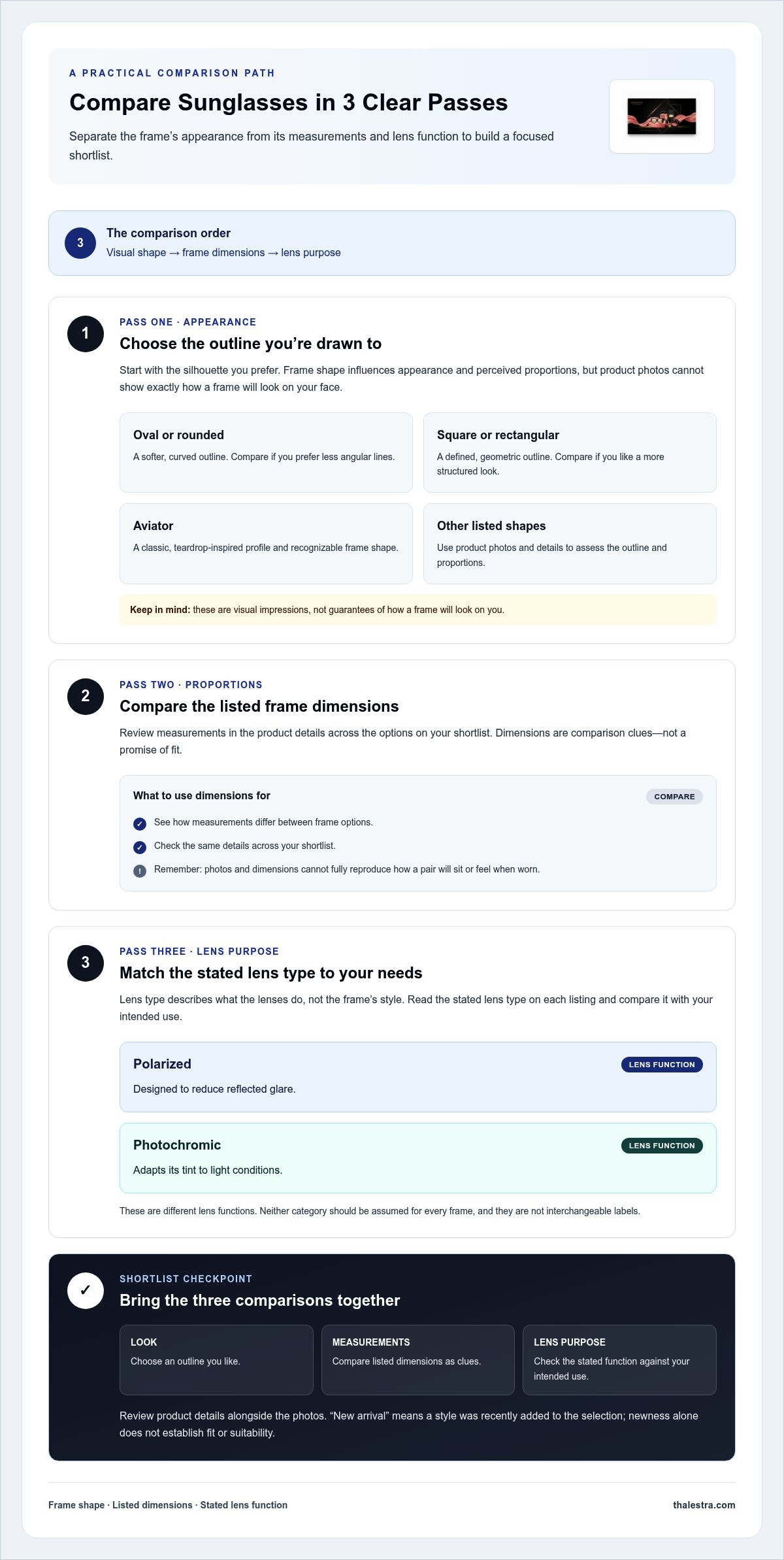
Compare options in this order: visual shape, frame dimensions, then lens purpose. This sequence keeps a large selection manageable. The frame defines the look and apparent proportions; dimensions provide details to compare; and lens type describes how the lenses work. Frame style answers how you want your sunglasses to look. Lens type answers what you want the lenses to do.
| Frame shape | Visual effect | Browsing preference |
|---|---|---|
| Oval or rounded, if shown | Soft, curved outline | Compare if you prefer less angular lines |
| Square or rectangular, if shown | Defined, geometric outline | Compare if you like a more structured look |
| Aviator, if shown | Classic teardrop-inspired profile | Compare if you want a recognizable frame shape |
| Other listed shapes | Distinctive outline and proportions | Use product photos and details to assess the style |
Which frame shape matches your preferred look?
Start with the silhouette you’re drawn to, not a rule about which shape should suit your face. An oval frame may look softer, while a square outline can appear more defined. Neither impression guarantees how a frame will look on you. Compare the shapes in the selection and choose one that matches your preferences. For a focused example of a familiar silhouette, explore this men’s aviator sunglasses guide.
Next, compare the frame dimensions shown in the product details. Use them to see how measurements differ between options, not as a promise of fit. Photos and dimensions offer useful clues, but they can’t fully reproduce how a pair will sit or feel when worn. Check the same details across your shortlist.
What do polarized and photochromic lenses do?
Polarized lenses are designed to reduce reflected glare. Photochromic lenses adapt their tint to light conditions. These describe different lens functions, not frame shapes, and neither category should be assumed for every frame. Read each listing’s stated lens type and compare it with your intended use. For a use-specific explanation, see the photochromic cycling sunglasses guide.
In THALESTRA.COM’s New arrival sunglasses collection, polarized and photochromic options give you useful points of comparison. Keep the decisions separate: choose an outline you like, review dimensions as comparison information, then consider the stated lens function. To apply that checklist, browse the online sunglasses selection and compare product details side by side.
Are New-Arrival Sunglasses Automatically the Best Choice?
No. “New arrival” describes when a style was added to the selection, not whether it’s the best match for your preferences or routine. A newly added frame may catch your eye, but its newness doesn’t establish its fit, lens function, or suitability for your intended use. Treat trend appeal as one filter, then compare the product information that matters to you.
Try a quick two-part check: can you picture wearing this frame often, and does its listed lens type suit how you plan to use it? If either answer is uncertain, pause before adding it to your shortlist. This keeps a trend-led choice connected to practical details instead of the “new” label alone.
When does a trend-led frame make sense?
A trend can be a helpful starting point if the frame’s look fits the clothes you already wear and the settings where you expect to use it. A distinctive silhouette may appeal for a particular style, while a simpler outline may feel closer to your usual choices. Choose a design you can imagine wearing regularly, not one that only looks appealing in a product photo.
Think about how often you’d wear the pair with your existing wardrobe. If you like the frame but can’t picture it in your routine, compare it with another style before deciding. That doesn’t make the trend wrong; it simply gives personal preference more weight than novelty. No frame shape is automatically right for every face, outfit, or occasion.
What should shoppers check beyond newness?
Open the product details and compare the listed frame information and lens description. Look for the specific lens type and any product information relevant to your needs. Use photos to judge the general appearance, but don’t assume they reveal every specification or exactly how the frame will look when worn. Separate stated details from impressions created by styling or trend language.
- Frame details: Compare the information provided across the options you’re considering. Treat dimensions as useful reference points, not a guarantee of how a pair will fit.
- Lens description: Match the stated lens category to your intended use instead of assuming all frames share the same features.
- Protection information: Consider eye-protection details separately from fashion and lens category. A trend label or product photograph doesn’t establish protection specifications.
For background on eye protection, the UV protection sunglasses guide covers that topic separately. Use it to understand what protection information means, then base your product comparison on the details stated for each option.
The strongest choice isn’t necessarily the newest one. It’s the pair whose look appeals to you and whose listed details align with your preferences. In the New arrival sunglasses collection, compare those points before letting a trend decide for you.
How to Narrow the New Sunglasses Collection to a Shortlist
A short, repeatable process helps you compare options without getting pulled in too many directions. Work through the decisions in order: settle on a look, consider when you’ll wear the sunglasses, compare relevant lens categories, then review each listing’s frame details. This keeps personal style and product information in view as you browse the New arrival sunglasses collection.
- Choose a look. Decide whether you’re drawn to a classic, understated, or more noticeable frame. Use that preference to narrow the styles you open instead of comparing every shape at once.
- Identify your intended use. Think about routine daily wear or a particular activity. Your usual setting can help you decide which product details deserve closer attention.
- Compare lens types. Check whether a listing describes polarized or photochromic lenses, then consider whether that category aligns with what you want from the pair. Don’t assume every frame has the same lens type.
- Review frame details. Compare the product information for your remaining options, including any listed dimensions. Treat measurements as comparison points, not a guarantee of how the frame will fit.
Match the shortlist to your everyday use
Start with how the sunglasses would fit into your routine. For regular daily wear, consider whether you like the frame enough to reach for it often. For a specific activity, focus on the lens description and product details relevant to that use. Polarized and photochromic are separate categories to compare when relevant; don’t infer performance beyond the information given for a listing.
Use a simple frame-and-lens checklist
Before comparing individual products, note your preferences in a few words. This makes it easier to scan listings consistently and keeps a striking photo from outweighing practical details. Use the same checklist for each option:
- Shape: Write down the frame outline you prefer.
- Colour direction: Note the colours you’re drawn to, based on the options shown.
- Fit considerations: Record the proportions or dimensions you want to compare.
- Lens and details: Read the stated lens description and other product information on each listing.
Keep the checklist beside your shortlist. Product photos can suggest a style, but they don’t establish lens type, measurements, or other specifications. Use the written listing details for those comparisons, and avoid assumptions based only on styling or appearance. If a detail matters to your choice, make sure it’s stated in the product information before using it as a deciding factor.
Once you’ve narrowed your preferences, compare the available listings against your notes. Browse sunglasses and compare the available styles to find options that match your look and lens priorities.
Shop THALESTRA.COM’s New Arrival Sunglasses Collection
Turn your shortlist into a considered choice with one final sequence: choose a look, compare lens purpose, then review the product details. THALESTRA.COM is an online destination for sunglasses, with options for men and women and lens categories that include polarized and photochromic. The New arrival sunglasses collection gives you a place to browse and compare, while your preferred style and intended use guide the decision.
Choose a style and lens category
Start with the frame styles that match your taste. Then compare the lens description for each pair you’re considering. Polarized and photochromic are distinct options, not features to assume across every frame. Focus on the lens category stated in the individual product description and consider whether it aligns with how you plan to use your sunglasses.
Keep your selection personal. A frame may appeal to you, but the best choice also depends on its product details and your preferences. Compare the available men’s and women’s sunglasses, note the look you’re drawn to, and use lens descriptions to narrow the options. This keeps style and function in the decision without treating one as a substitute for the other.
Move from browsing to checkout
Before adding a preferred pair to your cart, read its product description and compare the details that matter to you. Use the listing, rather than styling alone, to understand the stated lens category and other available information. If you’re weighing a few options, revisit your shortlist and check each description in the same way. A consistent comparison makes it easier to choose a pair that matches your priorities.
THALESTRA.COM supports online product browsing, cart checkout, and order tracking. After placing an order, shoppers can use the store’s order-tracking option to follow its progress. These online tools make it straightforward to move from exploring sunglasses to managing an order through the storefront.
- Look: Choose a frame style that reflects your preference.
- Lens: Compare the product’s stated lens category with your intended use.
- Details: Review the description before adding your preferred option to the cart.
Ready to make your shortlist? Browse sunglasses and compare available styles at THALESTRA.COM.
Make Your Next Pair Part of the Everyday
The best choice is one you’ll feel good reaching for after the moment you buy it. Treat the New arrival sunglasses collection as a way to find a pair that fits your personal style and routine, not simply a trend to try once. As you browse, consider which option feels like the most natural match for the way you dress and spend your days.
THALESTRA.COM lets you browse men’s and women’s sunglasses, including polarized and photochromic options, then continue through cart checkout and order tracking. Let the product details guide your final comparison, and choose at your own pace.
Browse the latest sunglasses styles at THALESTRA.COM and take the next step toward a pair that feels right for you.
Frequently Asked Questions
What counts as a new arrival in a sunglasses collection?
A new arrival is a style recently added to a retailer’s browsable selection. The label describes its place in the store’s assortment, not a guaranteed launch date, limited release, or recommendation for every shopper. In the New arrival sunglasses collection, use it as a browsing cue: open a listing, check its product details, and decide whether the style and stated features match what you want.
How do I choose new sunglasses that suit my face shape?
Use face shape as a starting point, not a strict rule. Compare the frame outline with your features and consider whether you prefer contrast or a more balanced appearance. For example, if your features are angular, you might explore rounded frames, while a structured frame may appeal if you like defined lines. Compare several options and choose proportions and a style you feel comfortable wearing.
Are polarized sunglasses better than photochromic sunglasses?
Neither category is automatically better; they serve different purposes. Polarized lenses reduce reflected glare, while photochromic lenses adapt their tint to light conditions. Your choice depends on the conditions you expect to encounter and the lens function you prefer. The categories can describe different lens properties, so compare the exact wording in each product description rather than assuming one type replaces the other.
Can I use photochromic sunglasses for everyday wear?
Photochromic sunglasses can be an everyday option if their described tint-changing function suits your routine. Think about how you move between different light conditions during a typical day, such as spending time outdoors and then going indoors. Read the individual product description for details about that pair, since the category name alone doesn’t tell you every lens characteristic. Choose based on your preferences and intended use.
What should I compare when buying sunglasses online?
Compare the frame appearance, product description, stated lens category, and any listed dimensions or other specifications. Check details across your shortlist in the same order so an attractive photo doesn’t become your only deciding factor. If you’re choosing between two similar frames, note what differs in their descriptions. Use the product information for specifications, since a styled image may not show every feature.
Do new-arrival sunglasses automatically include UV protection?
No. “New arrival” indicates that a style was added to a selection; it doesn’t establish its UV protection. Look for product information that specifically states UV protection, such as a UV400 or 100% UVA/UVB claim, rather than inferring protection from lens darkness, colour, or a fashion label. If protection details matter to your decision, base your comparison on the stated information for the individual pair.
How do I find the right frame size when shopping for sunglasses online?
Use listed frame measurements as comparison clues, and compare them with a pair you already own that feels comfortable. Measurements may include lens width, bridge width, and temple length when provided. Check how those figures differ between shortlisted frames, but remember that numbers and photos can’t fully predict how a frame will sit or feel. Consider the listed proportions alongside the frame shape before choosing.