
The biggest-looking sunglasses may still be too narrow for a comfortable fit. Oversized lenses can make a bold style statement, but they don’t guarantee extra room across the temples. If frames pinch, leave pressure marks, or sit awkwardly, the best sunglasses for a big head are the ones with measurements and proportions that suit your face, not just a “large” label.
Finding that fit online can be tricky when listings show little more than lens size and a product photo. This guide explains which measurements to compare, including front width, bridge width, and temple length, and why hinge-to-hinge width can be a better clue to overall fit than lens size alone. You’ll also learn how frame shapes, materials, and spring hinges can affect comfort, plus what to check in a product listing before you buy. Use these practical checks to narrow your options, then consider lens features such as polarization or photochromic lenses after you’ve found a frame that looks like a suitable fit.
Key Takeaways
- The best sunglasses for a big head are defined by a secure, comfortable fit and balanced proportions, not a “wide” or “oversized” label alone.
- Use the measurements on a pair you already own as a reference when comparing online listings.
- Rectangular, square, aviator, and round frames offer different style effects, but shape alone doesn’t determine fit.
- Before buying, compare dimensions, review listing details, and check the seller’s current purchase terms.
- Once you know your fit priorities, consider polarized and photochromic options as lens choices, not as indicators of a wider frame.
Best sunglasses for a big head start with fit, not a style label
A good wide-head fit feels secure and comfortable, sits evenly on the face, and looks proportionate without pressing at the temples or slipping during normal movement. The best sunglasses for a big head aren’t determined by a label alone. Frame measurements, face shape, and how the bridge rests on your nose all affect the result.
These fit factors are related, but they aren’t interchangeable. Head width affects how much room the frame needs across the sides. Face width influences how the frame looks in relation to your features, while bridge fit affects whether the glasses rest steadily on your nose. Personal style determines which silhouette you prefer. A frame can suit your style but feel too narrow, or fit comfortably while looking smaller or bolder than you want.
Watch for practical clues: pressure at the temples, arms that bow outward, glasses that slide when you look down, or a front that appears noticeably narrower than your face. Knowing the names of parts such as the frame, temples, and nose bridge can also help you interpret product details. Wikipedia’s overview of sunglass components provides a quick reference.
What does a wide-fit sunglasses frame mean?
“Wide-fit” generally describes a frame intended to accommodate broader measurements across the front or at the temples. The label isn’t standardized across every brand, so don’t treat it as proof that a pair will fit. Compare the listed dimensions with a pair you already find comfortable. A familiar frame is a more useful reference than a size label by itself.
How should sunglasses fit a wider head?
The frame should feel even, without pinching at the temples or needing constant adjustment. The lenses should sit centered in front of your eyes, and the frame should look balanced rather than pulled tight across your face. Fit can change with movement, so smile, turn your head, and look down. If the glasses shift, press, or feel unstable, reconsider the fit.
Don’t confuse oversized with wide-fit. Large lenses may create a dramatic look, but lens size alone doesn’t tell you whether the frame has enough width across your face. Likewise, a square, round, or aviator style isn’t automatically better for a wider head. Use shape to guide your style choice, then judge comfort and proportion separately.
Which sunglasses measurements matter most for a wider head?
Measurements make online comparisons more useful than a size label alone. Check lens width, bridge width, and temple length, then look for total frame width if the listing provides it. No single set of numbers suits every wearer. Face proportions, nose shape, and how the arms curve behind your ears all affect comfort.
How do lens, bridge, and temple measurements affect fit?
Lens width usually describes the width of one lens, not the full frame. It helps you compare lens proportions, but it doesn’t show how far apart the hinges sit or how much room the frame gives across your face. Two pairs with the same lens width may have different overall widths.
Bridge width is the space between the lenses where the frame rests on your nose. If it doesn’t suit your nose, the glasses may sit too high or low, feel unstable, or cause pressure. Temple length measures each arm from the hinge toward its end. The length and curve affect how the arms reach and rest behind your ears. A suitable fit shouldn’t depend on the arms squeezing your head to hold the frame in place.
How can you compare sunglasses measurements online?
Start with a comfortable pair you already own. Look for small size markings on the inside of a temple arm. These often show lens width, bridge width, and temple length, commonly in millimeters. Check the seller’s measurement guide before comparing, since listings may describe dimensions differently. Lens width may refer to one lens, while frame width describes the front from side to side.
- Record: Lens width, bridge width, and temple length from your current pair.
- Compare: Match each figure with the same measurement in the listing, not a different dimension with a similar name.
- Check: Look for total frame width or hinge-to-hinge width when available, and confirm how it’s measured.
- Ask: Contact the seller if a key measurement is missing or its format isn’t clear.
Use the comparison as a guide, not a guarantee. Frame shape, arm curve, and construction can make two pairs with similar numbers feel different. Once you’ve identified the dimensions that work for you, you can browse polarized and photochromic sunglasses and check each listing for the measurements you need before choosing lens features.
Which frame shapes and materials can suit a big head?
Frame shape affects the look of sunglasses, but it doesn’t tell you whether they’ll fit. Rectangular, square, aviator, and round frames can all work if their measurements and proportions suit your face. The best sunglasses for a big head balance appearance with construction: compare the frame’s width and position on your face, then check the material and arm design for comfort clues.
Which frame shapes look balanced on a wider face?
A broader-looking frame can create visual balance, but it still needs to sit comfortably and align well with your features. Rectangular and square silhouettes may add definition. Aviators offer a softer, angled outline, while round frames create a more curved look. Treat these as starting points, not rules. Lens size, frame thickness, and the width across the front can change the effect of any shape.
Use this quick comparison to guide your shortlist. Fit checks matter more than a silhouette’s reputation.
| Silhouette | Potential visual effect | Fit check |
|---|---|---|
| Rectangular | Defined, horizontal lines | Check that the front doesn’t look or feel too narrow. |
| Square | Structured, bold proportions | Check that the corners and temples don’t press against the sides of your face. |
| Aviator | Angled shape with a tapered lower edge | Check that the bridge rests securely and the lenses sit centered. |
| Round | Softer, curved outline | Check the frame width and lens placement, not just the lens shape. |
Do frame materials change comfort?
They can, but material alone doesn’t guarantee a comfortable fit. Overall weight, flexibility, frame thickness, and the shape of the arms all influence how sunglasses feel over time. Acetate is one material you may see in listings, but the label alone doesn’t tell you a pair’s weight or how it will sit. Look for confirmed product details rather than assuming one material is always lighter or more flexible.
Construction can offer useful clues. A flexible frame or spring hinges may allow the arms to move outward more easily, but individual fit still depends on the frame’s dimensions and shape. Check what the product listing actually confirms, then compare those details with your fit priorities. If weight or flexibility isn’t specified, don’t infer it from a style photo or material name.
Choose the silhouette you like, then use measurements and verified construction details to narrow your options. No shape or material can replace a frame that feels balanced and secure on your face.
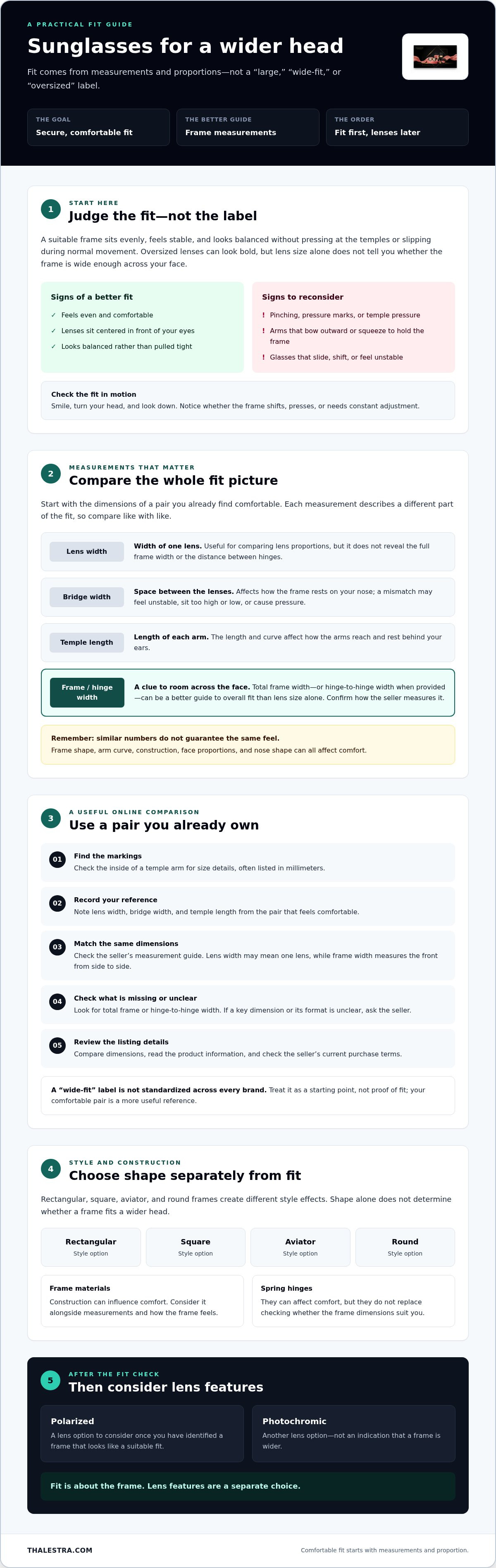
How to check wide-fit sunglasses before buying online
A “wide-fit” label is a useful search clue, not a promise of comfort. Brands may use the term differently, and individual fit depends on the frame’s dimensions, bridge position, and arm shape. To find the best sunglasses for a big head, use a repeatable check before ordering instead of relying on a label or product photo.
- Measure a pair that fits. Note its lens width, bridge width, temple length, and total frame width if available.
- Compare like with like. Check equivalent measurements in the product listing. Confirm whether a number describes one lens or the full frame.
- Inspect the details. Look for frame dimensions, material, and stated lens features. Don’t infer these from appearance alone.
- Verify purchase terms. Read the current return or exchange policy before ordering, especially if you’re unsure about fit.
What should you check in a sunglasses product listing?
Prioritize the measurements that help you compare the frame with your comfortable pair. Then confirm that material and lens-feature descriptions are stated in the listing, rather than assumed from a photo or general style name. If a key dimension is missing or you can’t tell how it was measured, ask the seller for clarification before you buy. Check current purchase terms directly, and don’t assume a fitting service is available.
Style can be part of your shortlist, but it can’t replace the fit check. If you’re considering aviators, compare their dimensions just as carefully as those of any other silhouette. A guide to choosing sunglasses for an aviator silhouette can help you evaluate that style, while the frame measurements help you judge whether a particular pair may suit your needs.
How can you assess comfort when trying frames on?
If you can try a pair, compare it with one you already know fits well. Check for pressure at the temples, slipping at the bridge, or the frame touching your cheeks. Smile, look down, and turn your head. Sunglasses should stay comfortably positioned through ordinary movement without pinching or needing constant adjustment. These checks assess the individual frame, not just its size label.
After setting your fit priorities, browse THALESTRA.COM sunglasses and review each product listing for the dimensions and features you need.
Explore THALESTRA.COM sunglasses after defining your fit needs
Once you’ve set your preferred frame measurements and silhouette, you can browse with a clearer checklist. THALESTRA.COM sells polarized and photochromic sunglasses, but the available product information doesn’t confirm dedicated wide-fit styles or specific dimensions. Check each current listing rather than assuming a frame suits every wider head. The best sunglasses for a big head still depend on how that specific frame’s measurements work for you.
How to narrow down the options
Start with fit, then compare style and lens features. Use the measurements you’ve identified as your reference, and look for equivalent details in each listing. Next, consider whether the silhouette matches your preference. Vintage-inspired designer sunglasses are a style choice, not a fit category. A vintage look doesn’t indicate extra width or a particular bridge size.
Polarized and photochromic describe lens features, not frame dimensions. Consider them after checking whether the frame’s width, bridge, and temples appear suitable. Confirm any stated lens or material details in the product description. If a specification isn’t listed, don’t infer it from the product photo or category name.
- Fit: Compare listed frame dimensions with a pair you already find comfortable.
- Shape: Choose a silhouette you like, then check its proportions separately.
- Lenses: Review the description for confirmed polarized or photochromic features.
- Details: Keep only options with enough information to assess against your needs.
What to do when a frame’s fit details are missing
Pause before relying on a style name, product image, or “wide” label. Ask THALESTRA.COM for relevant dimensions, such as total frame width, lens width, bridge width, and temple length. If the retailer can’t clarify a measurement, treat it as missing information rather than guessing. Before ordering, review the current return or exchange terms so you understand the options if the fit isn’t right.
With your measurements and priorities in hand, browse THALESTRA.COM sunglasses and compare the available listing details. Use product information to identify options worth checking, not as a guarantee of fit. Frame comfort is individual, so base your choice on confirmed specifications and the features that matter to you.
Choose your next pair with fit in mind
The best sunglasses for a big head aren’t defined by an oversized look or a wide-fit label. Start with the measurements that work for you, compare frame proportions, and check how the bridge and temples may affect comfort. Consider shape and lens features next, based on your personal style and practical preferences.
THALESTRA.COM offers sunglasses in multiple styles, including polarized and photochromic options. These lens categories are separate from frame fit, so review current product details and dimensions before choosing a pair. Don’t assume a style or label guarantees a comfortable match for your face.
Browse THALESTRA.COM sunglasses and compare the available options with your fit priorities. Use your checklist to shop more confidently and focus on frames that feel as good as they look.
Frequently Asked Questions
What sunglasses are best for a big head?
The best sunglasses for a big head are those whose frame width, bridge, and temples suit your proportions and feel comfortable without pinching. Compare the measurements with a pair you already find comfortable, then choose a shape you like. Rectangular, square, aviator, and round frames can all be options, but no style or “wide-fit” label guarantees a match. Check that the sunglasses stay in place when you smile or turn your head.
How do I know if sunglasses are too small for my head?
Sunglasses may be too small if the temples press against your head, the arms bow outward, or the frame looks noticeably narrower than your face. Other clues include lenses sitting off-center or the frame shifting because it can’t rest comfortably. Try smiling, looking down, and turning your head. If pressure builds or the glasses move out of position, compare a different frame width or temple design.
How do I measure my head for sunglasses?
Head circumference can offer a rough indication of whether you may want to explore wider frames, but it can’t determine the fit of a specific pair. For a more useful comparison, measure sunglasses you already wear comfortably. Check the inside of the temple arms for size markings, then note lens width, bridge width, and temple length. Compare those figures with equivalent dimensions in the product listing, checking how each measurement is defined.
Are wide-fit sunglasses the same as oversized sunglasses?
No. Wide-fit refers to a frame intended to accommodate broader measurements, while oversized usually describes a larger-looking style or lenses. A pair can have large lenses but a standard-width frame, so it may still feel tight at the temples. Check frame dimensions, especially total width when listed, rather than judging fit from lens size or appearance alone. Labels can vary between brands, so compare actual measurements.
Can people with big heads wear aviator sunglasses?
Yes, people with big heads can wear aviators if the specific frame’s dimensions suit them. The style itself doesn’t confirm that the front is wide enough or that the bridge and temples will feel comfortable. Compare its measurements with a pair that fits well, and check whether the lenses sit centered and the frame stays put during movement. Treat aviator as a shape preference, not a fit specification.
Do bigger sunglasses fit every wide face?
No. A larger-looking frame doesn’t automatically fit every wide face. Lens size, full frame width, bridge fit, and temple shape all affect how sunglasses sit and feel. A frame that looks broad may still pinch, slip, or rest awkwardly on a particular wearer. Compare dimensions with a comfortable pair and assess positioning and pressure where possible. The best match depends on individual proportions, not size labels alone.
What sunglasses frame measurements should I check before buying online?
Check lens width, bridge width, and temple length, plus total frame width or hinge-to-hinge width if the listing provides it. Confirm whether lens width is measured for one lens and whether frame width describes the complete front. Compare matching measurements with a pair you own and find comfortable. If a key dimension is missing or unclear, ask the retailer to clarify it before ordering instead of estimating from a product photo.