
Why carry three sets of lenses when a single pair of adaptive optics processes light shifts faster than your brain registers a shadow? You've felt the mid-climb frustration of fogged lenses and the danger of sudden shade during high-speed descents. Finding the best sunglasses for cycling shouldn't involve a compromise between clarity and comfort. Long miles demand gear that eliminates road glare without temple pinch or slippage. We focus on functional, high-utility gear that stays secure for 100+ mile rides.
This guide identifies the top adaptive vision solutions for 2026. You'll learn how next-generation photochromic technology adapts from 10% to 85% light absorption instantly. We promise to help you find ultra-lightweight frames that disappear on your face while meeting ANSI/ISEA Z87.1-2025 safety standards. Our review covers photochromic polarized hybrids, carbon fiber durability, and aerodynamic designs that reduce drag by 15 percent. Expect crystal clear vision in every tunnel, shade patch, and sun-drenched straightaway. We prioritize speed, efficiency, and modern technical specifications for the global rider.
Key Takeaways
- Understand mechanical eye protection and wind management strategies to prevent tear-film evaporation during high-speed descents.
- Identify the best sunglasses for cycling featuring 2026 photochromic technology for instant, molecular-level light adaptation.
- Evaluate carbon fiber frame benefits including vibration damping and weight-saving ergonomics for 100+ mile ride comfort.
- Compare discipline-specific optics for road glare reduction versus the rapid light shifts required for mountain bike environments.
- Access the 2026 buyer checklist for UV400 safety standards and adaptive lens selection for dawn, dusk, and variable trail conditions.
Why Cycling-Specific Eyewear is a Performance Necessity
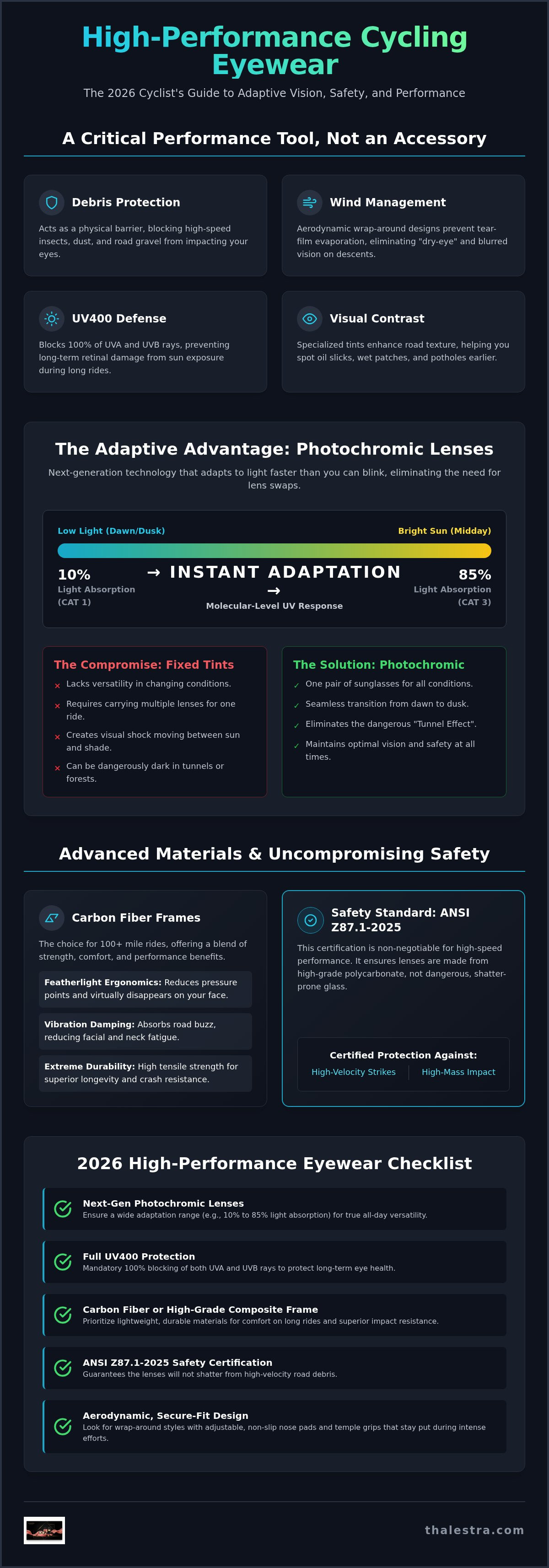
High-velocity riding demands more than basic sun protection. The best sunglasses for cycling operate as critical protective eyewear, functioning as a physical barrier against environmental hazards. This gear is a performance tool. It isn't a lifestyle accessory. Standard frames fail under the mechanical stress of 40 mph descents and variable road conditions.
Mechanical and Environmental Shielding
- Debris Protection: Lenses block high-speed insects, airborne dust, and kicked-up road gravel.
- Wind Management: Aerodynamic wrap-around designs prevent tear-film evaporation. This eliminates the "dry-eye" effect that causes blurred vision during fast descents.
- UV400 Defense: Standard UV400 protection blocks 100 percent of UVA and UVB rays. This prevents long-term retinal damage from prolonged sun exposure.
- Visual Contrast: Specific tints enhance road texture. This allows riders to spot oil slicks, wet patches, and potholes earlier.
The Impact of Eye Fatigue on Endurance
Constant squinting triggers involuntary facial tension. This tension radiates through the neck and shoulders, increasing your perceived exertion during long efforts. Maintaining consistent light levels is vital for focus during 4+ hour rides. Visual fatigue acts as a hidden drain on a cyclist's power output by diverting neural energy toward managing optical stress. By stabilizing the visual field, you preserve mental bandwidth for technical bike handling and sustained power delivery. Secure optics ensure the eyes remain relaxed even in high-glare environments.
Beyond Fashion: The Safety Specs of 2026
Standard fashion sunglasses lack the frame grip and impact resistance required for high-intensity movement. They often slip during heavy perspiration or shatter upon impact with road debris. Professional cycling lenses utilize high-grade polycarbonate. This material offers superior impact resistance compared to traditional glass, which is prone to dangerous splintering. Current 2026 safety standards, specifically ANSI/ISEA Z87.1-2025, ensure lenses withstand high-mass and high-velocity strikes. While some riders prioritize aesthetics, functional gear must meet these technical attributes. For those interested in how traditional styles translate to modern utility, see our Men's Aviator Sunglasses: The 2026 Guide to Style and Lens Tech. High-performance cycling requires specialized frame geometry that stays secure during aggressive sprints and rough terrain. Lightweight durability is the priority.
The Adaptive Advantage: Photochromic vs. Fixed Tints
Photochromic lenses utilize molecular-level adaptation to UV intensity. This technology eliminates the need for manual lens swaps mid-ride. In 2026, next-generation photochromic lenses adapt from 10 percent to 85 percent light absorption. This range covers CAT 1 to CAT 3 transitions, making them the best sunglasses for cycling across all-day excursions. Commuters benefit from a single-pair solution that handles dawn, bright noon, and evening shadows. High-performance optics must also meet FDA impact resistance requirements to ensure rider safety during high-speed activity.
Fixed tints, while effective in consistent light, lack versatility. Competitor lenses often require users to carry multiple sets for different environments. Adaptive optics solve this by shifting light transmission based on real-time UV exposure. CAT 1 levels provide 43 to 80 percent transmission for low-light mornings. CAT 3 levels drop to 8 to 18 percent for mid-day sun. This dynamic adjustment prevents the visual shock of moving between extreme environments. Modern silver halide molecules react faster than previous generations, ensuring your vision remains stable during high-speed efforts.
Photochromic Tech in Variable Light Conditions
Rapid light shifts occur when moving from bright sun to forest shade. Modern lenses handle the "Tunnel Effect" by clearing quickly to maintain visibility. Professional driving lenses are often the secret weapon for road cycling clarity. These lenses prioritize high-contrast road hazard detection and rapid adjustment speeds. They enhance visibility in overcast weather when the sun disappears, ensuring potholes and road debris remain visible. This crossover tech provides superior clarity compared to standard athletic eyewear. Fast-acting transition speeds are now standard for high-performance road and trail riding.
Polarized Photochromic: The Gold Standard
The synergy between adaptive tinting and glare filtration represents the peak of cycling eyewear. Polarization eliminates blinding road shimmer and "wet-look" glare from asphalt. This is critical for safety on high-speed descents where reflections can hide oil slicks. LIOUMO series photochromic polarized sunglasses combine these features with lightweight durability. This combination ensures crystal clear vision in changing light while blocking horizontal reflections. If you need gear that thinks for you, Explore Adaptive Cycling Lenses to find your next pair. These high-utility optics provide a mechanical advantage by reducing the cognitive load of visual processing during endurance rides.
Ergonomics and Materials: Why Carbon Fiber Wins
Frame weight dictates endurance comfort. A 10-gram variance between 25g and 35g frames creates significant pressure points on the nasal bridge after 50 miles. The best sunglasses for cycling utilize carbon fiber to achieve a superior strength-to-weight ratio. This material provides natural vibration damping, reducing the "road buzz" transmitted through the frame to your temples. While plastic remains the industry standard for budget gear, carbon fiber offers professional-grade durability and lightweight performance.
Stability depends on temple design and grip. Modern cycling helmets feature complex retention systems that often conflict with bulky eyewear. Thin, flat temples ensure compatibility with helmet straps and adjustment dials. High-friction nose pads prevent "nose-slide" during heavy sweating or aggressive out-of-saddle sprints. Secure fitment is a mechanical necessity for high-speed safety. Durable frames must withstand the constant vibration of rough tarmac and gravel trails.
The LIOUMO Carbon Fiber Series Breakdown
The LIOUMO Carbon Fiber Square Glasses (USD 31.89) prioritize high-utility specs for road and trail riders. This square frame style maximizes peripheral coverage, ensuring no blind spots during shoulder checks. Technical attributes include:
- Material: Real carbon fiber temples for lightweight durability and flex.
- Lens Tech: Photochromic polarized optics for adaptive clarity in shifting light.
- Resilience: Superior resistance to the sweat-salt-sun cycle compared to traditional acetate frames.
- Protection: UV400 rated lenses provide total defense against retinal stress.
Carbon fiber handles environmental stress without the warping or degradation common in lower-grade polymers. It's the ideal material for riders who demand gear that survives multiple seasons of intense use.
Ventilation and Fog Prevention
Lens fogging occurs during slow, steep climbs when airflow drops. Effective ventilation requires strategic frame gaps that channel air across the inner lens surface without causing eye irritation. In 2026, the most effective systems combine physical frame venting with advanced anti-fog coatings. This dual-layer approach keeps vision clear during high-intensity efforts in humid conditions. For more on lens technology, see our Photochromic Cycling Sunglasses: Adaptive Vision Guide 2026. Maintaining airflow is essential for preventing the moisture buildup that obscures road hazards. Efficient cooling keeps the rider focused on the terrain rather than adjusting gear. Clear vision remains the priority during low-speed technical climbs.
Selecting the Best Cycling Sunglasses for Your Discipline
Optical requirements change based on terrain and speed. Choosing the best sunglasses for cycling involves matching lens tints and frame geometry to your specific riding environment. Road cyclists prioritize aerodynamic profiles and high-speed glare reduction on asphalt. Mountain bikers (MTB) require rapid light adaptation for navigating dense forest canopies and mottled light. Gravel grinding demands superior dust protection and ultra-stable fitment for rough, high-vibration surfaces. City commuters need high-utility versatility for early morning dawn and evening dusk conditions. Each discipline requires a specific technical configuration to maximize safety and performance.
- Road Cycling: Focus on grey or smoke tints for neutral color balance and maximum glare filtration.
- Mountain Biking: Prioritize copper or amber lenses to enhance trail depth perception and contrast.
- Gravel Grinding: Emphasize wrap-around coverage to block airborne dust and fine gravel particles.
- City Commuting: Select adaptive photochromic lenses to handle shifting urban light and tunnel transitions.
Road vs. Trail: Lens Tint Selection
Copper and amber lenses serve as the primary choice for trail environments. These tints increase contrast, making it easier to spot roots, rocks, and trail irregularities in low-light forest sections. Grey and smoke lenses provide a neutral color balance for high-sun road environments. They reduce overall brightness without distorting the visual field, which is essential for reading road signs and spotting oil slicks. The Classic Mens Polarized Sunglasses (USD 14.65) represent a high-value, functional option for daily commutes. These provide reliable polarization and UV400 protection in a traditional frame style. Technical riders often prefer high-contrast amber for depth perception, while endurance road riders favor the cooling effect of dark grey tints. Selecting the correct tint reduces cognitive load during long efforts.
Face Shape and Coverage
Proper fitment prevents gear interference and visual distractions. Wide frames suit rounder faces by maximizing wind protection and preventing light leakage from the periphery. Narrow frames are necessary for petite faces to avoid "helmet-clash" where the frame hits the helmet retention system. Frame height also matters. Tall lenses provide a better field of view when riding in an aggressive, aerodynamic "drops" position. Wrap-around geometry is essential for lateral sun protection to block peripheral UV rays and prevent wind-induced tear evaporation during high-speed descents. Secure nose pads and temple grips ensure the optics stay in place during heavy perspiration. High-performance frames must disappear on the face to allow total focus on the route ahead.
For riders demanding professional-grade performance across all disciplines, the LIOUMO series offers the ultimate in adaptive vision. Shop Adaptive Cycling Optics to find a pair that transitions with your environment. These lenses provide the mechanical advantage needed for high-intensity training and casual commuting alike.
Buying Guide: Checklist for the 2026 Season
Selecting the best sunglasses for cycling requires a systematic evaluation of technical attributes. Performance gear in 2026 must meet specific safety and comfort criteria to handle 100+ mile rides. Follow this five-step checklist to ensure your equipment matches your performance demands. High-utility gear removes the guesswork from variable riding conditions.
- Step 1: Confirm UV400 Rating. Total eye safety depends on blocking 100 percent of UVA and UVB rays. This is non-negotiable for long-term retinal health and preventing cataracts.
- Step 2: Prioritize Adaptive Lenses. Choose photochromic optics if you ride at dawn, dusk, or through dense forest canopies. These lenses react to UV intensity, eliminating the need to stop and swap gear as the sun shifts.
- Step 3: Evaluate Frame Material. Opt for carbon fiber if you prioritize long-ride comfort and durability. Reducing frame weight by just 10 grams prevents pressure sores and temple pinch during endurance efforts.
- Step 4: Verify Polarized Filters. Road shimmer and water reflections cause significant visual fatigue. Polarized lenses filter horizontal glare, allowing you to spot road hazards like wet patches or oil slicks faster.
- Step 5: Measure Temple-to-Temple Width. Ensure helmet compatibility by checking the frame width against your helmet's retention system. Avoid "helmet-clash" by selecting frames that sit flush against the temples.
Maintenance for High-Tech Lenses
High-performance photochromic coatings require specific care to maintain their reaction speed. Avoid harsh chemicals or alcohol-based cleaners that strip the protective layers. Use a dedicated microfiber cloth and pH-neutral lens solution to prevent micro-scratches. Storage is equally critical. Never leave your glasses in a hot car. Extreme heat degrades the photochromic molecules; this permanently slows the transition time or causes the lens to "freeze" in a semi-tinted state. Replace your shades if you notice lens fatigue, persistent discoloration, or coating delamination. Clear vision is a safety requirement. Don't risk your safety on compromised optics.
The THALESTRA.COM Recommendation
The LIOUMO Top Quality series offers the best spec-for-dollar value in the 2026 market. These models combine real carbon fiber temples with high-speed photochromic polarized lenses. This combination provides professional-level features formerly reserved for elite price brackets. Budget-conscious riders should consider the Classic Mens series. These deliver essential UV400 protection and reliable polarization at a highly accessible price point. Both series meet modern impact resistance standards for road and trail safety. Proper gear selection ensures you remain focused on the ride, not your equipment. Upgrade Your Cycling Vision Today to experience adaptive clarity on every mile.
Maximize Your 2026 Performance Optics
High-performance riding demands equipment that operates with mechanical precision. You've identified how adaptive photochromic technology eliminates the need for manual lens swaps by reacting to UV intensity in real-time. Integrating ultra-lightweight carbon fiber frames ensures stability and vibration damping during 100+ mile endurance efforts. Safety remains a priority; always verify UV400 protection and impact resistance standards before your next season begins. Selecting the best sunglasses for cycling involves matching these technical attributes to your specific road or trail environment.
The LIOUMO Professional Series provides a streamlined solution for riders seeking elite-grade specs at an efficient price point. These frames deliver the durability and clarity required for high-speed descents and variable light conditions. Don't let visual fatigue or frame slippage compromise your power output. Secure your vision with gear designed for modern endurance demands. Shop the 2026 Adaptive Cycling Collection at Thalestra to upgrade your kit today. Experience the road with total clarity and focus on the miles ahead.
Frequently Asked Questions
Are polarized sunglasses good for cycling?
Yes, they are excellent for road cycling because they eliminate horizontal glare from asphalt and car windshields. This reduction in road shimmer prevents eye strain during long-distance efforts. While some riders worry about screen visibility, modern polarized filters are optimized for safety. They are often considered the best sunglasses for cycling when riding on high-glare surfaces or near water. Neutral grey polarized tints provide the most accurate color perception.
How fast do photochromic cycling glasses change color?
Modern 2026 photochromic lenses transition from clear to dark in approximately 20 to 30 seconds depending on UV intensity. The reverse process of clearing up takes slightly longer, usually 60 to 90 seconds. Temperature impacts this speed; colder environments often result in faster darkening but slower clearing. Next-generation molecules react instantly to UV shifts. This ensures vision remains stable when moving from bright sun into shaded forest canopies or tunnels.
Do cycling sunglasses fit under all helmets?
Most high-performance cycling glasses are designed for universal helmet compatibility, but temple length and thickness vary. Narrow, flat temples prevent interference with helmet retention systems and straps. You should measure the temple-to-temple width to ensure the frame sits flush against your face. Oversized shield styles might clash with low-profile aero helmets. Check for adjustable nose pieces and flexible temple tips to customize the fit. It's important to verify clearance before long rides.
Can I wear photochromic glasses for night riding?
You can wear them for night riding only if the base tint is clear or Category 0. Many photochromic lenses maintain a slight residual tint even in total darkness, which can reduce visibility on unlit roads. For 24-hour events, look for lenses with a transmission range starting at 80 percent or higher. If the lens remains Category 1 or darker in low light, it is unsuitable for nighttime use. Always verify the minimum transmission percentage.
Why are my cycling glasses fogging up?
Fogging occurs when warm, moist air from your face hits the cooler lens surface, usually during slow climbs or stops. Insufficient airflow prevents this moisture from evaporating. To fix this, select frames with integrated ventilation ports or floating lens designs. Anti-fog coatings also help by reducing surface tension. Keeping the lenses clean prevents dust particles from acting as nucleation points for water droplets. Proper frame spacing is essential for consistent airflow.
Are carbon fiber frames worth the extra money?
Carbon fiber frames offer superior strength-to-weight ratios and natural vibration damping. This material absorbs high-frequency road buzz that causes temple fatigue during long efforts. For endurance cyclists, saving 10 to 15 grams prevents nasal bridge pressure and skin irritation. These frames resist warping from sweat-salt-sun exposure better than acetate or standard polymers. High-utility durability and lightweight performance justify the investment for competitive environments. They remain the premium choice for serious riders.
Do polarized lenses make it hard to see my bike computer?
Some older polarized filters can cause a blackout effect on LCD screens when viewed at specific angles. However, most modern bike computers use LED or OLED displays that are less susceptible to this interference. High-quality polarized lenses utilize specific alignment to minimize this issue. You might notice slight rainbow patterns on some screens, but critical data remains visible. If you use an older head unit, test the compatibility before committing to polarized optics.
What is the difference between UV400 and polarized?
UV400 is a safety standard blocking 100 percent of UVA and UVB radiation for retinal health. Polarization is a functional filter that eliminates horizontal light waves to stop blinding glare. A lens can provide UV protection without being polarized. The best sunglasses for cycling combine both features for maximum safety. UV400 prevents long-term eye damage, while polarization ensures immediate clarity for spotting road hazards. Both are essential for high-intensity sun environments.