
Your expensive designer frames aren't built for the coastline; they're built for the sidewalk. Most beach sunglasses men buy fail within one season because saltwater is a relentless corrosive agent. You've likely felt the frustration of grit scratching a fresh lens or the constant squinting caused by high-intensity water glare. It's a common problem for every vacationer. We agree that a beach trip shouldn't end with ruined gear and tired eyes. You need equipment that handles the harsh technical demands of the shore while maintaining a sharp aesthetic.
This guide promises to help you master the technical trinity of coastal eyewear: saltwater-resistant materials, high-contrast polarization, and sand-defying coatings. You'll learn how to secure maximum eye protection and modern 2026 beach style. We're detailing high-performance carbon fiber frames, UV400 tech, and LIOUMO photochromic lenses. From classic polarized styles to advanced vacation-ready frames, we've curated the essential selection for clear vision and long-term performance in high-glare environments. Expect a focus on durability, utility, and immediate value for your next trip.
Key Takeaways
- Prioritize high-contrast polarized lenses with specialized mirror coatings to neutralize 360-degree glare from water and white sand.
- Opt for carbon fiber or TR90 memory polymers to ensure salt immunity and high strength-to-weight durability in beach sunglasses men use for high-intensity sun.
- Navigate 2026 vacation trends by selecting classic aviators or vintage oval silhouettes tailored to specific facial structures and modern aesthetics.
- Execute a mandatory freshwater rinse after every beach visit to eliminate corrosive salt deposits and maintain long-term lens clarity.
The Beach Environment Challenge: Why Specialized Eyewear Matters
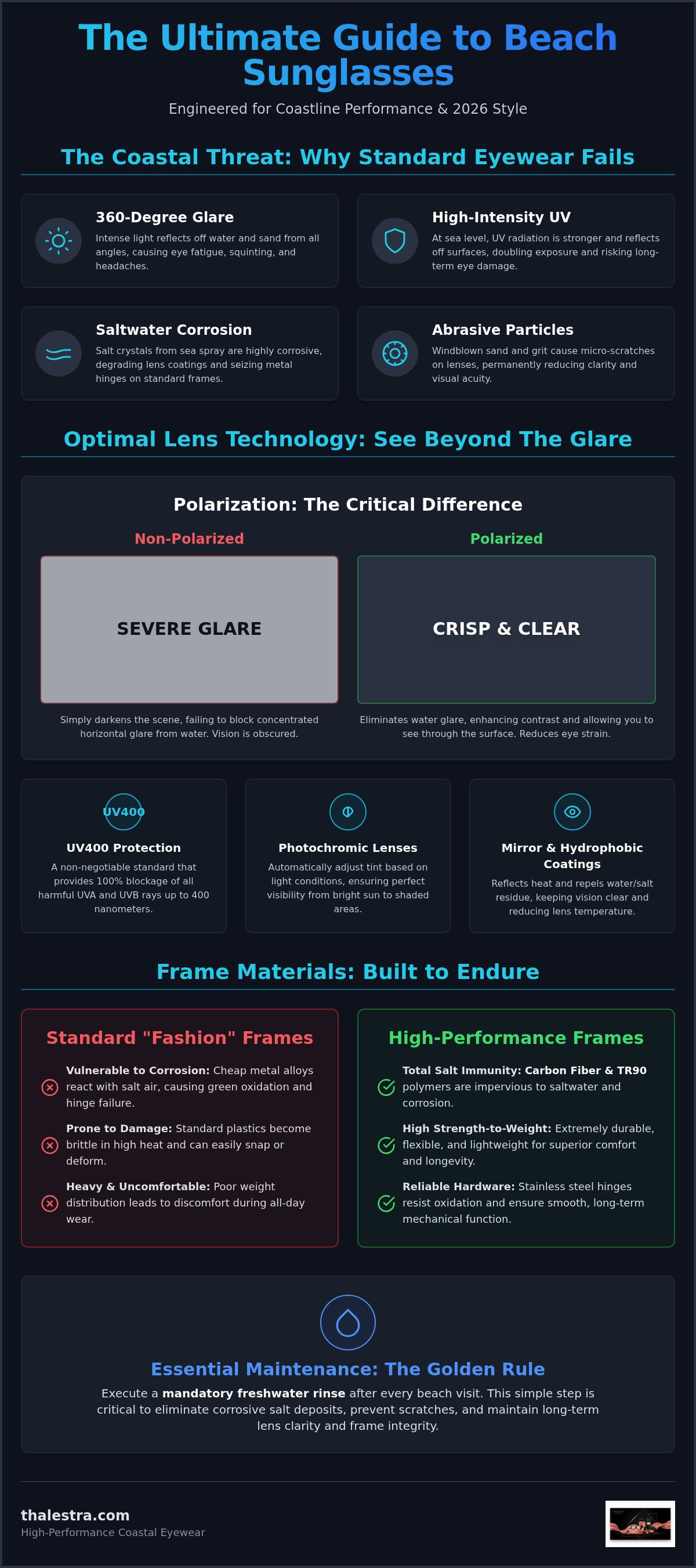
Standard eyewear fails in coastal conditions. Coastal environments present a unique combination of high-intensity UV radiation, corrosive salt spray, and abrasive sand particles. Most beach sunglasses men select are chosen for aesthetics alone, ignoring the technical demands of the shoreline. High-performance sunglasses must function as protective equipment. They require specific lens coatings and frame materials to survive the transition from urban environments to the sand. For a comprehensive overview of sunglasses and their functional evolution, understanding the basic design requirements is the first step toward effective protection.
The primary optical challenge is 360-degree glare. Unlike inland environments where light primarily comes from above, beach settings feature massive light reflection from white sand and water surfaces. This creates a high-contrast environment that causes rapid eye fatigue and squinting. At sea level, UV radiation intensity is high due to the lack of atmospheric density and the doubling effect of surface reflection. Standard dark lenses without specific filtration only cause pupils to dilate, allowing more harmful radiation into the eye. Without specialized tech, you risk lens delamination and permanent hardware failure within weeks of exposure.
Understanding UV400 Protection Standards
UV400 is the filtration of all light rays up to 400 nanometers. This standard is a non-negotiable baseline for coastal safety. It ensures 100% blockage of both UVA and UVB rays, preventing long-term ocular damage. In the high-glare environment of a 2025 vacation, baseline protection is the difference between visual comfort and permanent strain. Specialized models like the LIOUMO Top Quality Photochromic Polarized Sunglasses integrate this standard with adaptive light technology for varying beach conditions.
The Reality of Saltwater Corrosion
Saltwater is a relentless corrosive agent. When seawater evaporates, it leaves behind microscopic salt crystals. These crystals act as heavy abrasives on standard lens coatings, leading to micro-scratches and eventual delamination. Cheap metal alloys found in standard fashion frames undergo a rapid chemical reaction with salt air, leading to green oxidation and seized hinges. Durable beach sunglasses men should feature ocean-ready hardware.
- Carbon fiber frames: High strength-to-weight ratio with total salt immunity.
- Stainless steel hinges: Resistance to oxidation and mechanical failure.
- Hydrophobic coatings: Repelling water and salt residue for clearer vision.
Investing in carbon fiber frames or TR90 memory polymers ensures the frames remain flexible and corrosion-free despite constant exposure to moisture and heat. These materials prevent the structural failure common in low-tier vacation eyewear.
How to Select the Optimal Lens Technology for Sand and Sea
Visual performance on the coast depends on light transmission control. Selecting the right beach sunglasses men need for high-glare environments involves more than choosing a dark tint. High-utility lenses must manage reflected light from the ocean surface and the diffuse radiation from white sand. This requires a combination of polarization, mirror coatings, and specific base tints to maintain optical clarity without causing eye strain. Effective optics should prioritize high-contrast visibility and total glare reduction.
Mirror coatings serve a functional purpose beyond aesthetics. These external flash layers reflect infrared heat and high-frequency light away from the eye, effectively lowering the temperature behind the lens. For varied light conditions, photochromic adaptability is essential. Modern lenses transition their VLT (Visible Light Transmission) percentage as you move from the bright shoreline to shaded beach bars. This eliminates the need to remove your eyewear in lower light settings. It's a pragmatic solution for the 2025 vacationer who demands seamless utility across different environments.
Polarized vs. Non-Polarized: The Beach Test
Polarized filters are the primary defense against horizontal water glare. While non-polarized lenses simply dim the entire visual field, polarized tech blocks the specific light waves reflecting off the water. This significantly increases visual acuity, allowing you to see through the surface rather than just the reflection. Reducing this glare prevents the constant squinting that leads to fatigue and tension headaches. For a deeper technical breakdown, consult our 2026 Men's Polarized Photochromic Sunglasses Guide to understand how these layers interact with UV400 protection.
Lens Materials: Glass vs. Polycarbonate
Material choice impacts both durability and comfort. Polycarbonate is the standard for beach sports due to its high impact resistance and lightweight profile. It doesn't shatter upon impact, making it safer for active use. However, glass lenses offer superior scratch resistance against abrasive sand particles. To maximize longevity, ensure your lenses feature hydrophobic coatings. These layers shed water droplets and salt residue instantly, preventing the buildup of vision-obscuring spots. You can explore our latest 2025 vacation sunglasses for men to find high-performance material combinations built for the sand.
Color selection also matters for visibility. Neutral grey lenses provide true color perception in extremely bright light. Bronze or amber tints enhance contrast and depth perception, making them ideal for spotting sandbars or navigating uneven coastal terrain. Choose a tint that aligns with your primary beach activity to ensure maximum visual comfort.
Evaluating Frame Materials for Durability and Comfort
Frame selection dictates the long-term utility of beach sunglasses men choose for high-humidity environments. While lens tech handles the light, the frame must withstand 35°C+ temperatures and constant salt spray. Standard acetate or low-grade plastics often fail under these stressors, leading to warping or structural snap. High-performance materials like carbon fiber and TR90 memory polymers are the functional standards for 2026 vacation planning. These materials prioritize durability without adding unnecessary weight to the bridge of the nose.
TR90 memory polymer is the preferred choice for extreme heat resistance. Standard plastic frames become brittle after prolonged UV exposure, which leads to snapped temples. TR90 remains flexible and allows the frames to contour to your head without losing their original shape over time. Acetate offers a premium aesthetic for luxury styles, but it can soften and lose its tension if left in a hot vehicle or beach bag. For high-utility beach use, the flexibility of TR90 prevents mechanical failure during transport and active use.
The Benefits of Carbon Fiber at the Coast
Carbon fiber provides the highest strength-to-weight ratio available in modern eyewear. It's virtually weightless on the face, which reduces pressure points and prevents sliding during long vacation days. Carbon fiber does not oxidize like traditional metal frames because it lacks the reactive metallic elements that trigger corrosion in salt-heavy air. This immunity to saltwater makes it the elite choice for humid, coastal climates where traditional wire frames or hinges would quickly degrade and seize.
Ensuring a Secure Fit for Beach Activities
Saltwater, sweat, and sunblock create a lubrication layer that causes glasses to slide down the nose. Specialized beach frames integrate hydrophilic rubber on the nose pads and temple tips. This material gains grip as it gets wet, ensuring the glasses stay secure during high-movement activities like beach volleyball or boating. Wrap-around frame geometries are also critical for blocking peripheral light and preventing wind-blown sand from reaching your eyes. Review The Essential Sunglasses for Travel and Adventure: 2026 Checklist to verify your frame choice aligns with your specific holiday activities and protection needs.
Hinge tension is another failure point to evaluate. Look for integrated spring hinges or screwless designs that reduce the number of moving parts exposed to grit. Sand particles can easily jam standard barrel hinges, leading to stripped screws or cracked frame fronts. Choosing streamlined, ocean-ready hardware ensures your eyewear remains functional throughout the entire season.
How to Match Beach Styles with Your Face Shape
Aesthetic selection requires precise alignment with facial geometry to ensure both visual balance and technical coverage. Selecting beach sunglasses men prefer for coastal environments involves evaluating frame thickness, lens curvature, and silhouette. A frame that conflicts with your face shape creates visual tension and can impact light filtration at the periphery. For 2026, the focus is on high-utility silhouettes that merge heritage design with modern performance specs. High-contrast lenses paired with the right frame geometry prevent the "goggle" look while maintaining maximum protection.
Square and heart-shaped faces benefit from classic aviators. The characteristic teardrop lens shape softens strong jawlines and balances wider foreheads. For men with rounder face shapes, square and rectangular frames provide necessary structural definition, creating a sharper, more masculine profile. The 2026 tech-fusion style integrates technical carbon fiber temples with these retro-inspired fronts. This provides a lightweight, high-strength solution that maintains a premium aesthetic throughout the vacation season without the weight of traditional metal alloys.
2026 Beach Trend Forecast for Men
The 2026 season marks the rise of 'Retro-Futurism' in coastal eyewear. This style combines vintage shapes with transparent polymers and matte earth-tone palettes like olive, sand, and deep terracotta. These colors harmonize with natural beach environments; the transparent frames reduce the visual weight of the eyewear for a cleaner look. For a detailed breakdown of these evolving styles, explore our Men's Aviator Sunglasses: The 2026 Guide to Style and Lens Tech. You can also shop 2025 vacation sunglasses for men to secure these trending looks before your next trip.
Proportion and Scale: Finding the Right Lens Width
Perfect fit depends on the relationship between lens width and temple length. Measure the distance between your temples to determine your ideal frame size: small (125-129mm), medium (130-134mm), or large (135-139mm). Avoid oversized frames that slide during activity or rest on your cheeks. This traps heat and causes lens fogging. Bridge fit is equally critical; a snug, well-ventilated bridge prevents the frames from slipping when skin becomes oily from sunblock or sweat in high-temperature environments. Angular features are best complemented by the trending vintage oval frames, which provide a modern, curated look for the 2026 coastal aesthetic.
How to Maintain and Protect Your Beach Sunglasses
Maintenance determines the lifecycle of high-end optics. Saltwater and sand are the primary causes of premature failure in beach sunglasses men use for vacation. Without a strict cleaning protocol, even the most durable carbon fiber frames or photochromic lenses will degrade. Salt remains on the surface after water evaporates, creating a corrosive film that eats through lens coatings and seizes metal hinges. Proper maintenance for beach sunglasses men require involves immediate action to neutralize these environmental stressors. Sand is composed of silica, which is harder than most lens materials; rubbing it against the surface causes permanent micro-scratches.
The 'Freshwater Rinse' rule is non-negotiable. Rinse your eyewear under lukewarm tap water after every coastal visit to dissolve salt crystals before they dry. Never use your t-shirt or beach towel for cleaning. These fabrics trap sand and salt, turning them into sandpaper that destroys the outer mirror layer. Instead, use a dedicated microfiber cloth only after the lenses are free of debris. Inspect the screws and hinges weekly for white salt buildup. This residue can lead to hardware oxidation and structural failure if not removed promptly.
Cleaning Lenses Without Scratching
Effective cleaning requires a high-quality lens solution and a clean microfiber cloth. If you encounter dried salt spray, don't rub it off. Use a specialized spray to re-liquefy the salt before wiping the surface. For a deep clean after a long vacation, ultrasonic cleaning is a post-vacation essential. These devices use high-frequency sound waves to vibrate dirt and salt out of the tightest crevices in the frame and hinges. It's a pragmatic solution for maintaining long-term mechanical function and optical clarity.
Long-term Storage for Seasonal Eyewear
Off-season storage impacts frame integrity. Keep your sunglasses in a hard-shell case to prevent pressure-related warping in storage bins. Avoid high-humidity areas like bathrooms or basements. Moisture can trigger lens delamination, where the polarized or UV layers begin to peel away from the base material. Hard cases are superior to microfiber pouches when eyewear is stored inside a beach bag. A soft pouch offers zero protection against the crushing weight of towels, books, or water bottles. Before your next trip, perform a final inspection of your vacation-ready kit:
- Check hinge tension and tighten loose screws with a precision driver.
- Verify lens clarity under a bright light source to identify micro-scratches.
- Replace worn microfiber pouches that have accumulated grit.
- Confirm the integrity of hydrophobic and anti-reflective coatings.
By following these technical maintenance steps, you ensure your 2026 frames survive the transport and the sand. Investing time in preventative care protects your visual investment and maintains the high-performance standards required for coastal environments.
Secure Your 2026 Coastal Vision
Mastering the technical requirements for high-glare environments ensures you don't waste money on disposable vacation gear. Prioritize UV400 certified lenses and high-performance polarization to eliminate water reflections and prevent squinting-related fatigue. Selecting durable carbon fiber options provides the salt immunity and strength-to-weight ratio needed for long-term coastal durability. These specialized materials survive the humid, corrosive air that destroys standard fashion frames. Remember that a simple freshwater rinse after every trip protects your specialized coatings from abrasive sand and corrosive salt deposits. Choosing the right beach sunglasses men need for the shore is about merging these technical standards with 2026's trending silhouettes. It's time to upgrade your vacation kit with equipment designed specifically for the sand. Shop the 2026 Men's Beach Collection at THALESTRA.COM and benefit from free international shipping on select orders. Your next coastal adventure deserves clear vision and professional-grade protection. Enjoy the sun with total confidence in your gear.
Frequently Asked Questions
Are polarized sunglasses better for the beach?
Polarized lenses are superior for coastal environments because they specifically block horizontal glare reflecting off the ocean. While standard tinted lenses only dim your vision, polarization allows you to see through the water's surface clearly. This tech significantly reduces eye strain and prevents the tension headaches often caused by constant squinting in high-glare environments. It's a functional requirement for any serious beach utility.
Can saltwater damage my sunglasses?
Saltwater is a fast-acting corrosive agent that can permanently damage beach sunglasses men use for vacation. When seawater evaporates, it leaves behind abrasive salt crystals that scratch lens coatings and oxidize metal hardware. Without a freshwater rinse, standard hinges can seize and lens layers may delaminate. Choosing corrosion-resistant materials like carbon fiber helps mitigate these risks, but consistent maintenance remains essential for protection.
What lens color is best for bright beach sunlight?
Neutral grey and bronze are the most effective lens colors for intense beach sunlight. Grey lenses provide the most accurate color perception in extremely bright conditions, while bronze or amber tints enhance contrast and depth perception against the sand and water. Adding a mirror coating is also recommended to reflect infrared heat away from your eyes. This combination ensures maximum visual comfort during peak sun hours.
How do I get sand off my sunglasses without scratching them?
You should always rinse your eyewear with fresh, lukewarm water before attempting to remove sand. Sand particles are composed of silica, which is hard enough to gouge lens coatings if rubbed with a cloth while dry. After the debris is washed away, apply a specialized lens cleaning solution and wipe gently with a clean microfiber cloth. Never use paper towels or clothing, as these fibers trap grit.
Does UV400 protection expire over time?
UV400 protection doesn't have a specific expiration date, but the physical integrity of the lens can degrade over time. Constant exposure to salt spray, extreme heat, and abrasive sand can cause micro-scratches that compromise the protective layers. If you notice lens delamination or significant surface wear, the filtration efficiency may be reduced. It's best to inspect your beach sunglasses men kit every season to ensure maximum safety.
Are carbon fiber frames worth it for beach vacations?
Carbon fiber frames are a high-value investment for beach environments due to their total immunity to salt corrosion. Unlike traditional metal alloys, carbon fiber won't oxidize or turn green when exposed to humid sea air. These frames also offer a superior strength-to-weight ratio, ensuring they remain comfortable during long vacation days. They provide the durability and modern aesthetic required for 2026's high-performance coastal style.
What is the difference between mirrored and polarized lenses?
Mirrored lenses feature a reflective coating that reduces the amount of light entering the eye, while polarized lenses use a filter to block horizontal glare. Mirrored tech is excellent for reflecting heat and lowering the temperature behind the lens in direct sun. Polarization is specifically designed to eliminate the blinding reflections from the water's surface. For the best coastal performance, look for models that integrate both technologies.
How can I tell if my sunglasses have 100% UV protection?
Authentic UV protection is usually indicated by a UV400 sticker or a "100% UV Protection" mark on the frame's interior temple. This certification confirms that the lenses filter out all light rays up to 400 nanometers, covering both UVA and UVB radiation. Since you can't see UV protection, it's critical to buy from reputable providers who offer certified tech. Avoid unbranded fashion glasses that lack verified safety documentation.